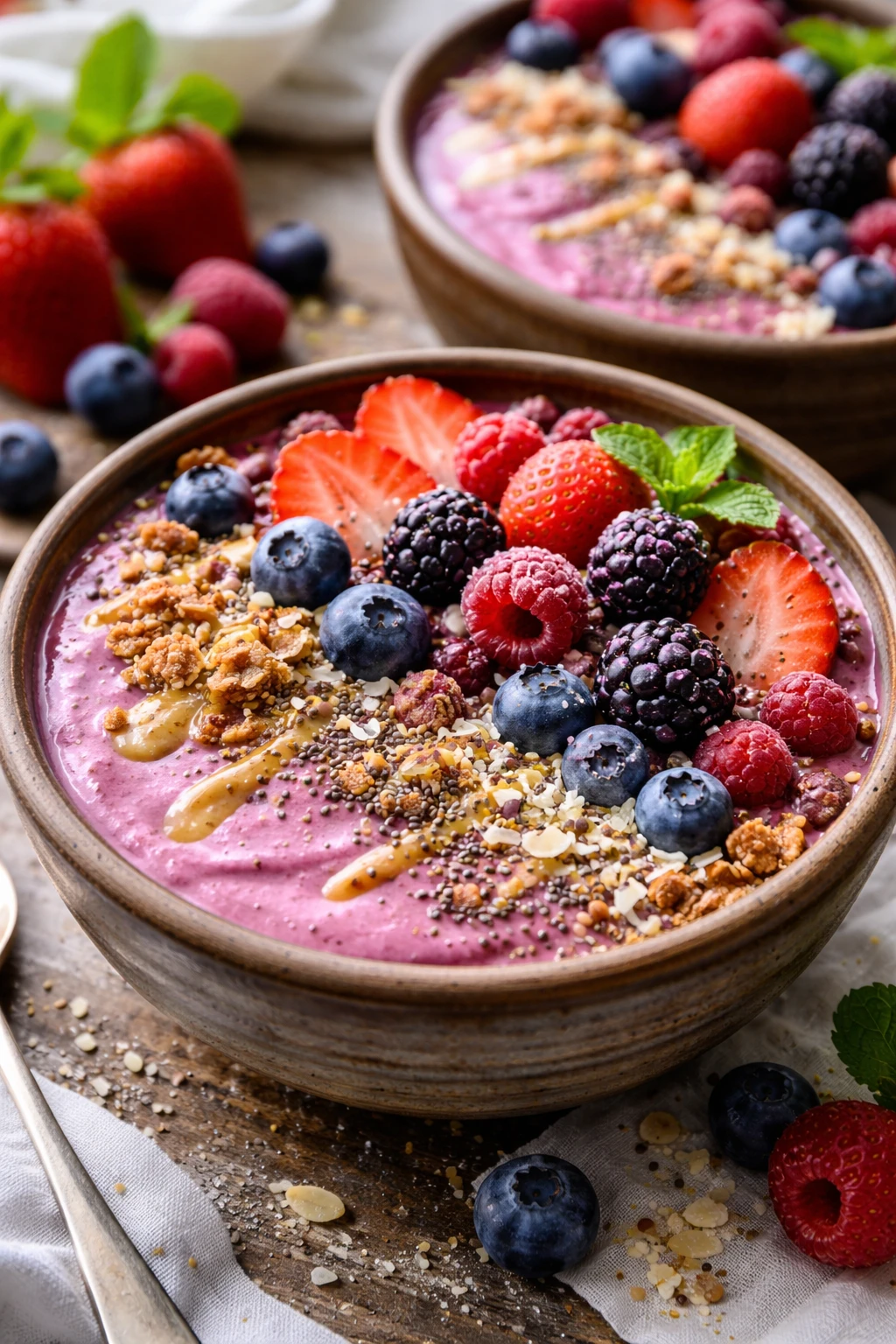
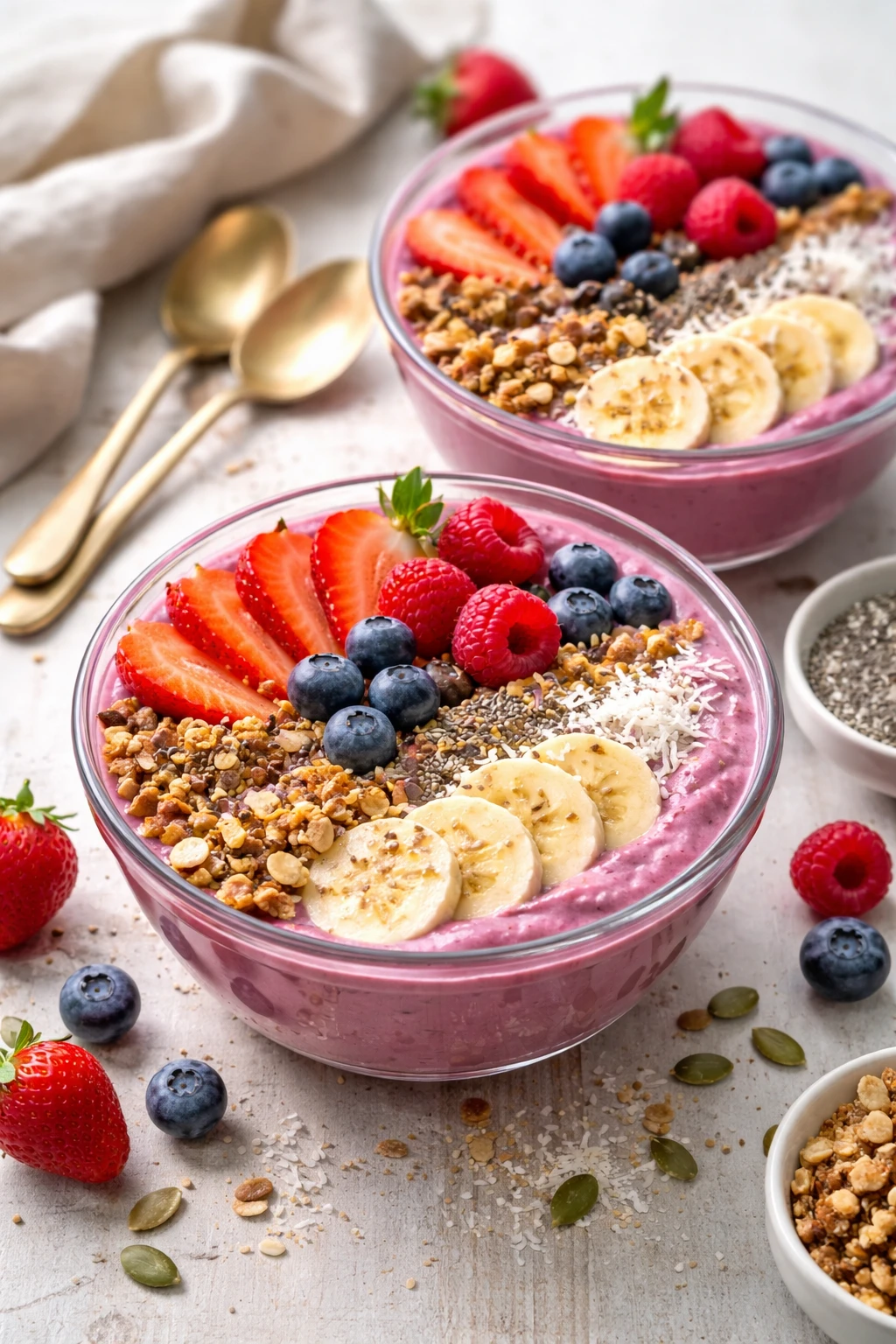
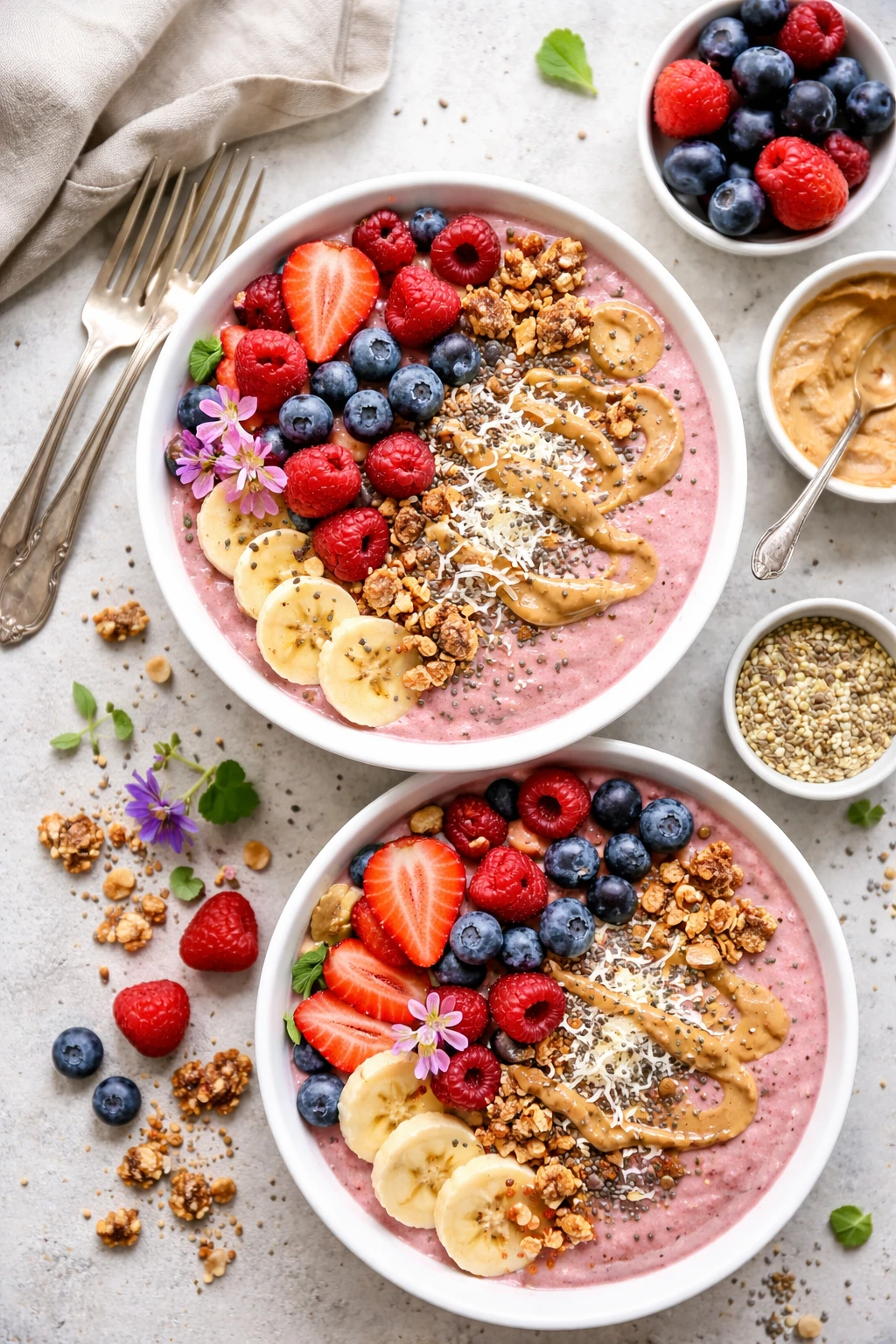
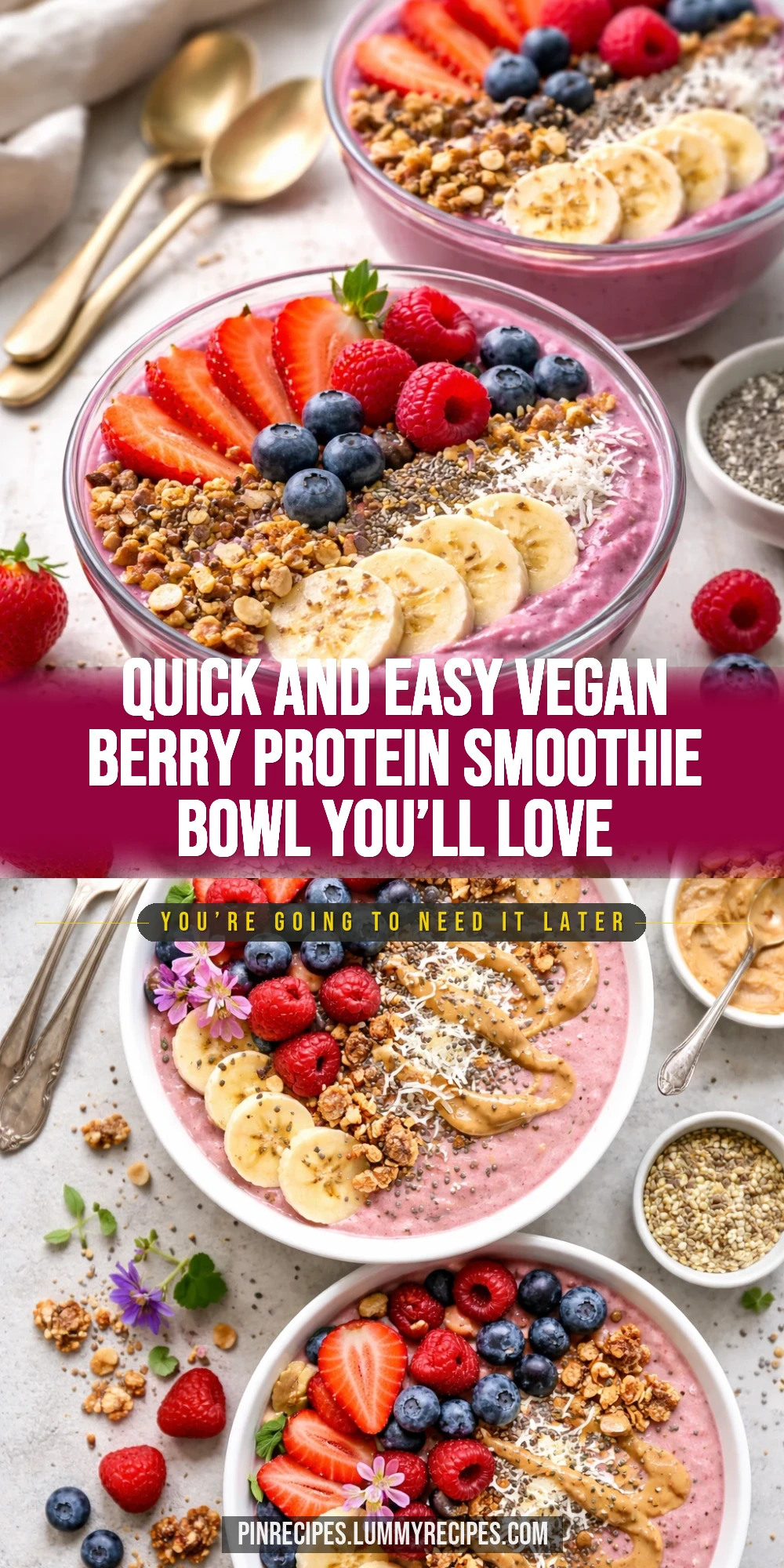
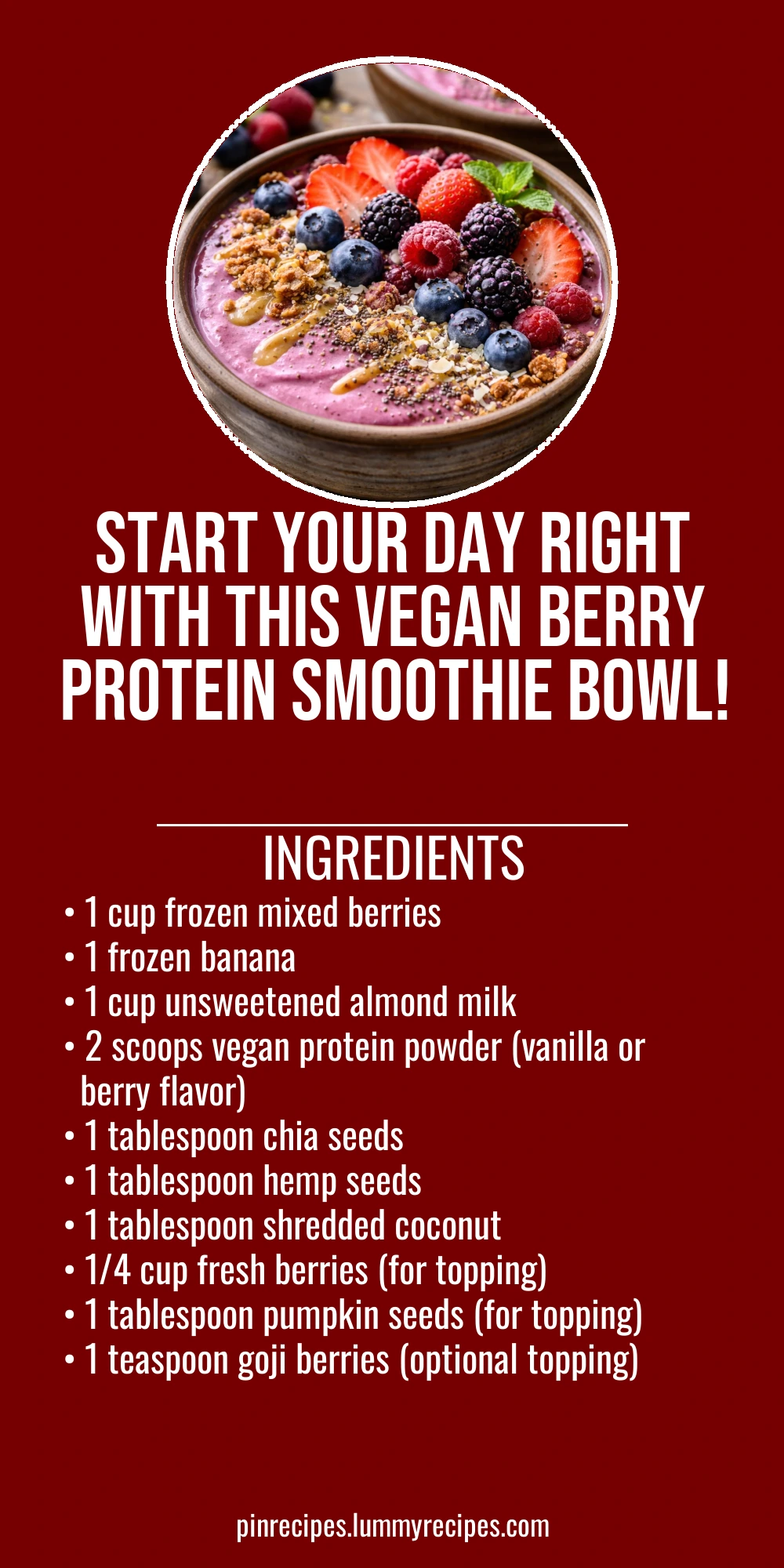
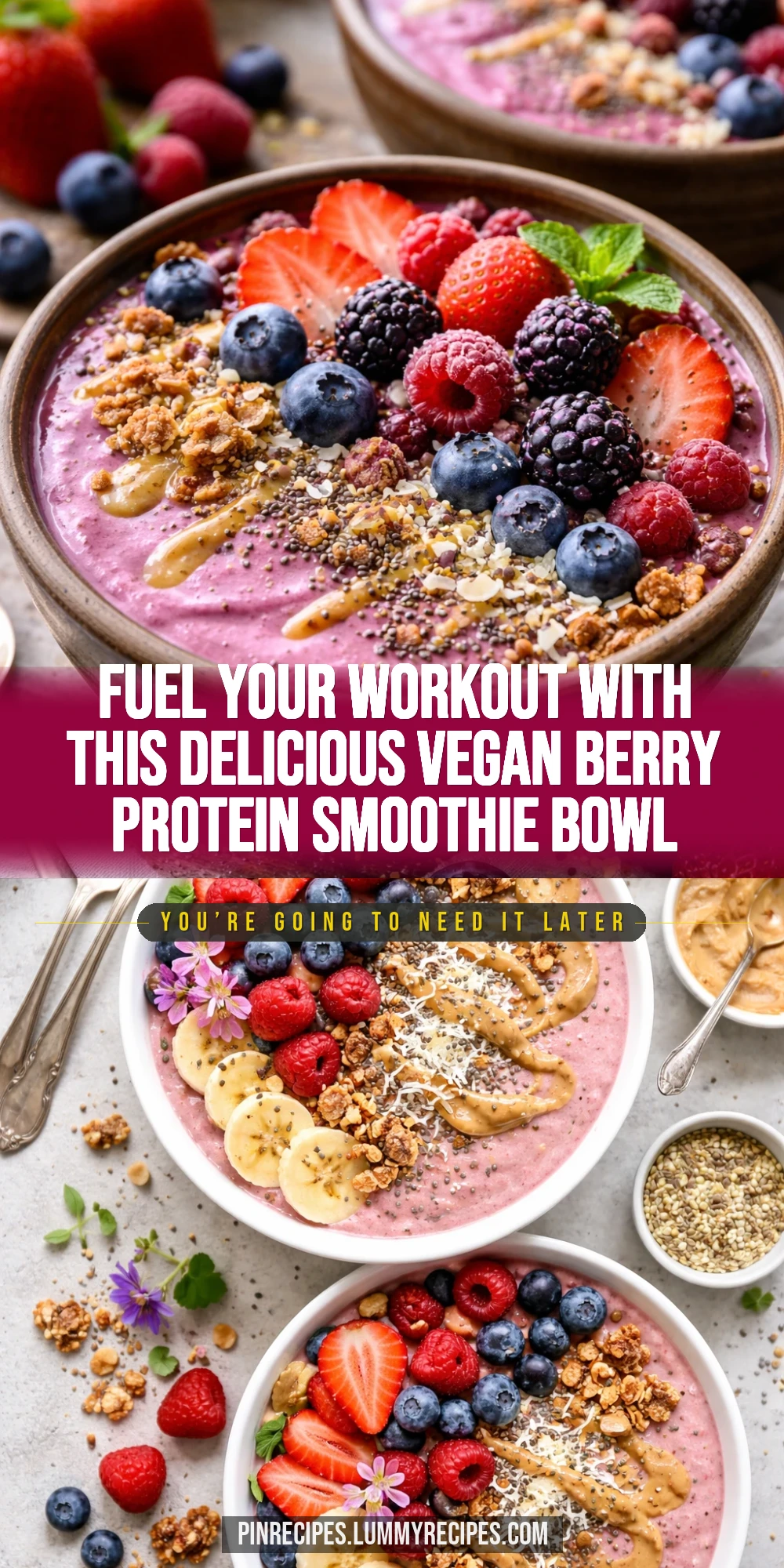
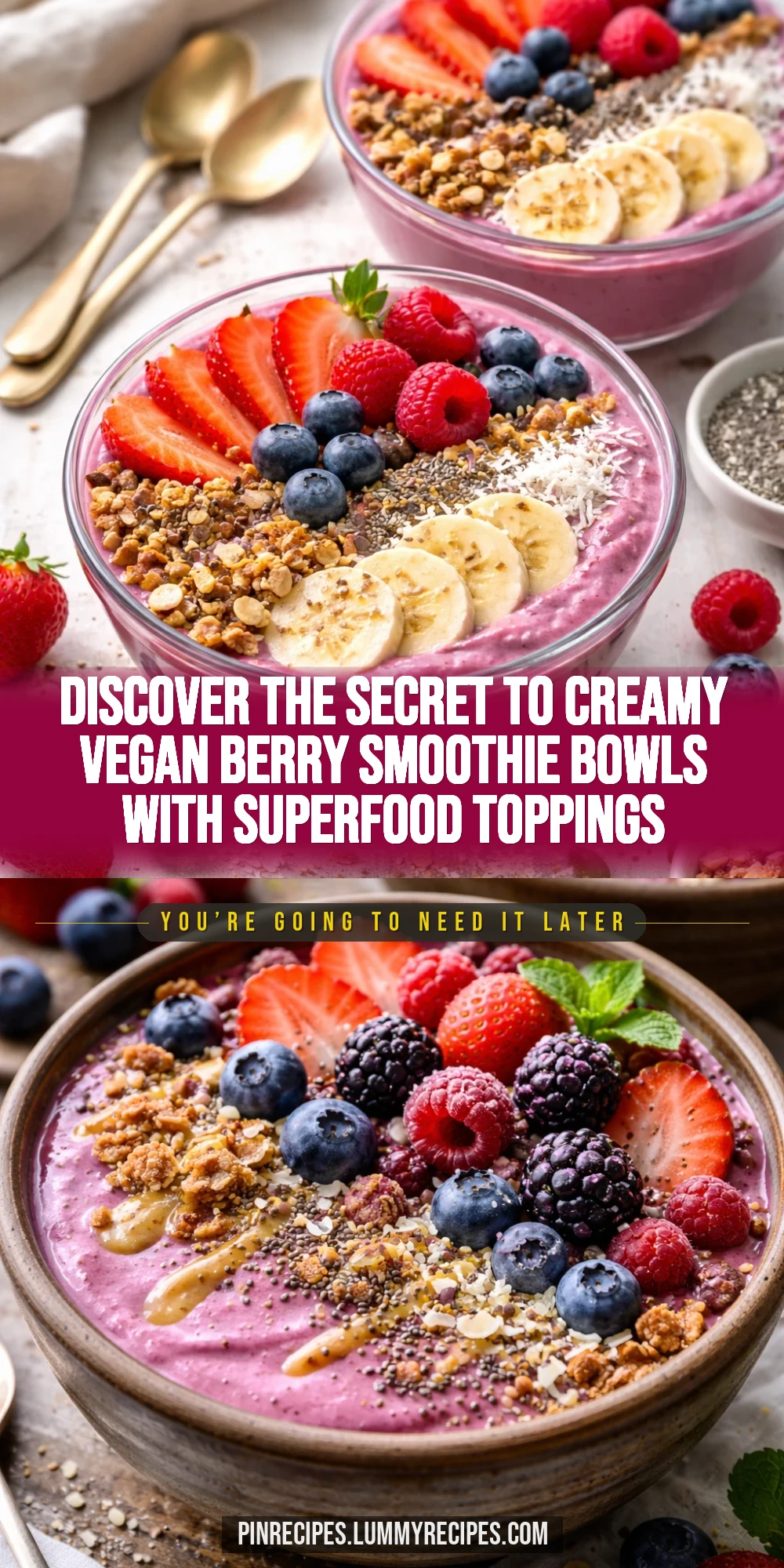
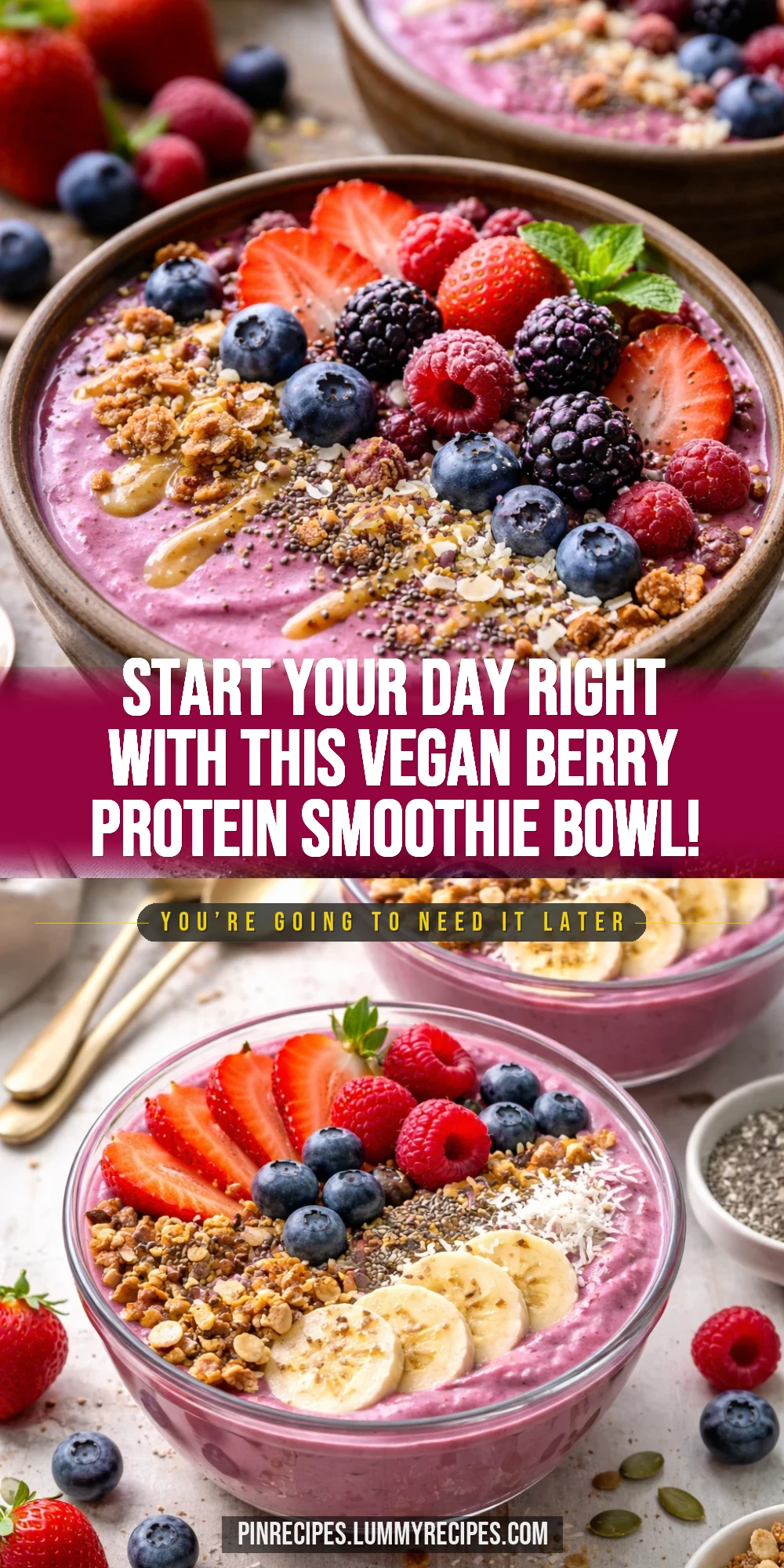
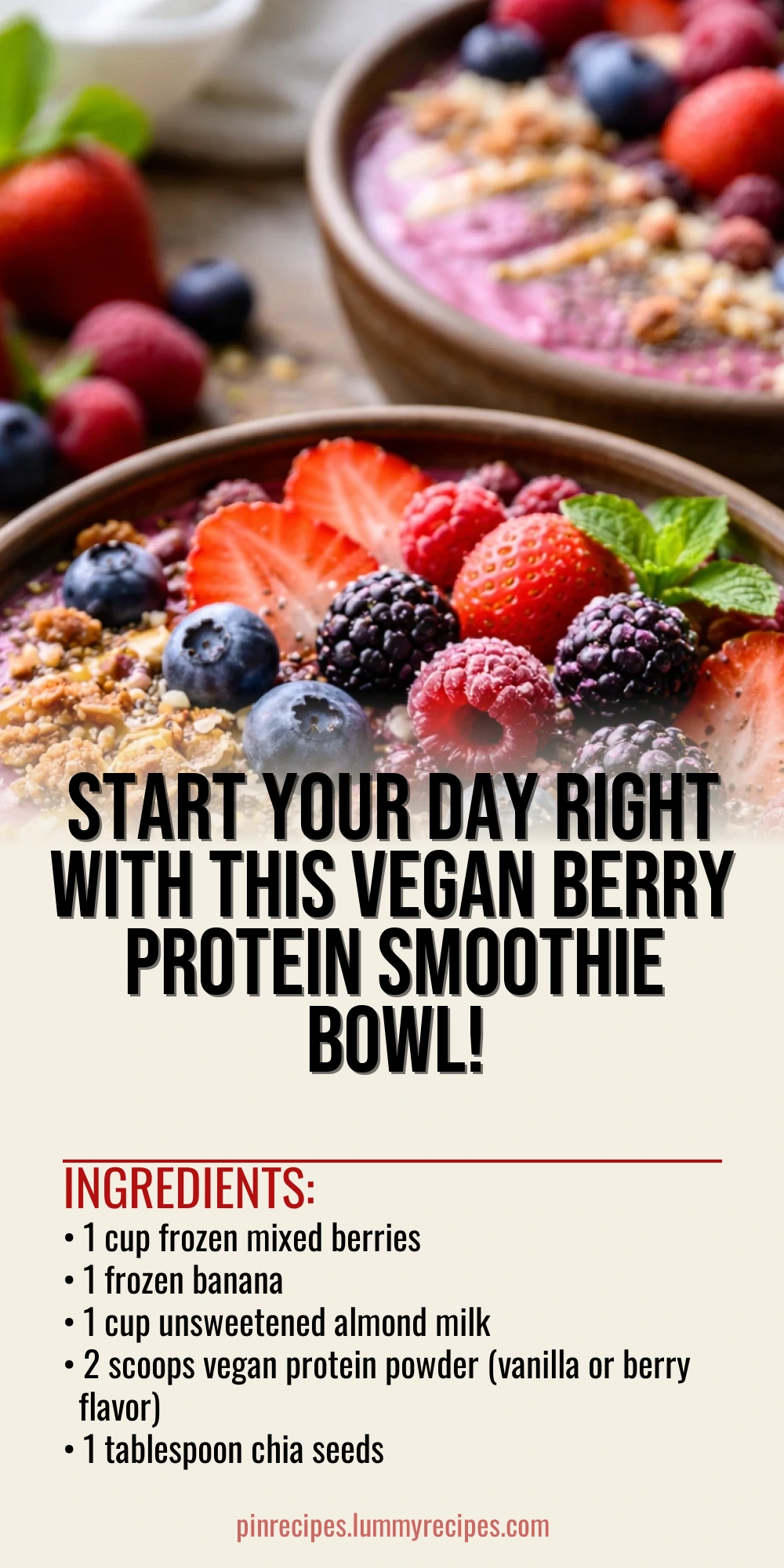
These vibrant vegan berry smoothie bowls pack a protein punch with plant-based protein powder and are topped with nutrient-rich superfoods. A refreshing, energizing breakfast or post-workout treat that feels like a little celebration in a bowl.
Introduction
I first stumbled upon smoothie bowls years ago when I wanted something more exciting than a plain smoothie for breakfast. This vegan berry protein smoothie bowl quickly became a favorite because it’s not only delicious but also packed with nutrients that keep me full and energized. What sets this recipe apart is the combination of frozen berries and banana for natural sweetness and creaminess, plus a scoop of vegan protein powder to give it that extra muscle fuel. I also love topping it with a mix of chia, hemp, and pumpkin seeds for crunch and superfood benefits. It’s bright, colorful, and feels like a special treat even on rushed mornings. Plus, it’s super easy to customize with whatever toppings you have on hand. The trick I learned is to blend the frozen fruit with just enough almond milk to get a thick, spoonable texture—it’s all about balance. You’ll end up with a bowl that’s creamy, fruity, and satisfying, perfect for breakfast or a post-workout boost.
How To Do It
Step 1
Start by adding the frozen mixed berries, frozen banana, and vegan protein powder into your blender. Using frozen fruit is key here because it gives the smoothie bowl that thick, creamy texture you want. If you use fresh fruit, the bowl will be more liquidy and less satisfying to eat with a spoon. Blend on high until the mixture is smooth but thick enough to hold its shape. You might need to stop and scrape down the sides a couple of times to get everything blended evenly.
⏱ Time: 3-5 minutes
✓ Doneness: The mixture should be smooth, thick, and spoonable without any large chunks of fruit.
Step 2
Next, slowly add the almond milk while blending, just enough to help the blades move but not so much that the mixture becomes runny. The goal is a thick consistency that you can eat with a spoon, not drink through a straw. If you add too much liquid, your smoothie bowl will lose that creamy texture. Once blended, taste and adjust sweetness if needed by adding a little maple syrup or agave, but usually the fruit and protein powder are sweet enough.
⏱ Time: 2-3 minutes
✓ Doneness: The smoothie should be thick, creamy, and hold its shape when scooped.
Step 3
Spoon the smoothie mixture into two bowls evenly. This is where the fun begins—adding toppings! Sprinkle chia seeds, hemp seeds, shredded coconut, fresh berries, pumpkin seeds, and goji berries if you like. These toppings add texture, flavor, and a boost of nutrition. Don’t be shy with the toppings; they make the bowl visually appealing and provide a nice contrast to the creamy base.
⏱ Time: 5 minutes
✓ Doneness: Bowls should look colorful and inviting with a variety of toppings evenly distributed.
Step 4
Serve immediately for the best taste and texture. If you let it sit too long, the smoothie bowl can start to melt and lose its thickness. Eating it fresh ensures you get the perfect balance of creamy and crunchy with every bite. If you want to prep ahead, keep the base and toppings separate and assemble right before eating.
⏱ Time: Immediate
✓ Doneness: Smoothie bowl should be thick, cold, and topped beautifully.
Step 5
If you want to add extra protein or creaminess, consider blending in a tablespoon of nut butter or a handful of silken tofu. These ingredients add richness and make the bowl more filling, great for a post-workout meal or a hearty breakfast. Blend these in with the frozen fruit in step one for the best texture.
⏱ Time: Optional, 2 minutes
✓ Doneness: Smoothie remains thick but creamier and richer in flavor.
Step 6
For an antioxidant boost, sprinkle some cacao nibs or a dusting of matcha powder over the toppings. These superfoods complement the berry flavors and add a subtle earthiness. They also add an extra crunch or a delicate powdery finish, enhancing the eating experience.
⏱ Time: Optional, 2 minutes
✓ Doneness: Toppings look vibrant and add visual interest.
Step 7
If you prefer a sweeter smoothie bowl, you can add a splash of pure maple syrup or agave nectar to the blender before blending. I usually skip this since the banana and berries provide enough sweetness, but it’s a nice option if your berries are tart or you want a dessert-like bowl.
⏱ Time: Optional, 1 minute
✓ Doneness: Smoothie tastes balanced and sweet but not overpowering.
Step 8
To make the smoothie bowl extra refreshing, add a few ice cubes to the blender along with the frozen fruit. This helps keep it cold longer and adds a light frosty texture. Just be careful not to add too many ice cubes or it will water down the flavor.
⏱ Time: Optional, 1 minute
✓ Doneness: Smoothie bowl is chilled and slightly frosty.
Step 9
Clean your blender immediately after making the smoothie bowl to prevent any residue from sticking and staining. Rinse with warm water and a little dish soap, then blend with water for a quick clean. This saves time and keeps your blender in great shape for the next use.
⏱ Time: 5 minutes
✓ Doneness: Blender is clean and ready for next use.
Pro Tips
Use frozen fruit to achieve the perfect thick texture.
Frozen fruit provides the cold, dense consistency that makes smoothie bowls spoonable rather than drinkable. Fresh fruit can make the mixture too watery, losing the signature creamy texture.
Add almond milk gradually to control thickness.
Adding too much liquid at once can make the smoothie runny. Pouring it slowly while blending helps maintain a thick texture that's ideal for eating with a spoon.
Top with a variety of seeds and fresh fruit for texture contrast.
The combination of crunchy seeds and soft fresh berries adds complexity and makes the bowl more satisfying. It also boosts nutritional value with fiber and healthy fats.
Blend protein powder in with frozen fruits for even distribution.
Blending protein powder with the frozen fruit ensures it mixes smoothly without clumps, improving texture and flavor throughout the bowl.
Clean your blender immediately after use.
Smoothie ingredients like berries and protein powder can stick and stain if left too long. Quick cleaning prevents buildup and keeps your blender fresh.
Experiment with nut butters for extra creaminess and protein.
Adding a spoonful of almond or peanut butter enhances richness and satiety, making the bowl more filling especially after workouts.
Use ripe bananas for natural sweetness without added sugar.
Ripe bananas contain more sugars which naturally sweeten the smoothie bowl, reducing the need for syrups or sweeteners.
Common Mistakes to Avoid
Adding too much liquid and ending up with a runny smoothie bowl.
Why it happens Many people pour in all their milk at once, thinking it will help blend better, but this dilutes the mixture and ruins the thick texture.
Fix Add almond milk gradually while blending, just enough to get the blender moving. Stop as soon as the mixture is smooth and thick enough to hold a spoon.
Using fresh instead of frozen fruit and getting a watery bowl.
Why it happens Fresh fruit lacks the frozen texture that makes smoothie bowls thick and creamy, so the bowl becomes more like a drink.
Fix Always use frozen berries and banana to maintain the right consistency. If you only have fresh, add ice cubes to help thicken it.
Not blending protein powder well, resulting in gritty texture.
Why it happens Protein powders can clump if not blended thoroughly, especially plant-based ones with a grainier texture.
Fix Blend protein powder with frozen fruit first, scraping down the sides to ensure even mixing and a smooth bowl.
Skipping toppings and missing out on texture and nutrients.
Why it happens Some people eat smoothie bowls like smoothies, but toppings add crunch, flavor, and extra nutrition.
Fix Always add a variety of seeds, nuts, or fresh fruit toppings to enhance the eating experience and boost health benefits.
Preparing smoothie bowls too far in advance and losing texture.
Why it happens Smoothie bowls can melt and separate if left too long before eating, losing their thick texture.
Fix Prepare the base ahead but add toppings and assemble just before serving to keep the texture fresh.
Variations
Tropical Mango Protein Smoothie Bowl
Swap the mixed berries for frozen mango and pineapple chunks for a tropical twist. Use coconut milk instead of almond milk to enhance the island vibe. Top with toasted coconut flakes and sliced kiwi for a refreshing flavor change that’s just as creamy and satisfying.
Note: Tropical fruits are softer and sweeter, so you might need less sweetener. Coconut milk is richer, so reduce liquid slightly to maintain thickness.
Chocolate Peanut Butter Vegan Smoothie Bowl
Add 1 tablespoon of cocoa powder and a spoonful of peanut butter to the original recipe for a rich, dessert-like bowl. This version is perfect for chocolate lovers craving a healthy indulgence. Top with cacao nibs and crushed peanuts for extra texture and flavor.
Note: Cocoa powder can dry out the mixture slightly; add a splash more almond milk if needed to keep it creamy.
Green Protein Smoothie Bowl with Spinach and Avocado
Blend in a handful of fresh spinach and half an avocado for a green, nutrient-dense bowl. The avocado adds creaminess and healthy fats while spinach boosts vitamins. Top with pumpkin seeds and sliced almonds for crunch and extra protein.
Note: Spinach blends smoothly but can alter the color. Avocado thickens the bowl, so reduce frozen banana slightly to balance texture.
Berry and Oat Protein Smoothie Bowl
Add 1/4 cup rolled oats to the blender for extra fiber and a heartier texture. This variation makes the bowl more filling and perfect for a substantial breakfast. Top with sliced banana and a drizzle of maple syrup for sweetness.
Note: Oats absorb liquid, so you may need to add a bit more almond milk to reach the right consistency.
Spiced Pumpkin Protein Smoothie Bowl
Incorporate 1/4 cup pumpkin puree and a pinch of cinnamon and nutmeg for a seasonal flavor. This bowl is creamy, lightly spiced, and perfect for fall mornings. Top with pecans and a sprinkle of pumpkin seeds for crunch.
Note: Pumpkin puree adds moisture, so reduce almond milk slightly to maintain thickness.
Nutrition
Per Serving:
Nutritional values are estimates and may vary based on specific ingredients used.
Storage & Tips
Room Temperature
Smoothie bowls are best eaten immediately and should not be left at room temperature for more than 30 minutes as they will melt and lose their texture.
Refrigerator
Store the smoothie base in an airtight container in the fridge for up to 24 hours. Toppings should be kept separate to avoid sogginess. Reheat is not recommended; serve cold or at room temperature.
Freezer
You can freeze the smoothie base in a sealed container for up to 1 month. Thaw overnight in the fridge and stir well before serving. Add fresh toppings after thawing for best texture.
Reheating
Reheating is not advised as it changes texture and flavor. If needed, let the smoothie bowl sit at room temperature for 10 minutes before eating.
Make Ahead
Prepare the smoothie base a day ahead and store it in the fridge. Keep all toppings in separate containers and assemble just before serving to maintain freshness and texture.
FAQ
Can I use fresh fruit instead of frozen for this smoothie bowl?
Using fresh fruit will make the smoothie bowl thinner and less creamy, more like a drink. To compensate, add ice cubes or freeze the fresh fruit beforehand to achieve the thick, spoonable texture typical of smoothie bowls.
What vegan protein powders work best in this recipe?
Pea protein, rice protein, or blends like pea-rice-hemp work well because they blend smoothly and have a neutral flavor. Avoid gritty powders or those with strong flavors that might overpower the berries.
How can I make this smoothie bowl sweeter without adding sugar?
Use ripe bananas and sweet berries, which naturally sweeten the bowl. You can also add a splash of pure maple syrup or agave nectar if needed, but usually the fruit provides enough sweetness.
Can I prepare the smoothie bowl ahead of time?
You can prepare the smoothie base up to 24 hours in advance and store it in the fridge. Keep toppings separate and add them just before serving to preserve texture and freshness.
What if I don’t have almond milk? Can I use other plant milks?
Yes, oat milk, soy milk, or coconut milk are good substitutes. Just be mindful that coconut milk is richer and may change the flavor and thickness slightly, so adjust the amount accordingly.
How do I get the smoothie bowl thick enough to eat with a spoon?
Use mostly frozen fruit and add liquid sparingly. The key is to blend until smooth but thick enough to hold its shape. Adding too much liquid will make it runny.
Can I add greens like spinach or kale to this smoothie bowl?
Absolutely! Add a handful of fresh spinach or kale when blending. It will change the color but adds nutrients. You might need to adjust the sweetness or liquid to balance flavors.
What toppings work best on smoothie bowls?
Seeds like chia, hemp, and pumpkin, fresh fruit, shredded coconut, nuts, and superfoods like goji berries or cacao nibs add great texture and nutrition. Mix and match based on your preference.
Final Thoughts
I hope you enjoy making and eating this vegan berry protein smoothie bowl as much as I do. It’s a simple way to start your day energized and nourished—don’t forget to share your creations!