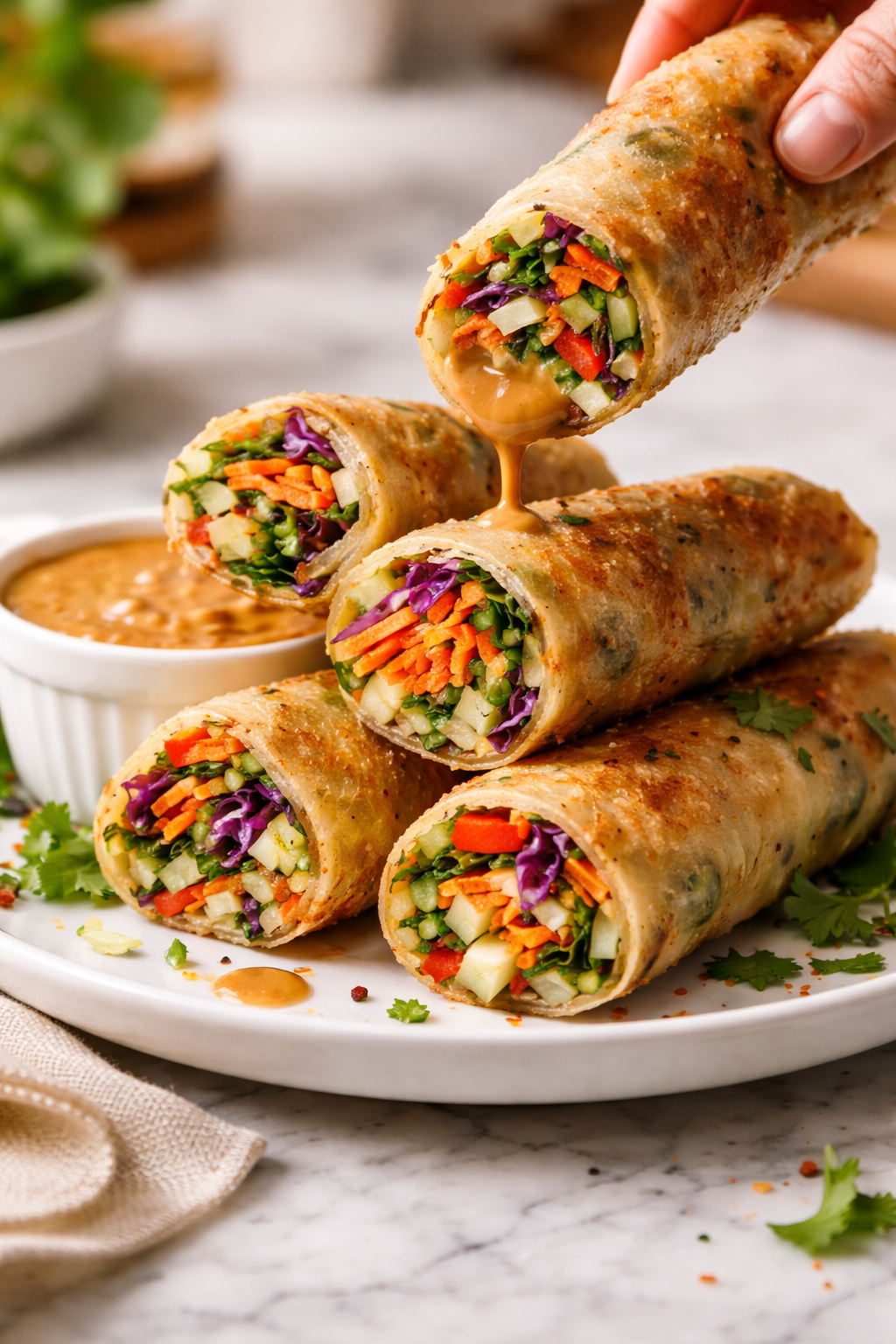
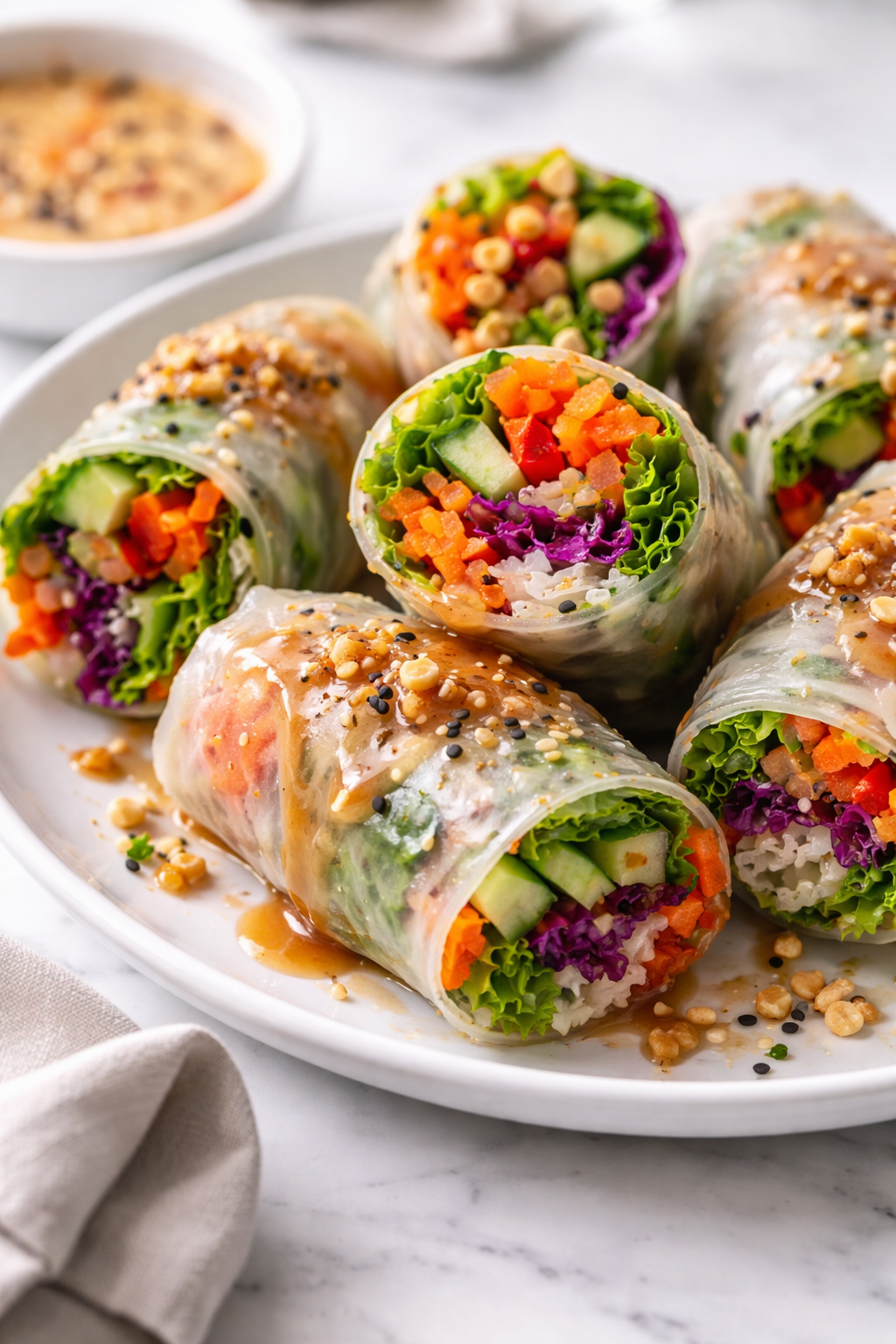
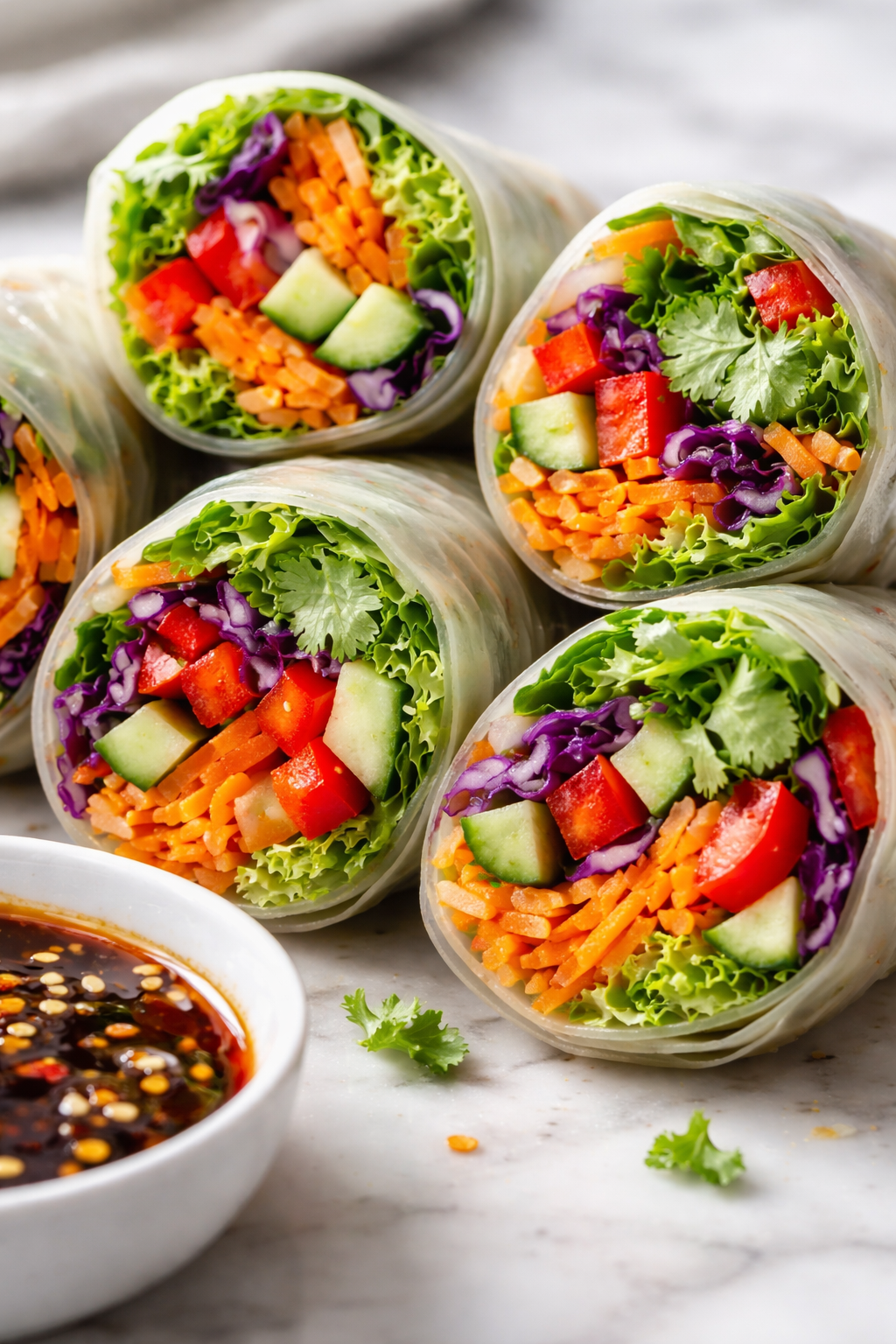
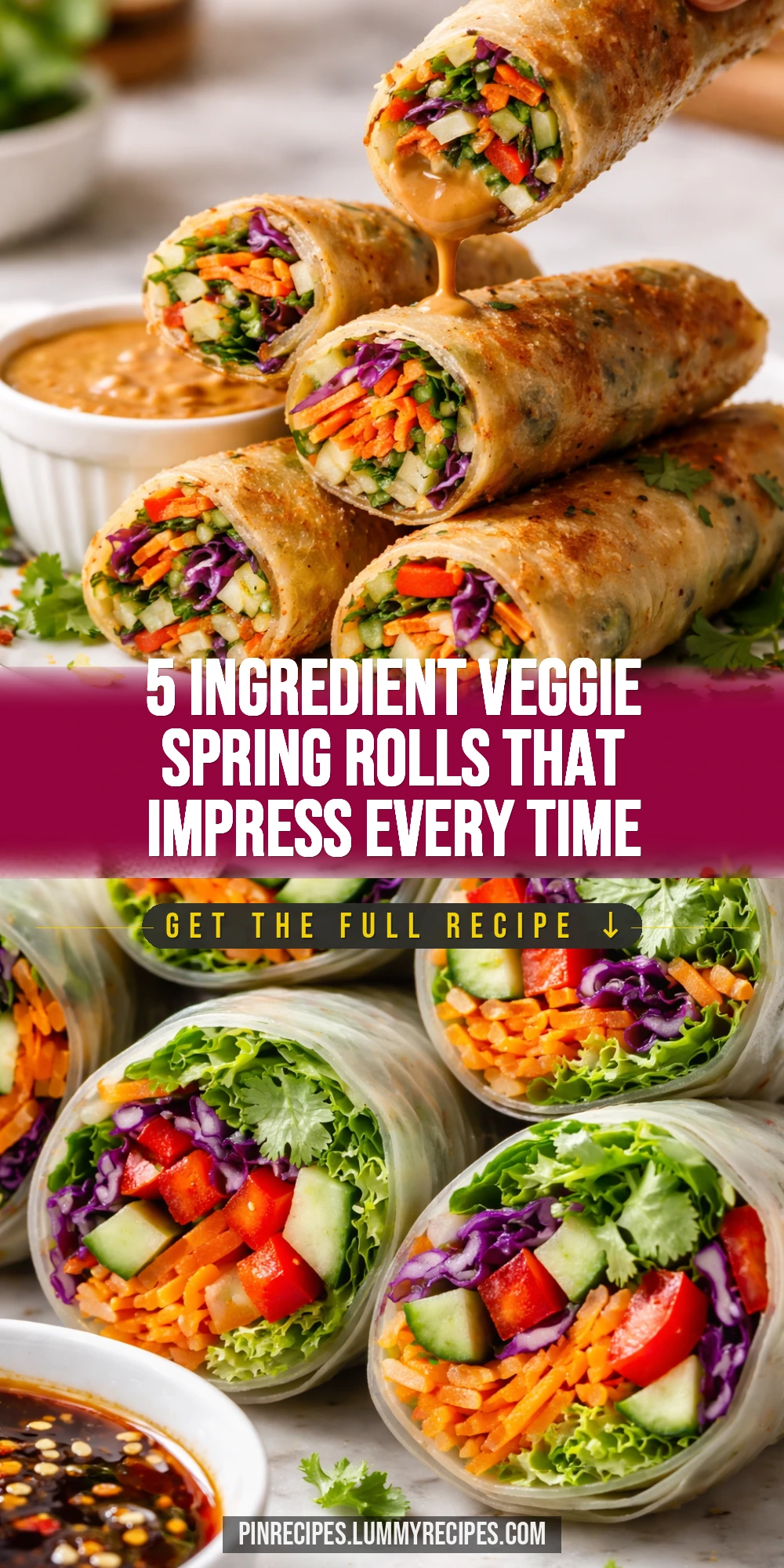
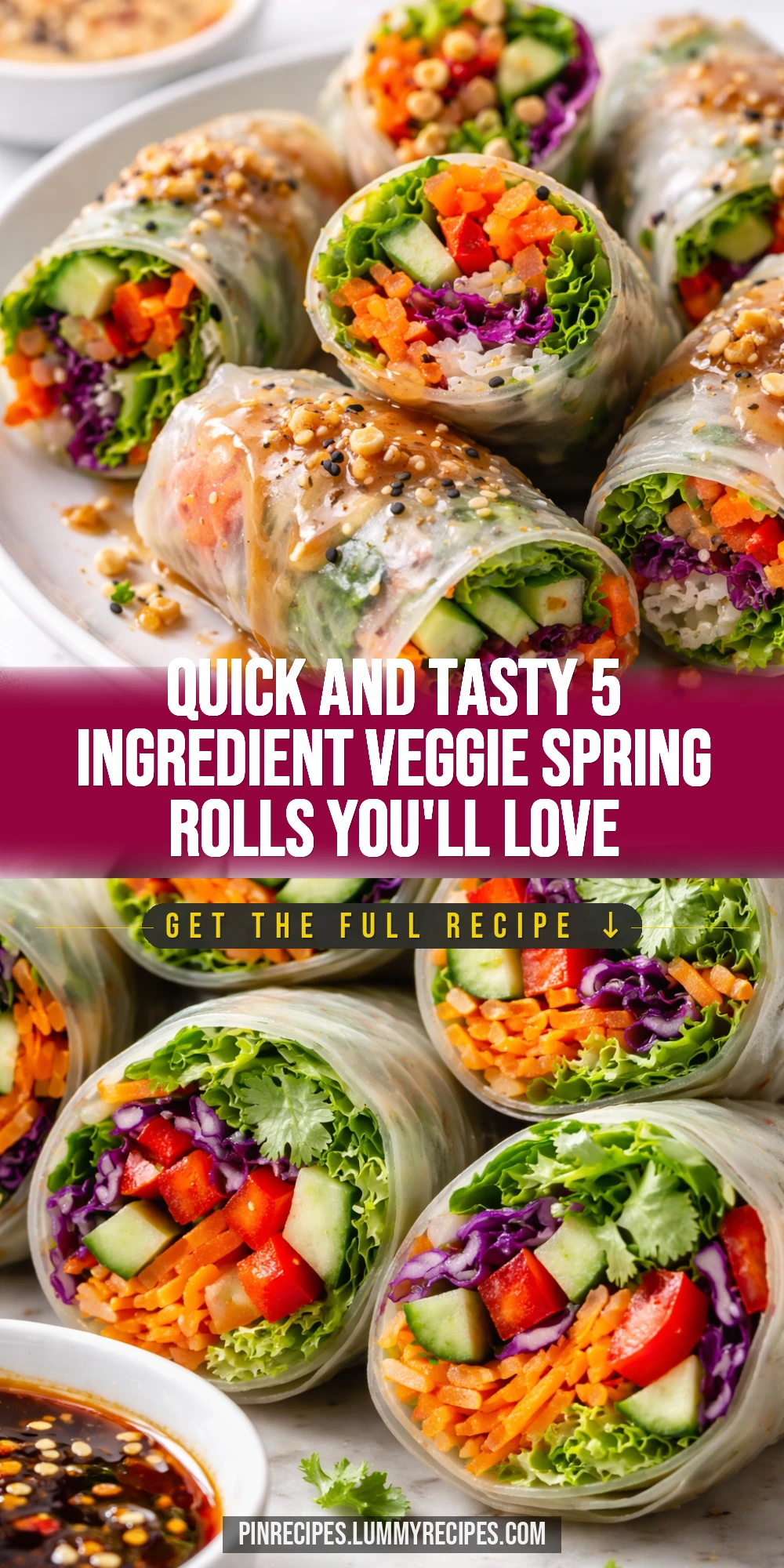
These fresh veggie spring rolls are a breeze to make with just five ingredients. The crisp veggies wrapped in tender rice paper make a light, colorful appetizer perfect for any get-together or potluck.
Introduction
I first made these veggie spring rolls years ago when a friend brought them to a summer picnic. I was hooked immediately — they’re light, fresh, and so easy to whip up with just a handful of ingredients. What I love about this version is how simple it is: only five ingredients, but each one adds a crisp, bright flavor that feels perfect for warm-weather gatherings. I’ve tweaked the technique a bit over time to make rolling them easier, especially soaking the rice paper just right so it’s pliable but not sticky. The result is these pretty little rolls that hold together beautifully and stay fresh for hours. They’re a hit with family and friends, especially when paired with a tangy dipping sauce. If you’re looking for an appetizer that’s fuss-free but still impressive, this is it. Plus, it’s a great way to get some veggies in without feeling heavy or complicated. I think you’ll find these spring rolls become your go-to for potlucks or casual get-togethers — they’re that good and that simple!
What You'll Need
Approximately 12 spring rolls, serves 6
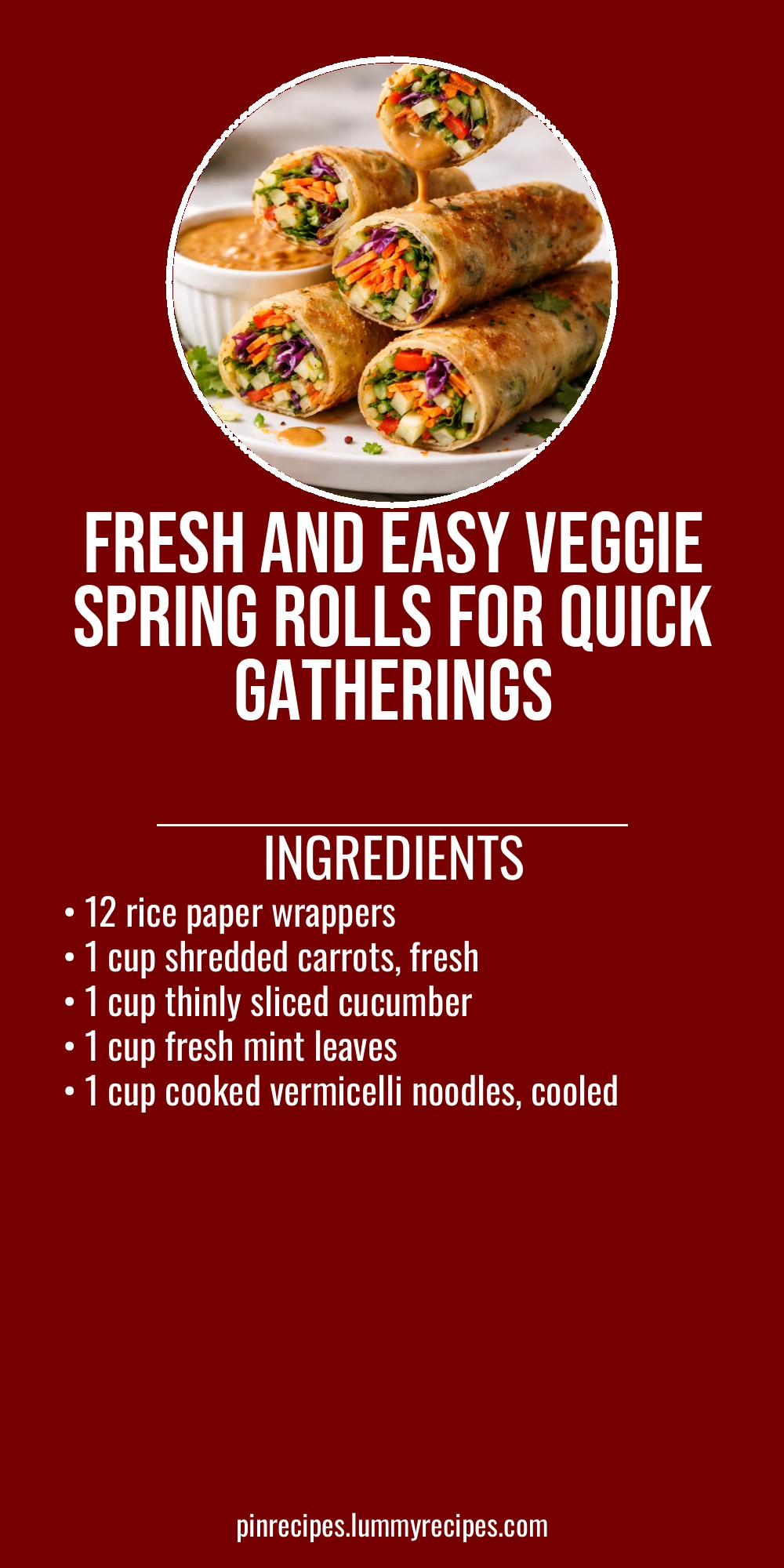
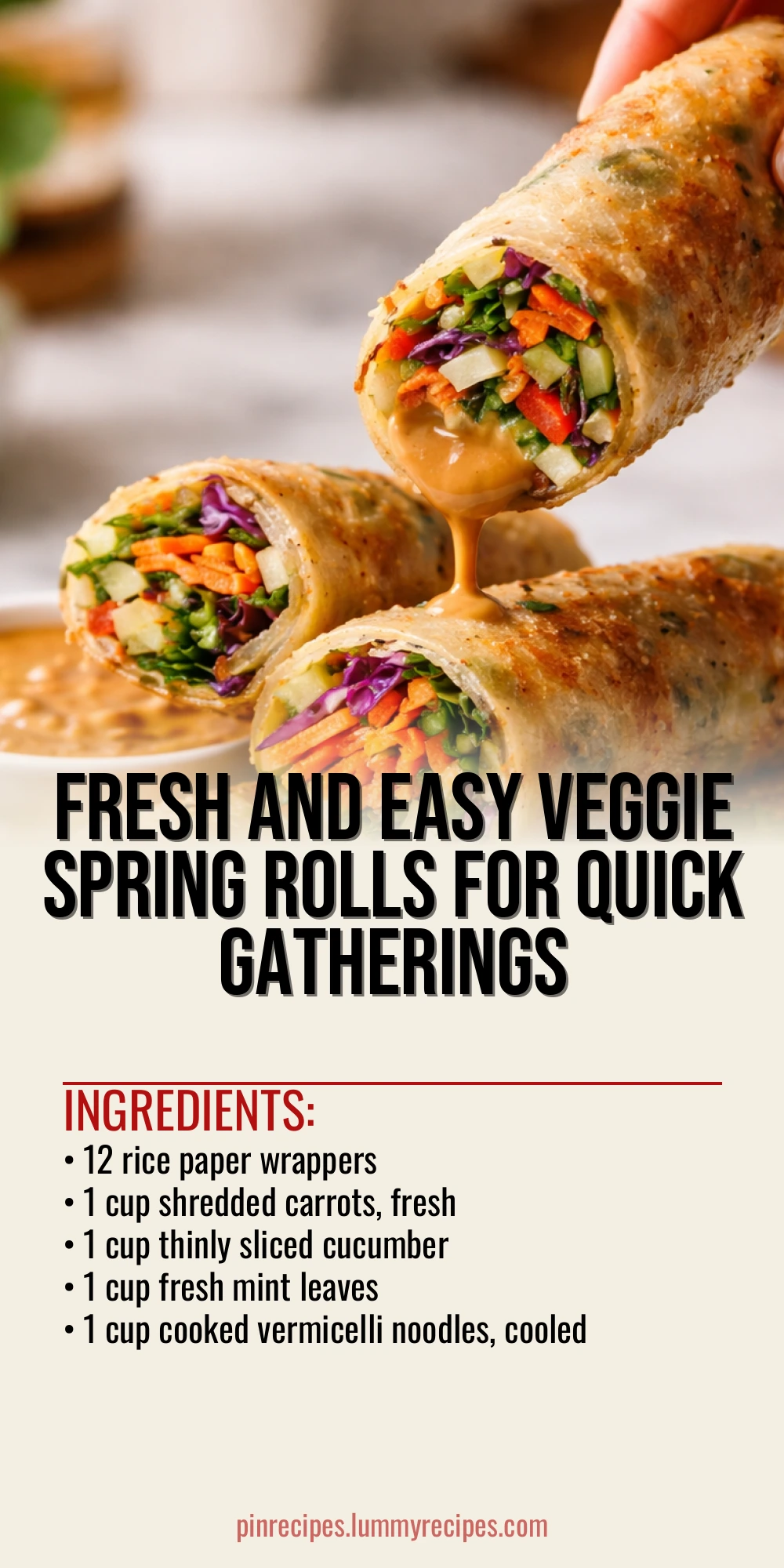
- 12 rice paper wrappers
- 1 cup shredded carrots, fresh
- 1 cup thinly sliced cucumber
- 1 cup fresh mint leaves
- 1 cup cooked vermicelli noodles, cooled
How To Do It
Step 1
Fill a large shallow dish or pie plate with warm water. Dip one rice paper wrapper into the water for about 10 seconds, just until it softens and becomes pliable but not too soggy. This step is crucial because over-soaking can make the wrapper tear easily, while under-soaking leaves it stiff and hard to roll. Lay the softened wrapper flat on a clean surface or damp towel to prevent sticking.
⏱ Time: 2 minutes
✓ Doneness: Wrapper should be soft, flexible, and slightly translucent but not falling apart
Step 2
Place about 2 tablespoons of cooked vermicelli noodles horizontally across the lower third of the wrapper. The noodles add a nice texture and help keep the roll together. Be careful not to overfill, or the roll will be difficult to close and might tear.
⏱ Time: 2 minutes
✓ Doneness: Noodles form a neat bed on the wrapper without spilling over edges
Step 3
Add a small handful of shredded carrots and cucumber slices on top of the noodles, spreading evenly. The fresh veggies bring crunch and vibrant color. Distribute them evenly to balance flavor and texture in every bite.
⏱ Time: 2 minutes
✓ Doneness: Veggies are evenly layered and do not overflow beyond wrapper edges
Step 4
Top the veggies with a few fresh mint leaves. The mint adds a refreshing herbal note that brightens the whole roll. If you want a milder flavor, reduce the mint to just a couple of leaves.
⏱ Time: 1 minute
✓ Doneness: Mint leaves are spread evenly and not clumped in one spot
Step 5
Fold the bottom edge of the rice paper over the filling, then fold in the sides snugly. Roll tightly upwards until sealed. Rolling tightly helps the spring roll hold its shape and prevents it from unwrapping when served.
⏱ Time: 3 minutes
✓ Doneness: Roll is compact and holds together without gaps or tears
Step 6
Repeat this process with the remaining rice papers and filling ingredients. Work quickly to prevent the wrappers from drying out. If they start to dry, just re-soak briefly before rolling.
⏱ Time: 10 minutes
✓ Doneness: All rolls are uniform in size and appearance
Step 7
Arrange the finished spring rolls on a platter lined with a damp towel to keep them moist. Cover loosely with plastic wrap if not serving immediately to prevent drying.
⏱ Time: 3 minutes
✓ Doneness: Rolls remain moist and flexible without cracking
Step 8
Serve the spring rolls with your favorite dipping sauce, such as hoisin-peanut or a simple soy-lime mix. The dipping sauce adds a savory contrast that complements the fresh veggies beautifully.
⏱ Time: 1 minute
✓ Doneness: Sauce is well balanced in flavor and ready for dipping
Step 9
Enjoy immediately for best texture and freshness. If you need to store, place rolls in a single layer with damp paper towels between layers and refrigerate briefly, but best eaten within a few hours.
⏱ Time: N/A
✓ Doneness: Rolls taste fresh and crisp when eaten
Pro Tips
Don’t over-soak the rice paper wrappers.
Over-soaking causes the wrappers to become too fragile and tear easily, making rolling frustrating. Soaking just until pliable ensures they’re flexible but still strong enough to hold the filling securely.
Use a damp towel to rest the softened wrappers on.
Placing the wrappers on a dry surface causes them to stick and tear. A damp towel keeps them moist and smooth, making rolling easier and preventing damage.
Roll tightly but gently to avoid tearing.
A tight roll keeps the filling contained and the spring roll compact, but pressing too hard can rip the delicate wrapper. Gentle, even pressure is key to a neat roll.
Cut veggies thinly and evenly.
Uniform thin slices ensure the rolls are easy to bite into and roll smoothly without lumps or uneven thickness that can cause tearing.
Serve immediately or keep covered with a damp cloth.
Spring rolls dry out quickly when exposed to air. Covering with a damp cloth preserves moisture and keeps them tender and fresh for longer.
Add a flavorful dipping sauce.
The dipping sauce balances the mild flavors and adds a savory or tangy kick, enhancing the overall eating experience and making the rolls more satisfying.
Prepare all fillings before soaking wrappers.
Working quickly once the wrappers are softened prevents drying and tearing. Having everything ready speeds up assembly and keeps the process smooth.
Common Mistakes to Avoid
Soaking rice paper too long or too short
Why it happens Beginners often guess soaking time and either leave wrappers in water too long or not enough, leading to tears or stiffness.
Fix Use warm water and soak wrappers just 8-12 seconds until pliable. Test one wrapper first, then adjust timing slightly as needed.
Overfilling the rolls
Why it happens It’s tempting to pack in lots of filling, but too much stresses the wrapper and causes tearing or bursting.
Fix Use modest amounts of filling, about 2 tbsp noodles and a small handful of veggies per roll. Keep ingredients centered.
Not drying noodles and veggies well
Why it happens Wet ingredients add moisture that weakens the wrapper and makes rolls soggy.
Fix Drain noodles thoroughly and pat veggies dry with paper towels before assembling.
Skipping the folding of sides
Why it happens Some skip folding sides to save time, but this leads to loose rolls that fall apart.
Fix Always fold sides in before rolling tightly from the bottom up for neat, secure rolls.
Leaving rolls uncovered after assembling
Why it happens Rolls dry out quickly when exposed to air, especially the rice paper wrapper.
Fix Place finished rolls on a damp towel and cover loosely with plastic wrap or another damp cloth until serving.
Variations
Add Protein with Cooked Shrimp
Add 12 cooked shrimp peeled and sliced lengthwise inside each roll for a light seafood boost. This keeps the rolls fresh but adds satisfying protein for guests who want more substance.
Note: Place shrimp on top of noodles before adding veggies; no change in rolling technique needed.
Peanut Butter Dipping Sauce
Mix creamy peanut butter with soy sauce, lime juice, and a touch of honey for a rich, nutty dip that pairs perfectly with the fresh rolls. It’s a crowd-pleaser and easy to whip up.
Note: Whisk ingredients until smooth; thin with water if too thick.
Use Basil Instead of Mint
Swap fresh mint leaves for basil for a slightly sweeter, aromatic flavor. This variation offers a different herbal note that pairs well with the crunchy veggies.
Note: Use the same amount of basil leaves as mint; fresh is best.
Add Avocado Slices
Include thin slices of ripe avocado inside the rolls for creaminess and extra richness. This adds a smooth texture contrast and healthy fats to the fresh veggies.
Note: Add avocado last to avoid browning; roll gently to prevent mashing.
Spicy Kick with Sriracha Mayo
Serve the spring rolls with a spicy sriracha mayo dipping sauce for a creamy, fiery twist. It adds depth and a little heat that livens up the fresh flavors.
Note: Mix mayonnaise with sriracha to taste; keep refrigerated until serving.
Nutrition
Per Serving:
Nutritional values are estimates and may vary based on specific ingredients used.
Storage & Tips
Room Temperature
Spring rolls should be served fresh and kept covered with a damp cloth if left at room temperature. They can safely sit out for about 1-2 hours during gatherings but will begin to dry out after that.
Refrigerator
Store leftover spring rolls in an airtight container lined with damp paper towels for up to 1 day. They may lose some pliability and become slightly chewy when chilled, so it’s best to enjoy them cold or at room temperature rather than reheating.
Freezer
Freezing is not recommended as rice paper wrappers become brittle and soggy when thawed. For best results, prepare fresh when needed.
Reheating
These spring rolls are best eaten fresh or chilled. If you prefer them warmer, briefly steam them for 1-2 minutes to soften the wrapper without drying out the filling. Avoid microwaving as it can make the wrapper tough.
Make Ahead
Prepare and slice all vegetables and cook vermicelli noodles 1-2 days ahead. Store fillings separately in airtight containers in the fridge. Soak and roll the rice paper wrappers just before serving to keep them fresh and tender.
FAQ
Can I make these spring rolls ahead of time?
You can prep the veggies and noodles a day or two in advance, but it’s best to soak and roll the rice paper wrappers right before serving. Prepared rolls tend to dry out or get soggy if stored too long, so assembling last minute keeps them fresh and tender.
What can I use if I can’t find rice paper wrappers?
Rice paper wrappers are essential for the classic texture and look. If unavailable, you might try very thin lettuce leaves for a low-carb option, but the flavor and texture will differ significantly from traditional spring rolls.
How do I prevent the rolls from falling apart?
Make sure to soak the wrappers just enough to soften, not too long. Also, fold in the sides snugly before rolling tightly from the bottom up. Using the right amount of filling helps prevent tearing or bursting.
Can I add protein to these rolls?
Absolutely! Cooked shrimp, tofu strips, or shredded chicken can be added for extra protein. Just place them on top of the noodles before adding veggies and roll as usual.
What dipping sauce pairs best with these spring rolls?
A simple hoisin-peanut sauce or a mix of soy sauce, lime juice, and a touch of honey works wonderfully. You can also try spicy sriracha mayo for a creamy kick.
How long do I soak the rice paper wrappers?
Usually about 8-12 seconds in warm water is enough. The wrapper should be soft and pliable but not overly soggy. If you soak too long, they may tear when rolling.
Can I make these gluten-free?
Yes! Rice paper wrappers and vermicelli noodles are typically gluten-free, but always check the packaging to be sure. Use gluten-free soy sauce or tamari for dipping sauces.
What vegetables work best in these spring rolls?
Crunchy veggies like shredded carrots, cucumber, bell peppers, and fresh herbs like mint or basil work best. They add texture and brightness without making the rolls soggy.
Final Thoughts
Give these easy veggie spring rolls a try at your next gathering — they’re fresh, simple, and always a crowd-pleaser. I’d love to hear how they turn out for you!