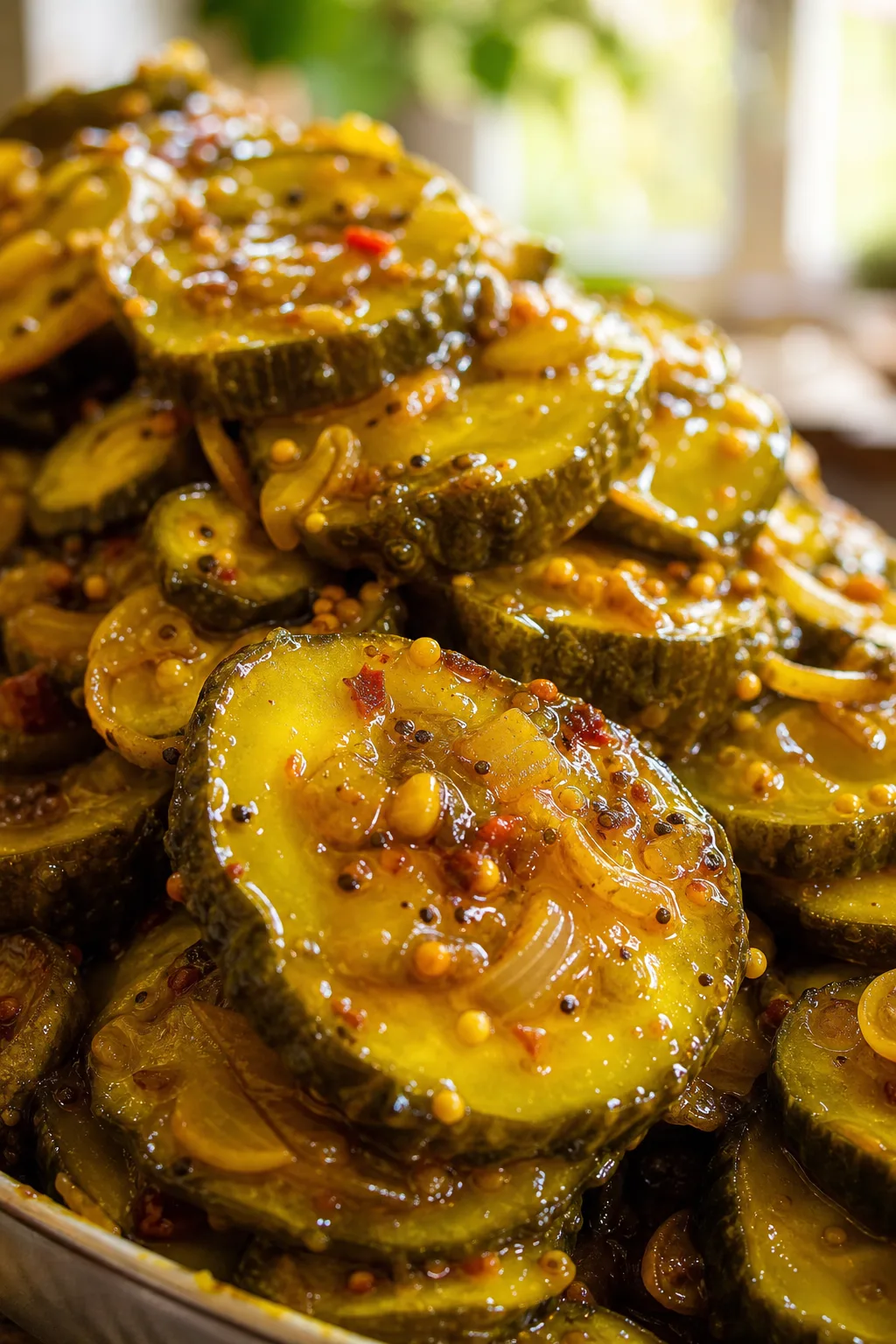
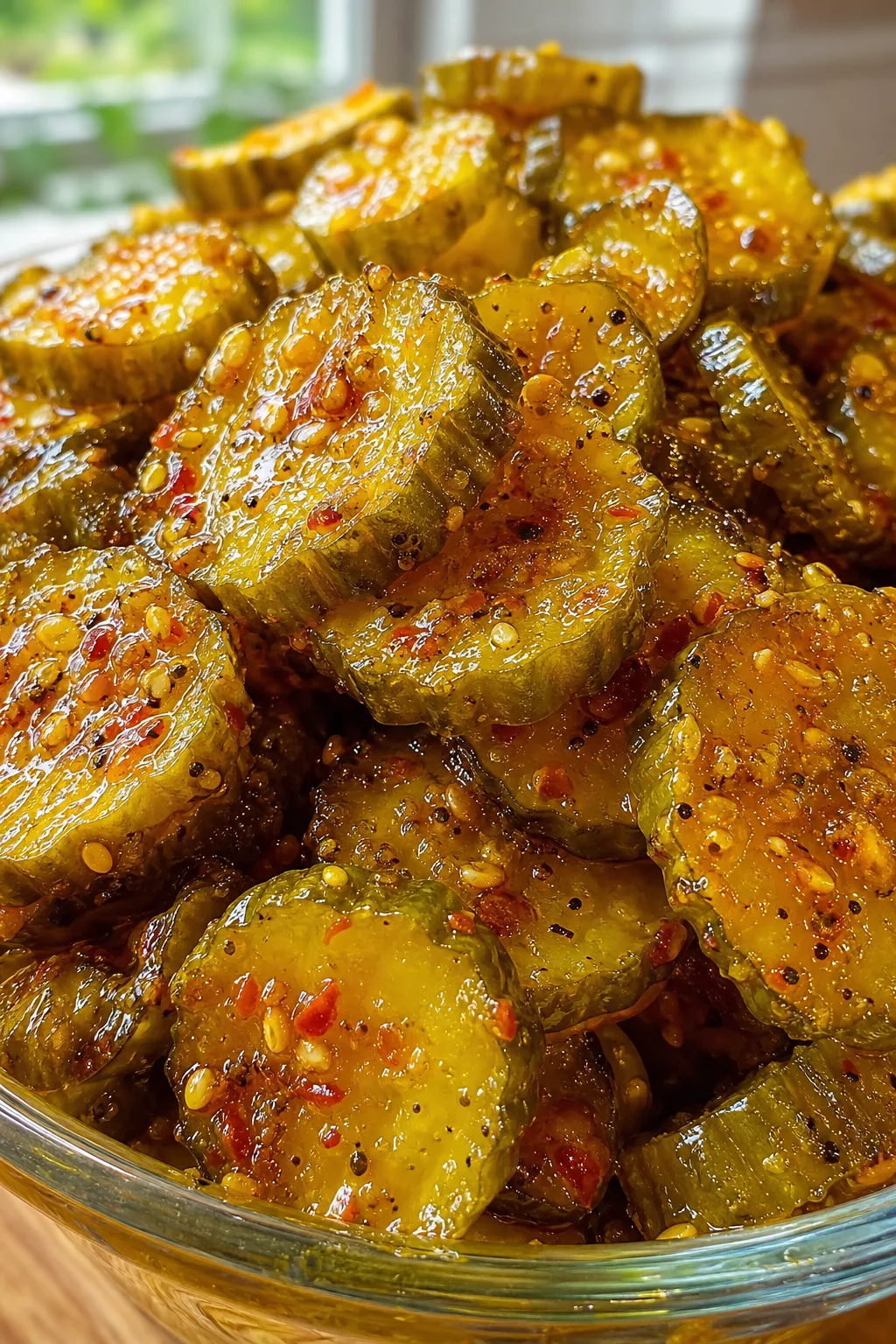
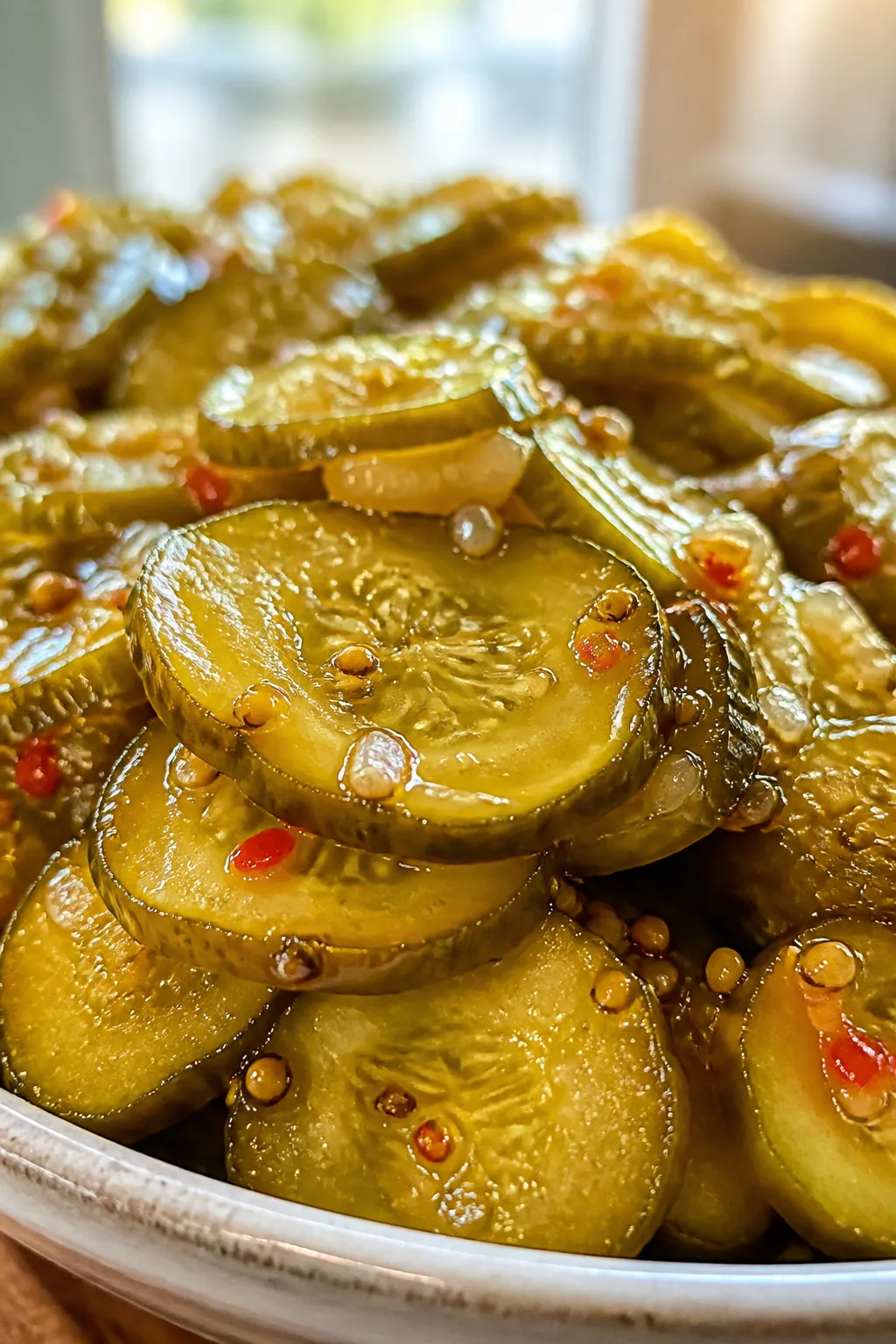
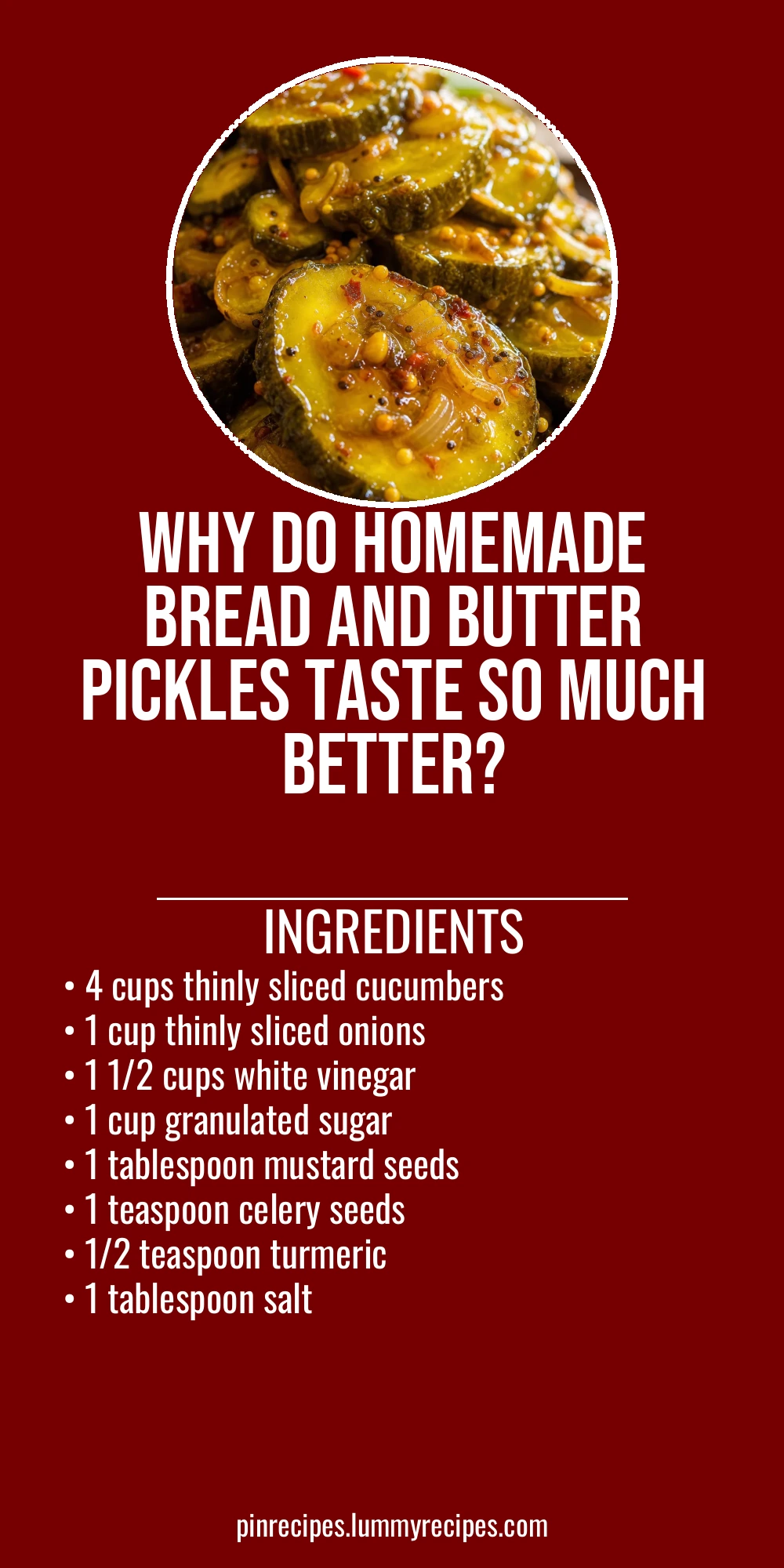
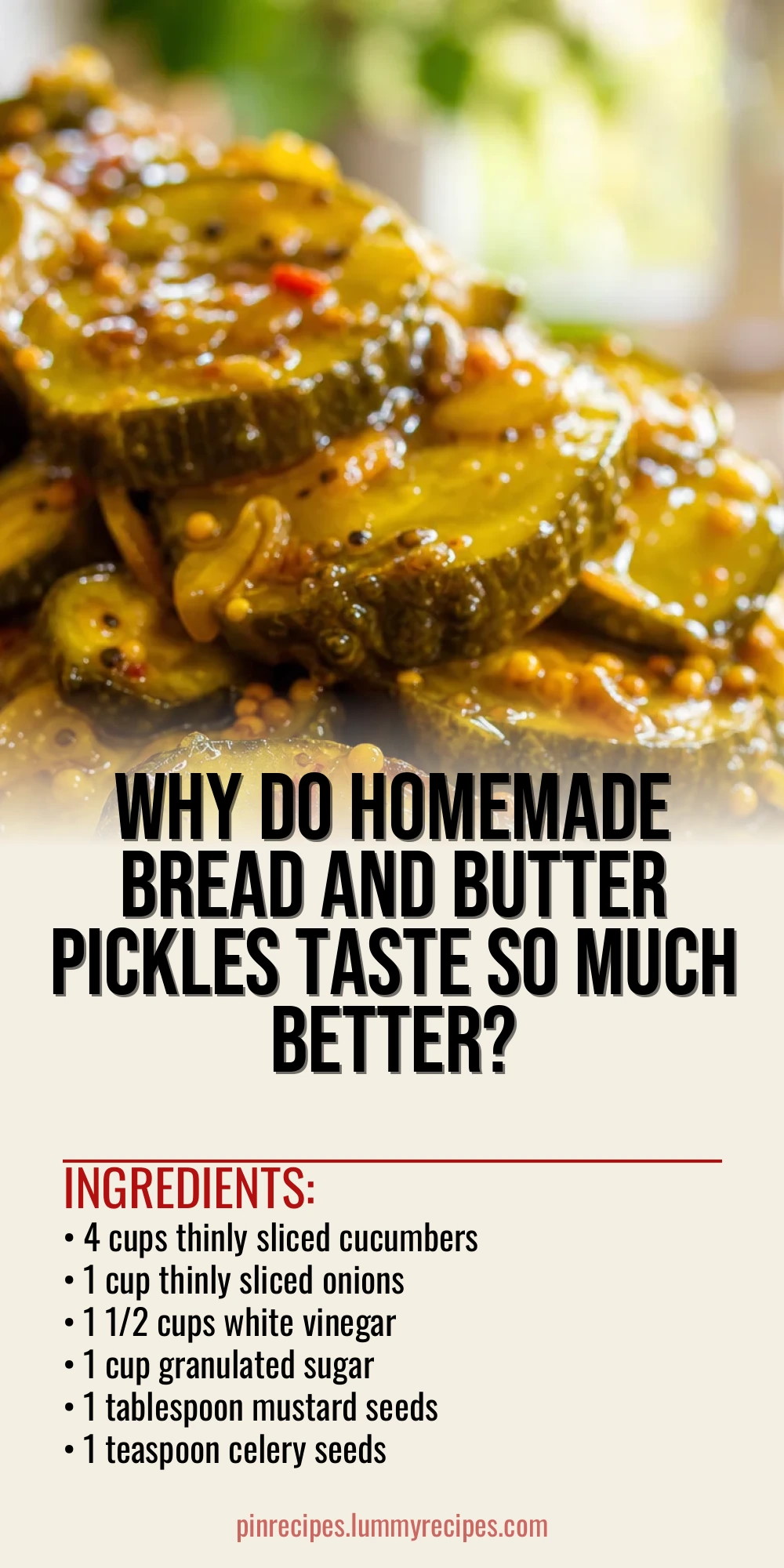
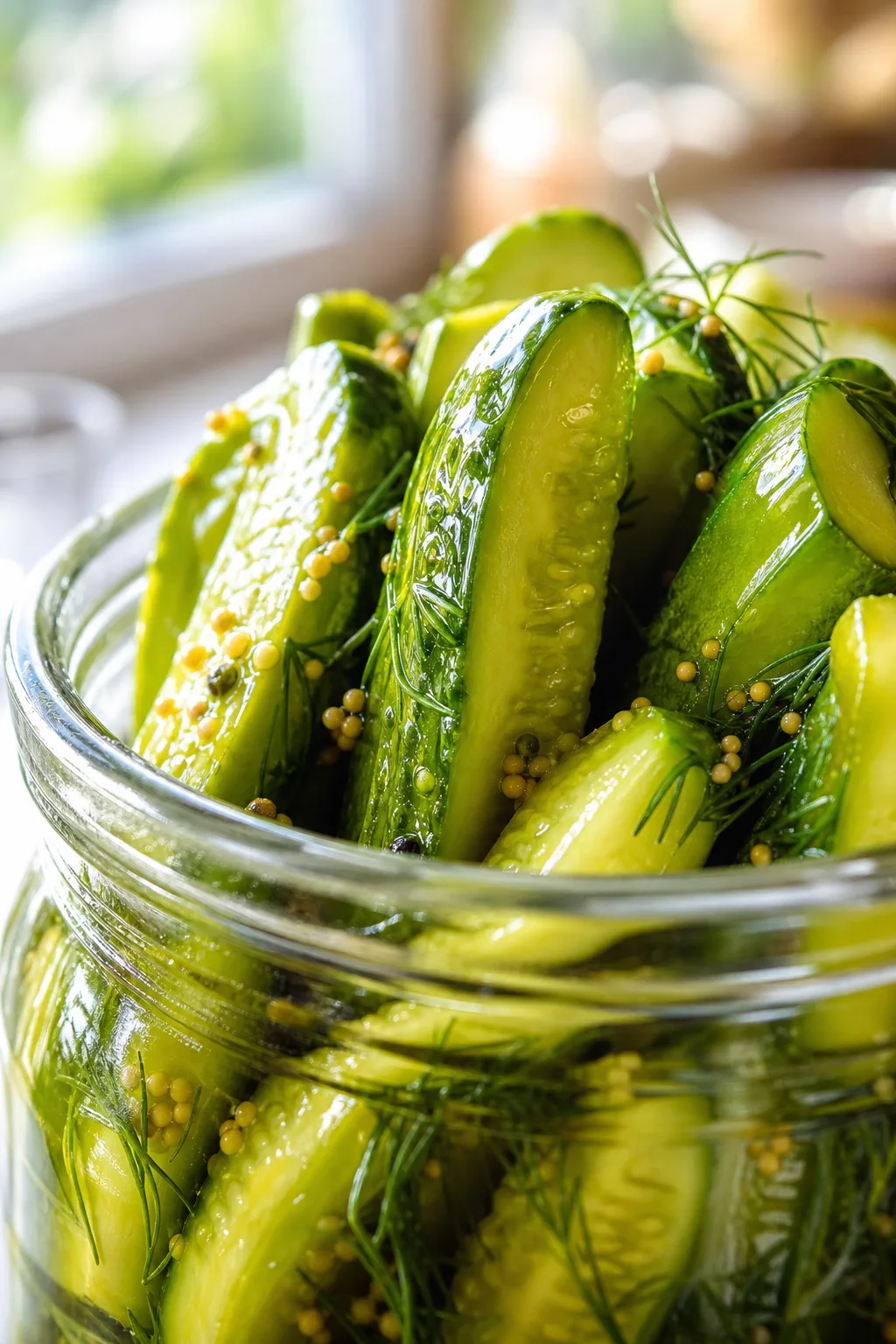
These bread and butter pickles are my go-to for that perfect balance of sweet and tangy. The secret? Slow simmering the brine with mustard seeds and onions for extra flavor. Great for sandwiches or snacking anytime!
Introduction
I’ve always loved the nostalgic taste of bread and butter pickles—sweet, tangy, and packed with just the right crunch. I first made this recipe when I wanted a homemade version that reminded me of my grandma’s jar from childhood. What sets this apart is the gentle simmering of the brine with mustard seeds and turmeric, which gives the pickles their signature golden color and depth of flavor. I also slice the cucumbers and onions thin to ensure every bite is perfectly balanced. The result is a batch of pickles that are crisp yet tender, with a perfect blend of sweetness and acidity. These pickles add a delightful zing to sandwiches, burgers, or just as a snack on their own. I love making a big jar to keep in the fridge—it’s a simple recipe but one that always impresses family and friends. If you’ve tried pickling before and found it intimidating, this recipe is a great place to start. It’s straightforward, forgiving, and yields delicious results every time. Plus, the aroma while simmering the brine is just heavenly!
What You'll Need
Approximately 4 cups, 4 servings
- 4 cups thinly sliced cucumbers
- 1 cup thinly sliced onions
- 1 1/2 cups white vinegar
- 1 cup granulated sugar
- 1 tablespoon mustard seeds
- 1 teaspoon celery seeds
- 1/2 teaspoon turmeric
- 1 tablespoon salt
How To Do It
Step 1
Start by washing and thinly slicing 4 cups of cucumbers and 1 cup of onions. The thin slices ensure the pickles soak up the brine flavor evenly and stay crisp. Avoid thick slices as they take longer to pickle and may become soggy. Place the sliced cucumbers and onions in a large bowl and sprinkle with 1 tablespoon of salt. Toss well and let sit for 1 hour to draw out excess moisture, which helps the pickles maintain their crunch during pickling.
⏱ Time: 60
✓ Doneness: The cucumbers and onions will release water and appear slightly wilted but still firm to the touch.
Step 2
While the cucumbers and onions are resting, prepare the brine by combining 1 1/2 cups white vinegar, 1 cup granulated sugar, 1 tablespoon mustard seeds, 1 teaspoon celery seeds, and 1/2 teaspoon turmeric in a saucepan. Bring the mixture to a gentle boil over medium heat, stirring occasionally to dissolve the sugar. The turmeric adds that classic golden hue and subtle earthiness. Simmer for 5 minutes to allow the spices to infuse fully.
⏱ Time: 10
✓ Doneness: The sugar is fully dissolved, and the brine has a bright golden color with aromatic spice notes.
Step 3
Drain the salted cucumbers and onions well, pressing gently to remove extra water but don’t squeeze too hard or they’ll get mushy. Transfer them to a clean heatproof bowl or jar. Pour the hot brine over the vegetables immediately to start the pickling process. The hot liquid helps soften the cucumbers slightly while preserving their crunch and infuses the flavors quickly.
⏱ Time: 5
✓ Doneness: The cucumbers and onions glisten with the warm brine and start to change color slightly.
Step 4
Let the pickles cool to room temperature uncovered, then cover and refrigerate for at least 24 hours before serving. This resting time allows the flavors to meld and the pickles to develop their signature sweet and tangy taste. While you can eat them sooner, the flavor deepens and the texture improves overnight.
⏱ Time: 1440
✓ Doneness: Pickles have a vibrant golden color and a balanced sweet-tart aroma.
Step 5
Before serving, give the pickles a gentle stir to mix the brine and spices evenly. Taste and adjust seasoning if desired—sometimes a pinch more sugar or vinegar can brighten the flavor. These pickles keep well in the fridge for up to 2 weeks, making them perfect for meal prep or adding a quick pop of flavor to dishes.
⏱ Time: 5
✓ Doneness: The pickles taste bright, tangy, and slightly sweet with a satisfying crunch.
Step 6
For best results, use fresh cucumbers that are firm and unblemished. Pickling cucumbers or Kirby cucumbers work well. Avoid large slicing cucumbers as they have more seeds and softer flesh which can affect texture. The freshness of the cucumbers plays a big role in the final crispness of your pickles.
⏱ Time: 0
✓ Doneness: Firm cucumbers yield crisp pickles with a clean flavor.
Step 7
If you want to make a larger batch, simply double the ingredients but keep the ratios the same. Use a large non-reactive pot for simmering the brine and sterilized jars for storing. Always ensure the pickles are fully submerged in the brine to prevent spoilage and maintain texture.
⏱ Time: 0
✓ Doneness: Pickles remain fully covered by brine with no exposed pieces.
Step 8
To add a little extra zing, consider tossing in a few slices of fresh jalapeño or a pinch of red pepper flakes to the jar before pouring in the brine. This adds a subtle heat that balances nicely with the sweetness. Adjust the amount based on your spice preference.
⏱ Time: 0
✓ Doneness: The pickles have a mild spicy aroma complementing the sweet and tangy notes.
Step 9
When serving, these bread and butter pickles are fantastic on sandwiches, burgers, or alongside cold cuts and cheese plates. They also make a tasty addition to potato salad or deviled eggs for a little crunch and flavor contrast. Store leftovers in the fridge and enjoy within two weeks for best quality.
⏱ Time: 0
✓ Doneness: Pickles remain crisp and flavorful after refrigeration.
Pro Tips
Always salt the cucumbers and onions and let them sit before pickling.
Salting draws out excess water from the cucumbers and onions, which helps keep the pickles crisp after pickling. Without this step, the vegetables can become soggy and lose their crunch. The salt also begins flavor penetration early, improving overall taste.
Simmer the brine to fully dissolve sugar and infuse spices.
Heating the brine ensures the sugar dissolves completely and the spices release their flavors, creating a well-rounded taste. Skipping this step can result in grainy sugar and less flavorful pickles. The simmer also slightly thickens the brine for better coating.
Use thin slices of cucumbers and onions for even pickling.
Thin slices increase the surface area exposed to the brine, allowing faster and more uniform flavor absorption. Thick slices take longer to pickle and may remain bland inside, or become mushy if over-pickled. Thin slices also yield a more delicate texture.
Cool the pickles to room temperature before refrigerating.
Allowing the pickles to cool prevents condensation inside the jar, which can dilute the brine and affect texture. Cooling also helps the pickles settle and flavors meld evenly. Placing hot pickles directly in the fridge risks uneven cooling and sogginess.
Store pickles fully submerged in brine to avoid spoilage.
Exposure to air can cause mold or fermentation. Keeping all slices submerged in the acidic brine preserves freshness and prevents spoilage. Use a clean utensil to press pickles down if needed, and ensure your jar or container seals well.
Adjust sugar and vinegar levels to suit your taste.
Pickling is flexible; some prefer sweeter or tangier pickles. Experimenting with sugar and vinegar ratios lets you customize flavor while maintaining balance. However, keep acidity sufficient for preservation and safety.
Use non-reactive cookware and containers for pickling.
Metal pots or containers can react with vinegar and spices, altering flavor and color, or causing off-tastes. Stainless steel, enamel, or glass vessels preserve the pure pickle taste and ensure safety.
Common Mistakes to Avoid
Skipping the salting step
Why it happens Many cooks want to speed up pickling and skip salting, thinking it’s unnecessary, but this leads to soggy pickles.
Fix Always salt cucumbers and onions and let them sit for at least an hour. This draws out moisture, preserving crunch and improving flavor absorption.
Using the wrong type of vinegar
Why it happens Some use flavored or low-acidity vinegar, which can affect taste and safety.
Fix Use white distilled vinegar with 5% acidity to ensure proper preservation and the classic pickle tang.
Not dissolving sugar fully in brine
Why it happens Rushing the brine preparation can leave grainy sugar and uneven flavor.
Fix Simmer the brine until sugar dissolves completely and spices infuse, stirring regularly.
Packing pickles too tightly in jar
Why it happens Overpacking leaves little room for brine circulation, causing uneven pickling.
Fix Leave some space and press gently to submerge all slices in brine for even flavor.
Eating pickles too soon
Why it happens Impatience leads to eating before flavors develop fully.
Fix Refrigerate pickles for at least 24 hours, preferably longer, to allow flavors to meld and texture to improve.
Variations
Spicy Bread and Butter Pickles
Add thin slices of jalapeño or red pepper flakes to the brine for a spicy kick. This variation balances sweet, tangy, and heat for a more complex flavor profile. Great for those who like a little heat with their pickles.
Note: Be careful with the amount of spice added; too much can overpower the sweetness and make the pickles too hot.
Dill Bread and Butter Pickles
Incorporate fresh dill sprigs into the jar along with the standard spices. This adds a fresh herbal note that complements the sweetness and acidity, giving a slightly different but equally delicious flavor.
Note: Use fresh dill just before pouring in the brine to preserve its bright flavor.
Garlic Bread and Butter Pickles
Add a few crushed garlic cloves to the brine for a subtle garlicky aroma and taste. This variation pairs well with sandwiches and burgers for added depth.
Note: Use fresh garlic and avoid overdoing it to prevent overpowering the other flavors.
Low-Sugar Bread and Butter Pickles
Reduce the sugar amount by half for a less sweet, more tang-forward pickle. This version is great for those watching sugar intake but still wanting that classic pickle flavor.
Note: Lower sugar may slightly alter texture and preservation time; consume sooner.
Quick Refrigerator Bread and Butter Pickles
Skip the salting step and use thinly sliced cucumbers with a hot brine poured over immediately. These pickles are ready in a few hours but have a milder flavor and softer texture.
Note: Best eaten within a week and stored in the fridge only.
Nutrition
Per Serving:
Nutritional values are estimates and may vary based on specific ingredients used.
Storage & Tips
Room Temperature
Bread and butter pickles should not be stored at room temperature once prepared, as they require refrigeration to maintain safety and texture. Keep the jar covered and refrigerated promptly after preparation.
Refrigerator
Store pickles in an airtight glass jar in the refrigerator for up to 2 weeks. Flavor and crunch remain best in the first week. The pickles may soften slightly over time but will stay tasty. Always use a clean utensil to remove pickles to avoid contamination.
Freezer
Freezing is not recommended for bread and butter pickles as it alters texture, making them mushy. For longer storage, canning using proper sterilization and processing methods is advised instead of freezing.
Reheating
Pickles are served cold or at room temperature; reheating is not necessary or recommended as it softens their texture and alters flavor.
Make Ahead
You can prepare the brine and slice cucumbers and onions a day ahead, storing them separately in the fridge. Salt the vegetables and let them sit overnight, then proceed with simmering the brine and combining everything the next day for quicker assembly.
FAQ
Can I use regular cucumbers instead of pickling cucumbers?
While you can use regular slicing cucumbers, pickling cucumbers or Kirby cucumbers are preferred because they have firmer flesh and fewer seeds, which helps the pickles stay crisp. Regular cucumbers tend to be more watery and can result in softer, less crunchy pickles.
How long do bread and butter pickles last in the fridge?
Always use clean utensils to avoid introducing bacteria.
Do I have to cook the cucumbers before pickling?
No, the cucumbers are not cooked before pickling. The hot brine poured over the salted cucumbers softens them slightly while preserving their crunch. Cooking cucumbers beforehand would make them too soft and mushy.
Can I make these pickles without mustard seeds?
The pickles will still be tasty but slightly less traditional.
Why are my pickles soggy?
Avoid over-packing the jar to ensure good brine circulation.
Can I can bread and butter pickles for long-term storage?
Always follow USDA canning recommendations for safety.
How can I make my bread and butter pickles spicier?
Let the pickles sit longer for the spice to develop fully.
Is it necessary to refrigerate the pickles?
For shelf-stable pickles, proper canning is required.
Final Thoughts
I hope you enjoy making and sharing these classic bread and butter pickles as much as my family does. They’re simple, delicious, and add a perfect tangy crunch to any meal. Let me know how yours turn out!