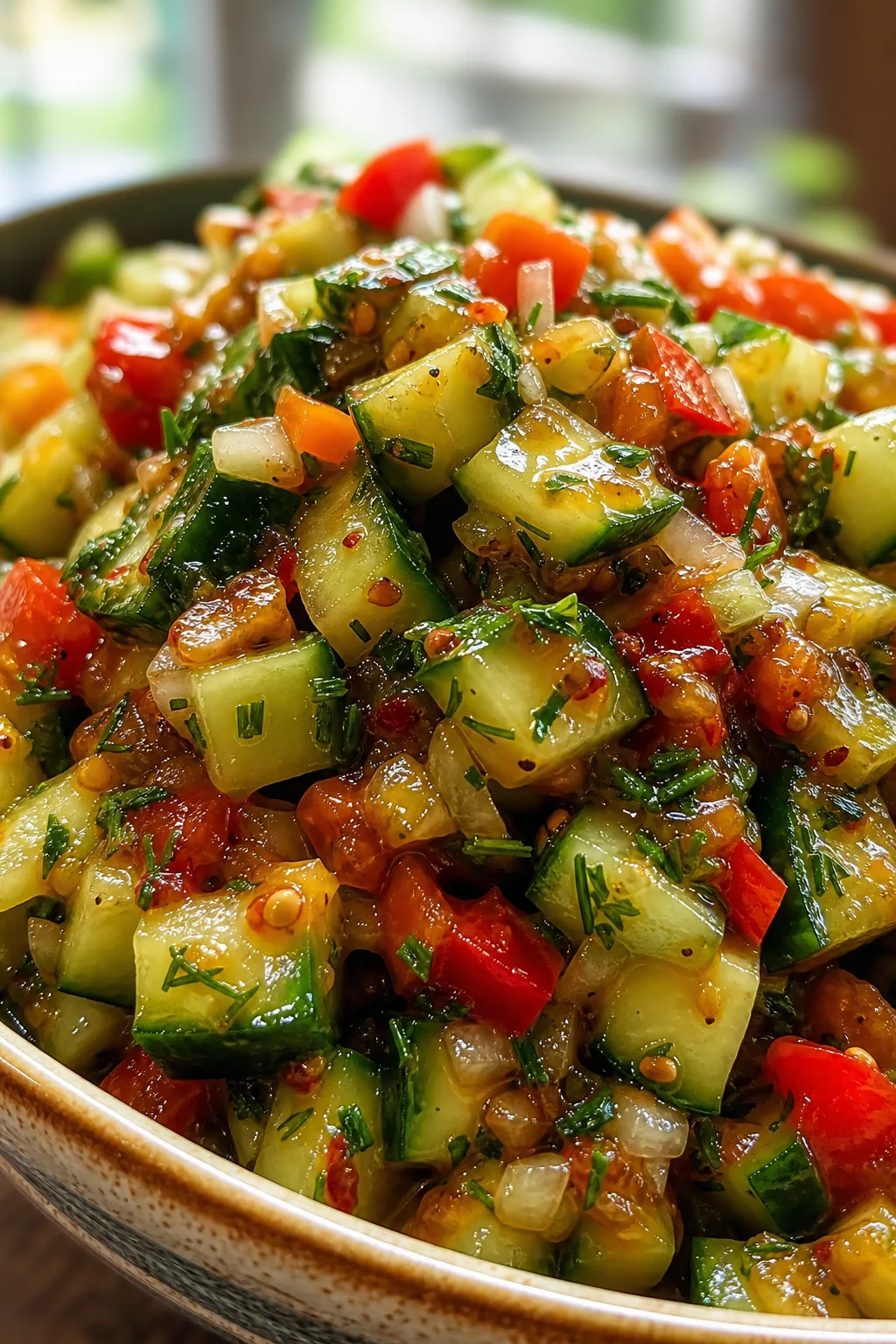
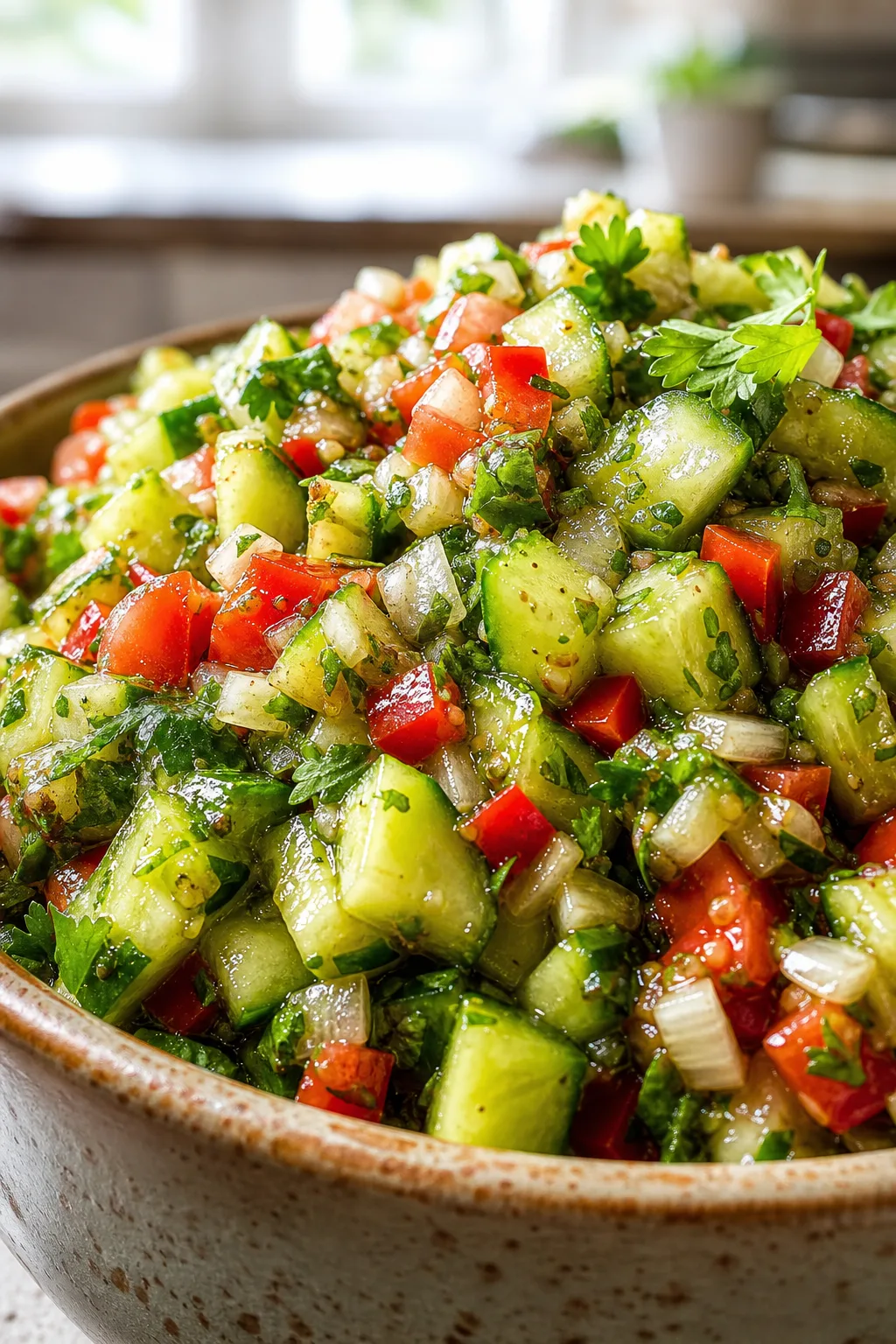
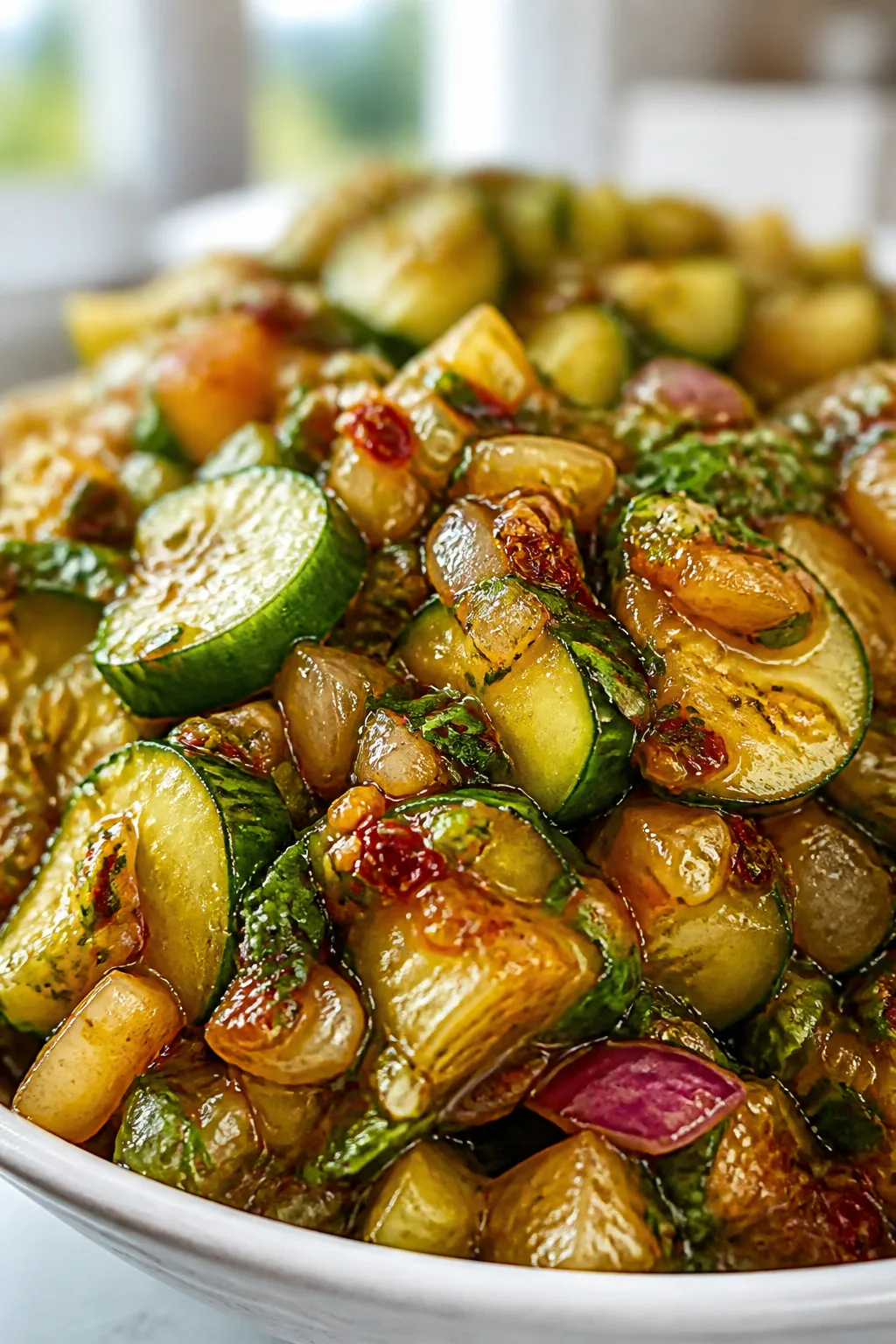
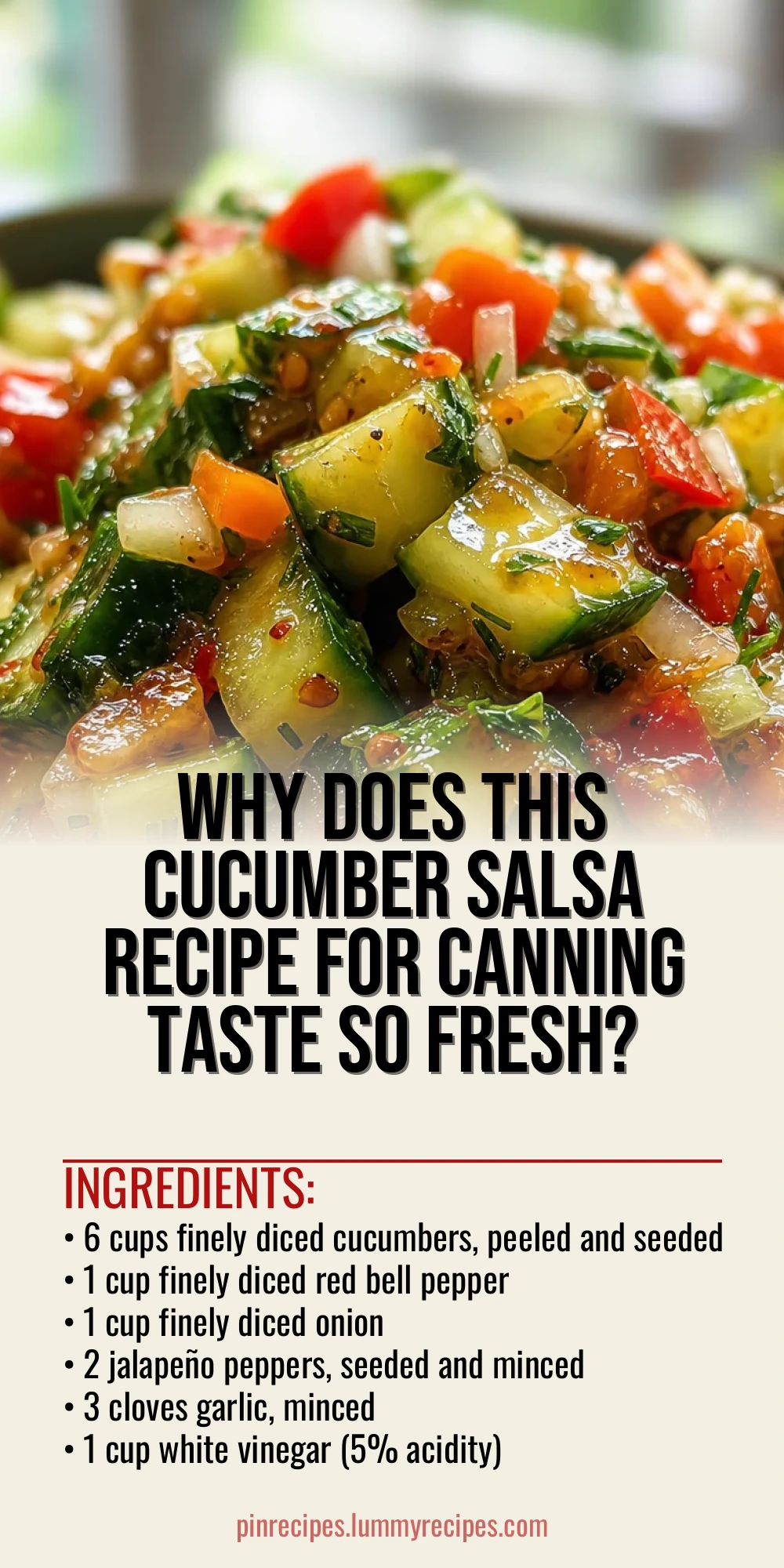
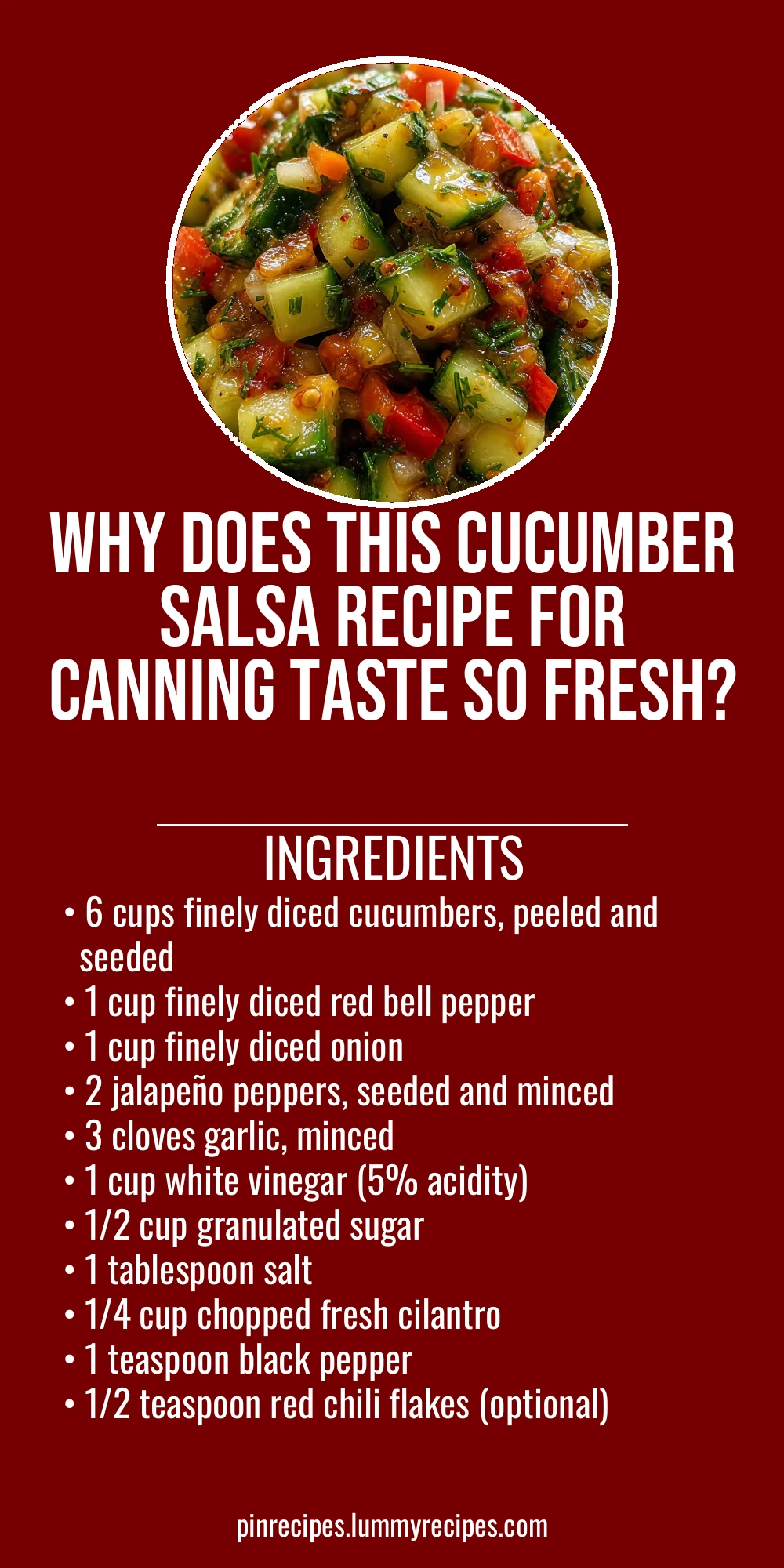
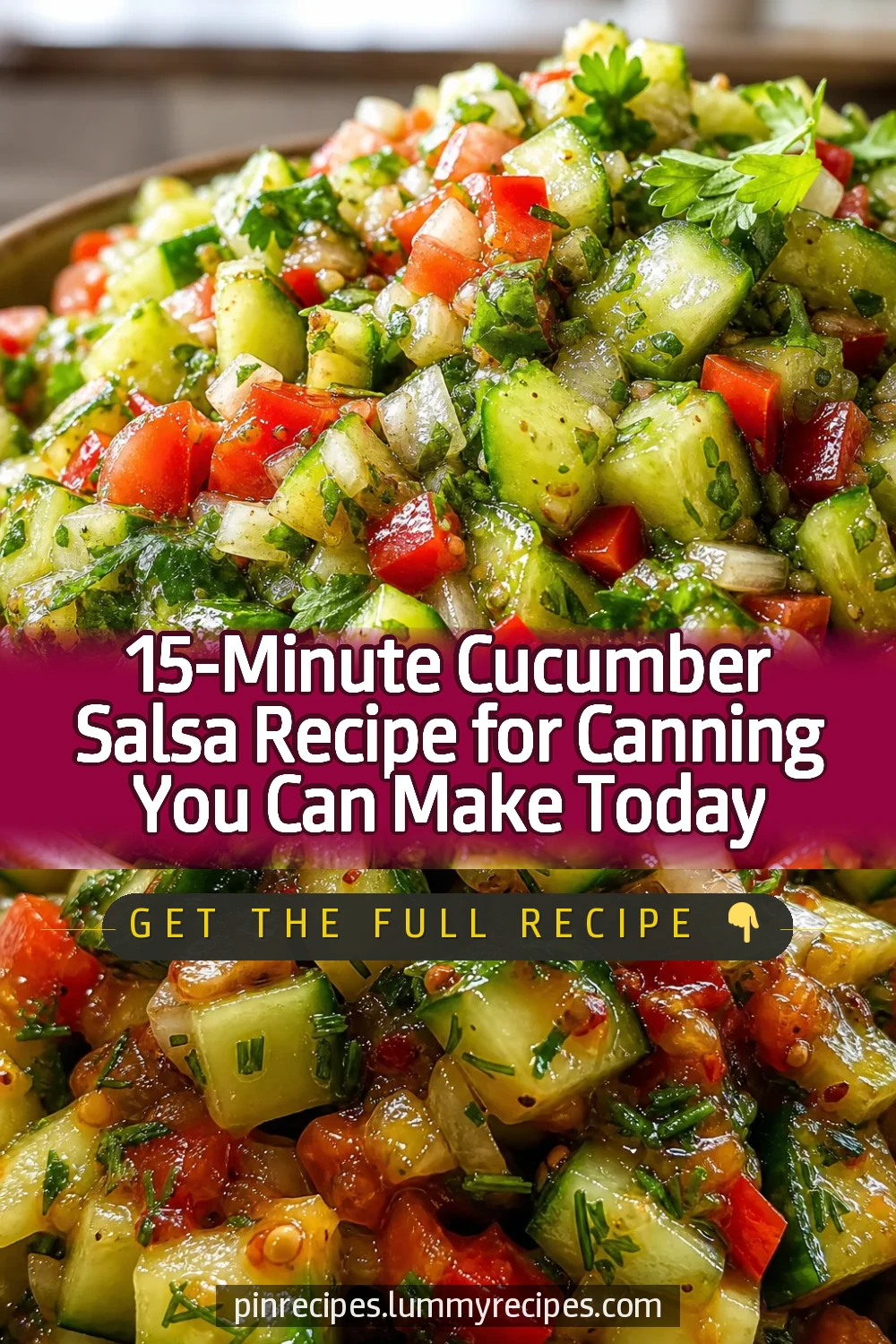
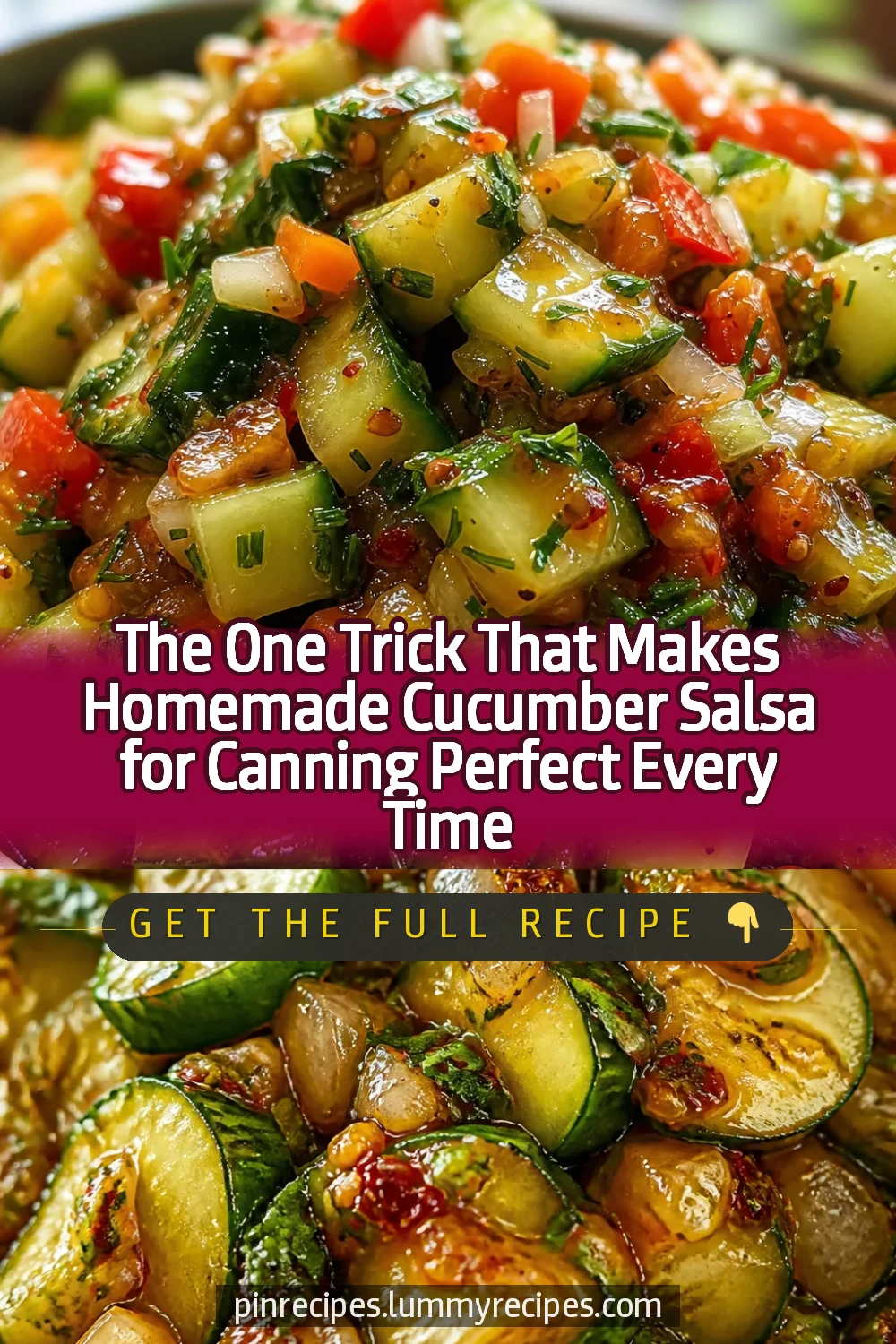
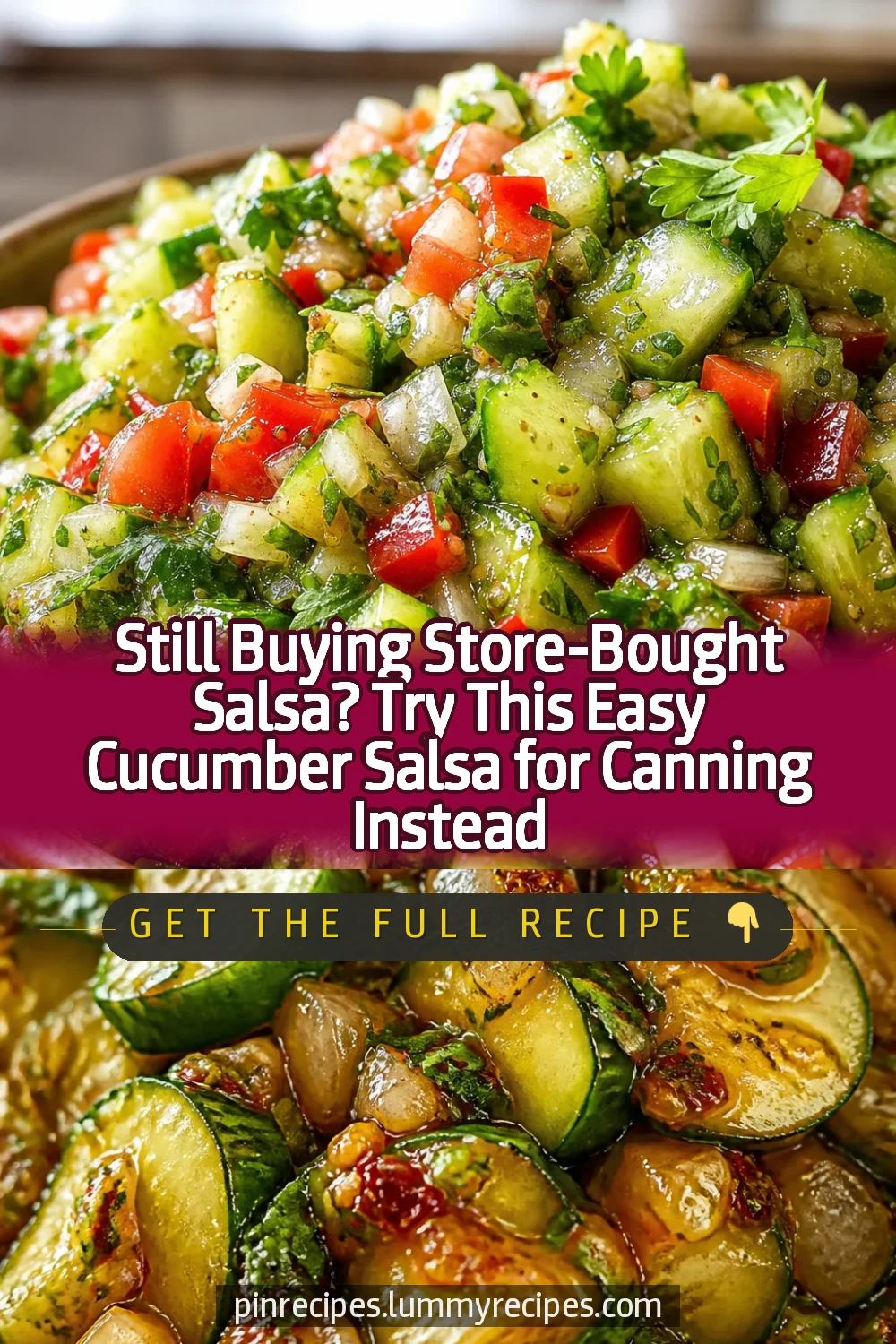
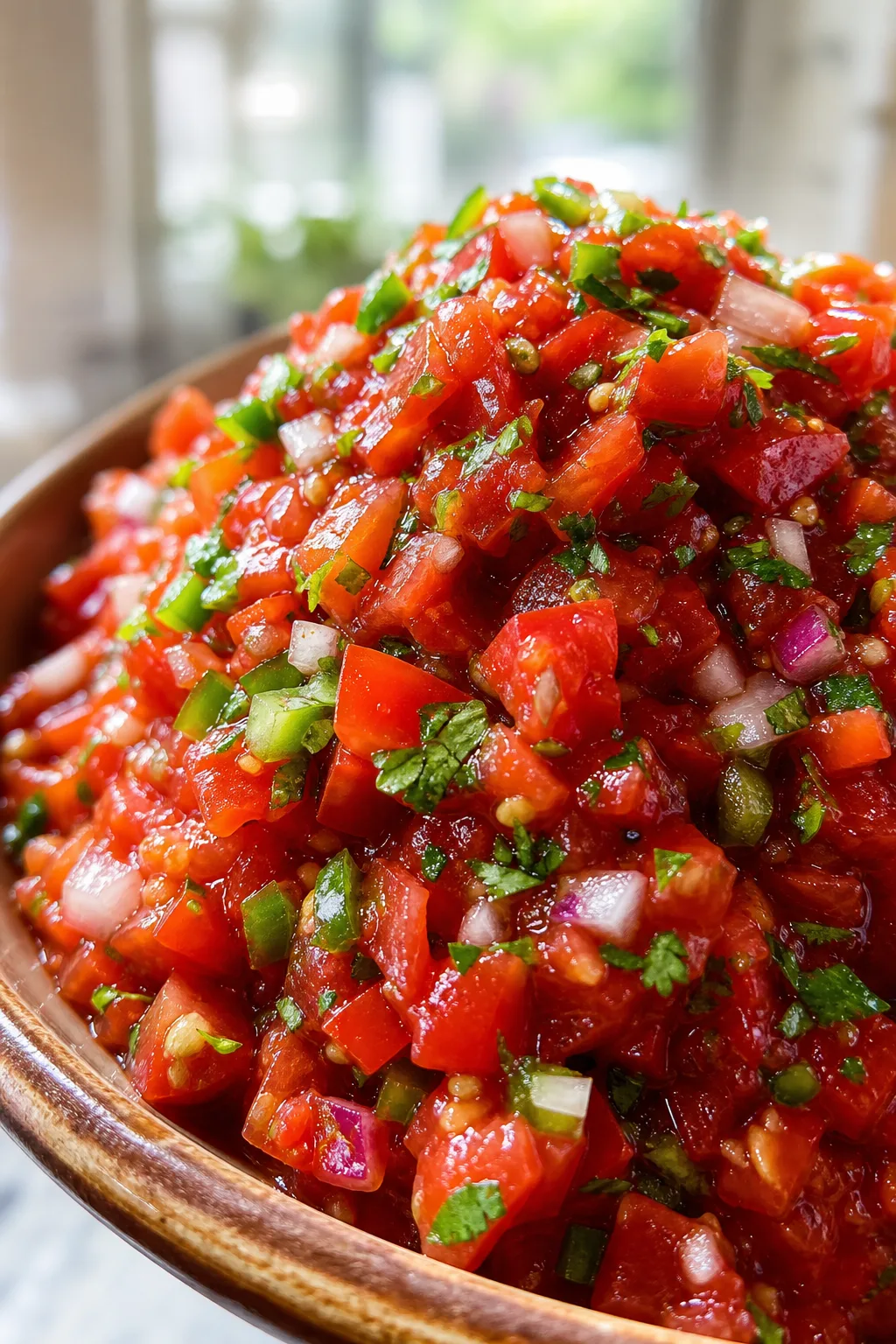
This cucumber salsa recipe for canning is a fresh and tangy way to preserve summer’s best flavors. The crisp cucumbers combined with zesty peppers and herbs make it perfect for snacking or topping your favorite dishes. I love making a big batch in late summer to enjoy all year long!
Introduction
I first stumbled upon this cucumber salsa recipe for canning a few summers ago when I had a surplus of cucumbers from my garden. I wanted a way to preserve that fresh, crisp flavor without losing the vibrant texture. After a few trial runs, I found the perfect balance of vinegar, sugar, and spices that keeps the salsa tangy and crunchy even after canning. What makes this recipe stand out is the quick blanching step I use before mixing everything together — it softens the cucumbers just enough to meld flavors without turning them mushy. Plus, adding fresh cilantro at the end gives it a bright, herby finish that I adore. When you open a jar months later, you’ll get that fresh-picked taste that feels like summer all over again. It’s perfect for topping tacos, mixing into salads, or just enjoying with tortilla chips. I hope you love making this as much as my family does!
What You'll Need
Approximately 8 half-pint jars
- 6 cups finely diced cucumbers, peeled and seeded
- 1 cup finely diced red bell pepper
- 1 cup finely diced onion
- 2 jalapeño peppers, seeded and minced
- 3 cloves garlic, minced
- 1 cup white vinegar (5% acidity)
- 1/2 cup granulated sugar
- 1 tablespoon salt
- 1/4 cup chopped fresh cilantro
- 1 teaspoon black pepper
- 1/2 teaspoon red chili flakes (optional)
How To Do It
Step 1
Start by washing and peeling your cucumbers, then remove the seeds and finely dice them. This step is crucial because peeling and seeding prevents the salsa from becoming too watery. Dice the red bell pepper, onion, and jalapeño peppers finely to ensure even flavor distribution. Mince the garlic and chop the cilantro, keeping it aside for later. Preparing all ingredients uniformly helps the salsa have a consistent texture and flavor throughout.
⏱ Time: 15
✓ Doneness: All vegetables are uniformly diced, with no large chunks, and garlic finely minced.
Step 2
In a large pot, combine the white vinegar, sugar, and salt, and bring to a boil over medium heat. Stir until the sugar and salt dissolve completely. This hot pickling liquid is essential as it preserves the salsa and balances the flavors. If you skip this step or don’t heat the liquid enough, the sugar and salt won’t dissolve properly, and the salsa won’t preserve well.
⏱ Time: 5
✓ Doneness: The liquid is clear and boiling gently, with no granules of sugar or salt remaining.
Step 3
Add the diced cucumbers, red bell pepper, onion, jalapeño, and minced garlic to the pot. Stir well to combine. Bring the mixture back to a boil, then reduce heat and simmer for 5 minutes. This brief cooking softens the vegetables slightly to meld flavors but keeps them crisp. Overcooking will make the salsa mushy, so watch the time carefully.
⏱ Time: 7
✓ Doneness: Vegetables are tender but still hold their shape, and the mixture is bubbling gently.
Step 4
Remove the pot from heat and stir in the chopped cilantro, black pepper, and red chili flakes if using. Adding cilantro at the end preserves its fresh flavor and bright green color, which would otherwise dull if cooked too long.
⏱ Time: 2
✓ Doneness: Cilantro looks fresh and vibrant, evenly distributed throughout the salsa.
Step 5
Prepare your canning jars and lids by washing them thoroughly and sterilizing in boiling water. This step is vital to prevent contamination and ensure your salsa stays safe to eat for months. Keep jars hot until ready to fill to avoid cracking when hot salsa is added.
⏱ Time: 10
✓ Doneness: Jars are spotless, hot to the touch, and lids are clean and ready.
Step 6
Ladle the hot salsa into the prepared jars, leaving about 1/2 inch headspace at the top. Wipe the rims clean with a damp cloth to ensure a proper seal. Headspace allows for expansion during processing, preventing jar breakage or seal failure.
⏱ Time: 10
✓ Doneness: Jars are filled to correct level, rims clean with no residue.
Step 7
Place the lids on the jars and screw on the bands fingertip tight. Avoid overtightening, which can prevent air from escaping during processing and cause seal failure.
⏱ Time: 2
✓ Doneness: Lids are secure but not overly tight, can still be turned slightly.
Step 8
Process the jars in a boiling water bath for 15 minutes, adjusting time for altitude if necessary. The boiling water bath kills bacteria and seals the jars for safe long-term storage. Underprocessing risks spoilage, so timing is important.
⏱ Time: 15
✓ Doneness: Water is boiling steadily, jars are submerged fully during processing.
Step 9
Carefully remove the jars from the water bath and place on a towel-lined surface. Let them cool undisturbed for 12-24 hours. You’ll hear the satisfying 'pop' of lids sealing as they cool. Check seals before storing; lids should be concave and not flex when pressed.
⏱ Time: 20
✓ Doneness: Lids are sealed tight with no movement when pressed, jars fully cooled.
Pro Tips
Use a sharp knife to dice vegetables uniformly.
Uniform pieces cook evenly and look more appealing in the jar. Uneven cuts can cause some pieces to overcook while others remain underdone, affecting texture and flavor.
Keep jars hot before filling.
Adding hot salsa to hot jars prevents thermal shock that can cause jars to crack. It also helps create a better vacuum seal during processing.
Don’t overtighten jar lids.
Lids need to vent air during processing to form a proper seal. Over-tightening traps air, which can cause seal failure and spoilage.
Adjust processing time for altitude.
Water boils at lower temperatures at higher altitudes, so longer processing times ensure proper sterilization and safe preservation.
Add fresh herbs after cooking.
Cooking herbs too long dulls their color and flavor. Adding them at the end preserves their brightness and fresh taste.
Use pickling cucumbers for best texture.
These cucumbers have firmer flesh and fewer seeds, which helps maintain crispness after canning.
Label jars with date and contents.
Keeping track helps you use the oldest jars first and ensures you enjoy the salsa within optimal freshness time.
Common Mistakes to Avoid
Using cucumbers that are too watery or seedy
Why it happens People often use large slicing cucumbers because they’re more common, but these hold more water and seeds that dilute flavor and make salsa watery.
Fix Choose pickling cucumbers which are smaller, firmer, and less watery. Peel and seed them to reduce moisture and bitterness.
Skipping the boiling water bath processing
Why it happens Some think that vinegar alone preserves the salsa, but without proper heat processing, harmful bacteria can survive.
Fix Always process jars in a boiling water bath for the recommended time to ensure safety and shelf stability.
Overcooking the vegetables until mushy
Why it happens Rushing or leaving the salsa to simmer too long breaks down the vegetables’ structure.
Fix Simmer just briefly until vegetables are tender but still crisp to keep texture.
Adding fresh herbs too early
Why it happens Cooking herbs too long causes loss of flavor and color.
Fix Add herbs after removing salsa from heat to preserve freshness.
Not leaving enough headspace in jars
Why it happens Filling jars too full leaves no room for expansion, risking jar breakage or seal failure.
Fix Leave about 1/2 inch headspace to allow for expansion during processing.
Variations
Spicy Cucumber Salsa
Add extra jalapeños or substitute with serrano peppers for a hotter salsa. You can also mix in a dash of cayenne pepper for extra kick. Expect a more intense heat that pairs well with grilled meats or tacos.
Note: Adjust cooking time slightly if adding more peppers to mellow raw heat but retain crunch.
Sweet and Tangy Cucumber Salsa
Increase sugar to 3/4 cup and add a splash of orange juice for a sweeter, fruitier salsa. This variation balances acidity with natural sweetness, great for serving with chips or as a salad topping.
Note: Ensure sugar dissolves fully in vinegar before adding vegetables to avoid graininess.
Herb-Infused Cucumber Salsa
Add fresh dill and parsley alongside cilantro for a more complex herbal flavor. This combination brightens the salsa and adds a garden-fresh aroma perfect for summer meals.
Note: Add delicate herbs after cooking to preserve their flavor and color.
Low-Sodium Cucumber Salsa
Reduce salt to 1/2 tablespoon and increase vinegar slightly for a tangier but less salty salsa. Ideal for those watching sodium intake but still wanting flavor.
Note: Taste before canning and adjust vinegar or sugar to balance flavor.
Cucumber and Tomato Salsa
Add 1 cup finely diced fresh tomatoes to the mix for a chunkier salsa with a richer flavor. This variation adds juiciness and color contrast.
Note: Simmer slightly longer to soften tomatoes but avoid overcooking cucumbers.
Nutrition
Per Serving:
Nutritional values are estimates and may vary based on specific ingredients used.
Storage & Tips
Room Temperature
Once canned and sealed, the salsa can safely be stored at room temperature in a cool, dark pantry for up to 1 year. Keep jars away from direct sunlight to preserve color and flavor.
Refrigerator
After opening, store the salsa in an airtight container in the refrigerator for up to 2 weeks. The flavors may intensify, but the texture remains crisp. Serve chilled or at room temperature.
Freezer
Freezing is not recommended for canned salsa as it can alter texture and cause jar breakage. Instead, consume within the shelf life or refrigerate after opening.
Reheating
Salsa is best served cold or at room temperature. If desired, gently warm in a saucepan but avoid boiling to preserve crisp texture.
Make Ahead
You can prepare and dice all vegetables a day ahead, storing them in the refrigerator in separate containers. Assemble and cook the salsa on the day of canning for best freshness.
FAQ
Can I use regular cucumbers instead of pickling cucumbers?
While you can use regular slicing cucumbers, they tend to be more watery and have larger seeds, which can make your salsa watery and less crisp. If using them, peel and seed thoroughly and consider reducing any added liquid in the recipe.
How long does canned cucumber salsa last?
Properly canned and sealed jars can last up to one year stored in a cool, dark place. Once opened, refrigerate and consume within two weeks for best flavor and safety.
Do I need to process the jars in a water bath?
Yes, processing in a boiling water bath is essential to kill bacteria and create a vacuum seal, preventing spoilage and ensuring food safety for long-term storage.
Can I make this salsa spicy?
Absolutely! Adjust the number of jalapeños or add hotter peppers like serranos or a pinch of cayenne to increase heat. Just be mindful of your family’s spice tolerance.
What if my jar lids don’t seal after processing?
If lids don’t seal, refrigerate the salsa and consume within two weeks. You can also reprocess with new lids, ensuring jars and rims are clean and undamaged before resealing.
Can I freeze this salsa instead of canning?
Freezing is not recommended for this salsa because the texture of cucumbers can become mushy and watery. Canning preserves texture better for long-term storage.
Can I omit the sugar for a low-sugar version?
You can reduce sugar, but it helps balance acidity and enhances flavor. Omitting it entirely may make the salsa too sharp. Adjust vinegar and taste as you go for best results.
How do I know when the salsa is done cooking?
The vegetables should be tender but still crisp, and the mixture should be bubbling gently. Overcooking will cause mushy texture, so simmer only briefly.
Can I add other vegetables to the salsa?
Yes, diced tomatoes, corn, or fresh herbs like dill can be added for variation. Just adjust cooking time slightly to maintain texture.
Is it necessary to peel the cucumbers?
Peeling helps reduce bitterness and prevents the salsa from becoming too watery. If you prefer, you can leave some peel on for texture, but avoid thick or waxy skins.
Final Thoughts
I hope you enjoy making this fresh, tangy cucumber salsa for canning as much as my family does. It’s a wonderful way to capture summer’s flavors and enjoy them all year long—let me know how yours turns out!