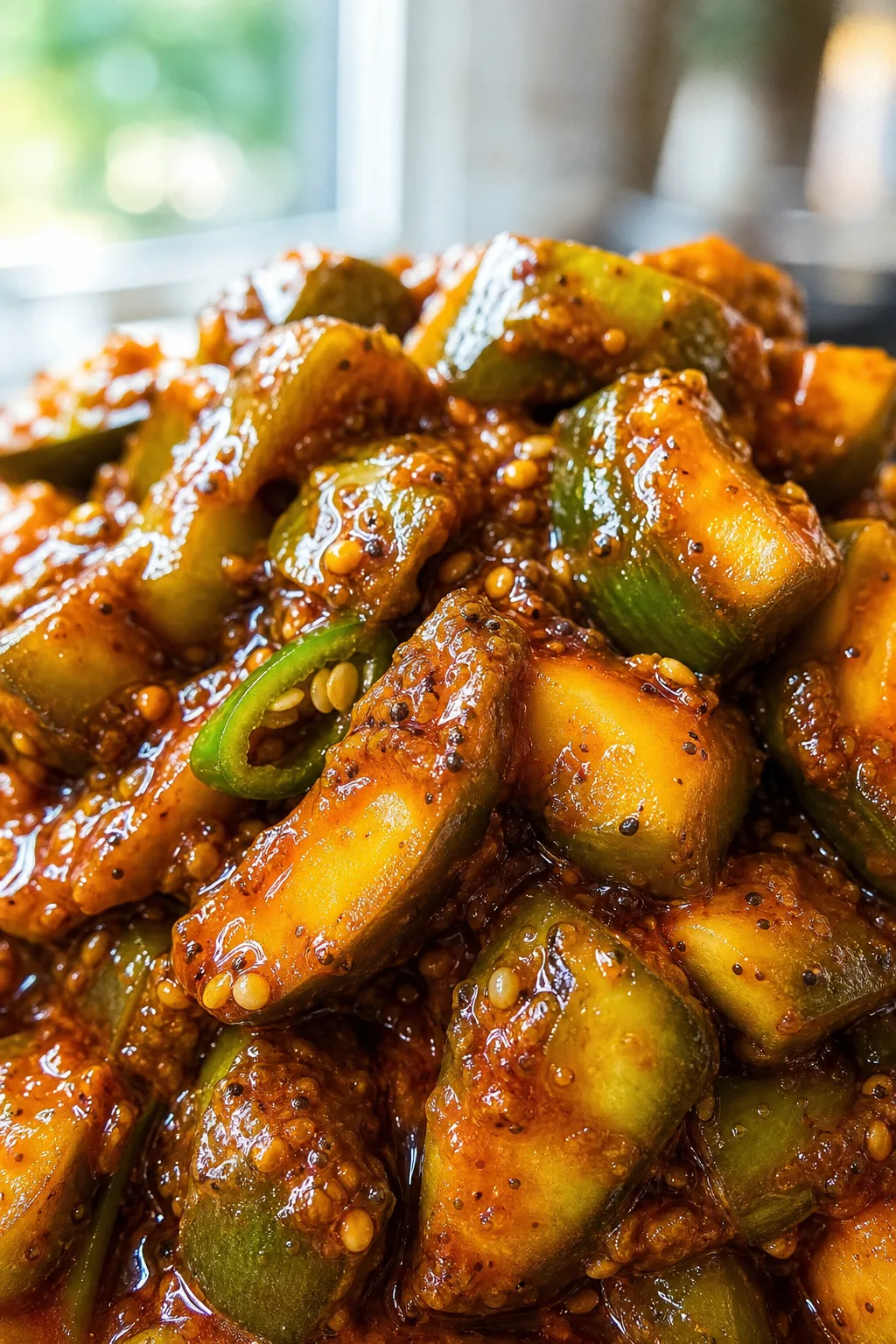
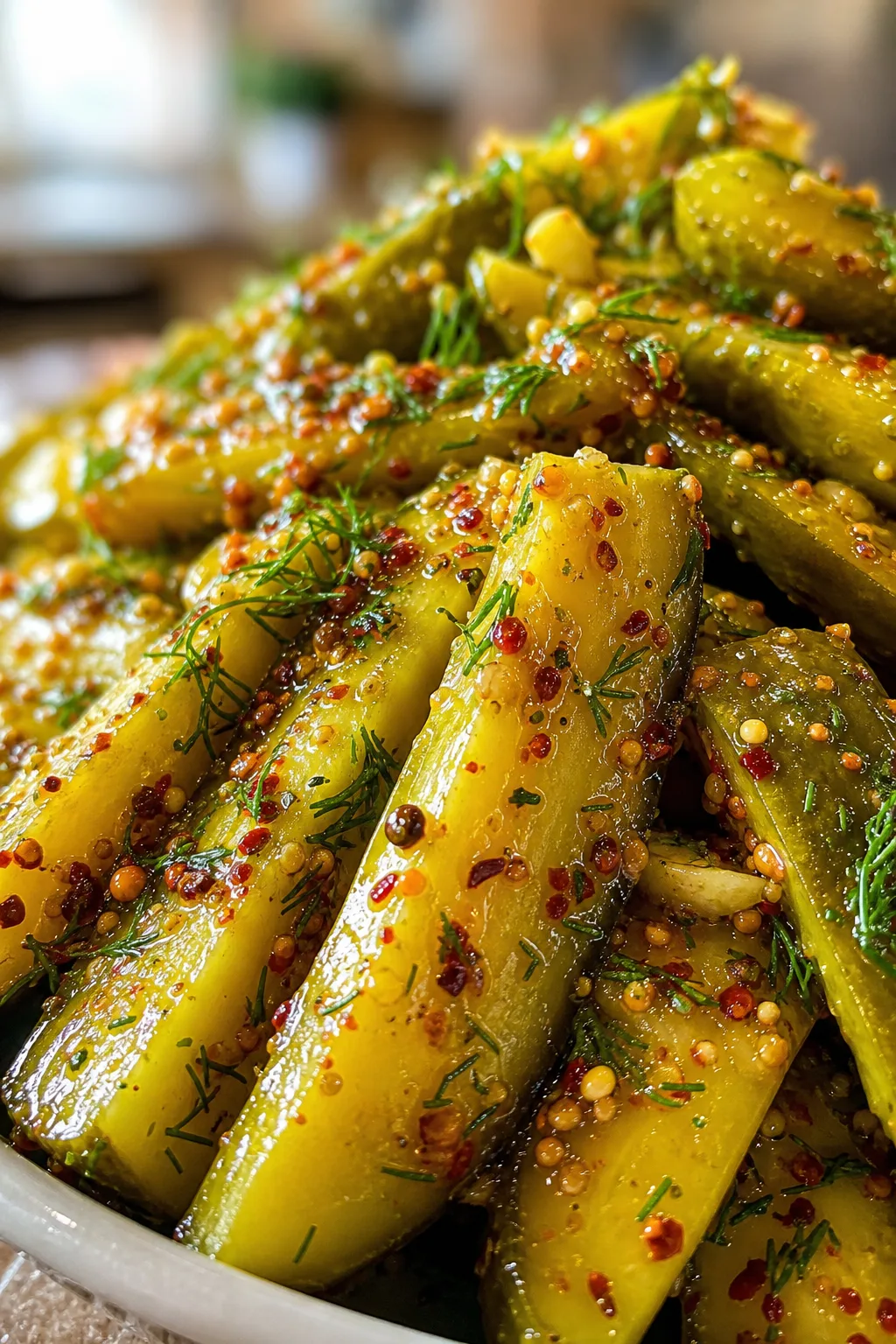
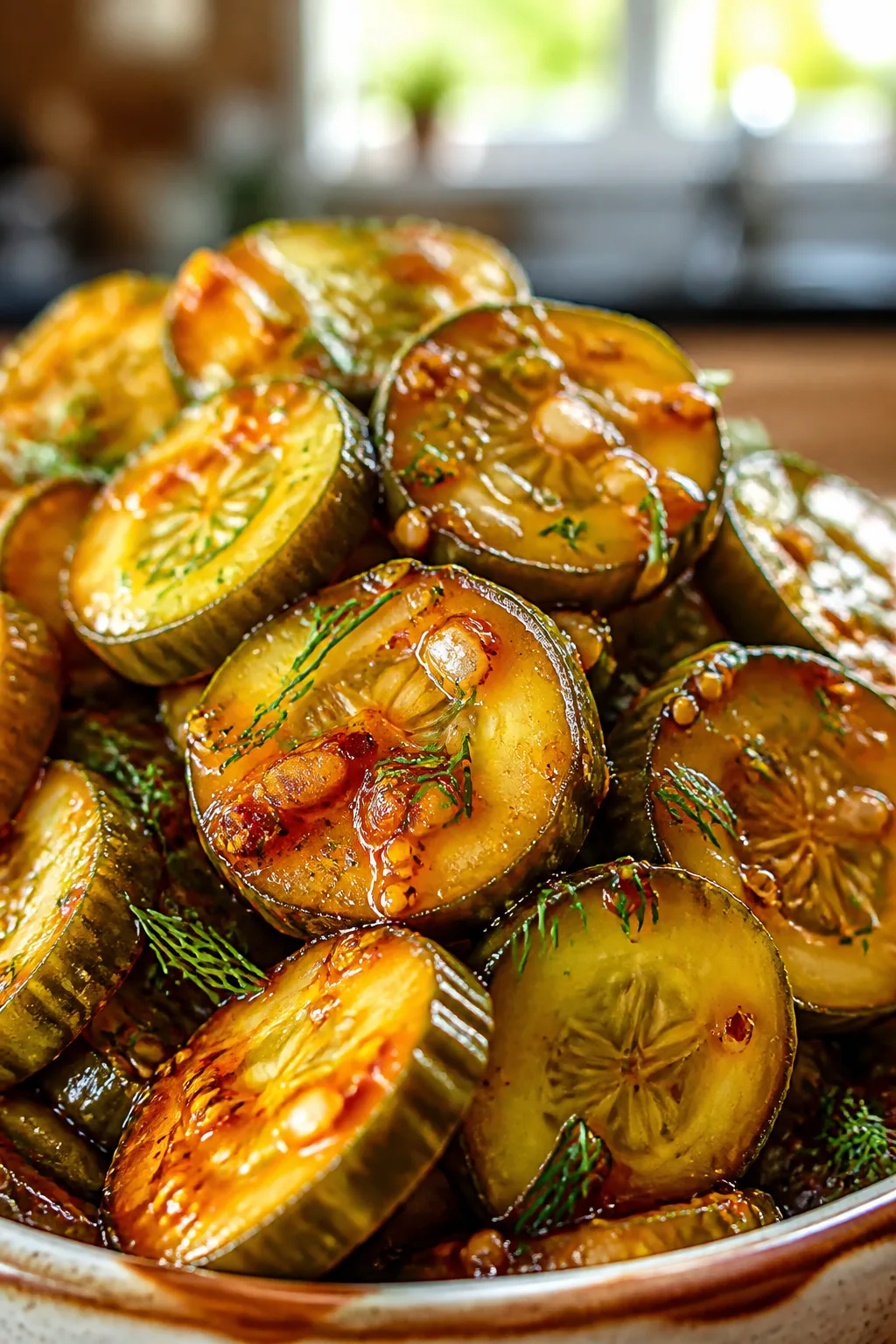
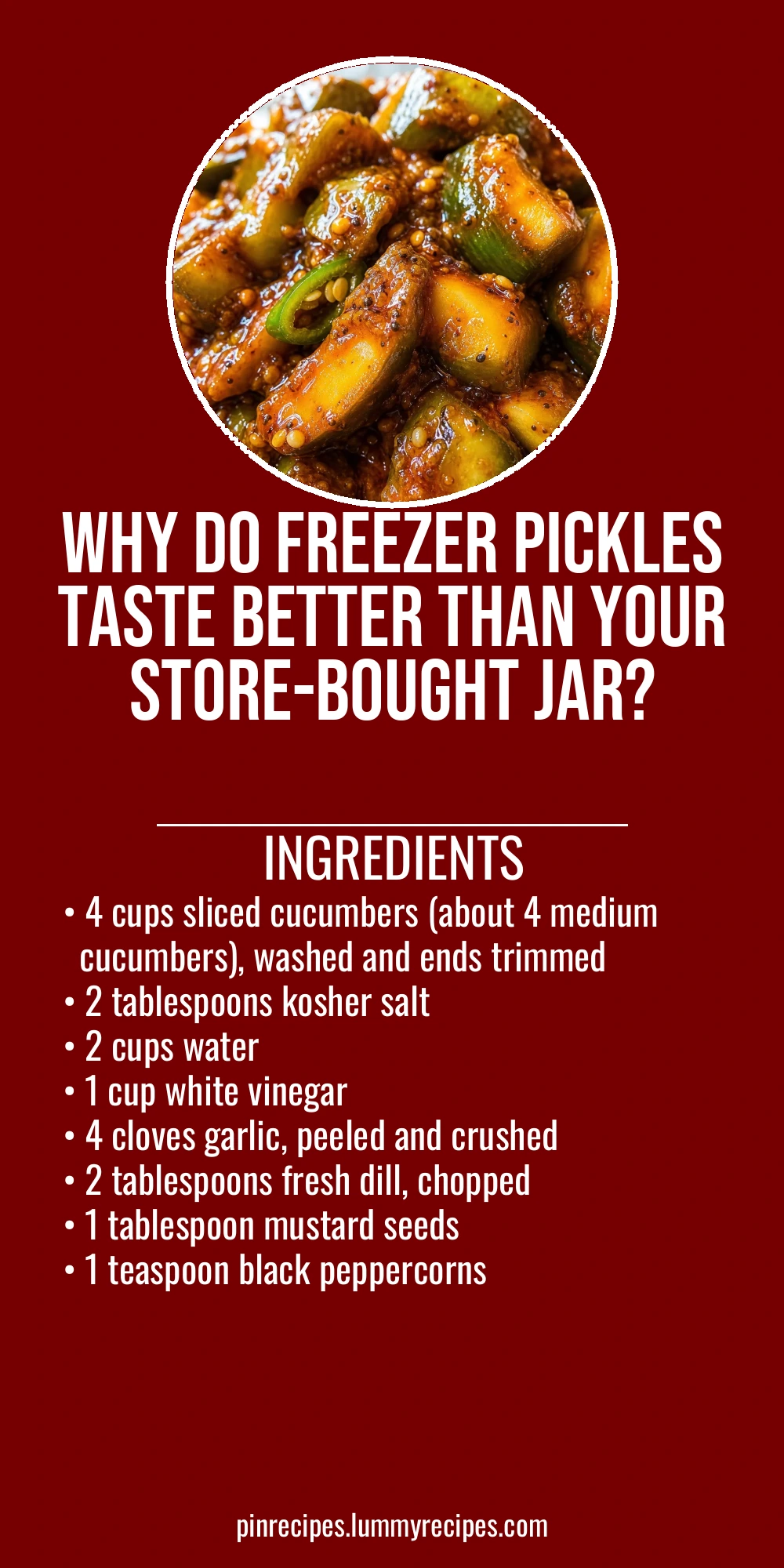
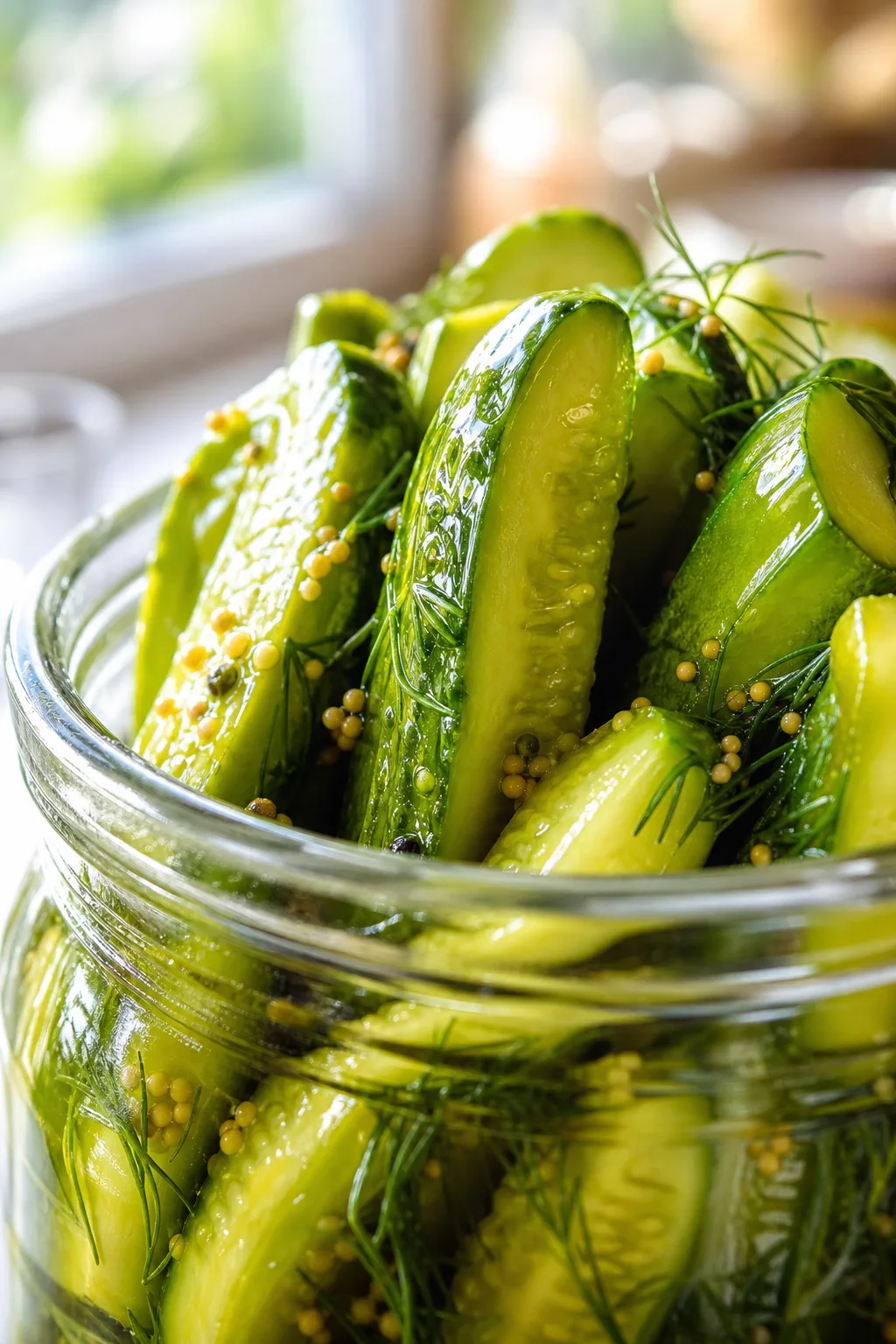
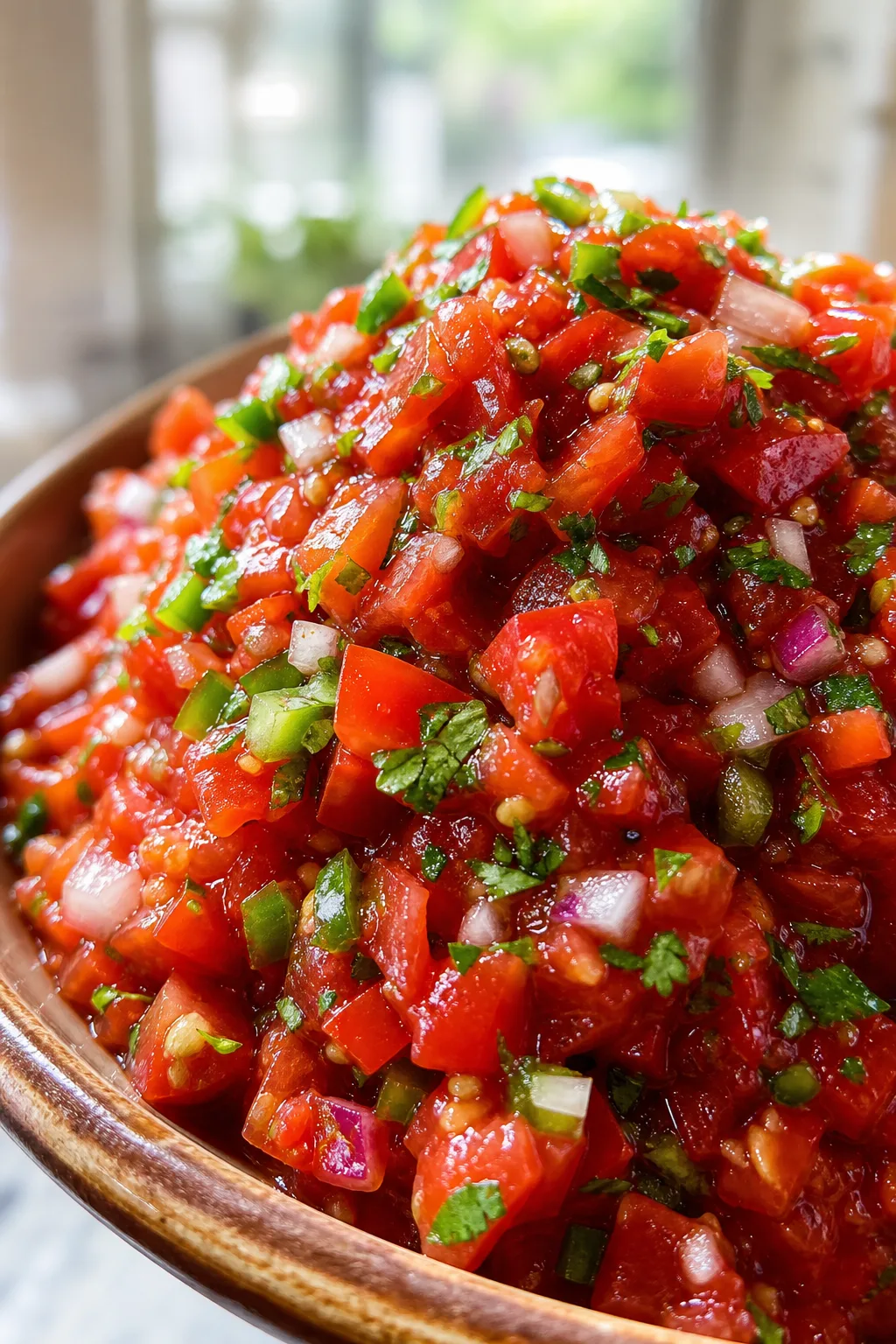
These freezer pickles are a game changer—super easy and they stay crisp without canning. I love adding fresh dill and garlic for that classic tang. Perfect for snacking or jazzing up sandwiches anytime!
Introduction
I first stumbled on freezer pickles when I wanted that fresh pickle crunch without the fuss of traditional canning. They’re so simple—just a quick brine and into the freezer. What sets this recipe apart is the balance of vinegar and salt, plus fresh garlic and dill that give the pickles that classic tang and aroma. I’ve tried making pickles the old-fashioned way before, but they often turned out mushy or too sour. The freezer method locks in the crispness beautifully, and the pickles develop a wonderful snap after a day or two. Plus, you don’t need special equipment or hours of waiting. The result? Bright green, juicy, and perfectly tangy pickles that are ready whenever you are. I love keeping a jar in the freezer for a quick snack or to add a fresh zip to sandwiches and burgers. It’s become a staple in my kitchen, especially during cucumber season. Give it a try—you’ll be surprised how easy and delicious homemade freezer pickles can be!
What You'll Need
Approximately 4 cups of freezer pickles, 4 servings
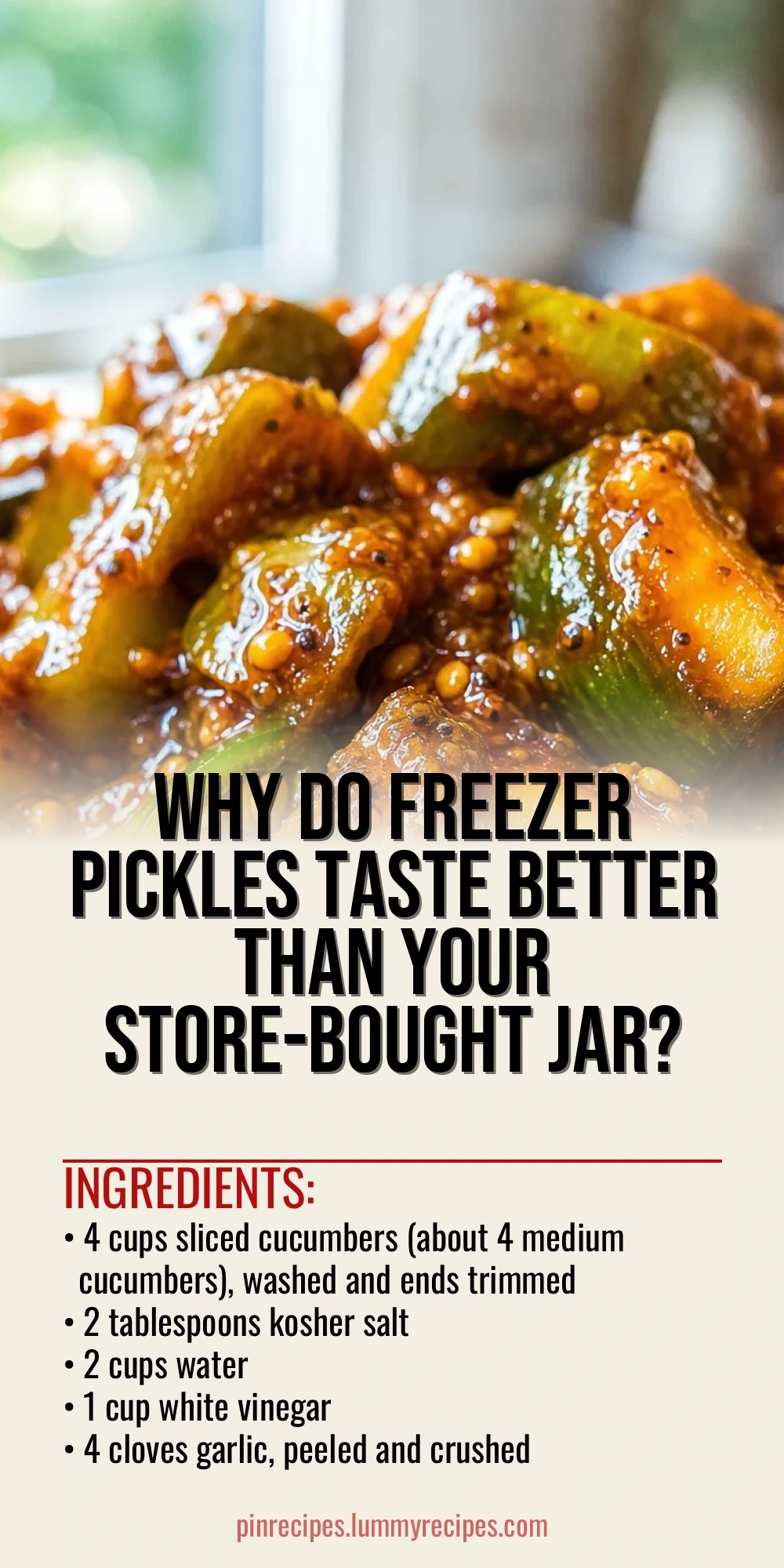
- 4 cups sliced cucumbers (about 4 medium cucumbers), washed and ends trimmed
- 2 tablespoons kosher salt
- 2 cups water
- 1 cup white vinegar
- 4 cloves garlic, peeled and crushed
- 2 tablespoons fresh dill, chopped
- 1 tablespoon mustard seeds
- 1 teaspoon black peppercorns
How To Do It
Step 1
Start by slicing your cucumbers evenly, about 1/4-inch thick. Uniform slices ensure they freeze and thaw evenly without becoming mushy. Place the slices in a large bowl and sprinkle kosher salt over them. Toss gently to coat all slices. The salt draws out excess moisture, which helps maintain crispness after freezing. Let them sit for 30 minutes, then drain off the liquid. This step is crucial to prevent soggy pickles later.
⏱ Time: 40
✓ Doneness: Cucumber slices feel slightly flexible but not floppy; excess water has drained off.
Step 2
In a separate bowl, combine water, white vinegar, crushed garlic, chopped dill, mustard seeds, and peppercorns. Stir well to dissolve the salt and blend flavors. Pour this brine over the drained cucumbers, ensuring all slices are submerged. This acidic brine not only flavors the pickles but also acts as a preservative. Cover the bowl and refrigerate for 1 hour to let the flavors meld before freezing.
⏱ Time: 60
✓ Doneness: The brine is aromatic with garlic and dill, and cucumber slices are uniformly coated.
Step 3
Transfer the cucumber slices and brine into a freezer-safe airtight container or jar, leaving some headspace for expansion. Seal tightly to prevent freezer burn. Label the container with the date. Freezing preserves the texture and flavor without the need for canning. Place the container flat in the freezer to freeze evenly.
⏱ Time: 10
✓ Doneness: Container sealed and placed flat in the freezer with no leaks.
Step 4
Allow the pickles to freeze for at least 24 hours before use. When ready to eat, thaw in the refrigerator for a few hours or overnight. The thawed pickles will retain a crisp texture and bright flavor, making them perfect for snacking or topping dishes. Avoid microwaving to thaw as it can soften the cucumbers.
⏱ Time: 1440
✓ Doneness: Pickles are fully thawed, cold, and crisp, with vibrant color.
Step 5
Before serving, give the pickles a gentle stir to redistribute the brine and flavor. Taste and adjust seasoning if needed—sometimes a pinch of salt or a splash of vinegar brightens the flavor after thawing. Serve chilled alongside sandwiches, burgers, or as a tangy snack. These freezer pickles keep their texture and flavor well for up to 3 months.
⏱ Time: 5
✓ Doneness: Pickles taste balanced with a lively tang and satisfyingly crisp bite.
Step 6
For extra flavor, try adding sliced onions or a pinch of red pepper flakes to the brine before freezing. These additions infuse the pickles with subtle heat or sweetness, enhancing the overall profile. Just be sure to add these before freezing so the flavors meld properly during storage.
⏱ Time: 5
✓ Doneness: Additional ingredients are evenly distributed and aromatic in the brine.
Step 7
If you prefer your pickles less tangy, reduce the vinegar by 1/4 cup and replace with water. This adjustment softens the acidity but still preserves the pickles well in the freezer. Taste the brine before freezing to ensure it suits your preference.
⏱ Time: 5
✓ Doneness: Brine tastes milder but still balanced and flavorful.
Step 8
Make sure to use fresh, firm cucumbers ideally picked within a day or two. Older cucumbers can become watery or soft, which affects the final texture of your freezer pickles. When shopping, look for bright green, unblemished cucumbers with a firm feel.
⏱ Time: 0
✓ Doneness: Cucumbers are firm and vibrant green with no soft spots.
Step 9
Always use a container labeled freezer-safe and airtight to prevent freezer burn and off-flavors. Glass jars with plastic lids or BPA-free plastic containers work well. Avoid metal lids that can corrode from the vinegar brine. Proper storage ensures your pickles stay fresh and delicious for months.
⏱ Time: 0
✓ Doneness: Container seals tightly with no leaks or cracks.
Pro Tips
Use Kirby or pickling cucumbers for best texture.
These varieties have firmer flesh and fewer seeds, which helps them hold up better during freezing and thawing. Using regular slicing cucumbers can result in watery, mushy pickles that lack the satisfying crunch.
Don’t skip the salting step before brining.
Salting draws out excess water from the cucumbers, which prevents sogginess after freezing. It also helps the cucumbers absorb the brine flavors more effectively, resulting in crisp, flavorful pickles.
Seal your container tightly and freeze flat.
An airtight seal prevents freezer burn and keeps the pickles tasting fresh. Freezing flat ensures even freezing and easier storage, avoiding crushed or misshapen slices.
Let pickles thaw slowly in the fridge.
Slow thawing helps preserve texture and flavor. Microwaving or thawing at room temperature can cause uneven warming and mushy spots, ruining the crispness you worked for.
Add fresh garlic and dill for authentic flavor.
Fresh aromatics infuse the brine during freezing and give your pickles that classic homemade taste. Dried herbs or garlic powder won’t provide the same bright, fresh notes.
Adjust vinegar and salt to taste if needed.
Everyone’s palate differs, so feel free to tweak the acidity or saltiness before freezing. This ensures the pickles suit your family’s preferences perfectly.
Use a freezer-safe glass or BPA-free plastic container.
Glass preserves flavor better and doesn’t absorb odors, but make sure it’s freezer-safe to avoid cracking. BPA-free plastic containers are lightweight and safe alternatives.
Common Mistakes to Avoid
Skipping the salting step
Why it happens Some cooks think they can skip salting to save time or reduce salt intake, not realizing it’s crucial for texture.
Fix Always salt and drain cucumbers before brining. This removes excess moisture that causes sogginess. Even a short 30-minute salting makes a big difference.
Using regular slicing cucumbers
Why it happens People often use whatever cucumbers are on hand, unaware that some varieties don’t freeze well.
Fix Choose firm pickling or Kirby cucumbers for best results. Their texture holds up better during freezing and thawing.
Not sealing container tightly
Why it happens Rushing the freezing process or using improper containers can lead to leaks or freezer burn.
Fix Use airtight, freezer-safe containers and double-check the seal before freezing. This keeps pickles fresh and flavorful.
Thawing pickles too quickly
Why it happens Impatience leads to microwaving or room temperature thawing, which damages texture.
Fix Plan ahead and thaw pickles overnight in the fridge for best texture.
Using dried herbs instead of fresh
Why it happens Convenience or lack of fresh herbs leads to dried substitutes that lack flavor.
Fix Use fresh dill and garlic to achieve authentic pickle flavor and aroma.
Variations
Spicy Freezer Pickles
Add 1 teaspoon red pepper flakes or a sliced jalapeño to the brine before freezing. This gives the pickles a gentle heat that builds with each bite, perfect for spice lovers. The freezing process mellows the heat slightly for balanced flavor.
Note: Monitor spice levels carefully; too much can overpower the delicate cucumber flavor. Start small and adjust next batch.
Sweet and Tangy Freezer Pickles
Add 2 tablespoons sugar or honey to the brine for a touch of sweetness that complements the vinegar tang. This variation is great for those who prefer milder, sweeter pickles that still have a crisp bite.
Note: Sugar dissolves easily in the brine; ensure it’s fully mixed before freezing to avoid graininess.
Garlic Lover’s Freezer Pickles
Double the garlic cloves for a bold, savory flavor punch. Roasted garlic can also be used for a sweeter, mellow taste. These pickles pair wonderfully with sandwiches and charcuterie boards.
Note: Fresh garlic is best; roasted garlic should be added after thawing to preserve its delicate flavor.
Herb-Infused Freezer Pickles
Add fresh herbs like thyme, rosemary, or tarragon alongside dill for a complex herbal aroma. This twist elevates the classic pickle with garden-fresh notes, perfect for gourmet snackers.
Note: Use small amounts of strong herbs to avoid overpowering the cucumbers.
Bread and Butter Style Freezer Pickles
Add sliced onions, a pinch of turmeric, and a bit of sugar to the brine for that sweet and tangy bread and butter flavor. These pickles are great for burgers and salads.
Note: Onions add moisture, so ensure proper salting to maintain crispness.
Nutrition
Per Serving:
Nutritional values are estimates and may vary based on specific ingredients used.
Storage & Tips
Room Temperature
Freezer pickles should not be stored at room temperature once prepared. Keep them refrigerated or frozen to maintain safety and texture.
Refrigerator
Once thawed, store pickles in an airtight container in the fridge for up to 1 week. Flavor may intensify, and texture remains crisp if properly handled. Avoid leaving pickles out uncovered.
Freezer
Freeze pickles in airtight, freezer-safe containers for up to 3 months. Proper sealing prevents freezer burn and flavor loss. Thaw slowly in the refrigerator before use to maintain texture.
Reheating
No reheating needed. Thaw in the refrigerator overnight. Avoid microwaving or warming as it softens the pickles.
Make Ahead
Prepare the brine and slice cucumbers up to 1 day ahead. Salt and drain cucumbers, then combine with brine just before freezing. This keeps pickles fresh and flavorful.
FAQ
Can I use regular cucumbers for freezer pickles?
While you can, regular slicing cucumbers tend to be watery and have larger seeds, which can lead to mushy pickles after freezing. Pickling or Kirby cucumbers are firmer and yield a better texture.
How long do freezer pickles last?
Stored properly in an airtight container, freezer pickles keep well for up to 3 months. After thawing, consume within a week for best flavor and texture.
Do I need to cook the brine before freezing?
No cooking is needed. This recipe uses a cold brine that flavors the cucumbers and preserves them through freezing, making it quick and easy.
Can I add other vegetables to the freezer pickles?
Yes, sliced onions, carrots, or peppers can be added for variety. Just adjust salting time and ensure all pieces are similar in size for even freezing.
Will freezer pickles be as crunchy as canned ones?
Freezer pickles maintain a fresh, crisp texture that many find superior to canned pickles, which can sometimes become softer due to heat processing.
Can I use apple cider vinegar instead of white vinegar?
Apple cider vinegar can be used but will add a sweeter, fruitier flavor and may slightly color the pickles. White vinegar provides a cleaner, sharper taste.
Is it safe to freeze vinegar-based pickles?
Yes, freezing preserves the pickles safely by halting bacterial growth. The acidity combined with freezing ensures safe storage without canning.
How do I prevent freezer burn on my pickles?
Use airtight, freezer-safe containers and remove as much air as possible before sealing. Freezing flat helps maintain even temperature and prevents damage.
Final Thoughts
I hope you enjoy making these easy freezer pickles as much as my family does. They’re a simple way to keep fresh, crunchy pickles on hand anytime—give them a try and let me know how they turn out!