These easy homemade pickle recipes pack a punch with fresh dill and garlic for a crisp, tangy bite. I love making them for quick snacks or to jazz up sandwiches. Perfect anytime you want that satisfying crunch!
Introduction
I’ve been making homemade pickles for years, and honestly, nothing beats that fresh, crisp crunch you get from a jar you made yourself. My first attempt was a bit soft and bland, but after tweaking the salt levels and adding fresh dill, I finally nailed a recipe that’s both flavorful and perfectly crunchy. What sets this version apart is the simple brine — just vinegar, water, and kosher salt — combined with fresh garlic and mustard seeds that infuse the cucumbers with a punch of flavor. I also like to slice my cucumbers thick enough so they hold up well but thin enough to soak up the brine quickly. These pickles are fantastic as a snack, a sandwich topper, or even chopped into potato salad for an extra zing. Plus, they’re ready in just a couple of days, making them perfect for last-minute cravings or quick meal prep. Whether you’re a pickle fanatic or just looking to try something new, this recipe is a keeper in my kitchen!
What You'll Need
Approximately 6 cups of pickles, 6 servings
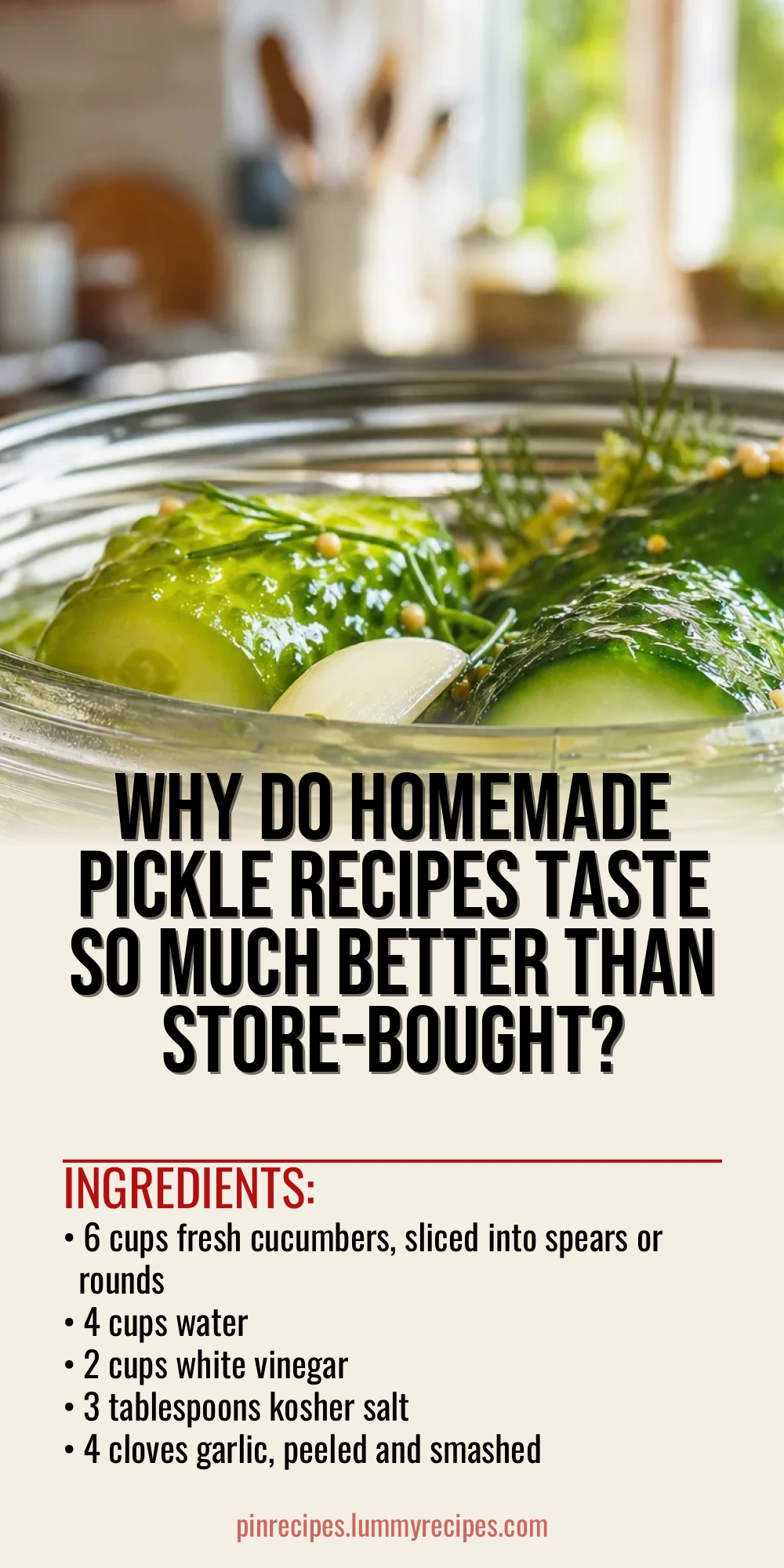
- 6 cups fresh cucumbers, sliced into spears or rounds
- 4 cups water
- 2 cups white vinegar
- 3 tablespoons kosher salt
- 4 cloves garlic, peeled and smashed
- 2 tablespoons mustard seeds
- 1 tablespoon black peppercorns
- 4 sprigs fresh dill
How To Do It
Step 1
Start by washing the cucumbers thoroughly to remove any dirt or residues. Slice them into spears or rounds depending on your preference; thicker slices will stay crunchier longer. Prepare your jars by sterilizing them in boiling water to avoid any bacteria that could spoil the pickles. This step is crucial for safe fermentation and preservation. Once jars are ready, pack the cucumber slices tightly but without crushing them to allow the brine to circulate evenly.
⏱ Time: 15 minutes
✓ Doneness: Jars are clean and dry, cucumbers packed snugly but not smashed
Step 2
Make the brine by combining water, white vinegar, and kosher salt in a saucepan. Heat gently and stir until the salt dissolves completely. This ensures the salt is evenly distributed, which is key for proper pickling and flavor balance. Avoid boiling the mixture as it can alter the flavor negatively. Let the brine cool to room temperature before pouring it over the cucumbers in the jars to prevent cooking the vegetables.
⏱ Time: 10 minutes
✓ Doneness: Brine is clear and salt fully dissolved, cooled to room temperature
Step 3
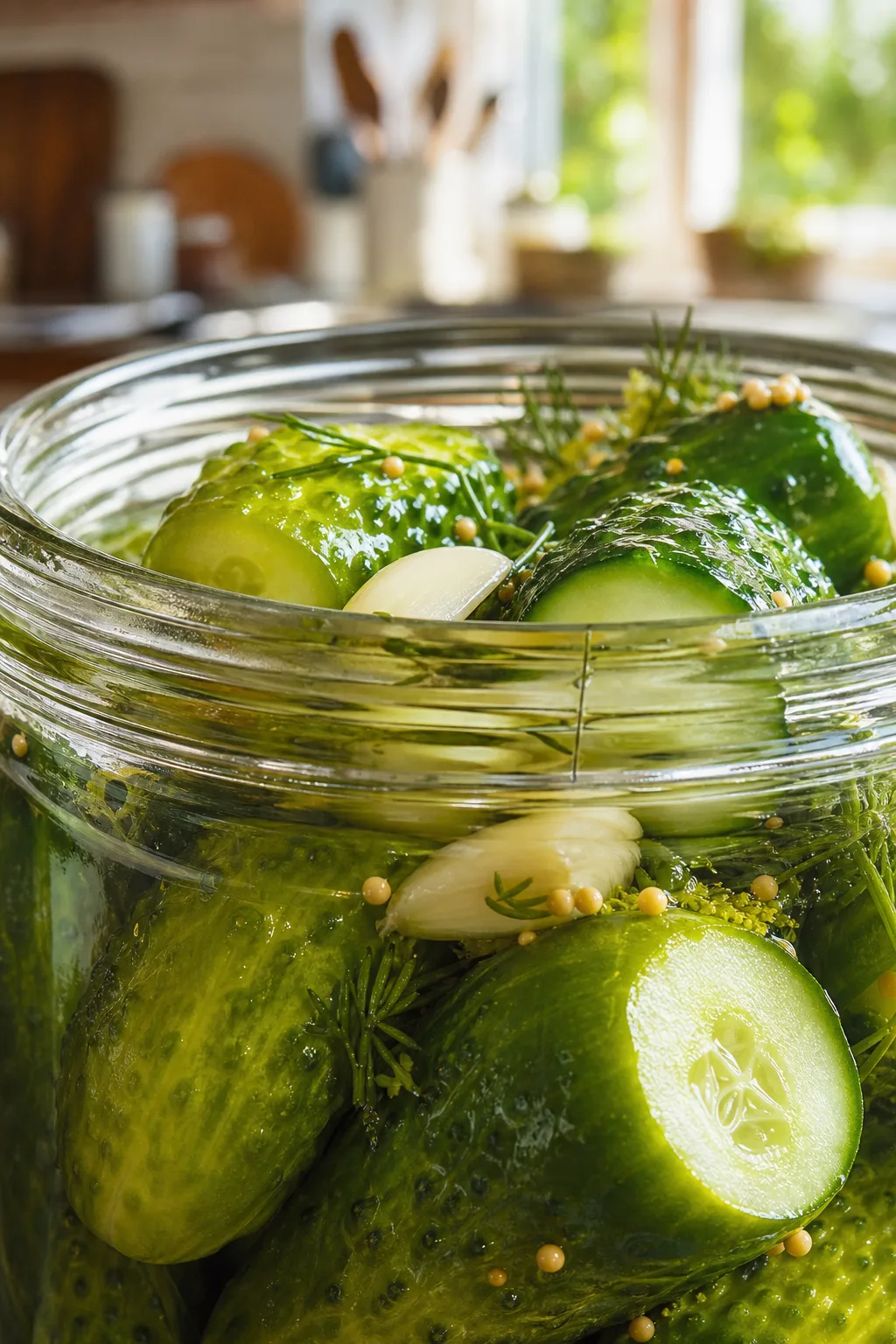
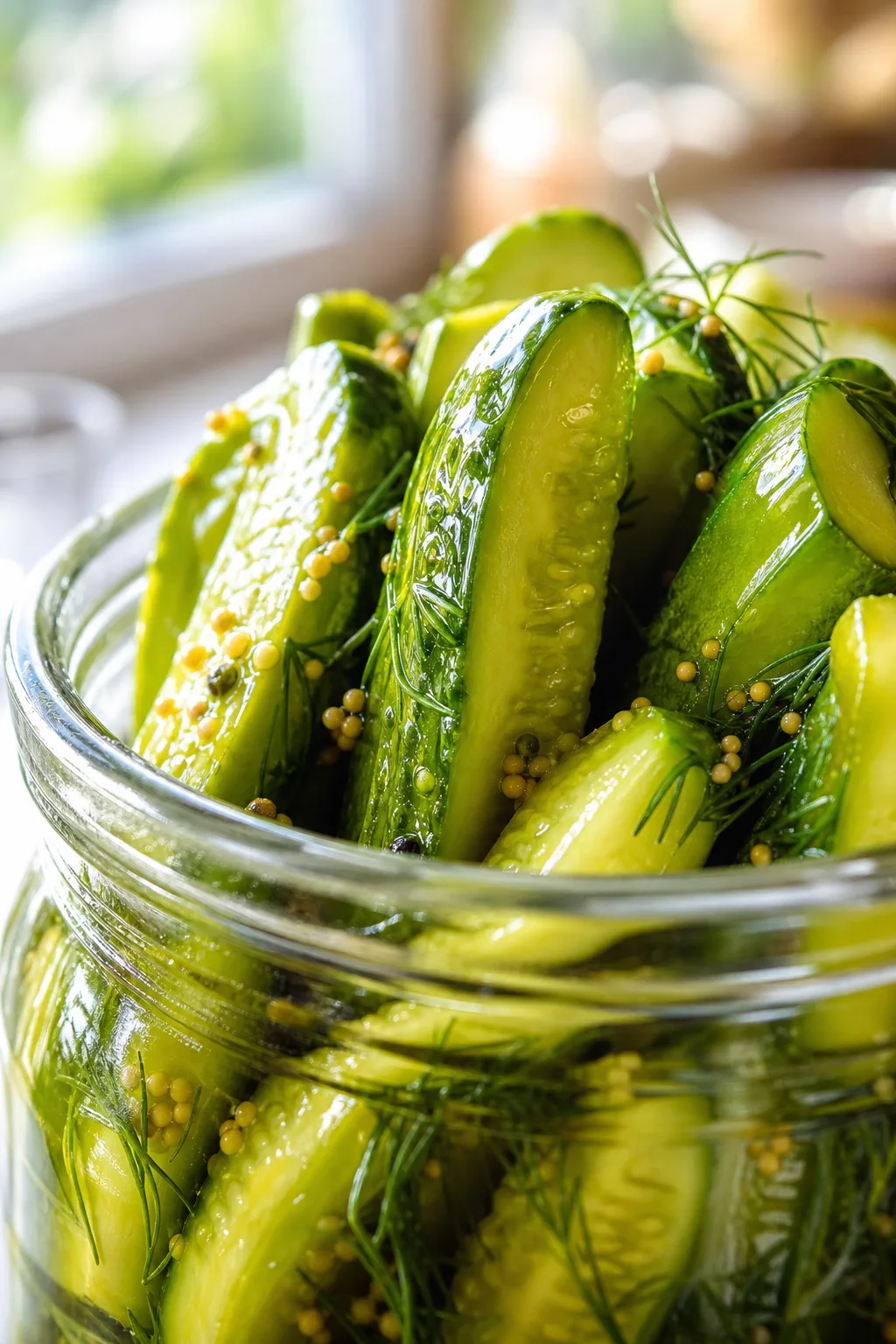
Add garlic cloves, mustard seeds, black peppercorns, and fresh dill sprigs evenly into each jar over the cucumbers. These aromatics give the pickles their signature flavor and aroma. Distributing them evenly ensures each bite is flavorful. Don’t skip the dill — it’s essential for that classic pickle taste.
⏱ Time: 5 minutes
✓ Doneness: Spices and herbs visibly layered atop cucumbers, aromatic scent released
Step 4
Pour the cooled brine over the cucumbers and spices, leaving about half an inch of headspace at the top. Make sure all cucumber slices are fully submerged to prevent mold growth. Use a clean utensil to press down gently if needed. Proper submersion is critical for safe fermentation and crispness.
⏱ Time: 5 minutes
✓ Doneness: Cucumbers fully covered by brine, no air pockets visible
Step 5
Seal the jars tightly and place them in the refrigerator. Unlike traditional fermentation, these quick pickles don’t require room temperature fermentation and are ready to eat in 48 hours. Refrigeration slows microbial growth, keeping pickles crisp and fresh.
⏱ Time: 2 days
✓ Doneness: Brine turns slightly cloudy, pickles develop tangy aroma
Step 6
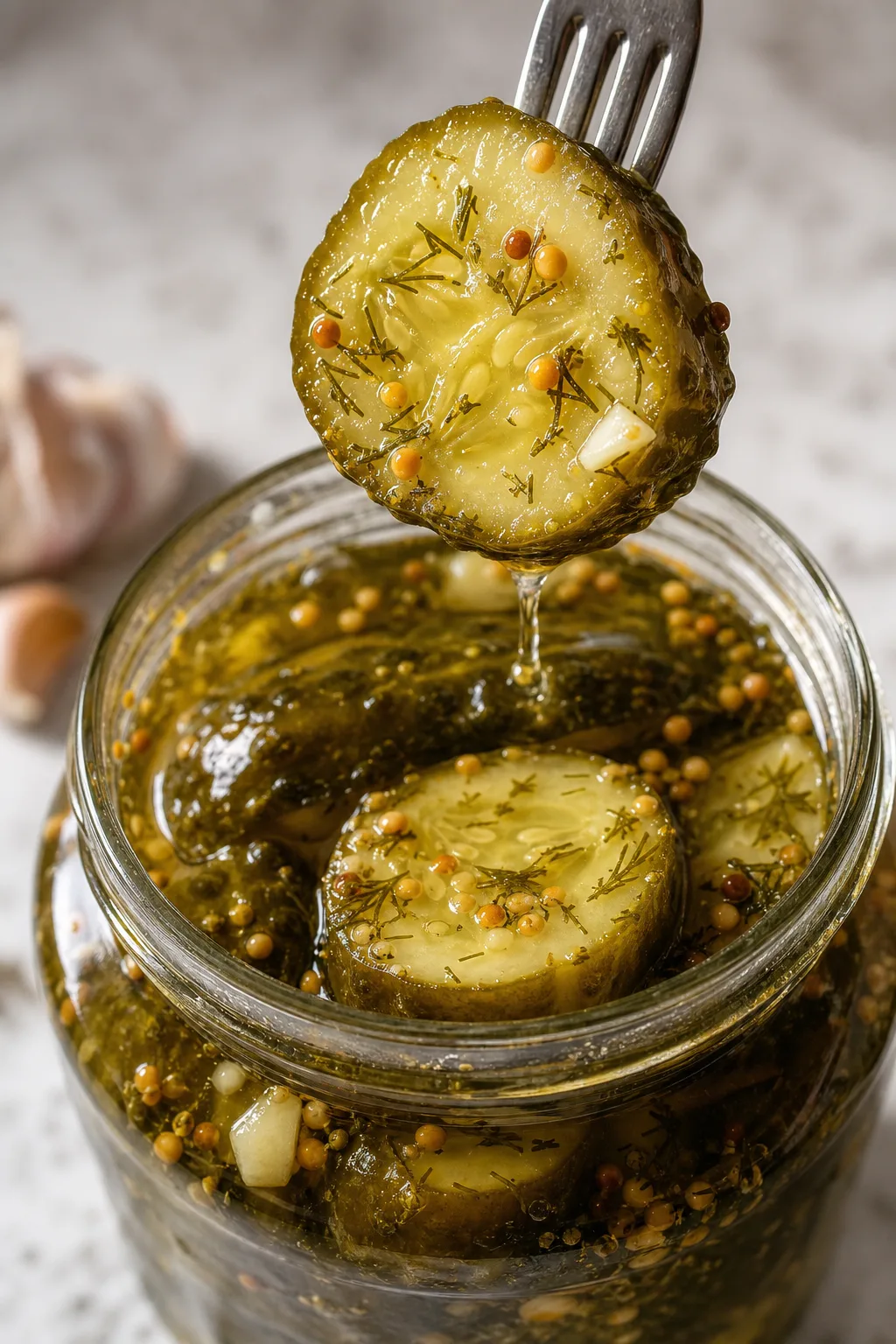
After 48 hours, taste a pickle to check for flavor and crunch. If you prefer a stronger tang, let them sit an extra day or two. The flavor deepens with time, but they’re best enjoyed within two weeks for optimal texture and taste.
⏱ Time: Up to 2 weeks
✓ Doneness: Pickles are tangy, flavorful, and crisp to bite
Step 7
Once opened, keep the pickles refrigerated and always use a clean utensil to avoid contamination. This keeps the pickles fresh and safe to eat for the duration of their shelf life.
⏱ Time: Ongoing
✓ Doneness: Pickles remain firm and flavorful, no off smells
Step 8
If you want to add a spicy kick, try adding sliced jalapeños or red pepper flakes to the jars before sealing. This adds a nice heat that balances the vinegar tang. Adjust the amount based on your spice tolerance.
⏱ Time: Optional prep step
✓ Doneness: Spicy aroma mingling with dill and garlic
Step 9
For a sweeter version, add a tablespoon of sugar to the brine mixture before heating. This balances the acidity and creates a classic sweet-and-sour flavor profile. Make sure sugar dissolves fully for even sweetness.
⏱ Time: Optional prep step
✓ Doneness: Brine tastes balanced with a hint of sweetness
Pro Tips
Use ice water to soak cucumbers before pickling to keep them extra crisp.
Soaking cucumbers in ice water for 30 minutes before pickling tightens their cell walls, resulting in a crunchier texture after pickling. This cold shock helps prevent sogginess during the brine soak.
Sterilize jars by boiling to prevent spoilage and extend shelf life.
Sterilizing jars removes bacteria and yeast that could cause spoilage or off-flavors. Boiling jars and lids ensures a clean environment for pickles to ferment safely and last longer in the fridge.
Don’t rush cooling the brine before pouring over cucumbers.
Hot brine can partially cook cucumbers, making them soft and mushy. Letting the brine cool to room temperature before adding preserves their crisp texture and fresh flavor.
Press cucumbers down to keep fully submerged in brine.
Exposure to air causes mold and spoilage. Using a clean utensil or weight to keep cucumbers under the brine prevents this and ensures even pickling.
Add aromatics evenly for balanced flavor in every bite.
Distributing garlic, dill, and spices evenly throughout the jar ensures consistent flavor throughout, so every pickle slice tastes just as good.
Store pickles in the fridge to slow fermentation and maintain crunch.
Refrigeration keeps the pickles fresh, prevents unwanted microbial growth, and preserves their crisp texture longer than room-temperature fermentation.
Experiment with spice additions like red pepper flakes for heat.
Adding spices lets you customize flavor profiles. Red pepper flakes add warmth without overpowering, making the pickles more versatile and exciting.
Common Mistakes to Avoid
Using cucumbers that are too large or old
Why it happens Many cooks grab whatever cucumbers are on hand without considering size or freshness, thinking all cucumbers pickle the same.
Fix Choose smaller, firm pickling cucumbers or Kirby types that hold texture well. Freshness matters; older cucumbers tend to be soft and watery, resulting in soggy pickles.
Pouring hot brine directly over cucumbers
Why it happens Rushing the process or not allowing brine to cool leads to cooking the cucumbers unintentionally.
Fix Always let the brine cool to room temperature before pouring. This preserves the crunch and fresh flavor of the cucumbers.
Not fully submerging cucumbers in brine
Why it happens Ignoring air exposure or not pressing down the cucumbers can lead to mold growth on exposed surfaces.
Fix Use a clean utensil or weight to keep cucumbers submerged. Check daily and press down if needed to prevent spoilage.
Using table salt with additives
Why it happens Many assume all salt is the same, but iodized or anti-caking salts can cloud brine and affect taste.
Fix Use pure kosher salt without additives for a clean brine and better flavor.
Skipping sterilization of jars
Why it happens Some cooks overlook this step, thinking refrigeration alone is enough to keep pickles safe.
Fix Always sterilize jars and lids by boiling to eliminate bacteria and extend shelf life safely.
Variations
Spicy Pickle Variation
Add sliced jalapeños or a teaspoon of red pepper flakes to the jars for a spicy kick. This variation pairs well with sandwiches and burgers, adding heat and depth without overpowering the classic pickle flavor.
Note: Monitor spice level carefully; too much heat can mask the dill and garlic. Adjust quantity based on preference.
Sweet and Sour Pickles
Include a tablespoon of sugar in the brine to balance acidity with sweetness. This creates a classic sweet-and-sour pickle perfect for snacking or serving alongside rich dishes.
Note: Ensure sugar dissolves fully in the brine to avoid grainy texture and uneven sweetness.
Garlic Dill Pickles
Increase the amount of fresh garlic and dill for a more pungent and aromatic pickle. Great for garlic lovers who want that bold flavor in every bite.
Note: Too much garlic can overpower; balance with fresh dill to maintain harmony.
Bread and Butter Pickles
Slice cucumbers thinner and add sliced onions with sugar and turmeric to the brine. These pickles have a sweet, tangy flavor with a golden hue, a nostalgic favorite for many families.
Note: Thinner slices absorb brine faster but soften quicker; consume within a week for best texture.
Fermented Pickles
Skip the vinegar and ferment cucumbers in a saltwater brine at room temperature for several days. This yields a tangy, probiotic-rich pickle with complex flavors and a satisfying crunch.
Note: Requires careful monitoring to avoid spoilage; use clean jars and weights to keep cucumbers submerged.
Nutrition
Per Serving:
Nutritional values are estimates and may vary based on specific ingredients used.
Storage & Tips
Room Temperature
Pickles should not be stored at room temperature for extended periods as this can lead to spoilage. Once prepared, keep jars sealed and refrigerated to maintain safety and quality.
Refrigerator
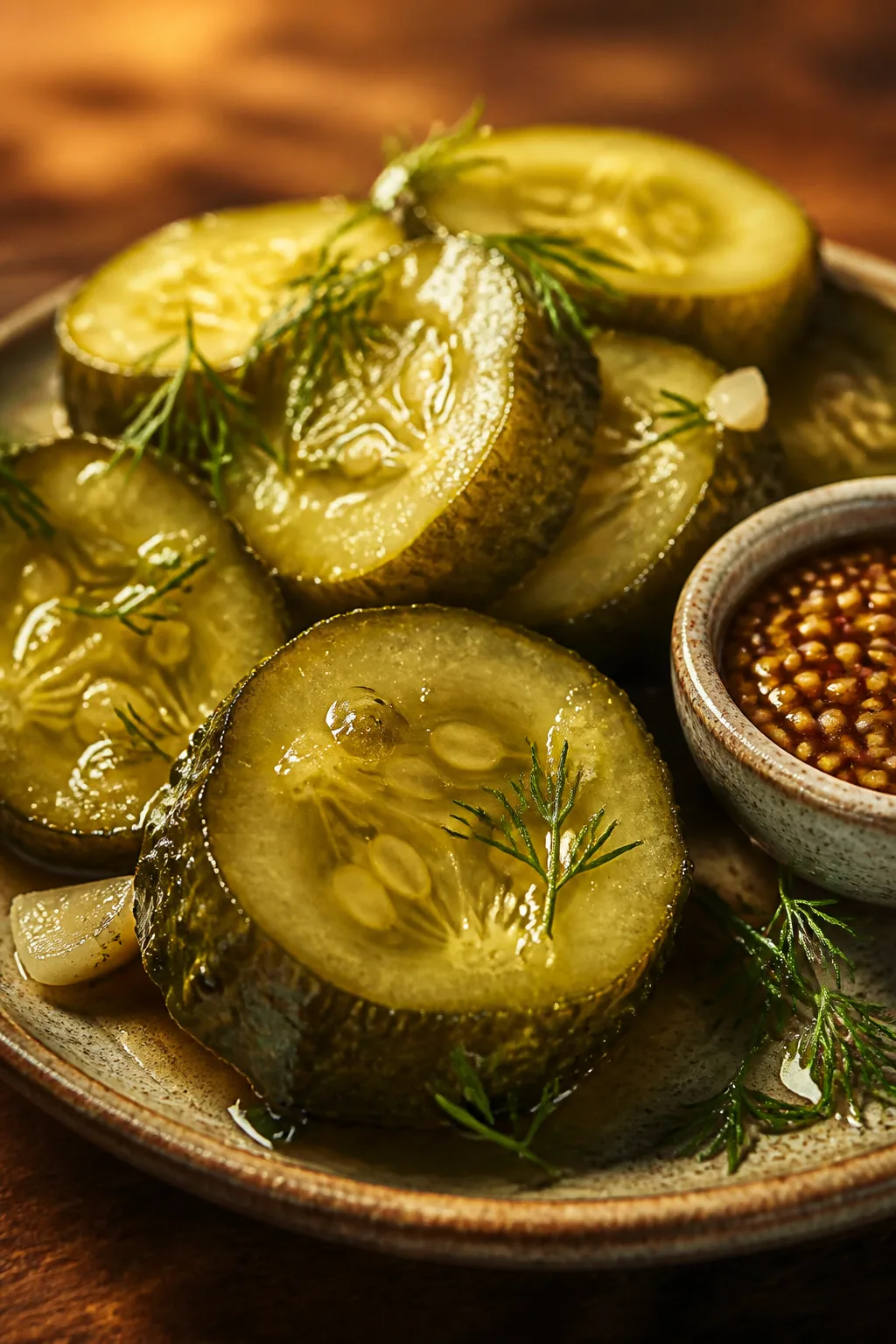
Store pickles in airtight jars in the refrigerator for up to 2 weeks. Flavor may intensify over time, but texture is best within the first week. Serve cold or at room temperature.
Freezer
Freezing pickles is not recommended as it breaks down their texture and makes them mushy. Instead, consume within the refrigerated storage period.
Reheating
Pickles are best enjoyed cold or at room temperature. Avoid reheating as it alters texture and flavor.
Make Ahead
You can prepare pickles up to 2 days in advance. Pack cucumbers and spices in jars and refrigerate, then pour cooled brine just before serving for maximum crunch.
FAQ
Can I use regular table salt instead of kosher salt?
While you can use table salt, it often contains iodine and additives that can cloud the brine and affect flavor. Kosher salt is preferred for its purity and clean taste, which leads to better pickles.
How long do homemade pickles last in the fridge?
Refrigerated pickles usually last about 2 weeks. Their flavor will intensify over time, but texture is best within the first week. Always use clean utensils to avoid contamination.
Can I make pickles without vinegar?
Yes, you can ferment cucumbers in a saltwater brine without vinegar, resulting in probiotic-rich pickles. However, this requires careful monitoring to prevent spoilage and a longer fermentation time.
Why are my pickles not crunchy?
Soft pickles often result from using overripe cucumbers, hot brine poured over cucumbers, or insufficient salt. Using fresh cucumbers, cooling the brine before pouring, and proper salt levels help maintain crunch.
Can I add other spices to my pickles?
Absolutely! Spices like red pepper flakes, coriander seeds, or bay leaves can add unique flavors. Just be sure not to overpower the classic dill and garlic base.
Do I have to sterilize jars for quick pickles?
Sterilizing jars is recommended to prevent bacterial contamination and extend shelf life, even for quick refrigerator pickles.
Can I reuse the brine for another batch?
It's best to make fresh brine for each batch to ensure proper acidity and salt balance. Reusing brine can lead to inconsistent results and potential spoilage.
How thick should I slice cucumbers for pickling?
Slices about 1/4 to 1/2 inch thick work well for balancing flavor absorption and maintaining crunch. Thinner slices pickle faster but can become soft quickly.
Final Thoughts
I hope you enjoy making these easy homemade pickles as much as I do! They’re a simple way to add fresh, tangy crunch to any meal. Let me know how your batch turns out!