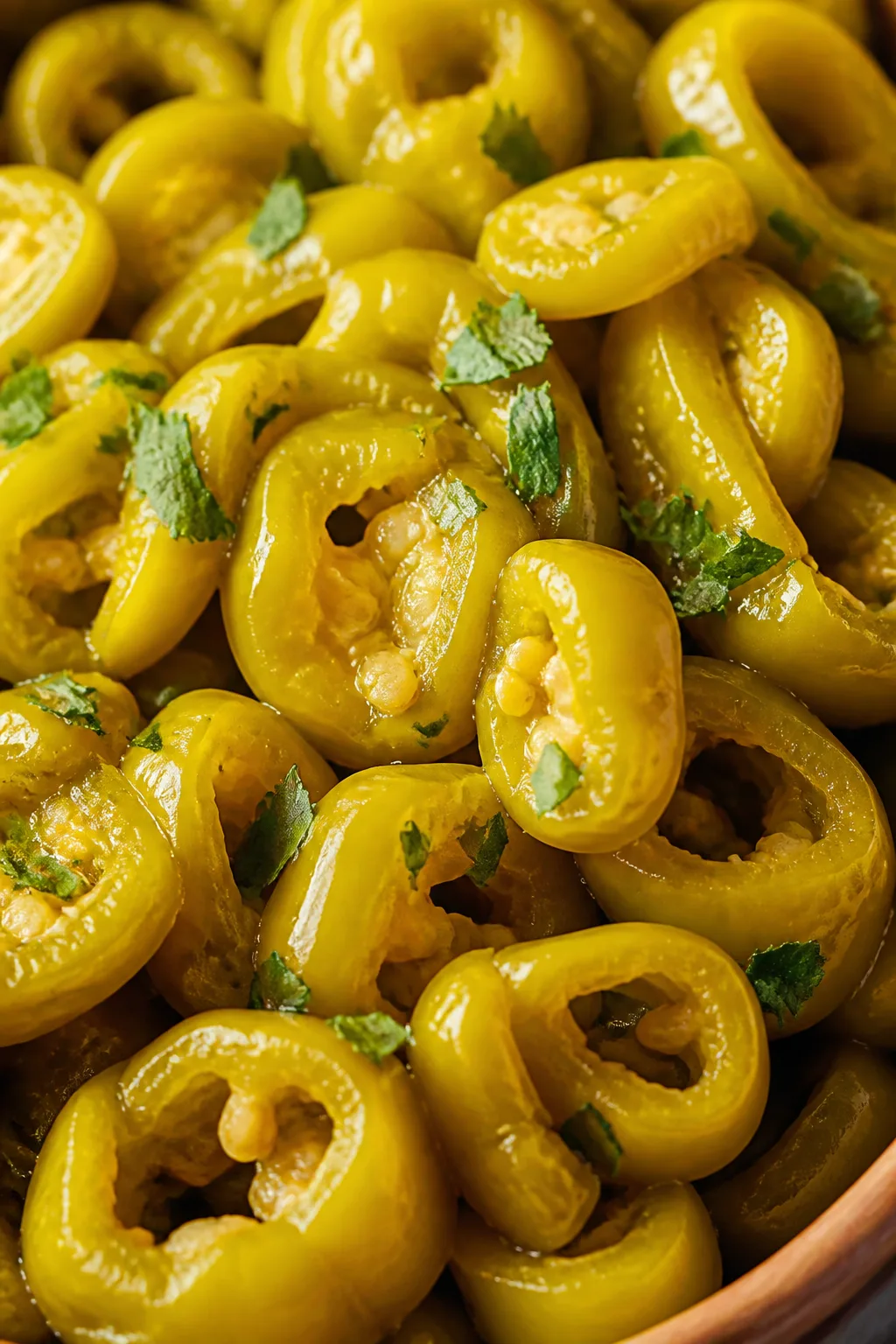
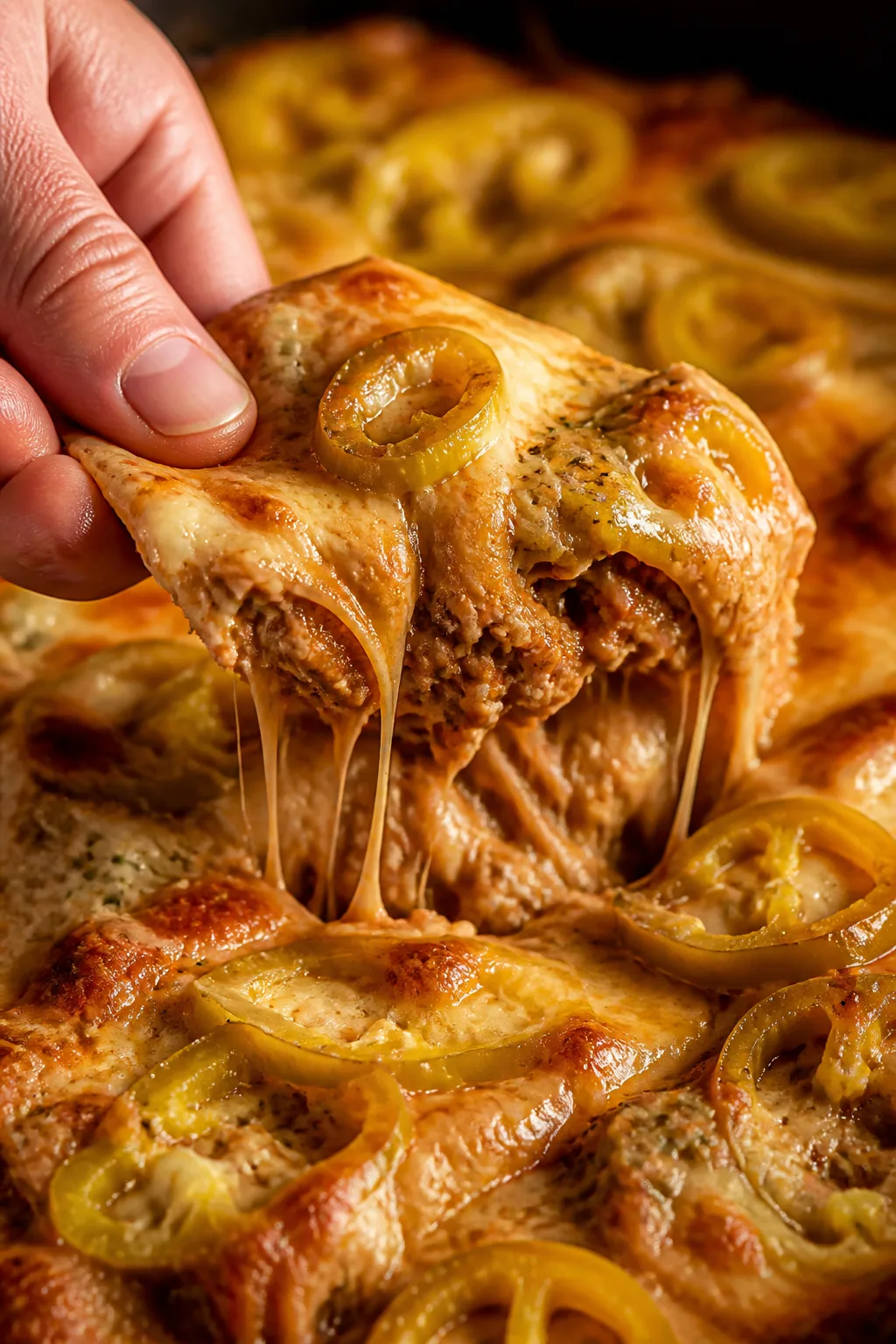
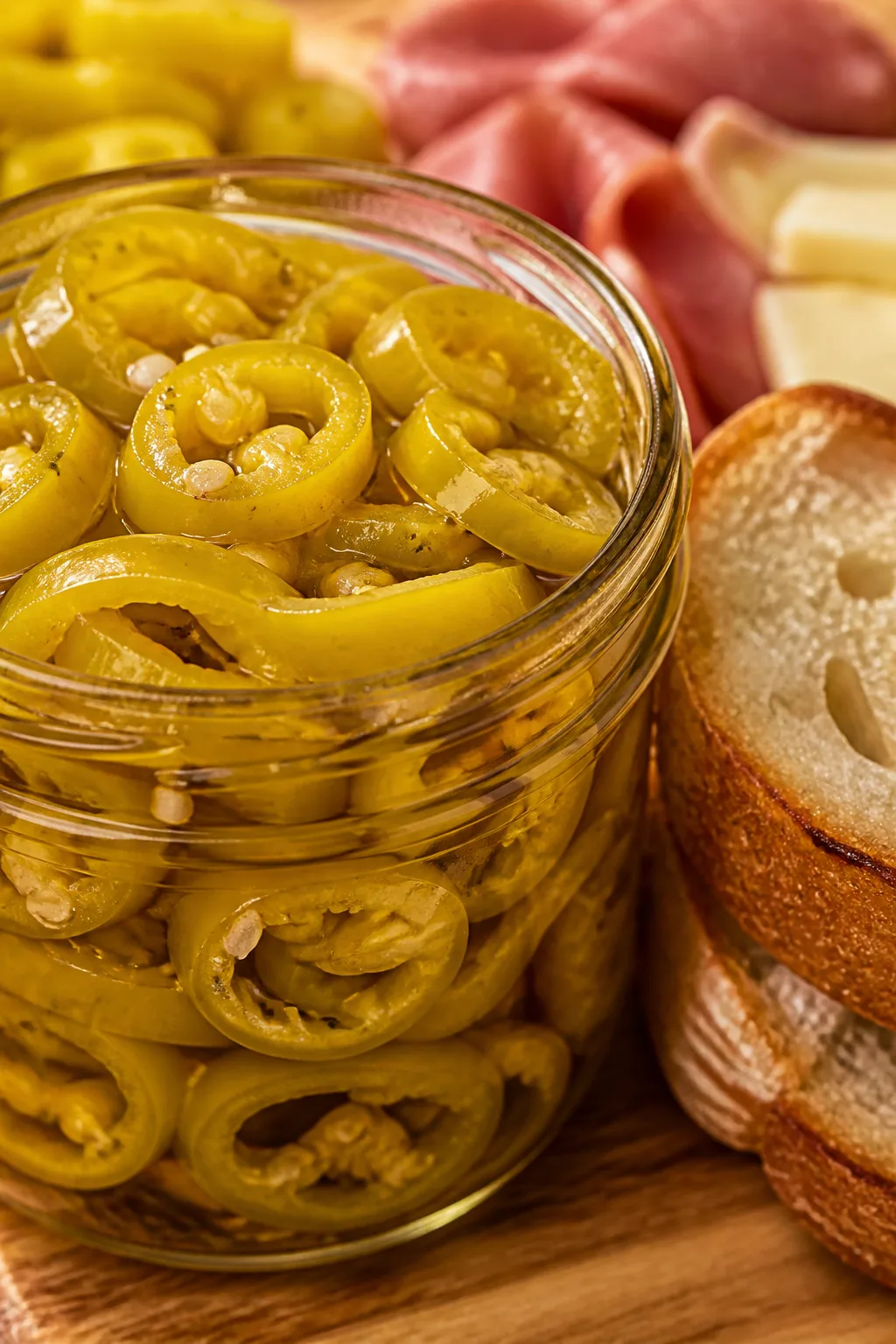
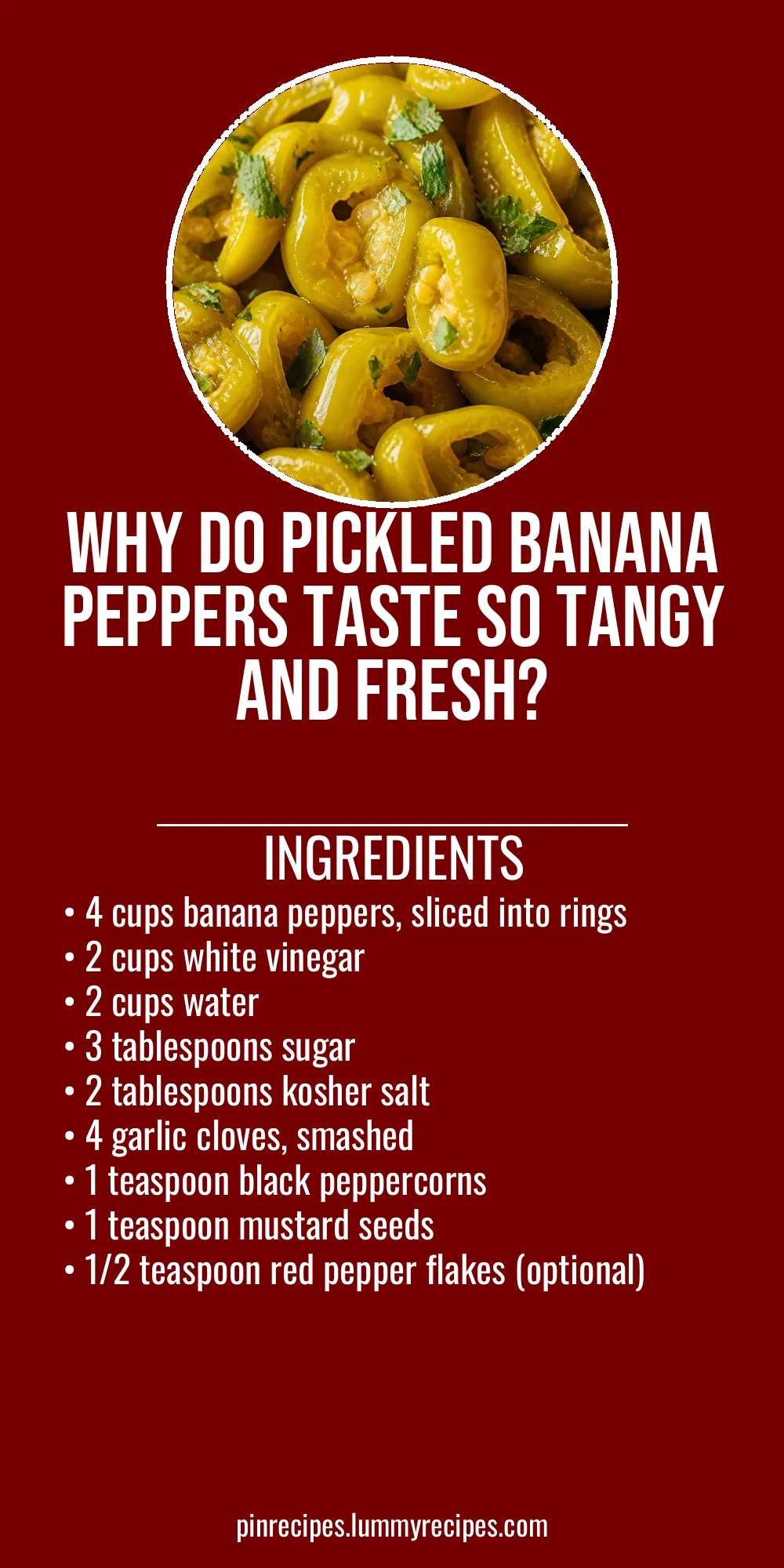
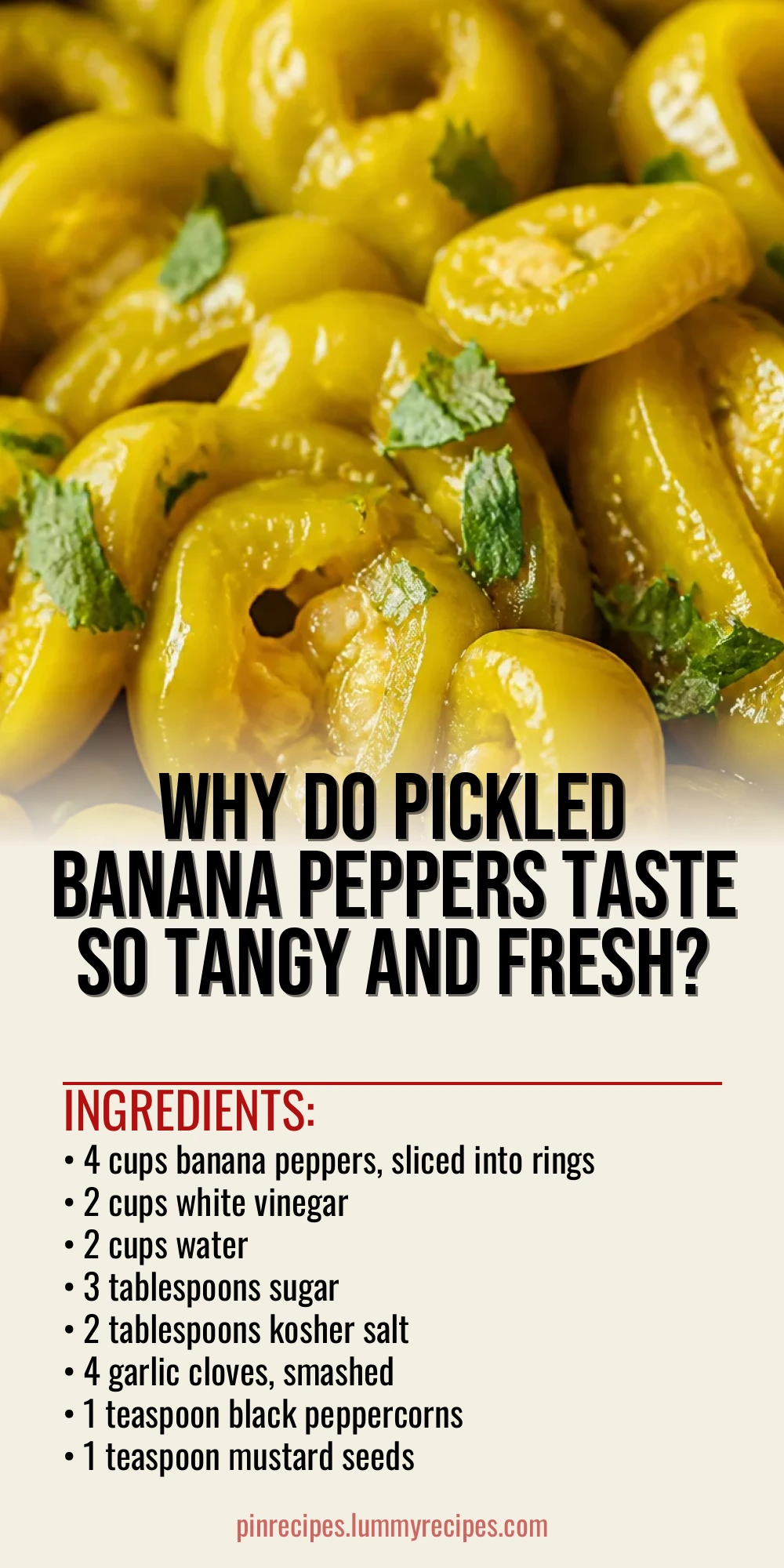
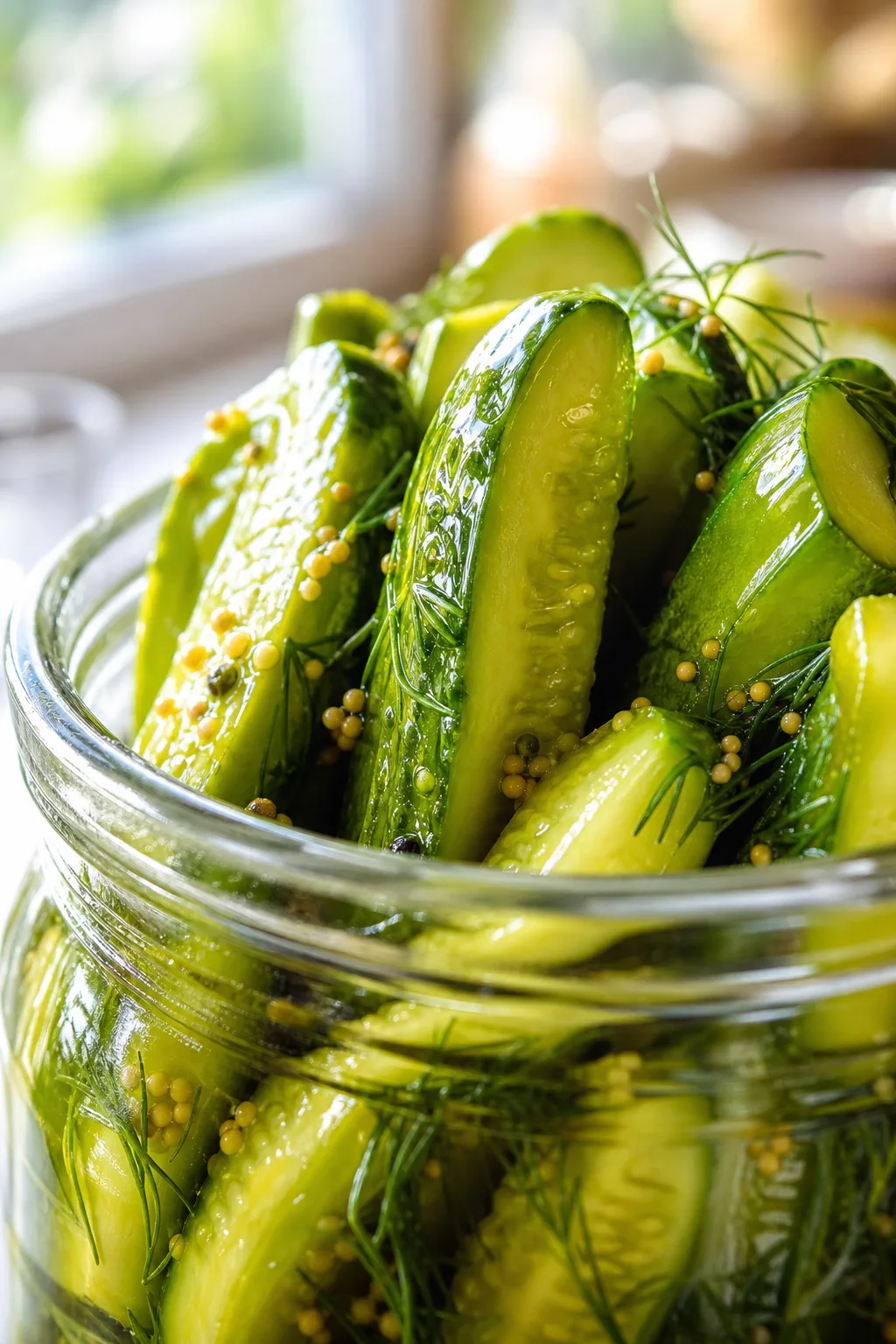
These pickled banana peppers add the perfect tangy crunch to sandwiches and salads. I love how the simple brine brings out their natural sweetness and bite. Great to make ahead and keep in the fridge for quick flavor boosts!
Introduction
I first made pickled banana peppers years ago when I wanted a tangy, crunchy topping for my sandwiches that I could keep on hand all the time. Store-bought versions often tasted too salty or lacked that fresh snap, so I experimented until I found a simple brine that brings out the peppers' natural sweetness while adding just the right amount of tang. What sets this recipe apart is soaking the sliced peppers briefly in ice water before pickling, which keeps them crisp and vibrant even after sitting in the jar for weeks. Plus, the combination of garlic, peppercorns, and mustard seeds gives a subtle warmth and complexity without overpowering the peppers' flavor. The result is a bright, flavorful pickle that’s perfect for sandwiches, salads, or even as a zesty snack on its own. I love how easy it is to make and how it elevates everyday meals with minimal effort. If you’re new to pickling, this recipe is a great place to start because it’s straightforward and forgiving. Expect a crunchy, tangy, and slightly sweet pickle with a beautiful golden-yellow color that’s as pretty as it is delicious. It’s a little jar of sunshine you can enjoy all year long.
What You'll Need
Approximately 4 cups pickled banana peppers, 4 servings
- 4 cups banana peppers, sliced into rings
- 2 cups white vinegar
- 2 cups water
- 3 tablespoons sugar
- 2 tablespoons kosher salt
- 4 garlic cloves, smashed
- 1 teaspoon black peppercorns
- 1 teaspoon mustard seeds
- 1/2 teaspoon red pepper flakes (optional)
How To Do It
Step 1
Start by slicing the banana peppers into uniform rings about 1/4 inch thick. This ensures even pickling and a consistent texture throughout. Next, soak the sliced peppers in ice water for about 15 minutes. This step is crucial because it helps the peppers retain their crunch during the pickling process by firming up their cell walls. Avoid skipping this step or using warm water, as it can result in softer peppers. After soaking, drain and pat them dry thoroughly with paper towels to remove excess moisture, which could dilute the brine.
⏱ Time: 20
✓ Doneness: Peppers feel firm and crisp to the touch after soaking and drying.
Step 2
In a medium saucepan, combine the white vinegar, water, sugar, kosher salt, garlic cloves, black peppercorns, mustard seeds, and optional red pepper flakes. Bring the mixture to a boil over medium-high heat, stirring occasionally to dissolve the sugar and salt completely. Boiling the brine is essential because it extracts flavors from the spices and ensures the sugar and salt are fully dissolved, which balances the acidity and sweetness. Once boiling, reduce heat and let simmer for 2-3 minutes. Then, carefully pour the hot brine over the prepared banana peppers in a heat-safe jar or container, making sure the peppers are fully submerged. Let it cool to room temperature before sealing and refrigerating.
⏱ Time: 15
✓ Doneness: Brine is clear and aromatic; peppers are fully covered and beginning to soften slightly.
Step 3
Seal the jar and refrigerate the pickled banana peppers for at least 24 hours before tasting. The flavors will develop more fully after a day, but they’re often delicious even sooner. For best flavor and texture, wait 3-5 days. The cold temperature slows the pickling process, allowing the peppers to soak up the brine slowly, which enhances their tanginess and crunch. Avoid leaving the jar out at room temperature for extended periods as this can affect the safety and texture of the peppers.
⏱ Time: 1440
✓ Doneness: Peppers have a bright yellow color and a balanced tangy flavor.
Step 4
When ready to serve, use clean utensils to remove the peppers from the jar to avoid contamination. These pickled banana peppers are fantastic on sandwiches, burgers, salads, or as a zesty addition to cheese boards. They also pair well with grilled meats and roasted vegetables. The brine can be reused once strained and boiled again for a second batch, but the flavor will be milder.
⏱ Time: 5
✓ Doneness: Peppers are crisp and flavorful with a balanced tang and mild spice.
Step 5
If you want to increase the heat, add more red pepper flakes or include a few sliced jalapeños in the jar. For a sweeter pickle, increase the sugar slightly but be careful not to overpower the natural pepper flavor. Taste adjustments can be made after the initial 24-hour period, but it's best to keep changes subtle to maintain balance.
⏱ Time: 5
✓ Doneness: Flavor adjustments are noticeable but harmonious.
Step 6
Use sterilized jars and lids to store your pickled banana peppers safely. To sterilize, wash jars in hot soapy water, rinse well, and place them in a preheated oven at 225°F for 10 minutes or boil jars and lids in water for 10 minutes. Proper sterilization prevents spoilage and extends shelf life. Avoid touching the inside of the jars or lids after sterilizing to keep them clean.
⏱ Time: 15
✓ Doneness: Jars are clean, dry, and warm before filling.
Step 7
Label your jars with the date you made the pickles. Homemade pickled banana peppers keep best in the refrigerator for up to 2 months. Check periodically for any signs of spoilage such as off smells, mold, or discoloration. Always use clean utensils when removing peppers to maintain freshness.
⏱ Time: 5
✓ Doneness: Jars are properly labeled and stored in the fridge.
Step 8
If you want to preserve the pickled banana peppers for longer storage outside the refrigerator, you can process the sealed jars in a boiling water bath for 10 minutes. This step is optional but recommended for pantry storage. Ensure jars are fully submerged in boiling water and cool completely before storing. This method extends shelf life up to a year.
⏱ Time: 15
✓ Doneness: Jars seal properly with lids concave and no leaks.
Step 9
Before serving, drain excess brine if desired or use the brine as a flavorful addition to salad dressings, marinades, or cocktails. The brine has a bright tang and subtle spice that can enhance many dishes. Store leftover brine in the fridge for up to a week.
⏱ Time: 5
✓ Doneness: Brine is clear and aromatic, enhancing other recipes.
Pro Tips
Soak the sliced peppers in ice water for 15 minutes before pickling.
This step firms the pepper’s cell walls, preserving crunchiness after pickling. Without this soak, peppers tend to soften and lose their texture, resulting in soggy pickles.
Use a sharp knife to slice the peppers evenly.
Uniform slices pickle evenly, ensuring consistent texture and flavor throughout the jar. Uneven pieces can cause some to be over or under-pickled.
Bring the brine to a full boil to dissolve sugar and salt completely.
Boiling extracts flavors from spices and ensures the brine is properly balanced. Skipping this can lead to uneven flavor and grainy texture.
Sterilize jars and lids before filling.
Sterilization prevents bacteria growth and spoilage, extending shelf life and ensuring food safety.
Store pickled peppers in the refrigerator for best texture.
Cold slows fermentation and preserves the crispness and bright color of the peppers. Room temperature storage can cause spoilage.
Label jars with the date made.
Tracking freshness helps you use pickles within their optimal flavor window and avoid eating spoiled food.
Use clean utensils every time you remove peppers from the jar.
Avoids contamination that can lead to mold or off-flavors, keeping your pickles fresh longer.
Common Mistakes to Avoid
Skipping the ice water soak
Why it happens Many cooks overlook this step, thinking it’s unnecessary or time-consuming.
Fix Soak the sliced peppers in ice water for 15 minutes before pickling. This firms the peppers and prevents sogginess, resulting in a crisp texture.
Using the wrong vinegar type
Why it happens Some assume any vinegar will work, but malt or cider vinegar can alter color and flavor.
Fix Use distilled white vinegar with 5% acidity for a clean taste and bright yellow color in your pickled peppers.
Not sterilizing jars
Why it happens People often don’t realize the importance of sterilization for preservation and safety.
Fix Always sterilize jars and lids by boiling or baking to prevent spoilage and extend shelf life.
Overfilling the jar
Why it happens Trying to fit too many peppers can cause uneven brine coverage.
Fix Leave some headspace and ensure peppers are fully submerged in brine to pickle evenly and prevent mold.
Using dull knives to slice peppers
Why it happens Dull knives crush rather than slice, damaging pepper texture.
Fix Use a sharp knife for clean cuts to maintain the peppers’ structure and appearance.
Variations
Spicy Pickled Banana Peppers
Add sliced jalapeños or increase red pepper flakes for a hotter pickle. This variation adds a fiery kick while keeping the tangy sweetness intact.
Note: Monitor heat level carefully and adjust spices gradually to avoid overpowering the peppers.
Sweet and Tangy Pickled Banana Peppers
Increase sugar slightly and add a cinnamon stick or a few cloves to the brine for a sweeter, aromatic twist. Great for those who prefer milder acidity.
Note: Balance sweetness carefully to keep the pickle from becoming syrupy.
Garlic-Heavy Pickled Banana Peppers
Double the garlic cloves for a pungent, savory flavor profile perfect for garlic lovers. The brine becomes more aromatic and robust.
Note: Use fresh garlic to avoid bitterness and ensure even flavor distribution.
Herb-Infused Pickled Banana Peppers
Add fresh herbs like dill, thyme, or oregano to the jar for an herbal note that complements the tanginess. This variation is great for salads and sandwiches.
Note: Add herbs just before sealing to preserve their fresh flavor.
Quick Refrigerator Pickled Banana Peppers
Skip the boiling water bath and store the jar in the fridge immediately after pouring hot brine. Ready to eat in 24 hours but best after 3 days.
Note: This method is faster but requires refrigeration to keep pickles safe and fresh.
Nutrition
Per Serving:
Nutritional values are estimates and may vary based on specific ingredients used.
Storage & Tips
Room Temperature
Pickled banana peppers should not be left at room temperature for extended periods after opening. Unopened, properly processed jars can be stored at room temperature, but once opened, refrigerate promptly to maintain safety and texture.
Refrigerator
Store pickled banana peppers in an airtight container in the refrigerator for up to 2 months. The flavor will intensify over time, but texture may soften slightly after several weeks. Use clean utensils to avoid contamination.
Freezer
Freezing pickled banana peppers is not recommended as it can cause loss of texture and flavor. If necessary, freeze in an airtight container for up to 1 month, then thaw in the refrigerator. Expect softer texture after thawing.
Reheating
No reheating is needed. Serve cold or at room temperature. The brine can be warmed slightly if using as a marinade, but avoid heating the peppers themselves to preserve crunch.
Make Ahead
You can slice the banana peppers and prepare the brine 1-2 days ahead. Store sliced peppers in ice water in the fridge to maintain crispness. Assemble and pour brine on the day of pickling for best texture and flavor.
FAQ
Can I use other types of peppers instead of banana peppers?
Yes, you can substitute with other mild peppers like pepperoncini or even jalapeños for more heat. Keep in mind that different peppers vary in thickness and water content, which can affect pickling time and texture. Adjust soaking time accordingly to maintain crunch.
How long do pickled banana peppers last in the fridge?
Properly stored in an airtight container, pickled banana peppers will stay fresh and flavorful for up to 2 months in the refrigerator. Always use clean utensils to prevent contamination and check for off smells or mold before use.
Do I need to sterilize the jars if I’m refrigerating the pickles?
Sterilizing jars is recommended for longer storage and safety, but if you plan to consume the pickles within a few weeks and keep them refrigerated, thorough cleaning with hot soapy water is usually sufficient. However, sterilization helps prevent spoilage and extends shelf life.
Can I make this recipe without sugar?
You can omit sugar if you prefer a less sweet pickle, but it helps balance the acidity and enhance flavor. Without sugar, the pickles will taste more sharply acidic and less rounded. Consider substituting with a small amount of honey or agave if desired.
Why are my pickled peppers soft after pickling?
Soft peppers usually result from skipping the ice water soak or using overripe peppers. Also, prolonged pickling at warm temperatures can break down cell walls. To keep peppers crisp, soak them in ice water before pickling and store the jars in the refrigerator.
Can I reuse the pickling brine?
Yes, you can strain and boil the brine again to reuse it for another batch of pickles. However, the flavor will be milder and the acidity may decrease slightly, so it's best for quick refrigerator pickles rather than long-term preservation.
Is it safe to eat pickled banana peppers without canning?
Yes, refrigerator pickles made with vinegar are safe to eat without canning as long as they are stored in the fridge and consumed within a few weeks. Canning extends shelf life and allows for room temperature storage but is not required for quick pickles.
How can I make my pickled banana peppers spicier?
Add sliced hot peppers like jalapeños or increase red pepper flakes in the brine. You can also leave some seeds in the banana peppers to increase heat. Adjust spice levels gradually to suit your taste.
Final Thoughts
I hope you enjoy making and eating these pickled banana peppers as much as my family does. They’re an easy way to add brightness and crunch to your meals—give them a try and let me know how they turn out!