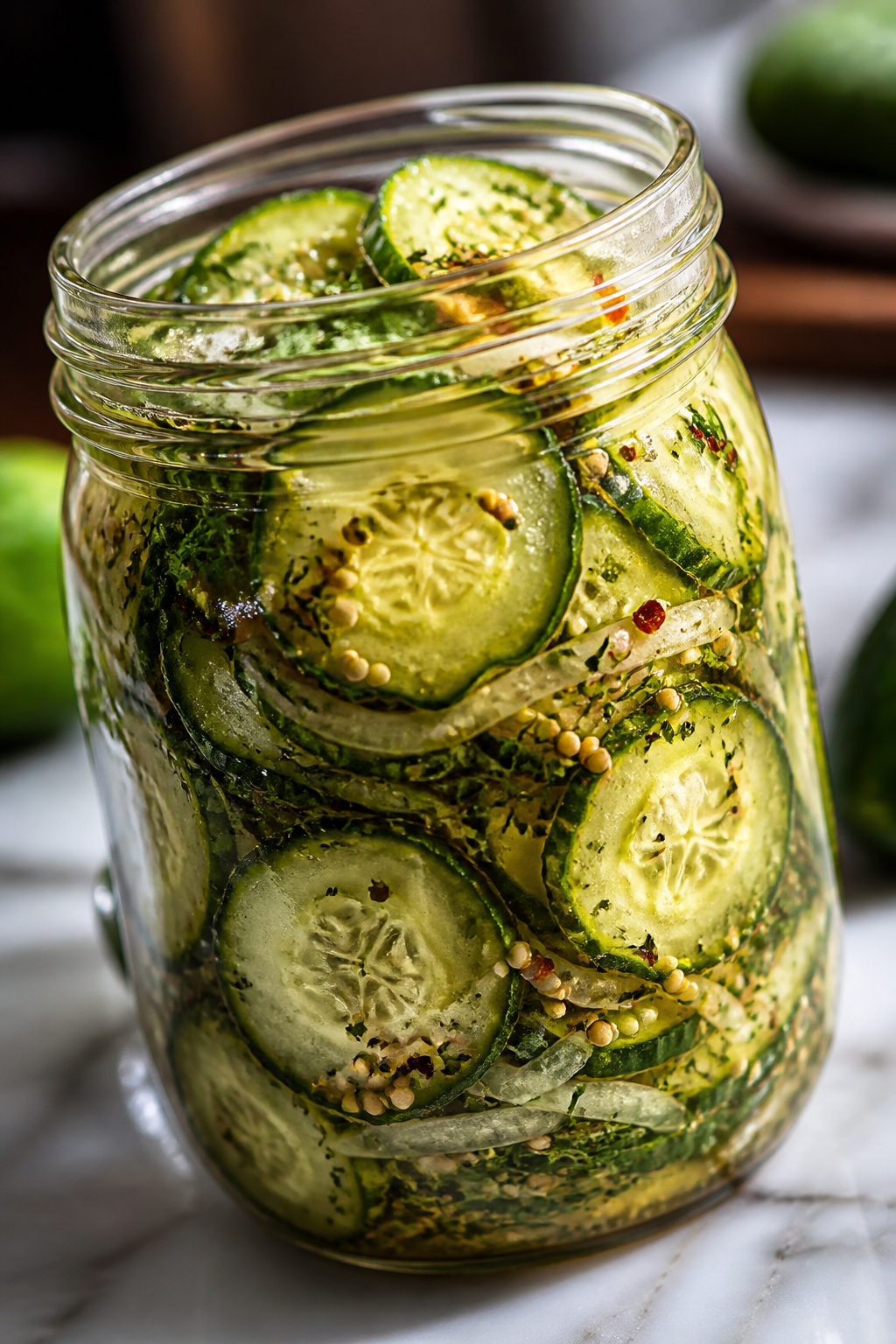
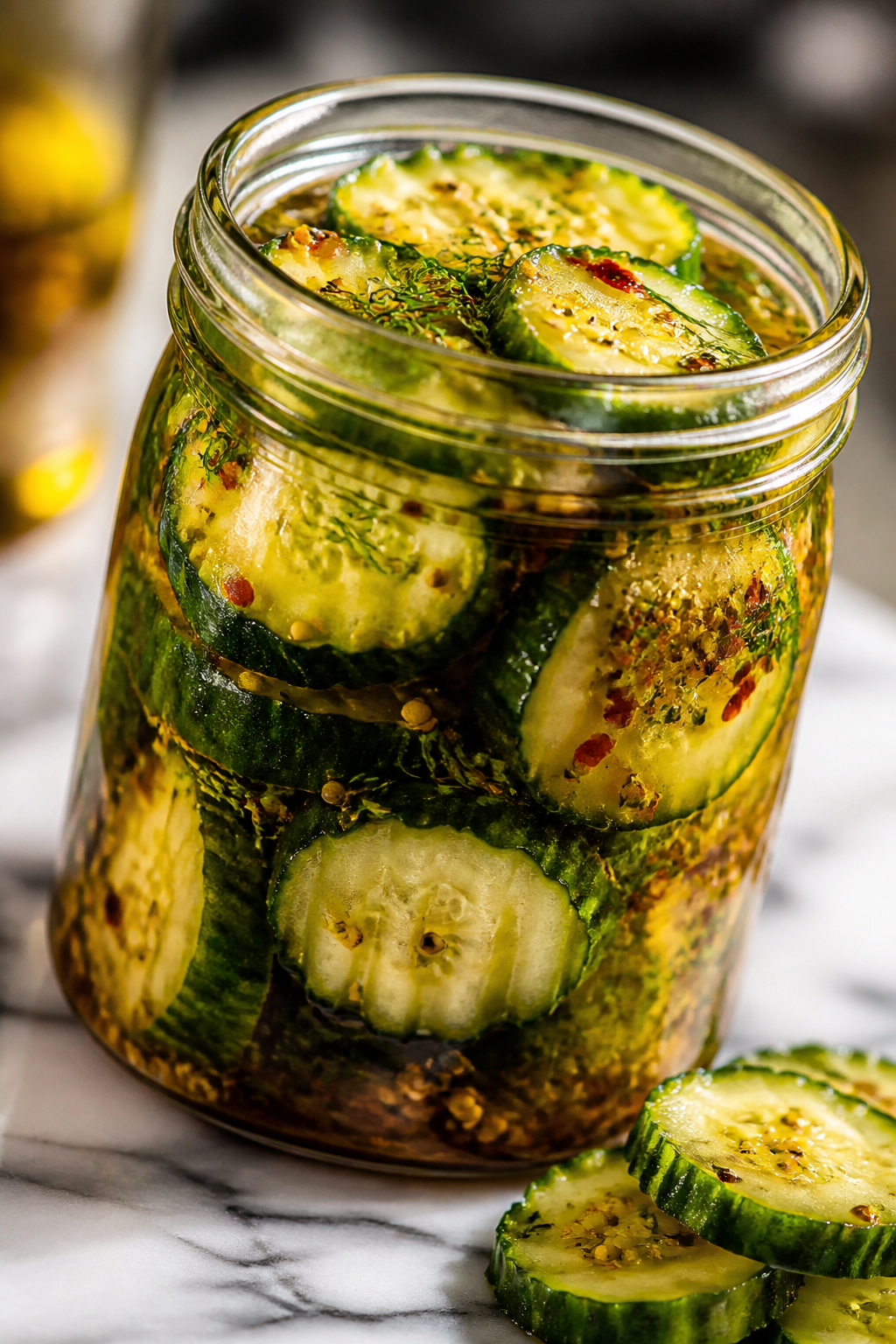
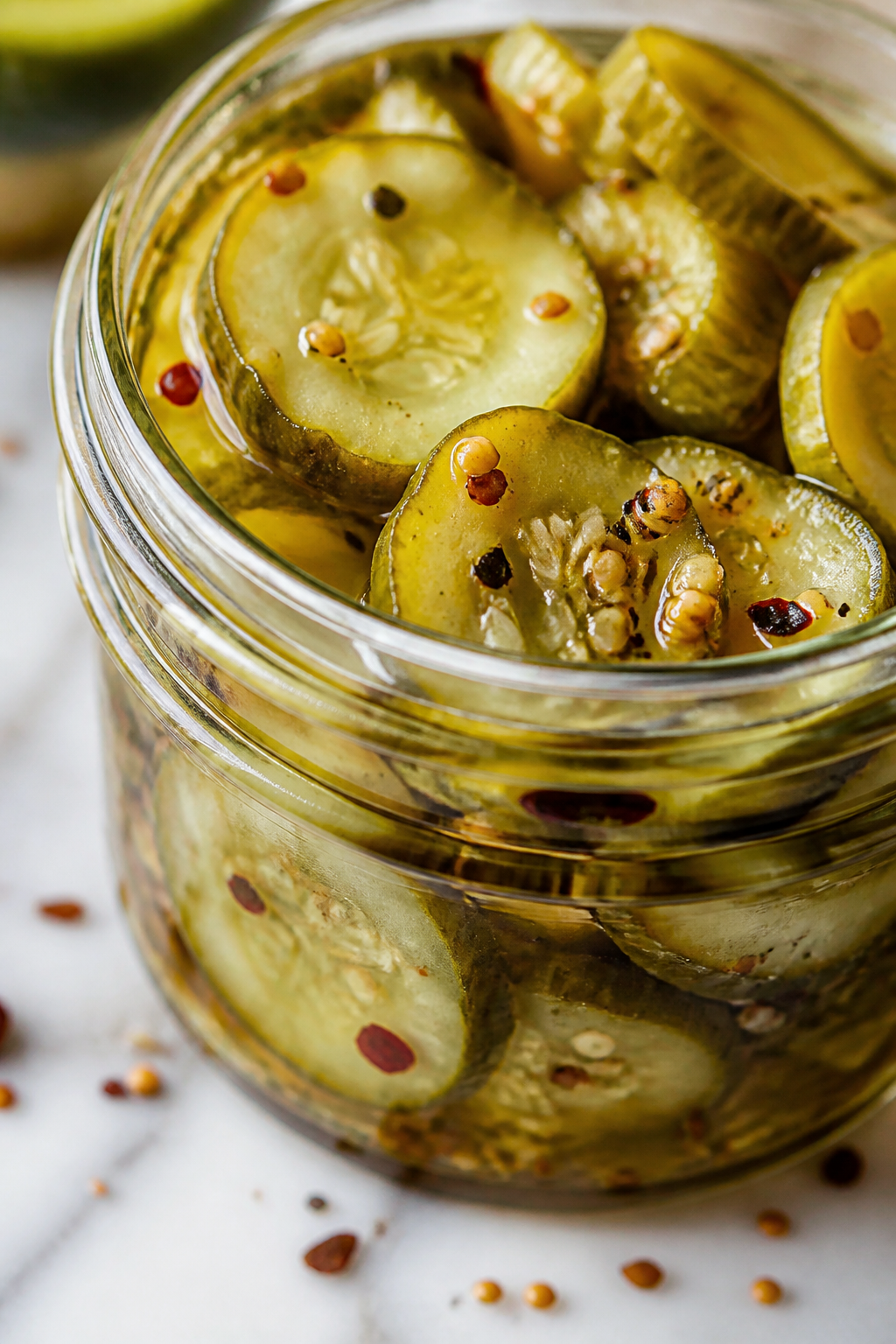
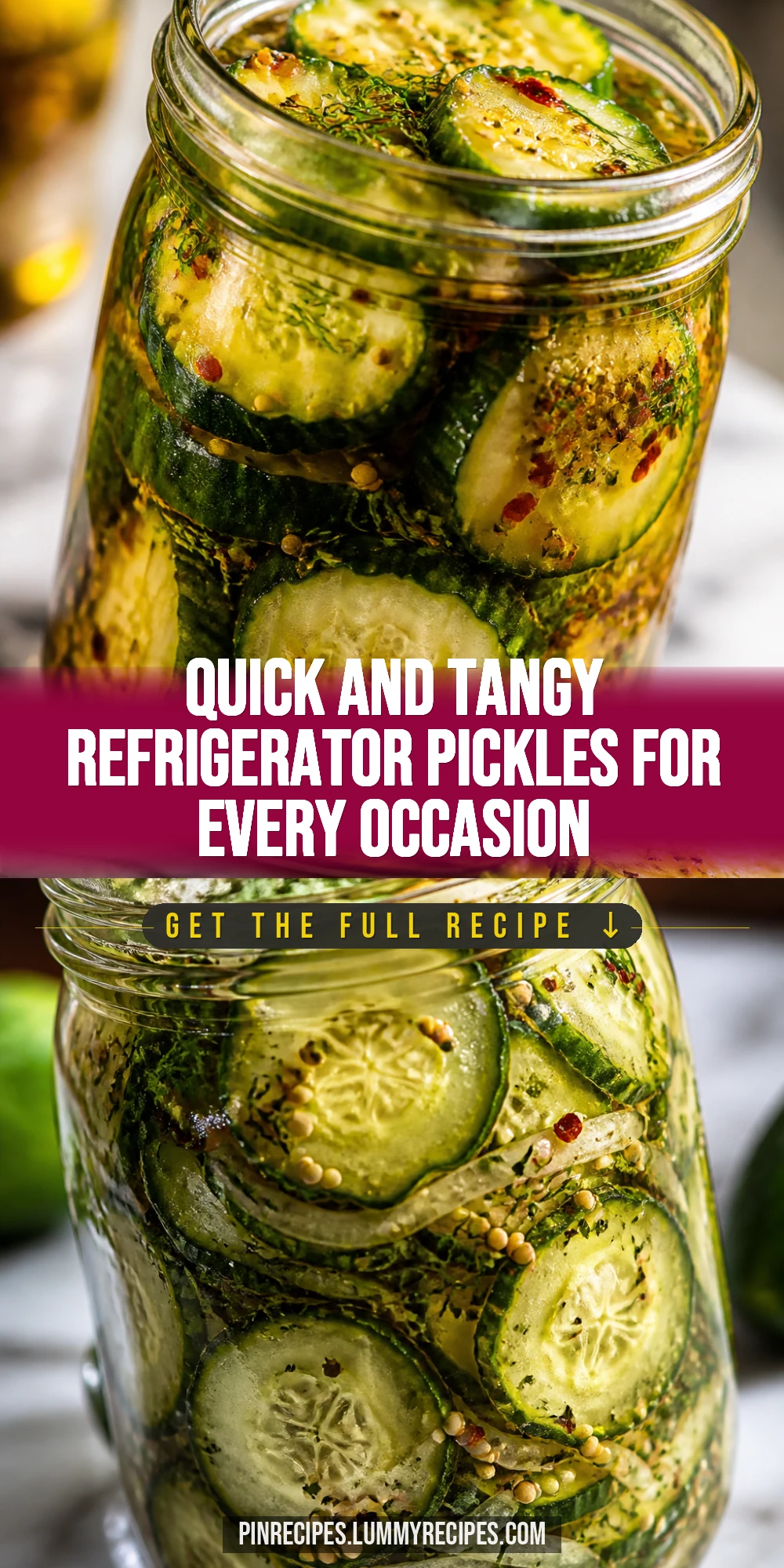
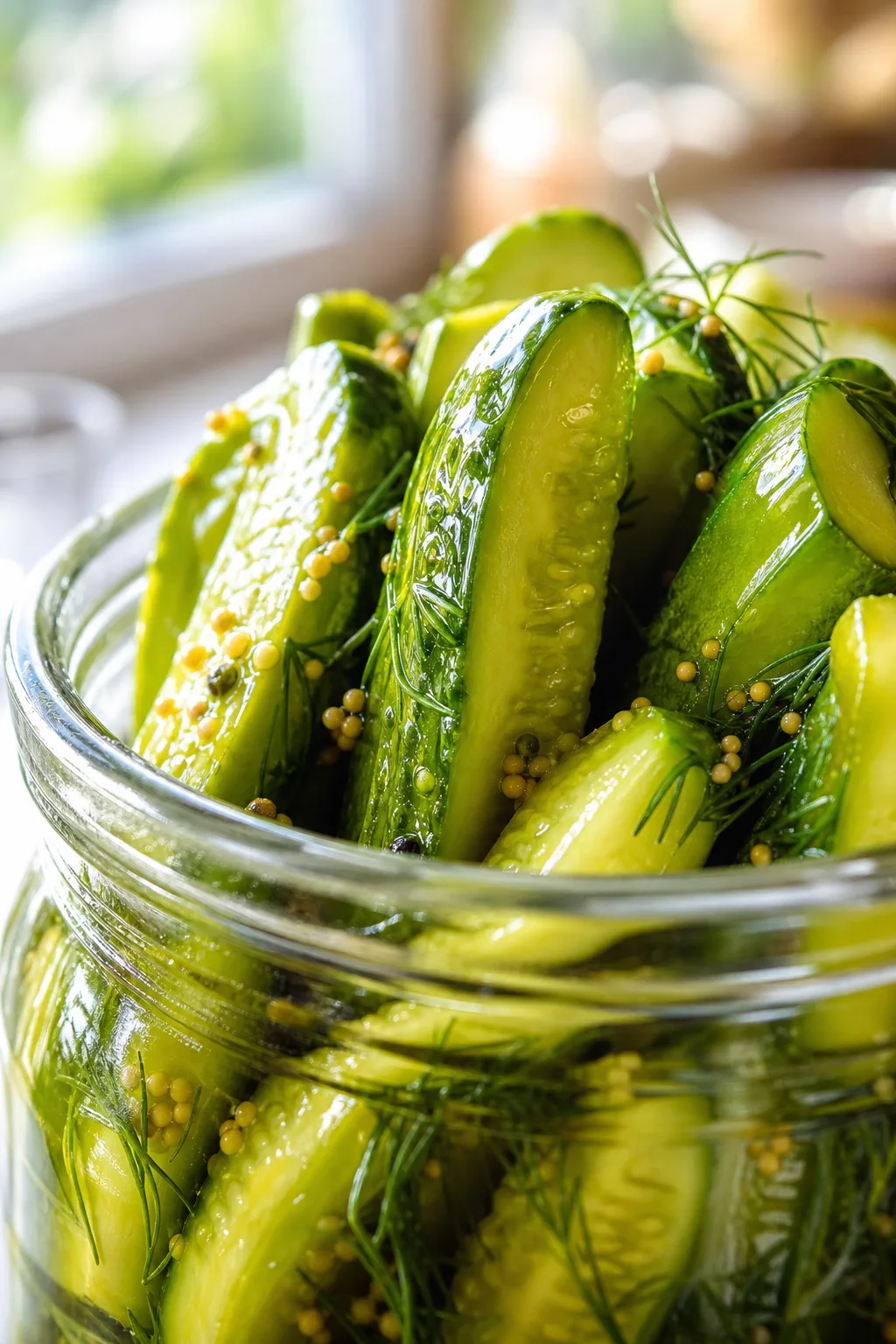
These refrigerator pickles are a quick and tasty way to enjoy fresh cucumbers with a tangy crunch. The secret is a simple brine with just the right balance of vinegar and spices. Perfect for a snack or sandwich topper anytime!
Introduction
I first made these refrigerator pickles on a whim one summer when my garden cucumbers were overflowing. I wanted something quick and easy without the fuss of canning, and these delivered perfectly. What makes this recipe stand out is the balance of vinegar and sugar that creates a tangy yet slightly sweet brine, plus the fresh dill that gives it that classic pickle flavor. I always smash a few garlic cloves in for that extra punch, and the peppercorns add a subtle warmth. The best part? You don’t have to wait weeks—these are ready to enjoy in just 24 hours. The pickles come out crisp and refreshing, perfect for topping sandwiches or just snacking on their own. I’ve tried a few variations, but this simple mix is my go-to because it’s reliable and tastes just like my grandma’s. Plus, it’s so easy to make that I often whip up a batch to keep in the fridge for quick snacks or last-minute additions to meals.
What You'll Need
Approximately 4 cups of pickles, 4 servings
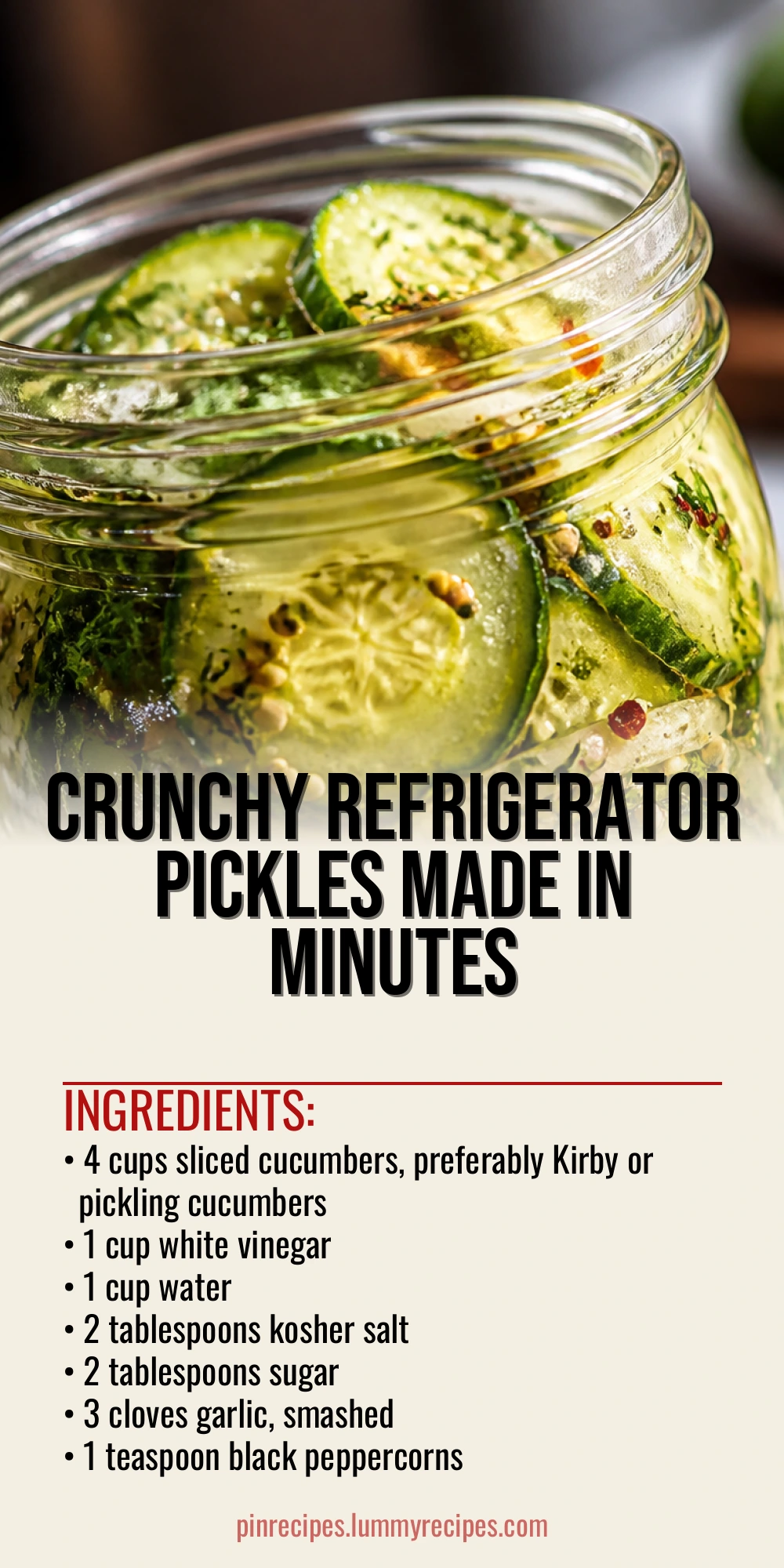
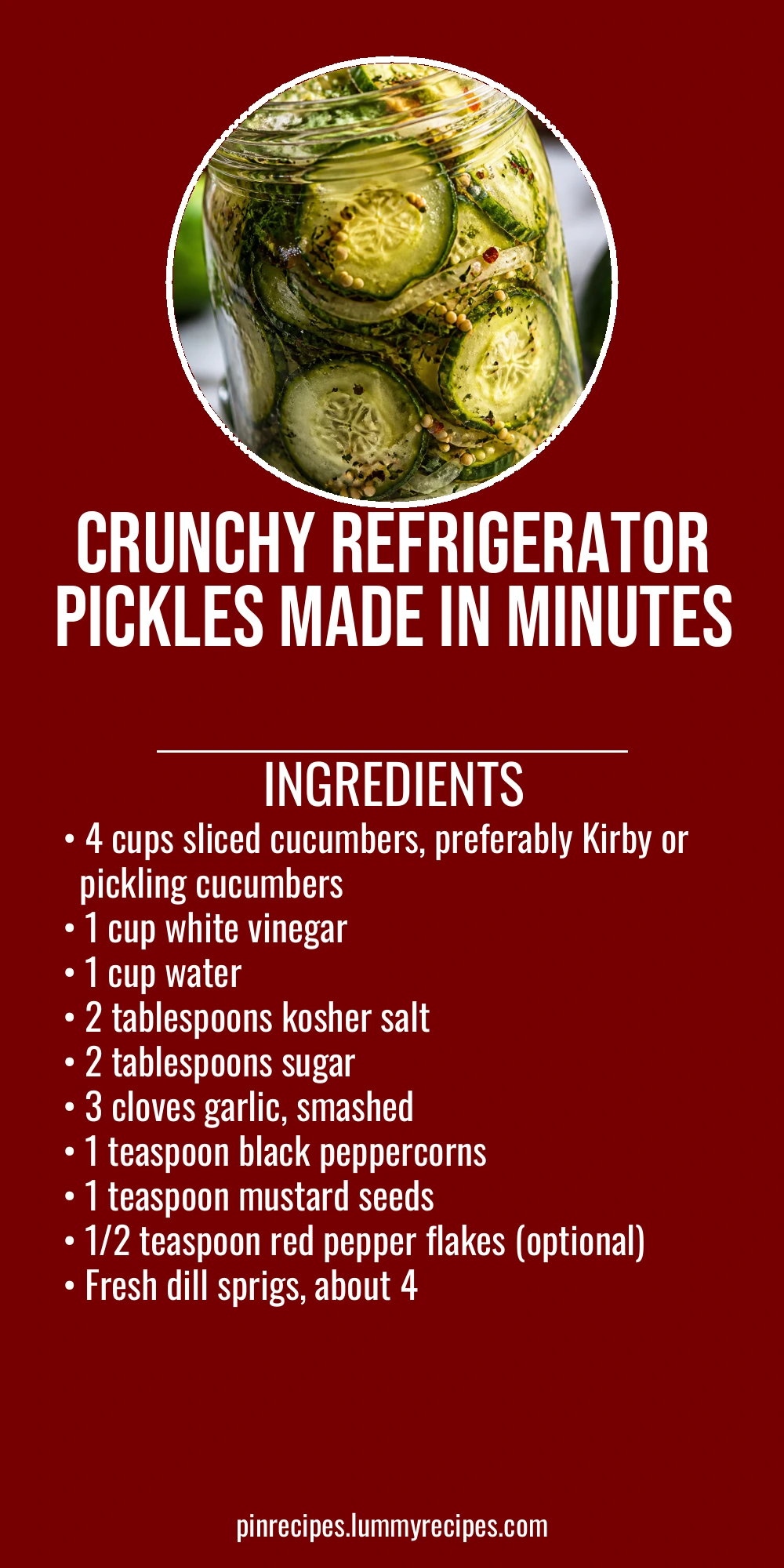
- 4 cups sliced cucumbers, preferably Kirby or pickling cucumbers
- 1 cup white vinegar
- 1 cup water
- 2 tablespoons kosher salt
- 2 tablespoons sugar
- 3 cloves garlic, smashed
- 1 teaspoon black peppercorns
- 1 teaspoon mustard seeds
- 1/2 teaspoon red pepper flakes (optional)
- Fresh dill sprigs, about 4
How To Do It
Step 1
Start by washing your cucumbers thoroughly and slicing them into your preferred shape—spears or rounds work great. Using Kirby cucumbers is best because they hold their crunch. Make sure your slices are uniform so they pickle evenly. Avoid slicing too thin, or they might turn mushy quickly. This first step sets the foundation for crisp pickles, so take your time to prep the cucumbers well.
⏱ Time: 10 minutes
✓ Doneness: Cucumbers are evenly sliced and ready for brining
Step 2
In a medium saucepan, combine white vinegar, water, kosher salt, and sugar. Heat the mixture over medium heat, stirring occasionally until the salt and sugar dissolve completely. This ensures the brine is well balanced and flavors are evenly distributed. Don’t boil the mixture; just warm it enough to dissolve the solids. If you rush this step or skip dissolving the salt and sugar, the pickles won’t develop their full flavor.
⏱ Time: 5 minutes
✓ Doneness: Brine is clear and all salt and sugar crystals are fully dissolved
Step 3
Place the sliced cucumbers into a clean quart-sized jar or container. Add the smashed garlic cloves, black peppercorns, mustard seeds, red pepper flakes (if using), and fresh dill sprigs. These aromatics infuse the pickles with classic flavors and a little heat if you like it spicy. Don’t be shy with the dill—it really makes a difference in the flavor profile.
⏱ Time: 5 minutes
✓ Doneness: All ingredients are layered evenly in the jar
Step 4
Pour the warm brine over the cucumbers and spices, making sure they’re fully submerged. Leaving any cucumber slices exposed to air can cause them to spoil or become soft. Use a clean utensil to press down gently if needed. The warm brine helps jumpstart the pickling process, but the cucumbers will stay crisp because you’re not cooking them in the brine.
⏱ Time: 5 minutes
✓ Doneness: Cucumbers are completely covered by the brine with no air pockets
Step 5
Seal the jar tightly and let it cool to room temperature before placing it in the refrigerator. This step is important to prevent condensation inside the jar, which could dilute the brine. The cool environment slows fermentation and keeps the pickles crisp. Avoid leaving the jar out too long, as that can cause unwanted bacterial growth.
⏱ Time: 10 minutes
✓ Doneness: Jar is sealed and cooled to room temperature
Step 6
Refrigerate the pickles for at least 24 hours before tasting. The longer they sit, the more the flavors develop. I usually wait 2-3 days for the best balance of tang and crunch. Be patient! These aren’t shelf-stable pickles, so keep them refrigerated and consume within a few weeks.
⏱ Time: 24-72 hours
✓ Doneness: Pickles have a tangy aroma and crisp texture
Step 7
When ready to serve, use a clean fork or tongs to remove pickles from the jar. They make a fantastic crunchy snack or a flavorful addition to sandwiches and burgers. If you find the pickles too sharp, you can soak them in fresh water for 10 minutes to mellow the acidity.
⏱ Time: 2 minutes
✓ Doneness: Pickles are crisp and tangy, ready to enjoy
Step 8
After each use, ensure the pickles remain submerged in the brine and the jar is sealed tightly. This helps maintain freshness and prevents spoilage. If the brine becomes cloudy or smells off, it’s best to discard the batch. Keeping everything clean is key to longevity.
⏱ Time: Ongoing
✓ Doneness: Brine remains clear and pickles stay fresh
Step 9
Feel free to experiment by adding other spices like coriander seeds or fresh herbs such as tarragon for a different twist. Just remember to keep the basic ratio of vinegar, water, salt, and sugar consistent to ensure proper pickling. Adjusting spices lets you customize flavor without risking texture.
⏱ Time: Varies
✓ Doneness: Flavor variations maintain crispness and balanced tang
Pro Tips
Use fresh, firm cucumbers for the best crunch.
Fresh cucumbers with firm flesh and no blemishes maintain their texture better during pickling. Older or soft cucumbers tend to become mushy quickly. The cell structure of fresh cucumbers withstands the brine’s osmotic pressure, keeping pickles crisp.
Don’t boil the brine; just warm it enough to dissolve salt and sugar.
Boiling can soften the cucumbers prematurely and diminish the fresh flavor. Warming helps ingredients dissolve fully and blend, but cooling before adding to cucumbers preserves their crunch and fresh taste.
Smash garlic cloves gently instead of mincing.
Smashing releases flavor oils without overpowering the brine. Minced garlic can become too intense and harsh. The gentle crush allows a balanced garlic aroma that infuses slowly.
Keep cucumbers fully submerged in brine at all times.
Exposure to air causes spoilage and soft spots. Using a weight or spoon to press down cucumbers ensures even pickling and prevents mold or bacterial growth on exposed pieces.
Wait at least 24 hours before tasting.
Flavors need time to meld and penetrate the cucumbers. Sampling too early can result in bland or unevenly flavored pickles. Patience yields the best tang and crunch balance.
Use a clean jar and utensils to avoid contamination.
Since these pickles aren’t canned, cleanliness is essential to prevent unwanted bacterial growth. Proper sanitation extends shelf life and keeps pickles safe to eat.
Store pickles in the refrigerator, not at room temperature.
Refrigeration slows fermentation and spoilage, preserving texture and flavor. Room temperature storage can cause rapid fermentation, leading to soft or off-flavored pickles.
Common Mistakes to Avoid
Using cucumbers that are too large or old.
Why it happens People often grab whatever cucumbers are on hand without considering size or freshness, assuming all cucumbers pickle the same.
Fix Choose small to medium Kirby or pickling cucumbers that are firm and blemish-free. Their texture holds up better in the brine, resulting in crisp pickles instead of mushy ones.
Boiling the brine too long or too hot.
Why it happens Some think boiling the brine is necessary for safety or flavor, but overheating can soften cucumbers prematurely.
Fix Heat the brine just enough to dissolve salt and sugar, then let it cool slightly before pouring over cucumbers. This preserves crunch and fresh flavor.
Not fully submerging cucumbers in brine.
Why it happens Sometimes jars are too small or cucumbers are packed loosely, leaving slices exposed to air.
Fix Use a weight or clean utensil to press cucumbers down so they stay under the brine. This prevents spoilage and soft spots.
Skipping salt or using table salt instead of kosher salt.
Why it happens Some skip salt for health reasons or use table salt without adjusting amounts, affecting flavor and texture.
Fix Use kosher salt as directed; it dissolves well and provides the right balance. If using table salt, reduce quantity accordingly to avoid over-salting.
Storing pickles at room temperature.
Why it happens People may think refrigeration isn’t necessary since it’s a pickled product.
Fix Always refrigerate these pickles as they are not canned. This prevents unwanted fermentation and spoilage, keeping pickles crisp and safe.
Variations
Spicy Refrigerator Pickles
Add extra red pepper flakes or a sliced jalapeño to the brine for a spicy kick. These pickles bring heat without losing their crispness, perfect for spice lovers.
Note: Be cautious with jalapeños; thin slices release more heat quickly, so adjust quantity to taste.
Garlic and Herb Pickles
Include fresh thyme or rosemary sprigs along with dill and garlic for a fragrant herbal twist. This variation adds depth and pairs well with roasted meats.
Note: Use fresh herbs and add them just before pouring the brine to preserve aroma.
Sweet Refrigerator Pickles
Increase the sugar slightly and add a cinnamon stick or star anise for a sweeter, aromatic pickle. Great for serving alongside cheese or charcuterie boards.
Note: Monitor sugar levels carefully; too much can overpower the tang and soften cucumbers.
Bread and Butter Style Pickles
Add sliced onions and a bit of turmeric to the brine for that classic bread and butter flavor. These are sweeter and tangier, ideal for sandwiches and burgers.
Note: Turmeric can stain, so use gloves or utensils to avoid discoloring hands or surfaces.
Quick Pickled Red Onions
Swap cucumbers for thinly sliced red onions using the same brine. These tangy onions brighten salads and tacos with a crisp bite.
Note: Onions pickle faster; check flavor after 12 hours and refrigerate promptly.
Nutrition
Per Serving:
Nutritional values are estimates and may vary based on specific ingredients used.
Storage & Tips
Room Temperature
Refrigerator pickles should not be kept at room temperature for more than 2 hours. Exposure to warmth can cause spoilage and loss of crunch. Always cover the jar tightly if left out briefly during serving.
Refrigerator
Store pickles in an airtight jar or container in the refrigerator for up to 3 weeks. The flavor will intensify over time, but the cucumbers remain crisp. They are best served cold straight from the fridge.
Freezer
Freezing is not recommended for refrigerator pickles as it breaks down the cucumber’s texture, making them mushy upon thawing. It’s best to make fresh batches as needed.
Reheating
These pickles are meant to be eaten cold or at room temperature. Reheating is not necessary and can ruin their texture and flavor.
Make Ahead
You can slice cucumbers and prepare the brine a day ahead, storing them separately in the fridge. Combine and let pickle for 24 hours before serving. This saves prep time on serving day.
FAQ
Can I use regular cucumbers instead of Kirby cucumbers?
You can use regular cucumbers, but they tend to be less firm and watery, which may result in softer pickles. If you do, try slicing thicker and pickling for a shorter time to preserve some crunch.
How long do refrigerator pickles last?
Stored properly in the fridge, these pickles last about 3 weeks. Over time, they become more sour and softer, so it’s best to enjoy them within the first two weeks for optimal flavor and texture.
Can I make these pickles without sugar?
Yes, you can omit sugar if you prefer a more tart pickle. Keep in mind that sugar balances acidity and rounds out flavors, so the pickles will be sharper without it.
Do I need to sterilize the jar before making pickles?
Since these are refrigerator pickles and not canned, sterilization isn’t strictly necessary. However, using a clean jar and utensils helps prevent contamination and extends shelf life.
Why are my pickles not crunchy?
Soft pickles usually result from using old or large cucumbers, boiling the brine too hot, or not keeping cucumbers submerged. Use fresh Kirbys, warm the brine gently, and keep everything covered in brine.
Can I add other spices to this recipe?
Absolutely! Feel free to add coriander seeds, bay leaves, or fresh herbs like thyme. Just keep the basic brine ratio the same to ensure proper pickling and safety.
How soon can I eat the pickles after making them?
They need at least 24 hours in the fridge to develop flavor. For best taste and crunch, wait 2-3 days before eating.
Can I make a larger batch and store it?
Yes, just scale ingredients proportionally and use a large enough container. Ensure cucumbers stay submerged and refrigerated. The flavor will be consistent if ratios are maintained.
Final Thoughts
I hope you enjoy making these easy refrigerator pickles as much as my family does. Give them a try and let me know how they turn out!