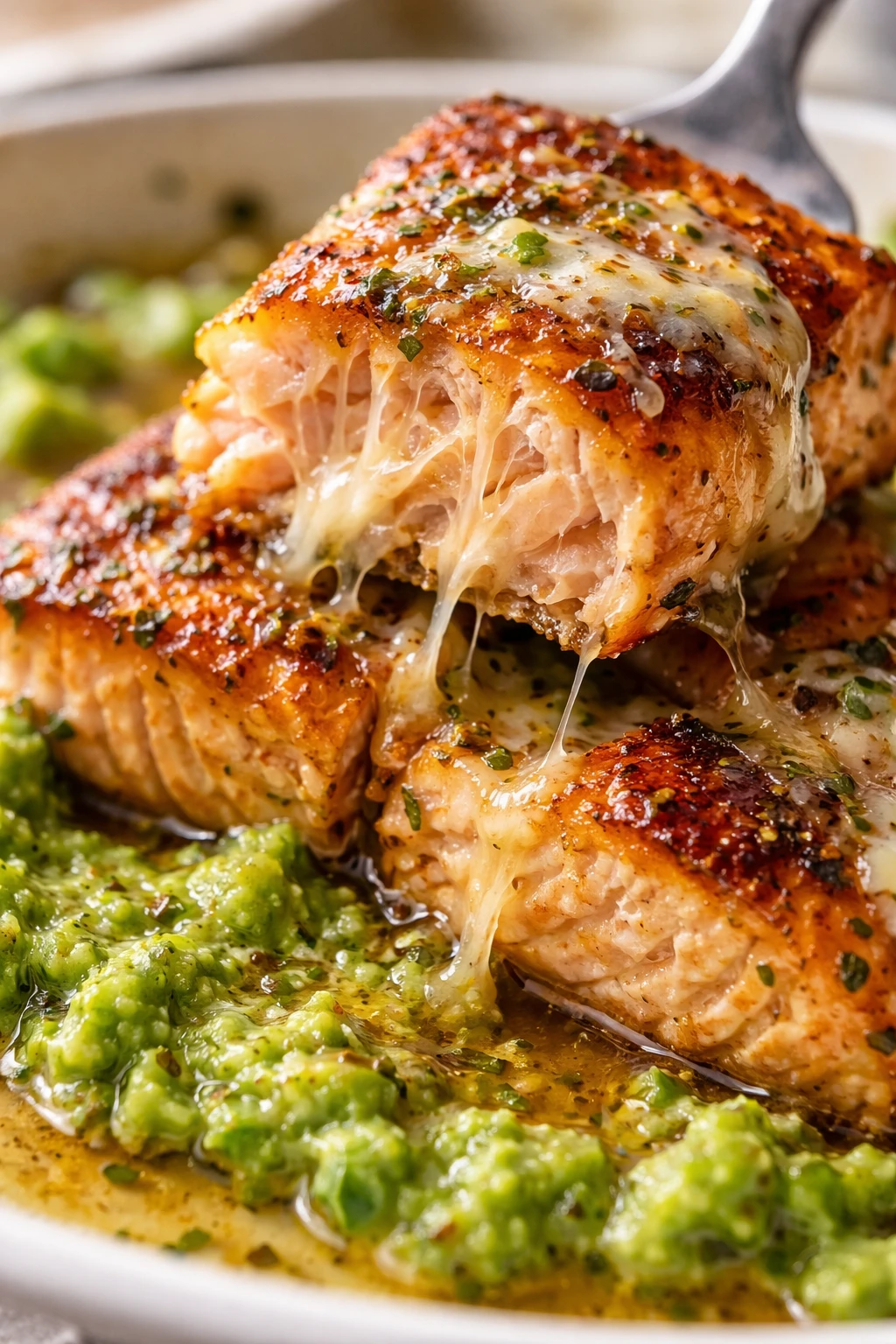
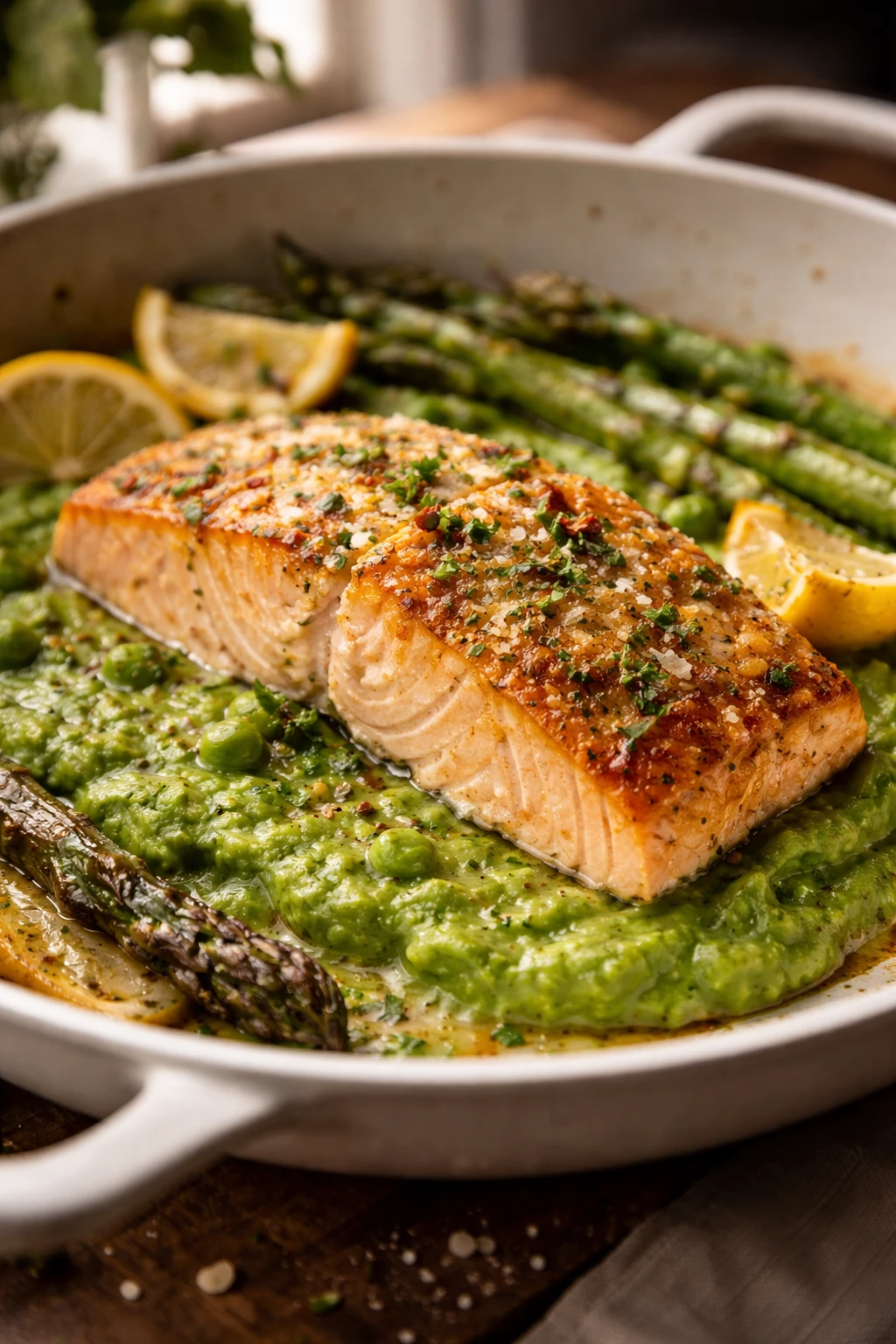
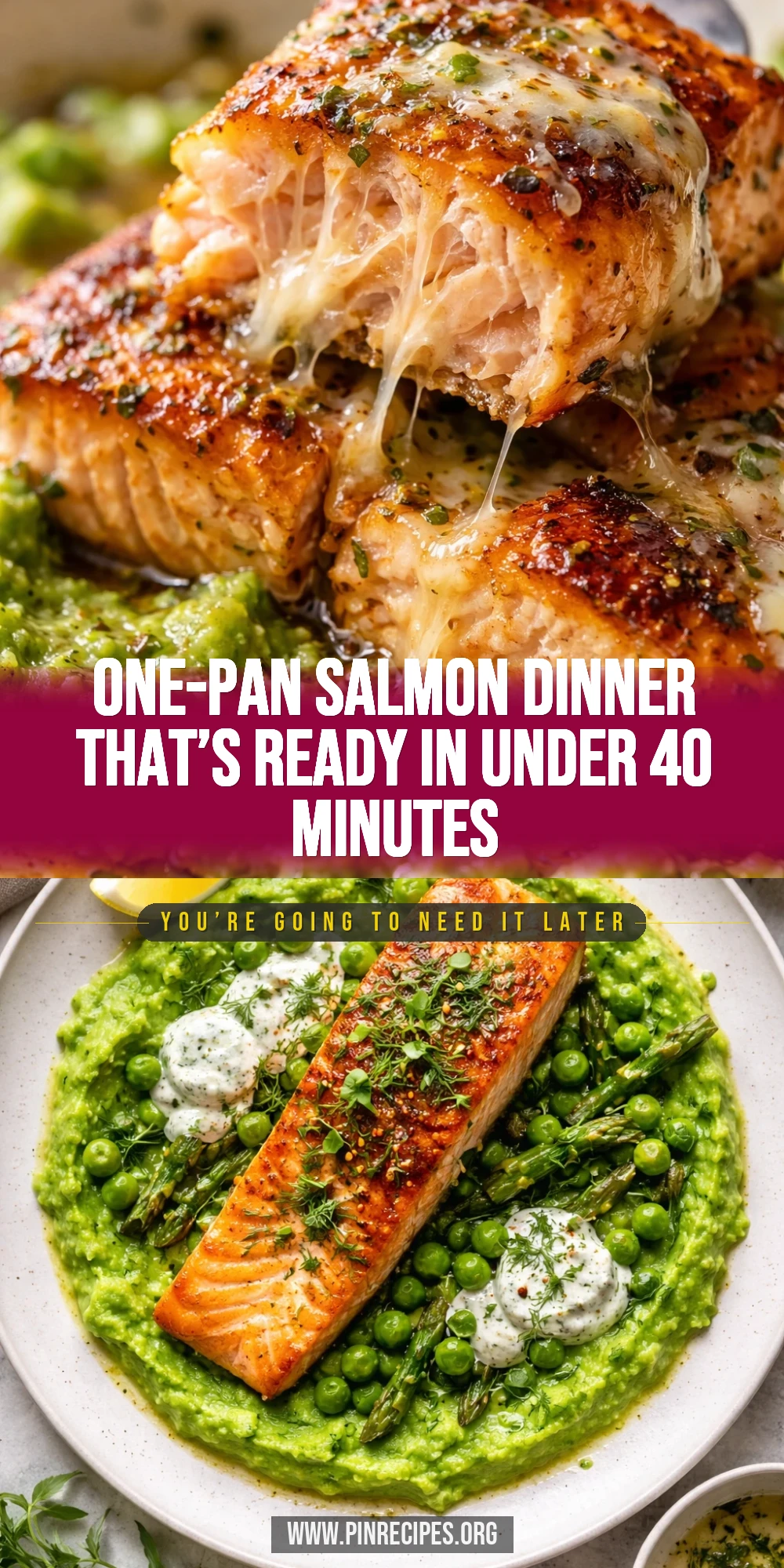
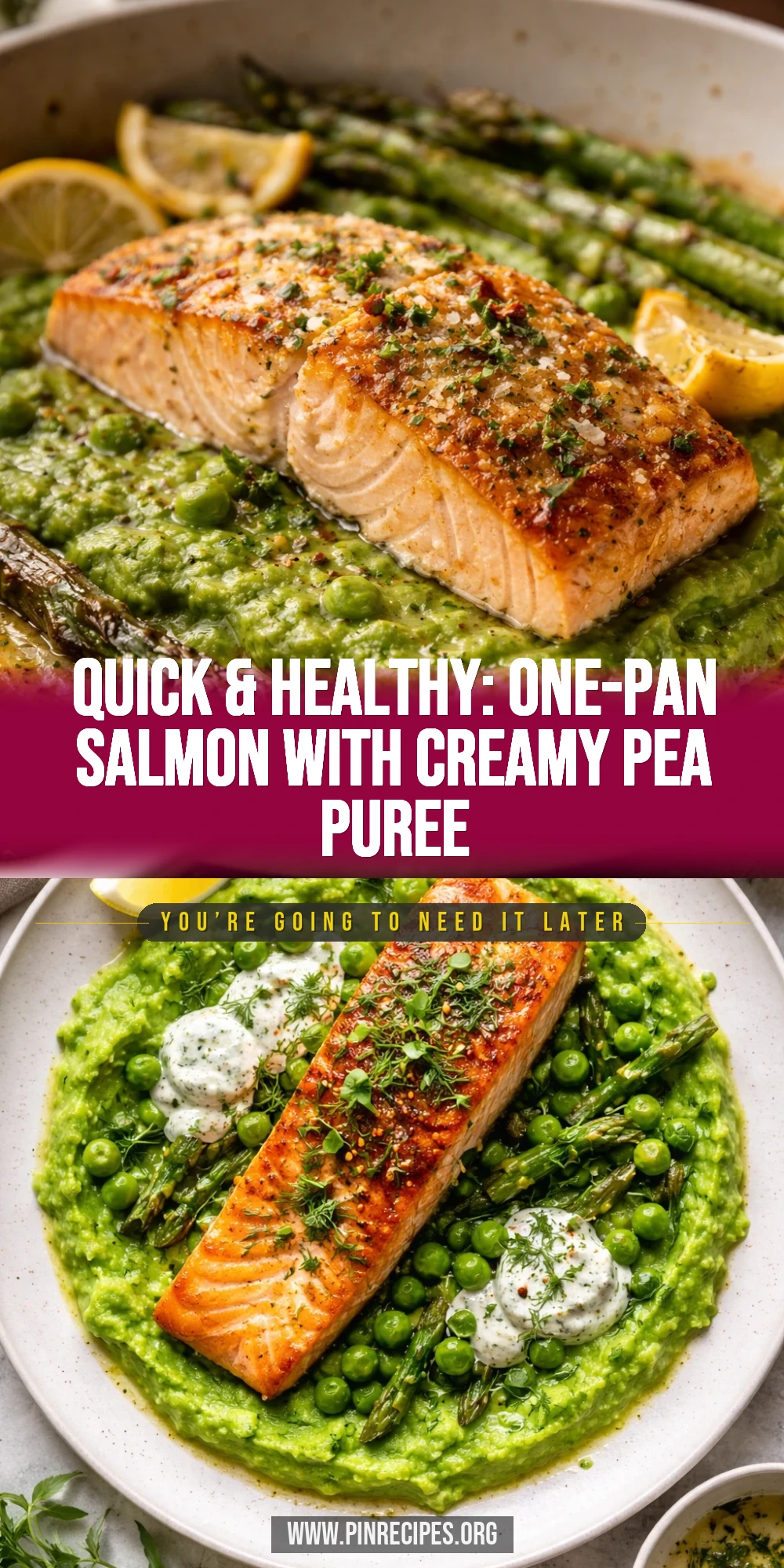
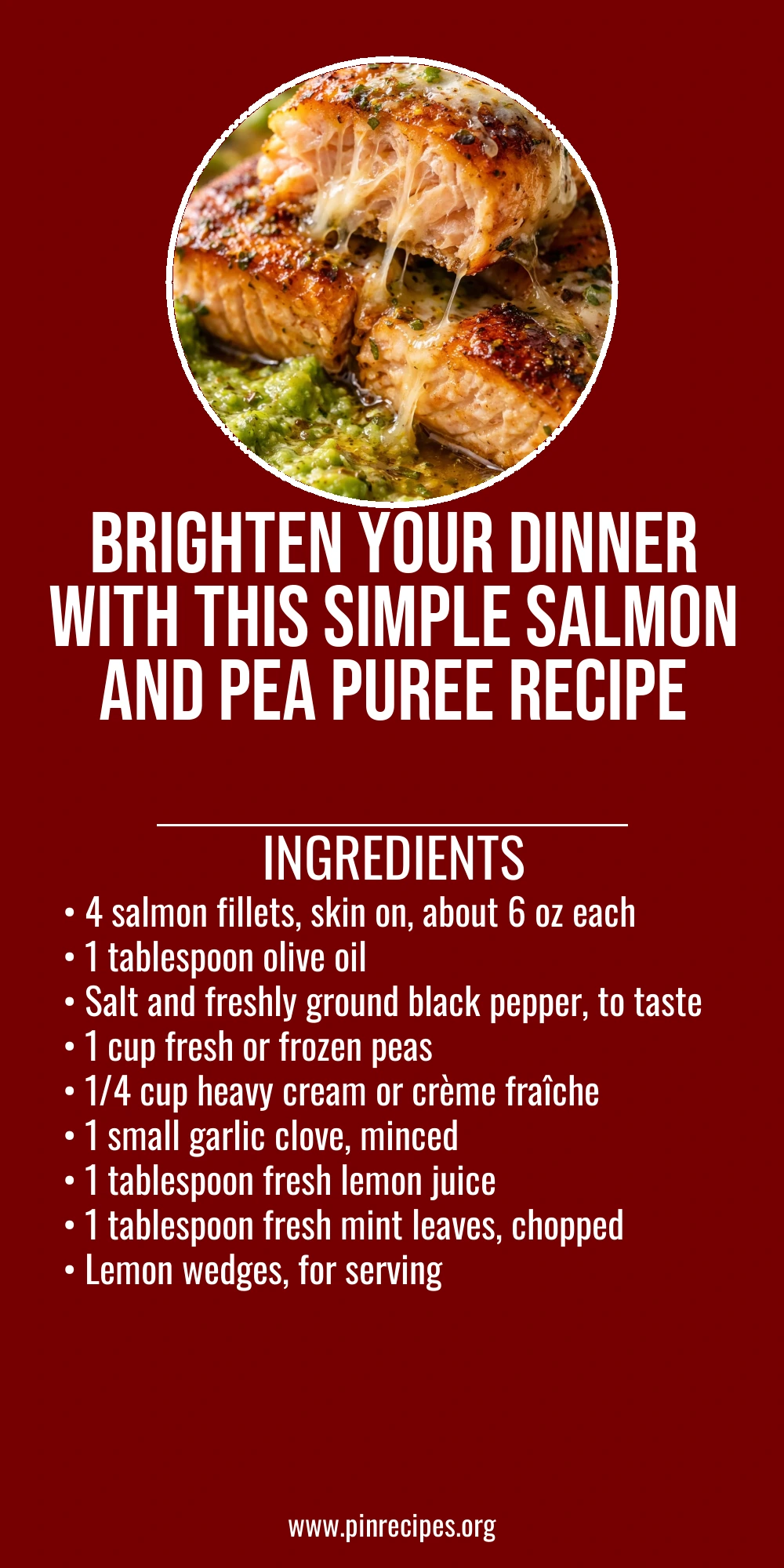
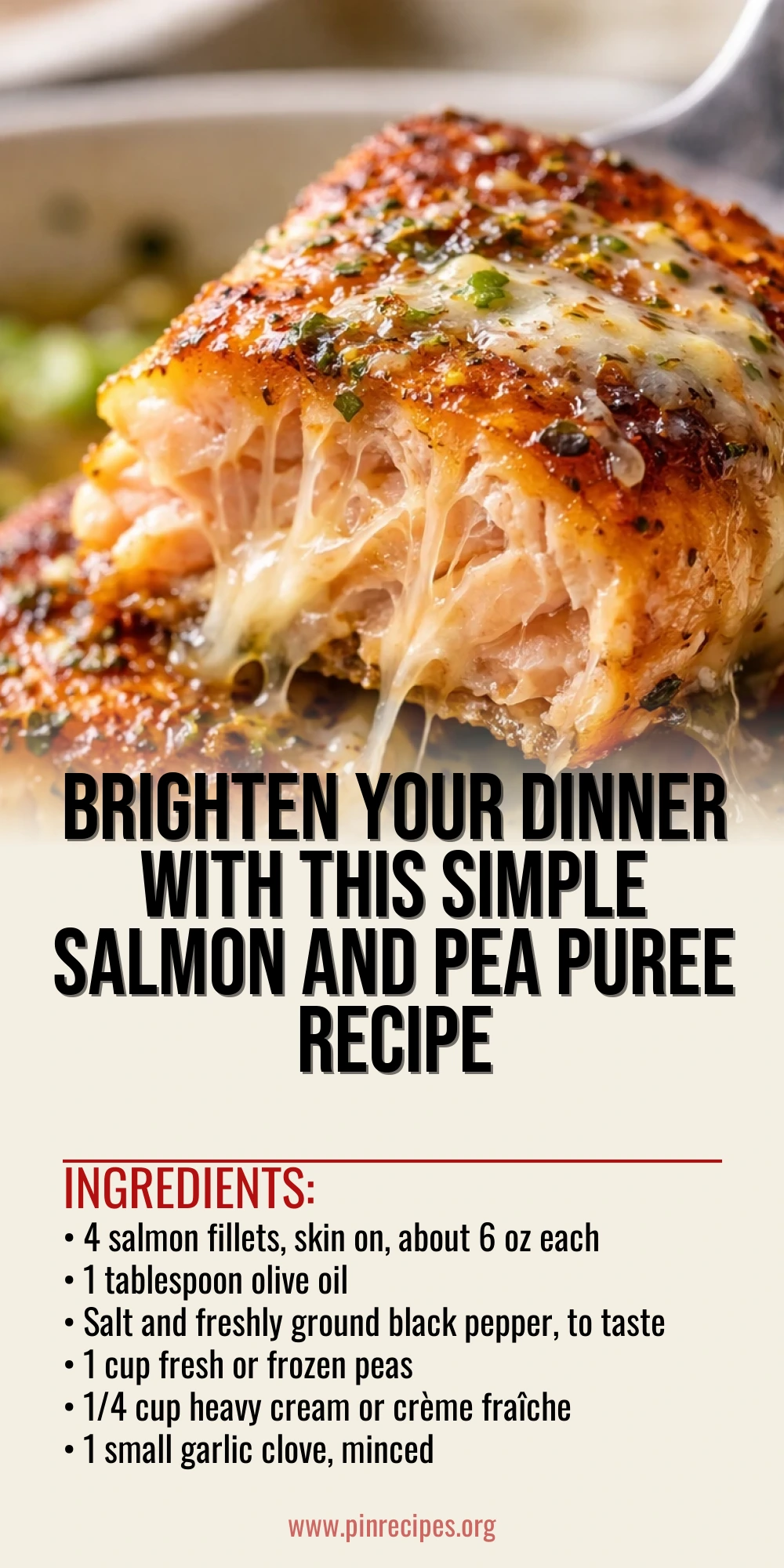
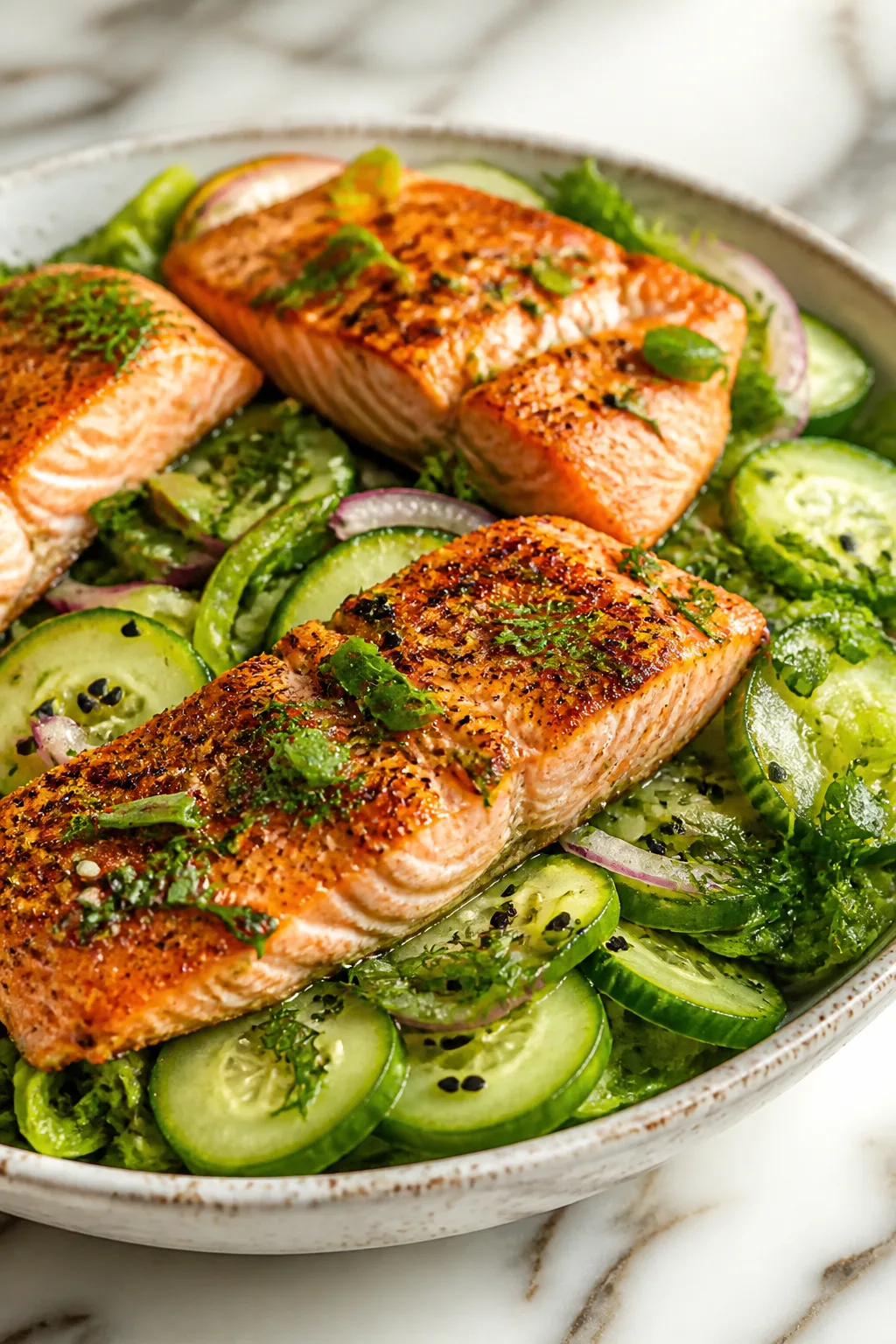
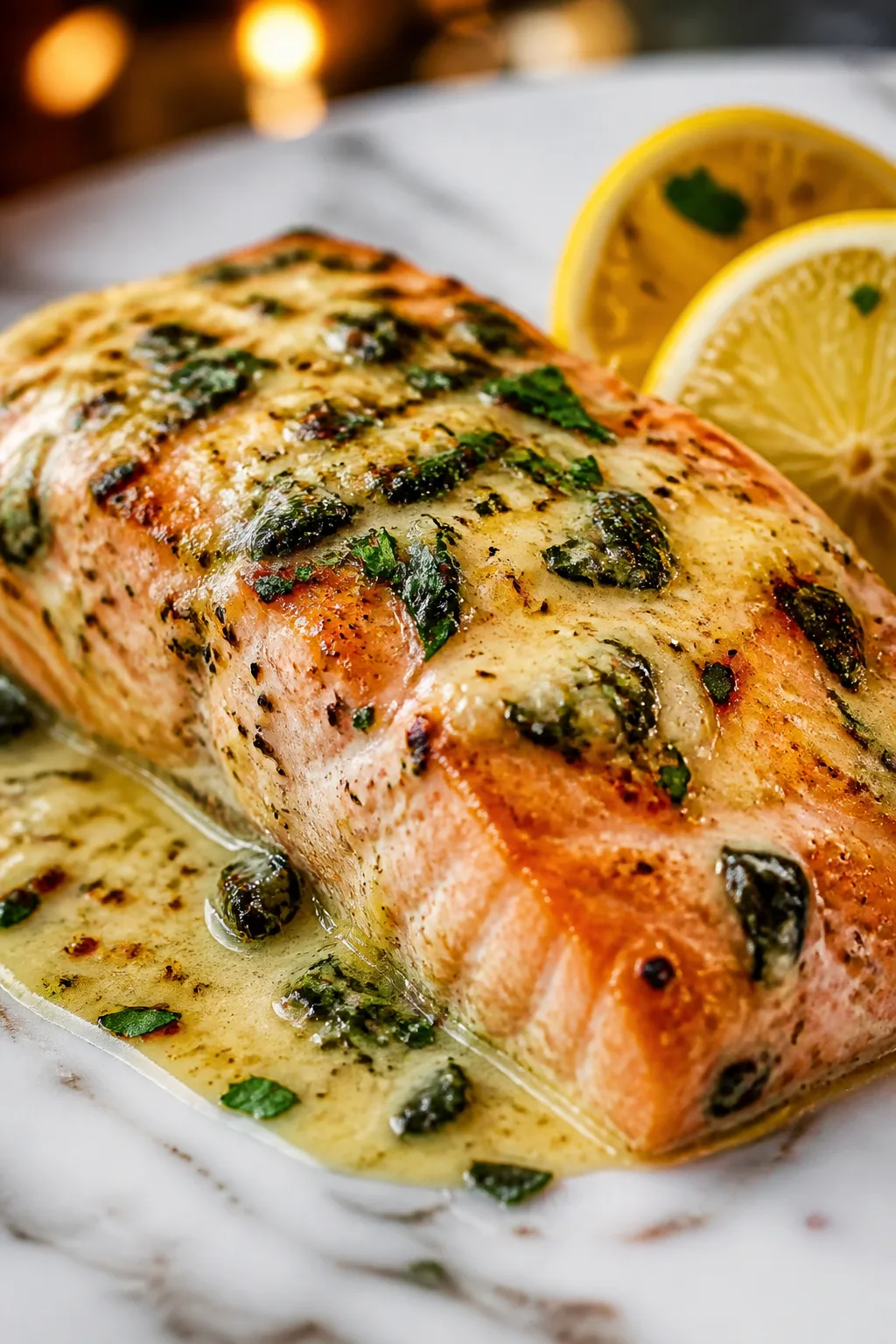
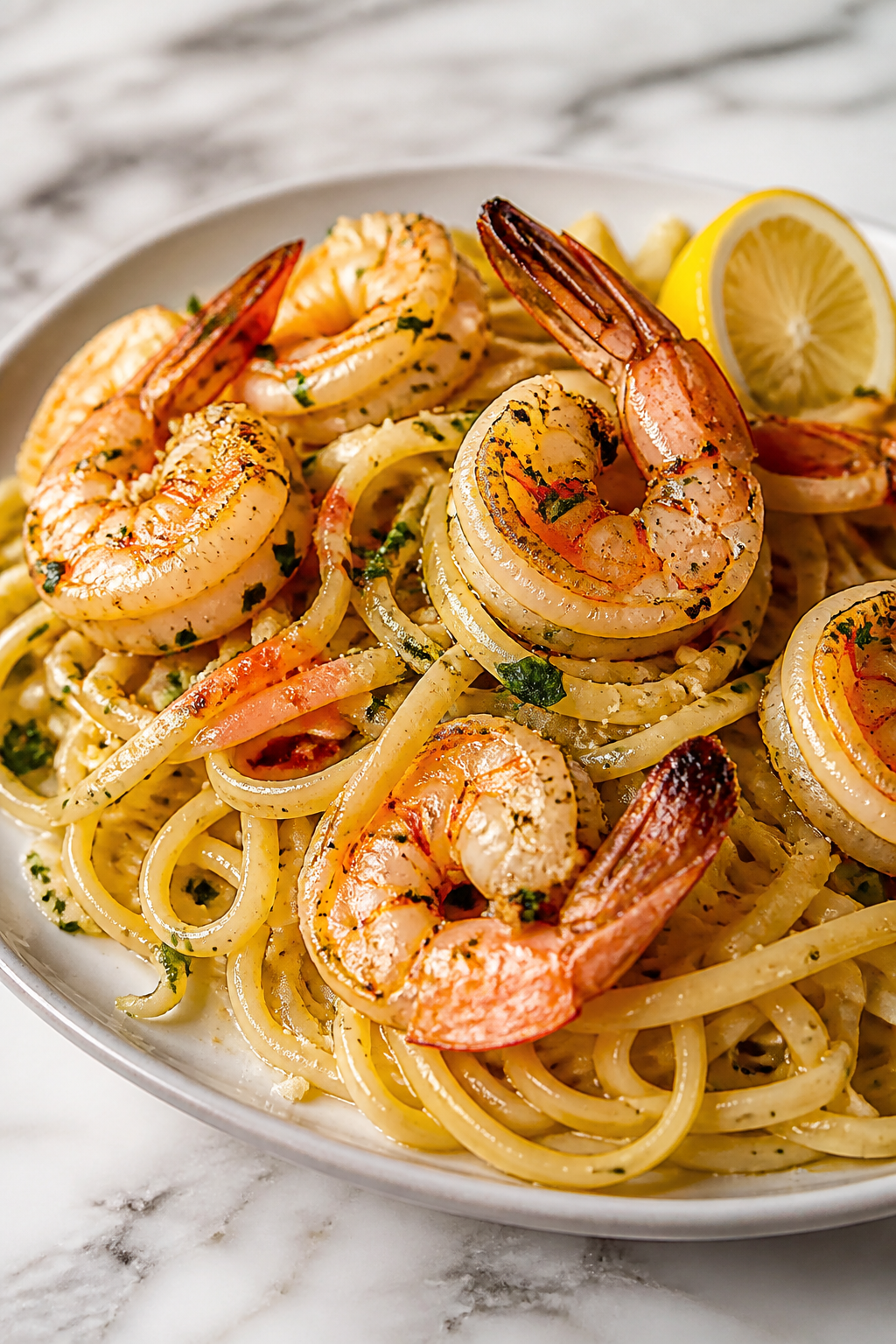
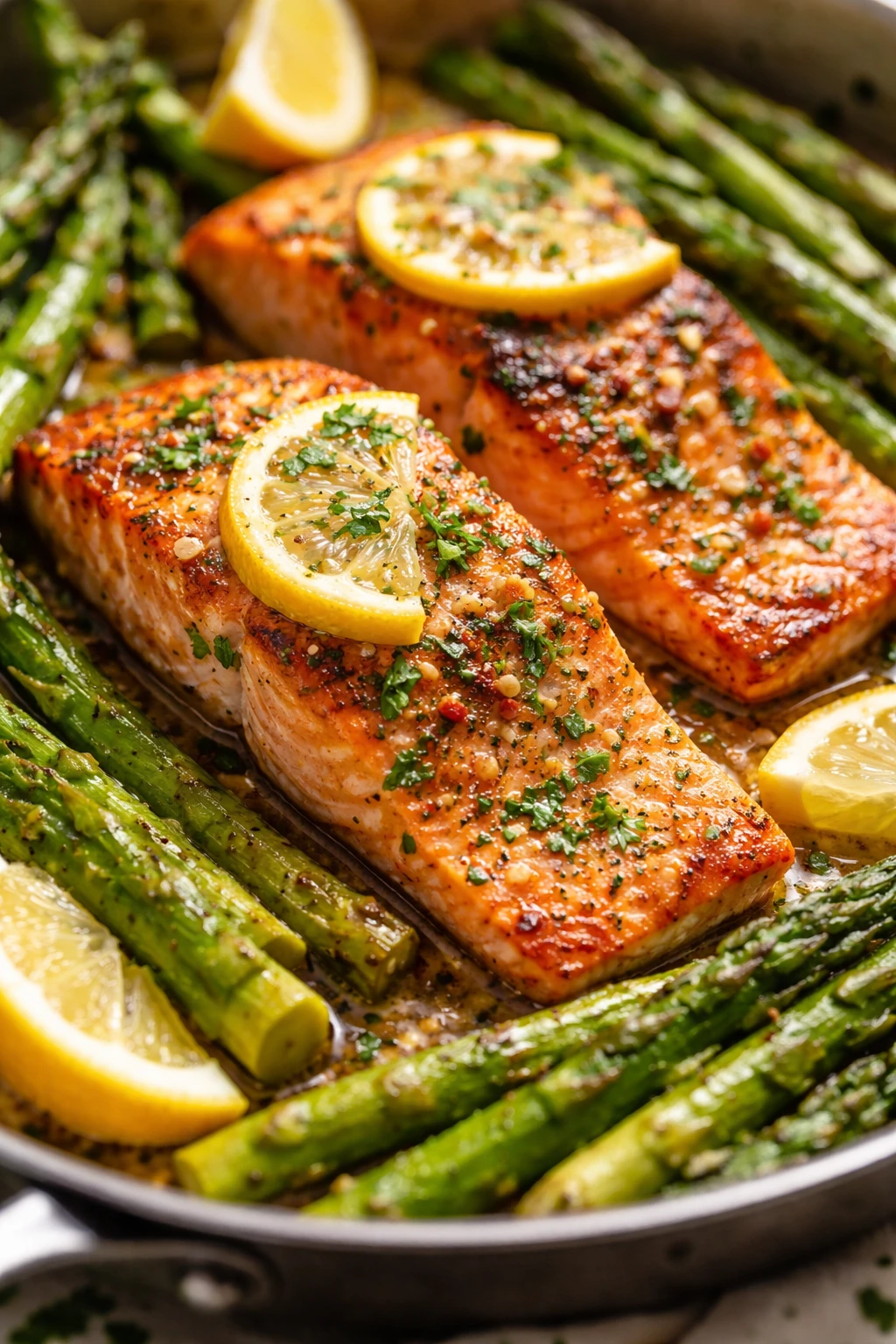
This one-pan baked salmon is a breeze to make and feels so fresh with a bright spring pea puree. I love how the puree adds a creamy, vibrant touch without any fuss. Perfect for a quick weeknight dinner or a light weekend meal.
Introduction
I first tried baking salmon with a pea puree a few years ago when I wanted a fresh, spring-inspired meal that was easy enough for a weeknight but special enough to feel like a treat. What I love about this version is how everything cooks in one pan, which means less cleanup and more time to relax. The pea puree is the real star here—it’s silky, bright, and adds just the right amount of creaminess without feeling heavy. I learned that gently steaming the peas before pureeing keeps their vibrant color and sweet flavor intact, which really elevates the dish. The salmon comes out perfectly tender with a little crisp on the skin, and the lemon juice adds a zing that balances the richness. It’s a simple recipe, but the flavors feel fresh and thoughtfully combined. Whether you’re cooking for family or just treating yourself, this salmon with pea puree is a winner every time. I’ve had my share of dry salmon disasters, but baking it at the right temperature and timing is the trick I swear by now. The result is flaky, juicy salmon with a lovely spring vibe that’s as delicious as it looks.
How To Do It
Step 1
Preheat your oven to 400°F (200°C). Pat the salmon fillets dry with paper towels to ensure the skin crisps up nicely during baking. Drizzle olive oil over the fillets and season both sides generously with salt and pepper. This step is crucial because dry skin crisps better and seasoning builds flavor right from the start. Avoid skipping the drying step as moisture will steam the skin instead of crisping it.
⏱ Time: 10 minutes
✓ Doneness: Salmon skin looks dry and slightly shiny from the oil, with even seasoning coverage.
Step 2
Place the salmon fillets skin-side down on a baking sheet lined with parchment paper or a lightly oiled pan. Bake in the preheated oven for about 12-15 minutes, depending on thickness. You want the salmon to be just cooked through and still moist inside. Overbaking dries it out, so check for flakiness with a fork near the end. The skin should be crisp and the flesh opaque but tender.
⏱ Time: 12-15 minutes
✓ Doneness: Flesh turns opaque and flakes easily when prodded gently with a fork.
Step 3
While the salmon bakes, bring a small pot of water to a boil and add the peas. Cook for 2-3 minutes until tender but still bright green. Overcooking will dull the color and reduce sweetness, so watch carefully. Drain the peas and immediately transfer them to a bowl of ice water to stop cooking and preserve that vibrant hue.
⏱ Time: 5 minutes
✓ Doneness: Peas are bright green and tender but not mushy.
Step 4
In a blender or food processor, combine the cooked peas, minced garlic, heavy cream, lemon juice, and chopped mint. Blend until smooth and creamy. The cream adds richness while lemon brightens the flavor. Mint gives a fresh herbal note that complements the peas beautifully. Taste and adjust seasoning with salt and pepper. The puree should be smooth and vibrant.
⏱ Time: 5 minutes
✓ Doneness: Puree is smooth, creamy, and bright green with a fresh aroma.
Step 5
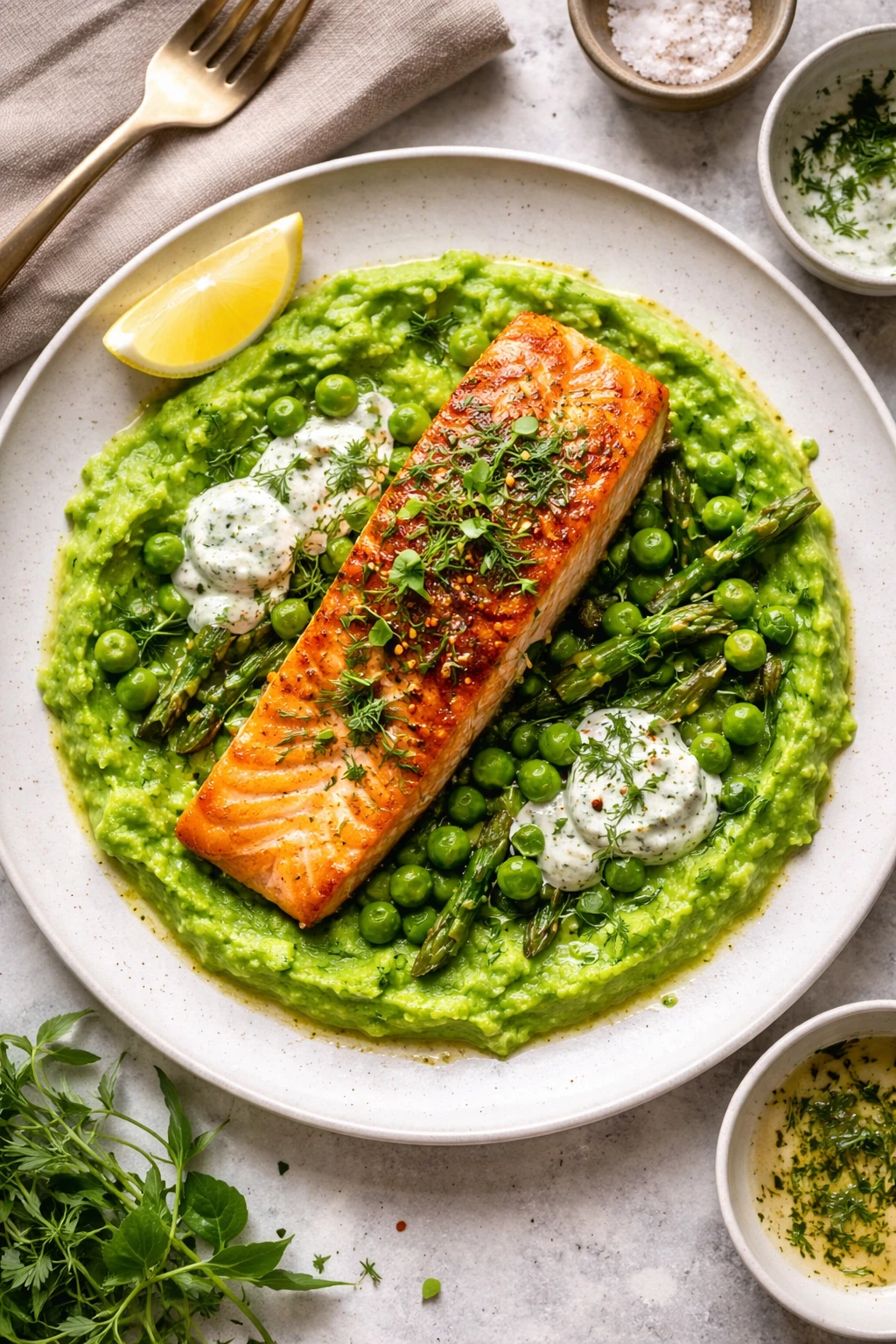
To serve, spoon a generous amount of pea puree onto each plate and top with a baked salmon fillet. Garnish with lemon wedges for squeezing over the fish. The contrast of the creamy puree and flaky salmon makes every bite delightful. This plating also keeps the dish visually fresh and inviting.
⏱ Time: 5 minutes
✓ Doneness: Plates look colorful and appetizing with vibrant green puree and golden salmon.
Step 6
Optional: If you want extra crispiness, once the salmon is baked, place it under the broiler for 1-2 minutes watching closely. This step enhances the skin texture but be careful not to burn. It’s a nice touch if you like a crunchier finish.
⏱ Time: 1-2 minutes
✓ Doneness: Skin bubbles and crisps without charring.
Step 7
If you prefer a lighter puree, swap heavy cream for a splash of olive oil or vegetable broth. This will make the puree less rich but still flavorful. Adjust seasoning accordingly. It’s a great tweak for a dairy-free option.
⏱ Time: 2 minutes
✓ Doneness: Puree remains smooth but slightly thinner in texture.
Step 8
For an extra flavor boost, stir in a teaspoon of Dijon mustard or a pinch of chili flakes into the pea puree. Mustard adds tanginess while chili flakes bring a subtle heat. Both elevate the dish without overpowering the delicate salmon.
⏱ Time: 2 minutes
✓ Doneness: Puree has a slight spicy or tangy aroma depending on addition.
Step 9
Let the salmon rest for a couple of minutes after baking before serving. This helps juices redistribute and keeps the fish moist. Cutting immediately can cause the juices to run out and make the salmon dry.
⏱ Time: 3 minutes
✓ Doneness: Salmon feels slightly firm but still moist when pressed gently.
Pro Tips
Always pat your salmon dry before seasoning.
Removing surface moisture helps the skin crisp up in the oven instead of steaming. Moist skin won’t get that satisfying crunch, and the fish can end up soggy. This simple step makes a huge difference in texture.
Use a blender or food processor for the pea puree.
Blending peas thoroughly with cream and lemon juice creates a silky smooth texture that coats the tongue nicely. Hand-mashing won’t achieve the same creaminess or even distribution of flavors.
Don’t overcook the salmon; check for flakiness early.
Salmon continues cooking slightly after removal from the oven due to residual heat. Pulling it out when it flakes easily but is still moist prevents dryness and preserves that tender texture.
Shock peas in ice water after boiling.
This stops the cooking process immediately, locking in the bright green color and fresh flavor. Without this step, peas can become dull and mushy quickly.
Add lemon juice last to the pea puree.
Lemon juice’s acidity can dull the color of peas if added too early. Adding it at the end preserves the vibrant green and gives a fresh, zesty flavor punch.
Use parchment paper or a lightly oiled baking sheet.
This prevents the salmon skin from sticking to the pan, making it easier to remove the fillets intact and keeping the skin crispy.
Let the salmon rest after baking.
Resting allows juices to redistribute inside the fish, keeping it moist and flavorful. Cutting immediately can cause juices to leak out, resulting in dry salmon.
Common Mistakes to Avoid
Overcooking the salmon
Why it happens Many cooks leave the fish in the oven too long thinking it ensures thorough cooking, but salmon is delicate and can dry out quickly.
Fix Check the salmon a few minutes before the suggested time. Look for opaque flesh that flakes easily with a fork. Remove it promptly and let it rest to finish cooking gently.
Not drying the salmon skin
Why it happens Skipping the drying step is common because it feels like an extra hassle, but wet skin steams instead of crisps.
Fix Pat the fillets very dry with paper towels before seasoning and oiling. This helps the skin crisp up beautifully in the oven.
Overcooking peas for the puree
Why it happens Boiling peas too long leads to dull color and mushy texture, often from rushing or not timing carefully.
Fix Boil peas just 2-3 minutes until tender but still bright green. Immediately transfer to ice water to stop cooking and preserve color.
Adding lemon juice too early to puree
Why it happens Lemon juice added before blending can cause the puree to lose its bright green color due to acid’s effect on chlorophyll.
Fix Blend peas and cream first, then stir in lemon juice at the end to keep the vibrant color and fresh flavor.
Skipping the rest period after baking
Why it happens Impatience to serve leads to cutting the fish right away, but this causes juices to run out.
Fix Let the salmon rest for 2-3 minutes after baking. This keeps it moist and tender when served.
Variations
Dairy-Free Pea Puree
Swap heavy cream with coconut milk or a splash of olive oil to make the pea puree dairy-free. This keeps it creamy but with a slightly different flavor profile, perfect for those avoiding dairy.
Note: Expect a thinner puree texture; blend a bit longer or add less liquid to keep it creamy.
Spicy Lemon Pea Puree
Add a pinch of chili flakes or a small diced jalapeño to the pea puree for a spicy kick. The heat contrasts nicely with the sweetness of the peas and richness of salmon.
Note: Be cautious with chili quantity to avoid overpowering the delicate flavors.
Herb Mix Pea Puree
Replace mint with basil, dill, or parsley for a different herbal twist. Each herb brings a unique flavor that pairs well with salmon and peas.
Note: Fresh herbs work best; dried herbs can taste bitter and alter texture.
Crispy Skin with Broiler Finish
After baking, place salmon under the broiler for 1-2 minutes to get ultra-crispy skin. Watch closely to prevent burning.
Note: Broiling time varies by oven; stay attentive for perfect crispness.
Add Roasted Garlic to Puree
Roast a garlic clove until soft and blend it into the pea puree for a mellow, sweet garlic flavor that deepens the dish’s complexity.
Note: Roasted garlic is milder than raw and blends smoothly without overpowering.
Nutrition
Per Serving:
Nutritional values are estimates and may vary based on specific ingredients used.
Storage & Tips
Room Temperature
This dish should not be left out at room temperature for more than 2 hours. Cover leftovers loosely with foil or plastic wrap if serving shortly after cooking.
Refrigerator
Store in an airtight container in the fridge for up to 3 days. The pea puree may thicken when cold; stir in a splash of water or lemon juice before reheating. Salmon reheats best gently to avoid drying out.
Freezer
Freeze cooked salmon and pea puree separately in airtight containers for up to 2 months. Wrap salmon tightly in plastic wrap and foil to prevent freezer burn. Thaw overnight in the fridge before reheating.
Reheating
Reheat salmon in a low oven (300°F) for 10-15 minutes, covered with foil to retain moisture. Warm the pea puree gently on the stovetop or microwave, stirring frequently. Avoid overheating to keep salmon tender.
Make Ahead
Prepare the pea puree a day ahead and store in the fridge. Season salmon but bake just before serving for freshest texture. This splits the work and makes dinner quicker.
FAQ
Can I use frozen salmon for this recipe?
Yes, frozen salmon works well if thawed properly in the fridge overnight. Avoid microwave thawing as it can partially cook the fish. Thawed salmon may release more moisture, so pat it dry before seasoning to ensure crispy skin.
What can I substitute for heavy cream in the pea puree?
You can use crème fraîche for a tangier flavor or coconut milk for a dairy-free version. Olive oil or vegetable broth can also thin the puree if you want less richness. Adjust seasoning accordingly to balance flavors.
How do I know when the salmon is perfectly cooked?
The salmon should be opaque and flake easily with a fork but still feel moist inside. Overcooked salmon becomes dry and tough. Checking a few minutes before the recommended time helps prevent overcooking.
Can I make the pea puree ahead of time?
Absolutely! The puree stores well in the fridge for up to 2 days. Give it a good stir and add a splash of water or lemon juice if it thickens before serving. Reheat gently to preserve flavor and texture.
Is it necessary to use fresh mint in the puree?
Fresh mint adds a bright, herbal note that really complements the peas. If you don’t have mint, basil or parsley are good substitutes but will change the flavor slightly. Avoid dried herbs as they can taste bitter.
What if I don’t have a blender for the puree?
You can mash the peas with a fork or potato masher, but the texture won’t be as smooth or creamy. For a silkier puree, a blender or food processor is best. You can also use an immersion blender if you have one.
How can I make the salmon skin extra crispy?
Patting the skin dry and brushing with oil before baking is key. For extra crispiness, finish the salmon under the broiler for 1-2 minutes, watching closely to avoid burning.
Can I add other vegetables to the pea puree?
Yes! Adding blanched asparagus or spinach can add depth and color. Just cook them until tender and blend with the peas. Adjust seasoning and liquid to maintain a smooth consistency.
Final Thoughts
I hope you enjoy making and eating this fresh, easy salmon with spring pea puree as much as I do. Don’t forget to share your results—I’d love to hear how it turns out for you!