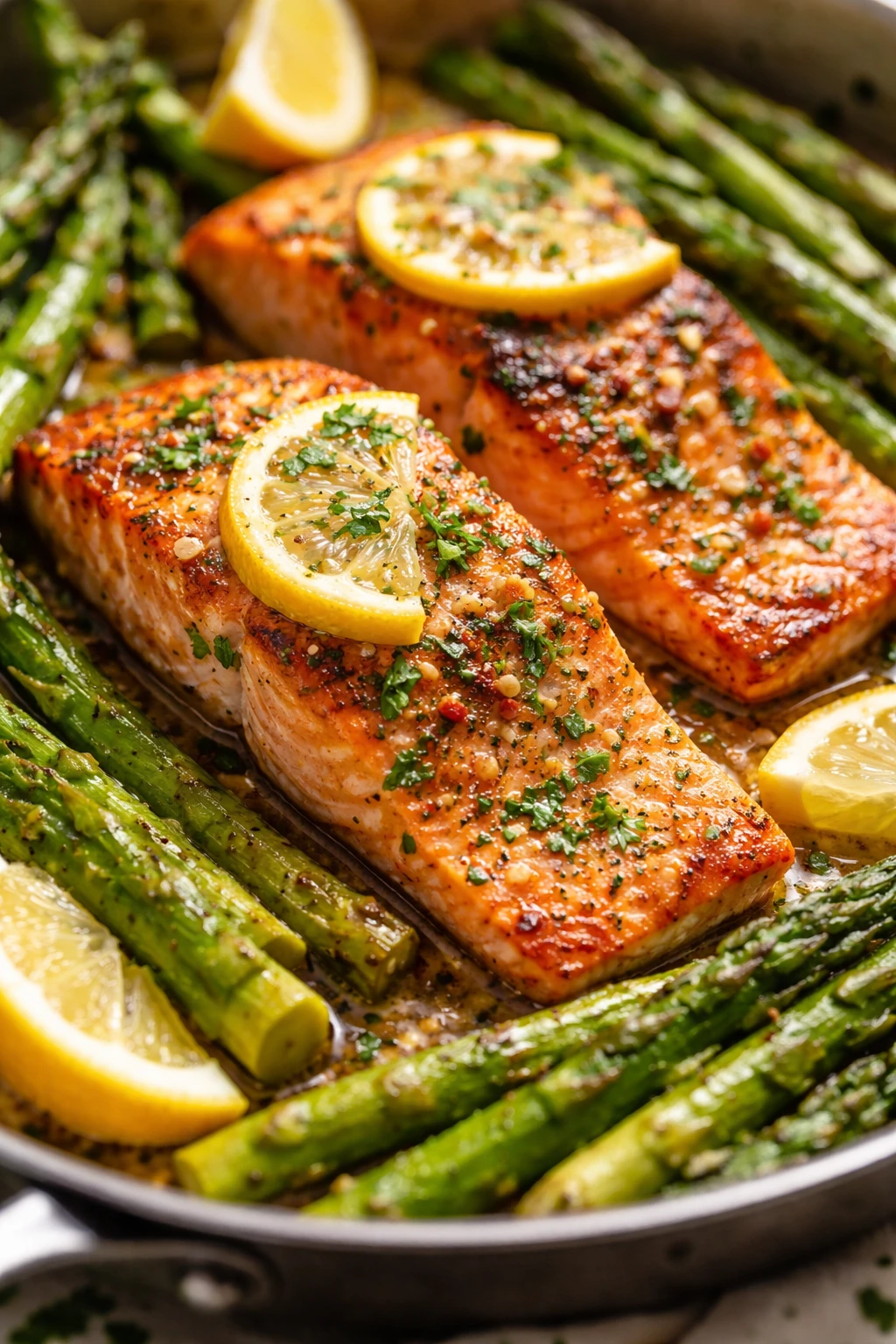
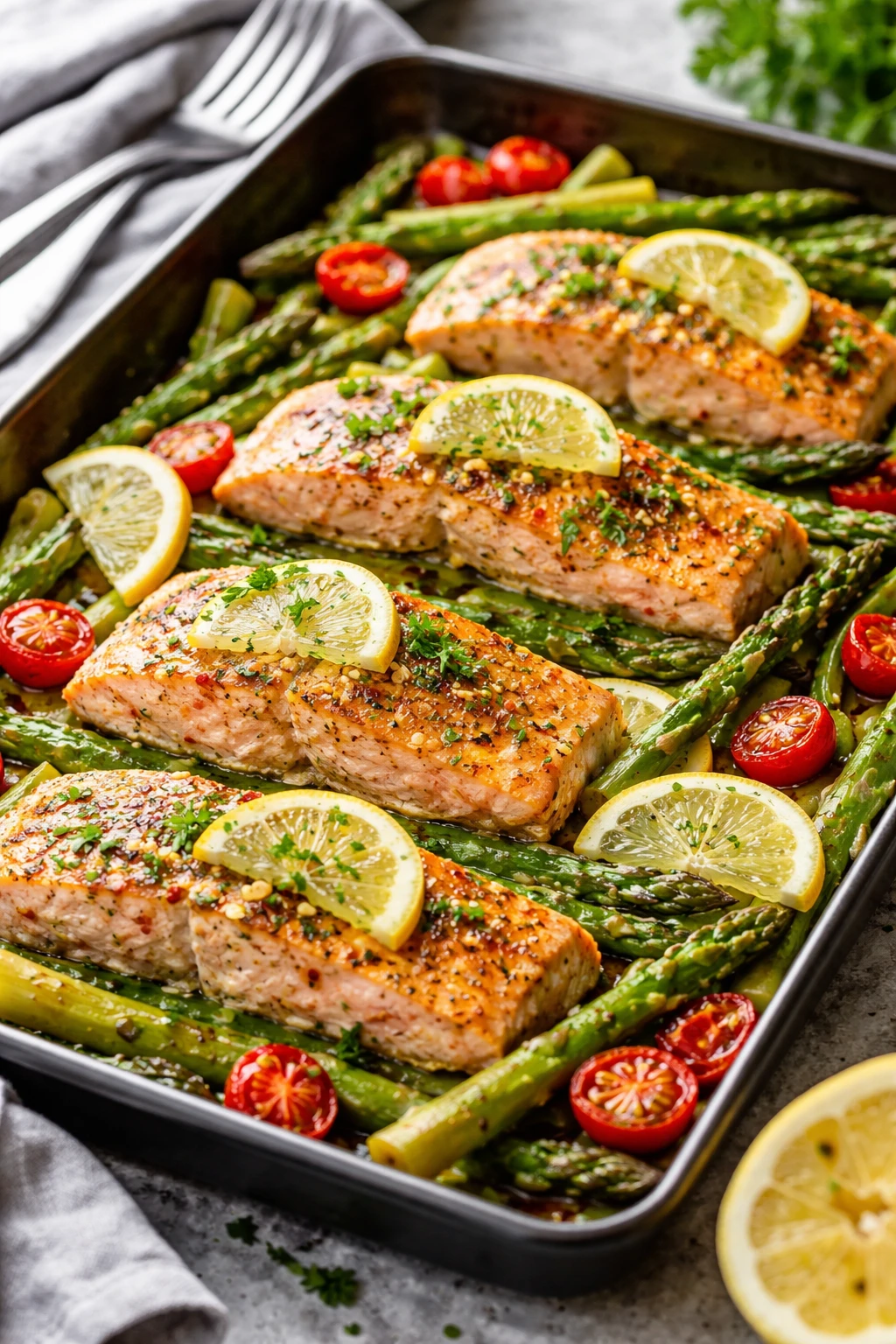
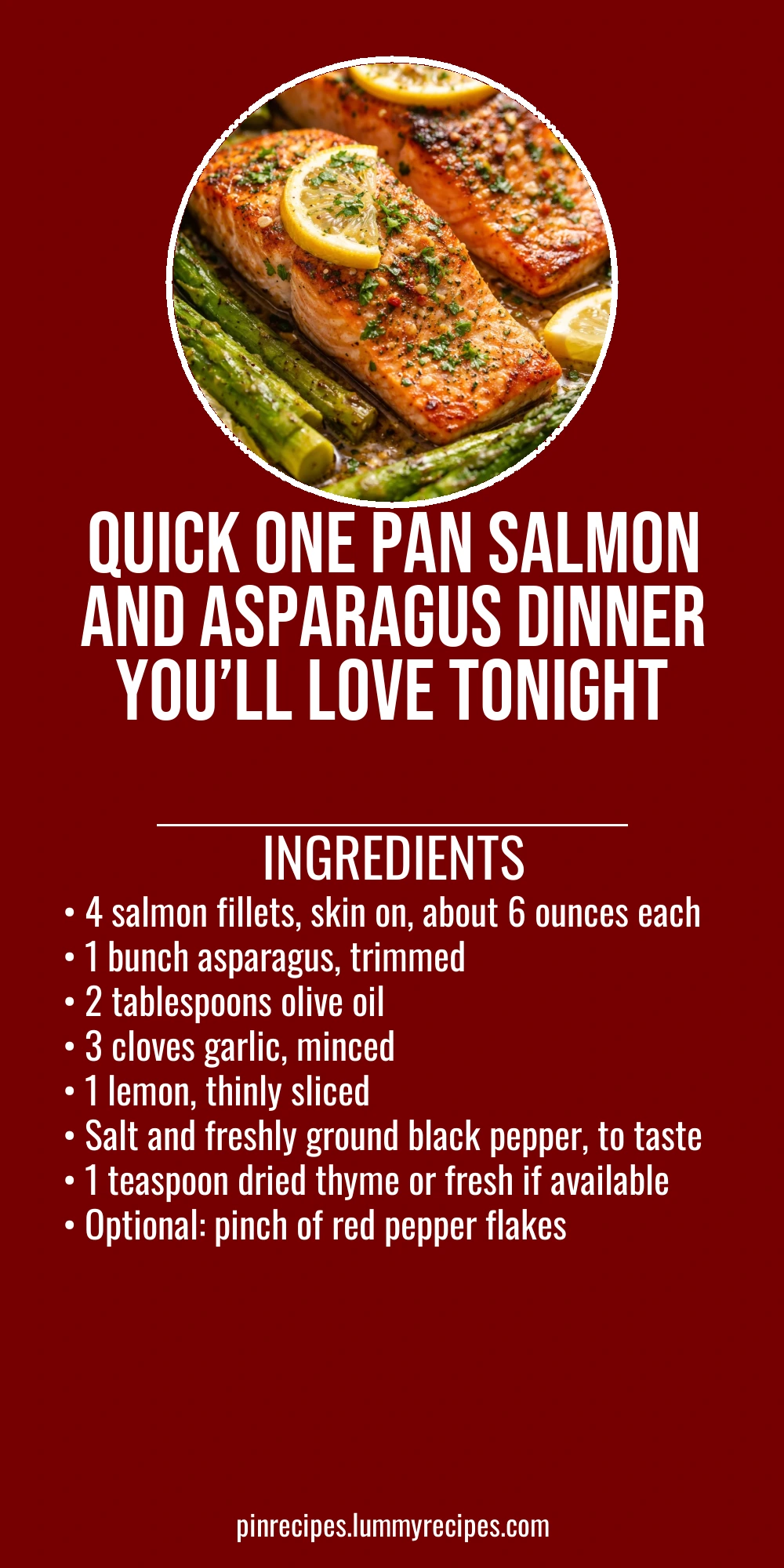
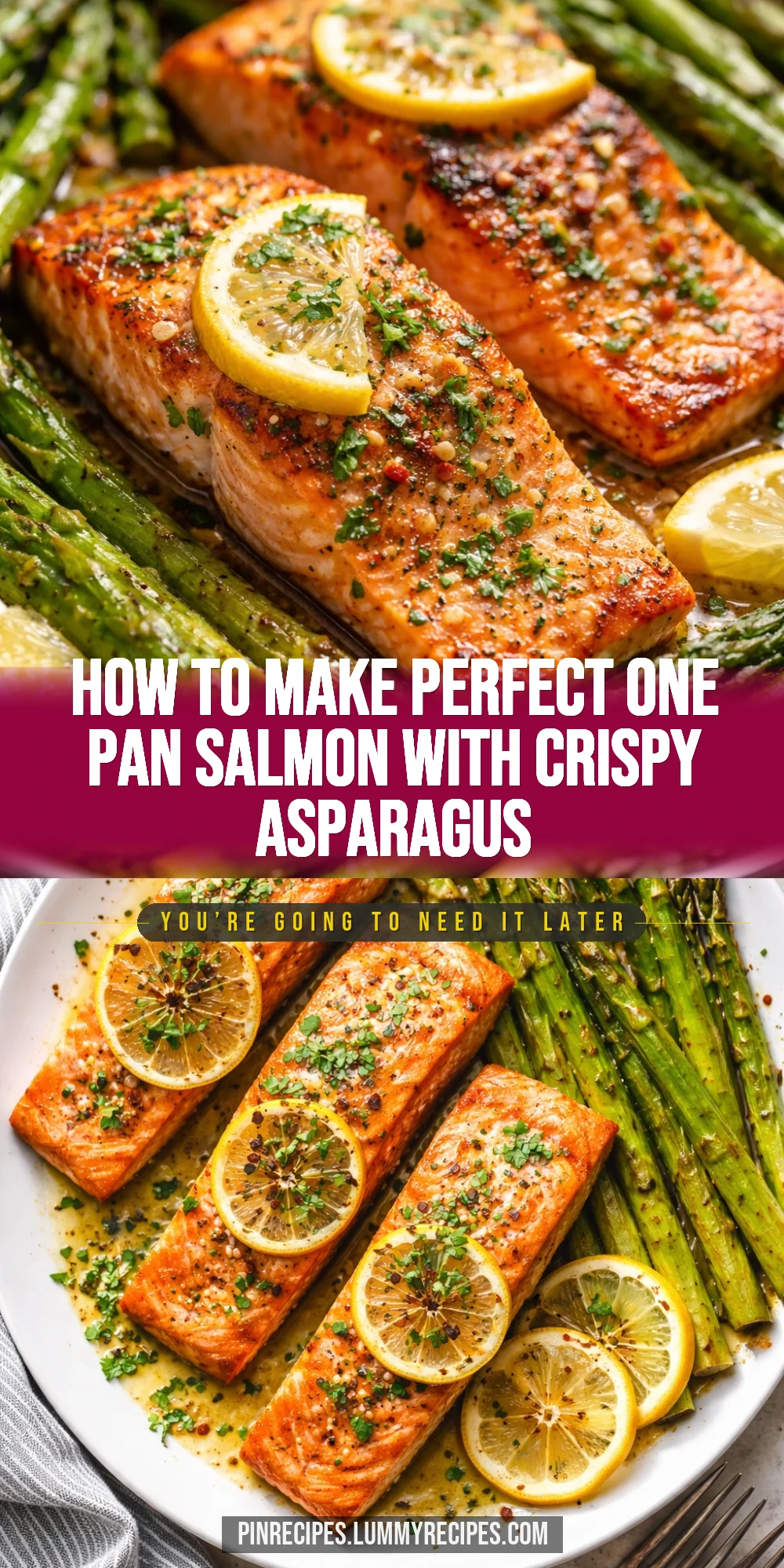
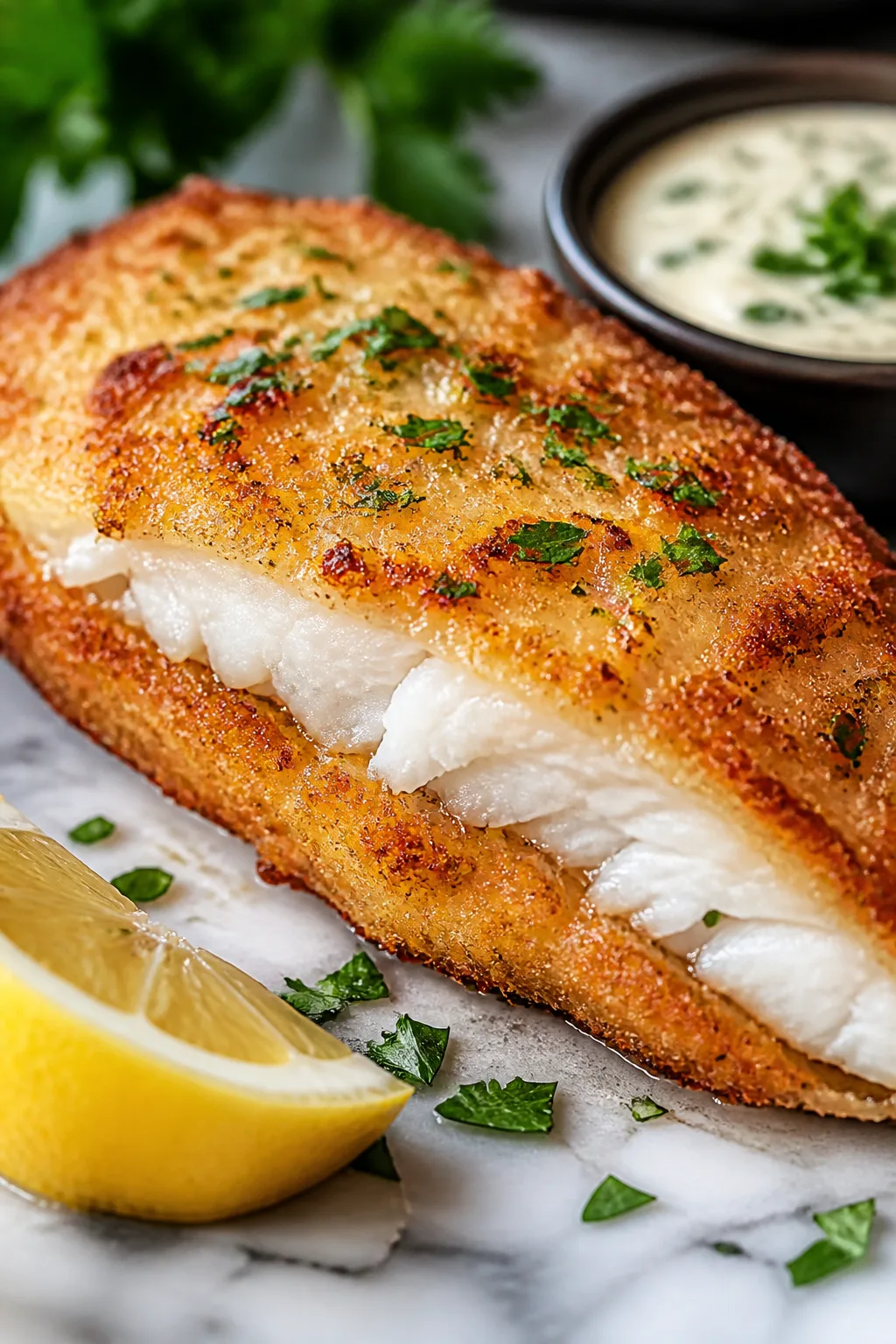
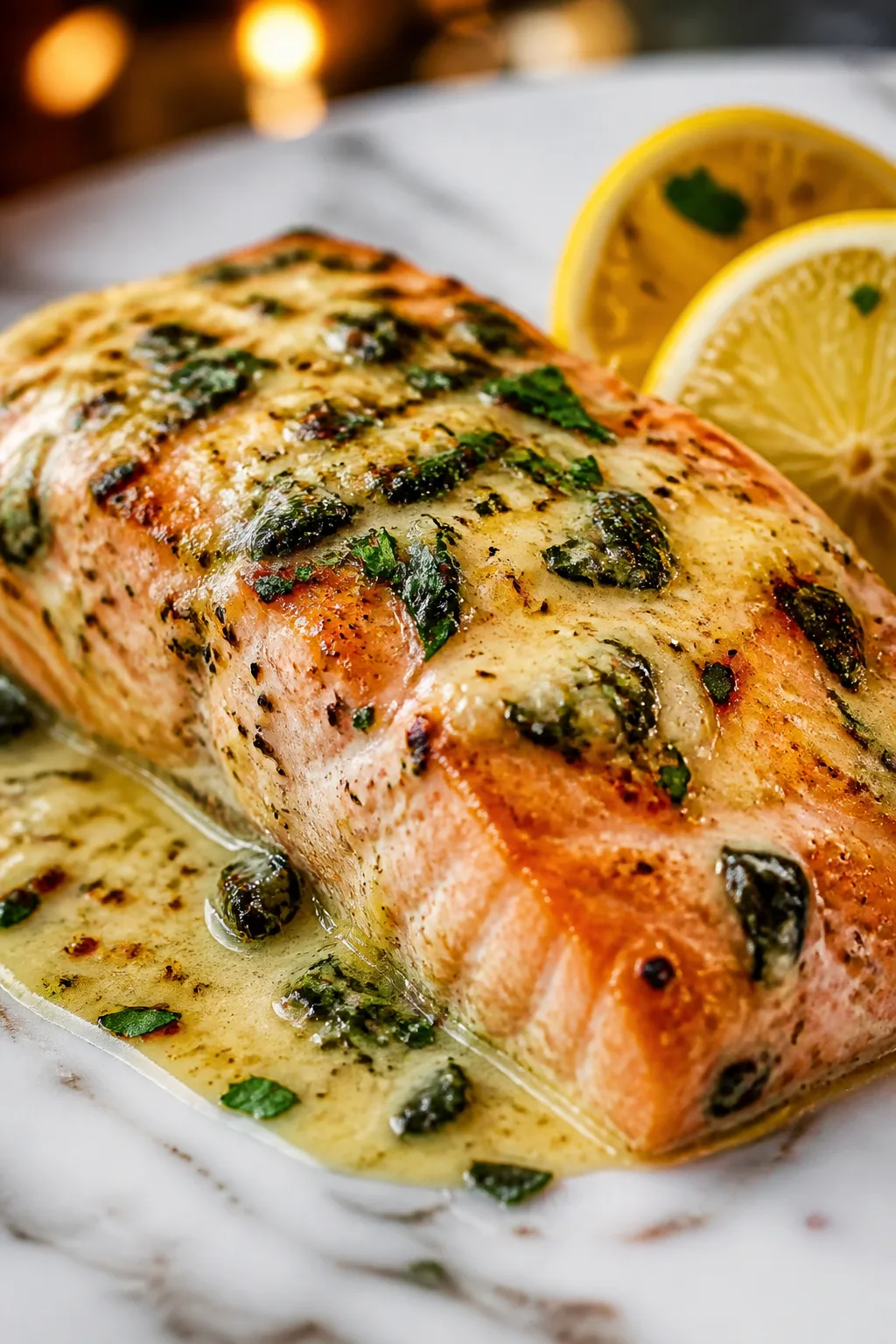
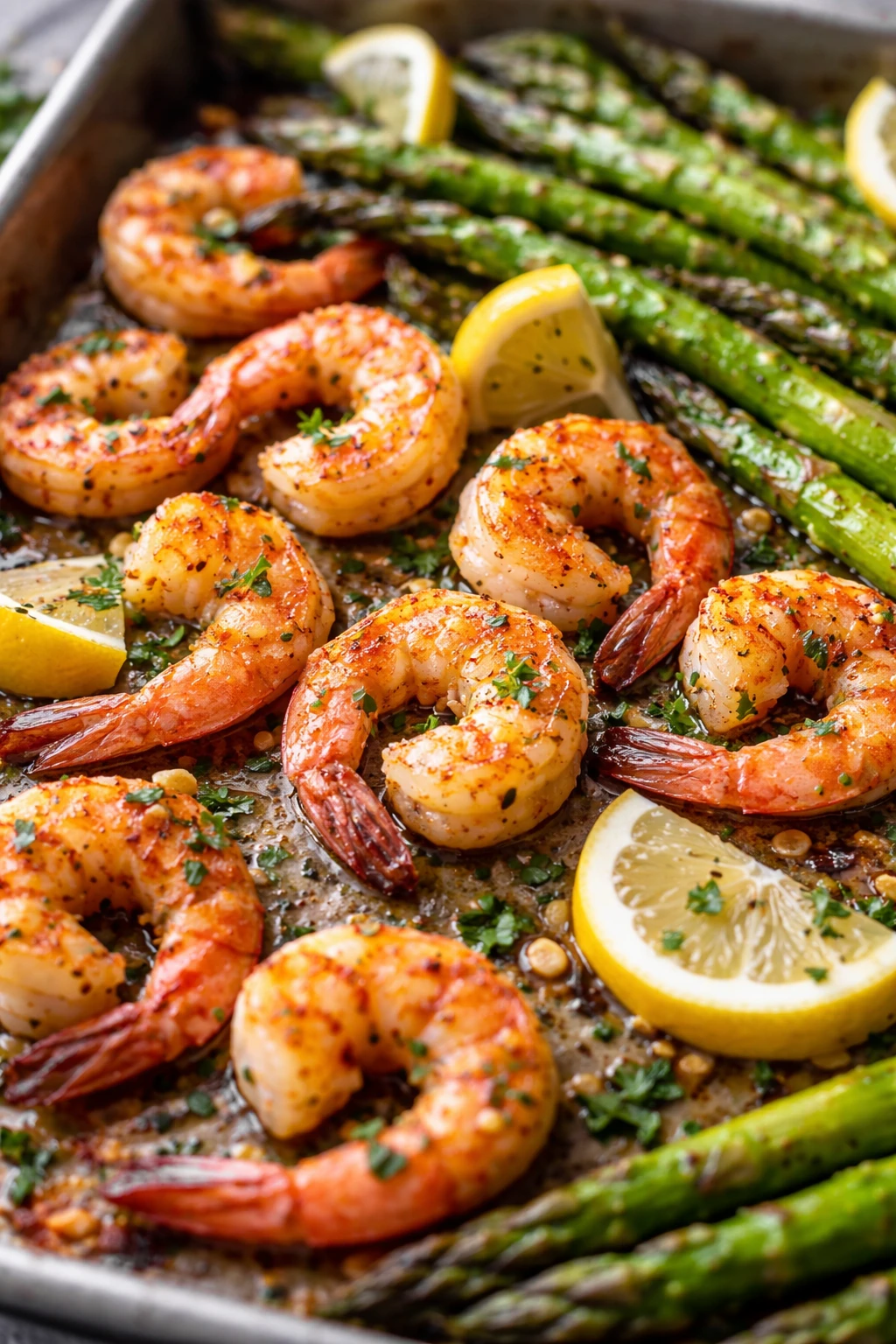
This one pan salmon asparagus recipe is a lifesaver for busy nights. The salmon stays juicy while the asparagus roasts to tender perfection. I love how everything cooks together with lemon and garlic for a fresh, simple dinner.
Introduction
I first tried making this one pan salmon asparagus recipe on a hectic weeknight when I wanted a healthy meal without fuss. It quickly became a favorite because it’s so straightforward yet delicious. What sets this version apart is roasting the salmon and asparagus together on the same sheet, which lets all the flavors mingle without extra dishes. Also, I learned that adding lemon slices on top of the salmon keeps it moist and infuses a subtle brightness that really lifts the dish. The garlic and thyme add a lovely aromatic touch, making each bite flavorful but not overwhelming. The salmon turns out tender and flaky, while the asparagus comes out perfectly roasted—slightly crisp, but tender enough to enjoy. It’s a recipe I keep coming back to because it’s fast, healthy, and always satisfying, especially when you don’t want to spend too much time in the kitchen. Plus, cleanup is a breeze, which is always a win in my book!
How To Do It
Step 1
Preheat your oven to 400°F (200°C). This temperature is perfect for roasting salmon and asparagus together because it cooks the fish gently while crisping the vegetables without drying anything out. Line a large baking sheet with parchment paper or foil to prevent sticking and make cleanup easier. Spread the trimmed asparagus evenly on one side of the pan. Drizzle with half the olive oil and season with salt, pepper, and half the minced garlic. Toss to coat the asparagus well so it roasts evenly and develops a nice caramelization.
⏱ Time: 10 minutes
✓ Doneness: Asparagus should look vibrant green with slightly browned tips
Step 2
Pat the salmon fillets dry with paper towels to ensure the skin crisps up nicely. Place the salmon on the other side of the baking sheet, skin side down. Drizzle the remaining olive oil over the fillets, then season generously with salt, pepper, thyme, and the rest of the garlic. Lay lemon slices on top of each fillet. This layering locks in moisture and infuses the salmon with a fresh citrus aroma. Avoid overcrowding the pan to allow proper heat circulation, which helps everything cook evenly.
⏱ Time: 5 minutes
✓ Doneness: Salmon looks glossy and lemon slices slightly softened
Step 3
Place the baking sheet in the preheated oven and roast everything for about 15-20 minutes. The exact time depends on the thickness of your salmon fillets. The key here is to check for doneness by gently pressing the thickest part of the salmon with a fork; it should flake easily but still be moist inside. The asparagus should be tender but still have a slight bite. Don’t overcook the salmon, or it will dry out and lose that buttery texture.
⏱ Time: 15-20 minutes
✓ Doneness: Salmon flakes easily and asparagus is tender but not mushy
Step 4
Once cooked, remove the pan from the oven and let the salmon rest for a few minutes. Resting allows the juices to redistribute, keeping the fish moist and flavorful. Meanwhile, you can squeeze a little extra fresh lemon juice over the asparagus and salmon for an added zing. This final touch brightens the flavors and balances the richness of the fish.
⏱ Time: 5 minutes
✓ Doneness: Salmon remains moist and lemon juice adds fresh aroma
Step 5
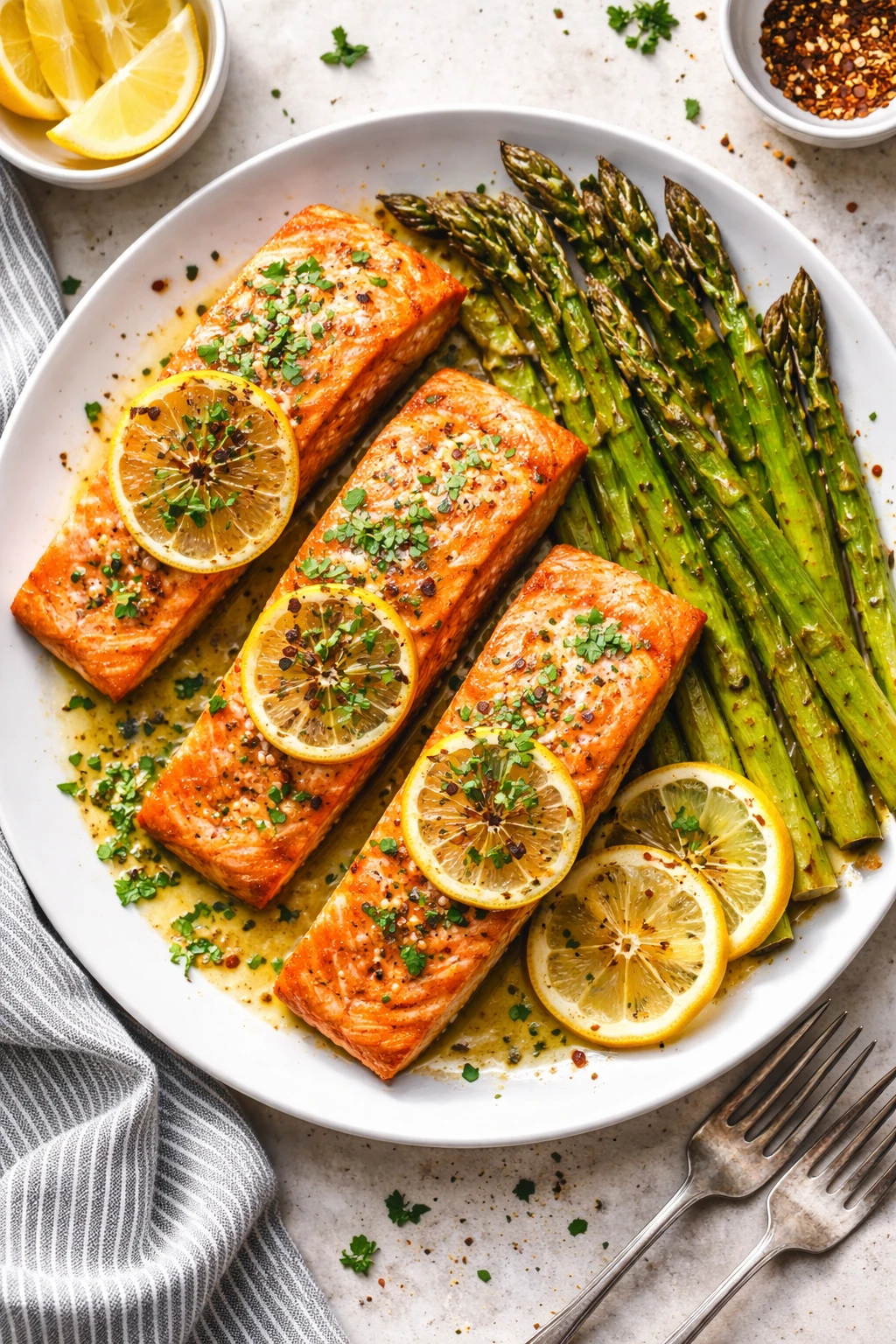
Serve the salmon and asparagus directly from the pan or transfer to plates. I like to garnish with freshly chopped parsley or dill for a pop of color and herbal freshness. This dish pairs beautifully with a simple side like quinoa, rice, or crusty bread to soak up any juices. The one pan method keeps it simple but elegant enough for guests or a cozy family dinner.
⏱ Time: 5 minutes
✓ Doneness: Plated dish looks colorful with herbs and lemon garnish
Step 6
For extra flavor, you can sprinkle a pinch of red pepper flakes over the salmon before roasting. This subtle heat complements the citrus and herbs without overpowering the dish. Be careful not to add too much if you prefer milder flavors. It’s a simple tweak that adds depth and warmth.
⏱ Time: 1 minute
✓ Doneness: Salmon has a gentle spicy aroma
Step 7
If you want to prep ahead, you can season the salmon and asparagus separately and store them covered in the fridge for a few hours. Just bring them to room temperature before roasting to ensure even cooking. This prep step saves time on busy evenings without sacrificing flavor or texture.
⏱ Time: Varies
✓ Doneness: Ingredients at room temperature before cooking
Step 8
When trimming asparagus, snap off the woody ends by bending each stalk until it naturally breaks. This ensures you only cook the tender parts, which roast evenly and taste better. Avoid peeling asparagus unless stalks are very thick, as the skin adds texture and nutrients.
⏱ Time: 5 minutes
✓ Doneness: Asparagus stalks are tender and not fibrous
Step 9
To get crispy salmon skin, make sure the fillets are dry and the pan is hot when you place them skin side down. Resist moving the fish around too much so the skin can crisp up nicely. This contrast between crispy skin and tender flesh is one of my favorite parts about this recipe.
⏱ Time: During cooking
✓ Doneness: Skin is golden brown and crisp
Pro Tips
Pat salmon dry before roasting to get crispy skin.
Moisture on the skin creates steam during cooking, which prevents browning and crispness. Drying the skin removes surface water, allowing the heat to create the Maillard reaction and a satisfying crunch.
Don’t overcrowd the baking sheet to ensure even roasting.
Crowding traps steam, causing food to steam rather than roast. Proper spacing allows hot air to circulate, producing caramelization and crisp textures on both salmon and asparagus.
Use fresh lemon slices on top of salmon for moisture and flavor.
Lemon slices gently steam the fish during roasting, keeping it moist and infusing a bright citrus aroma that balances the richness of the salmon.
Trim woody ends off asparagus by snapping them naturally.
This removes tough, fibrous parts that don’t soften well, ensuring the asparagus cooks evenly and has a pleasant texture.
Let salmon rest a few minutes after roasting before serving.
Resting allows juices to redistribute within the fish, preventing them from spilling out when cut and keeping the fillets moist and tender.
Season both salmon and asparagus with salt and pepper evenly.
Proper seasoning enhances natural flavors and helps create a balanced dish. Salt also helps draw out moisture from asparagus tips, aiding caramelization.
Use parchment paper or foil on the baking sheet for easy cleanup.
Roasting fish and vegetables can leave sticky residues. Lining the pan prevents sticking and saves time on washing up without affecting roasting quality.
Common Mistakes to Avoid
Overcooking the salmon until dry.
Why it happens People often leave salmon in the oven too long, thinking it needs to be well done, but it quickly dries out.
Fix Check salmon early for doneness by testing if it flakes easily but still looks moist inside. Remove from oven as soon as it’s opaque and flakes with gentle pressure.
Not drying the salmon skin before roasting.
Why it happens Many skip this step, leading to soggy skin because moisture prevents crisping.
Fix Use paper towels to thoroughly pat the skin dry before seasoning and roasting to get that desirable crispy texture.
Crowding the pan with too many ingredients.
Why it happens Trying to fit everything on one pan leads to steaming instead of roasting.
Fix Give each piece enough space for air circulation. Use two pans if needed to avoid overcrowding.
Using thick asparagus without peeling or adjusting cooking time.
Why it happens Thick stalks take longer to cook and can be fibrous if not peeled.
Fix Choose thinner asparagus or peel thicker stalks with a vegetable peeler. Adjust roasting time accordingly.
Skipping the resting step after cooking.
Why it happens Impatience leads to cutting immediately, causing juices to run out.
Fix Let the salmon rest for 3-5 minutes after roasting to keep it juicy and tender.
Variations
Spicy Cajun One Pan Salmon and Asparagus
Add Cajun seasoning to the salmon and a pinch of cayenne pepper to the asparagus before roasting. This gives the dish a smoky, spicy kick that’s perfect if you like bold flavors. Serve with a cooling yogurt sauce if desired.
Note: Spices can burn if too concentrated; evenly coat and monitor roasting time to prevent bitterness.
Honey Mustard Glazed Salmon and Asparagus
Brush salmon with a mixture of honey and Dijon mustard before roasting. This glaze caramelizes beautifully, adding sweetness and tang that pairs wonderfully with roasted asparagus.
Note: Apply glaze halfway through cooking to avoid burning the sugars in honey.
Mediterranean Style with Olives and Cherry Tomatoes
Add halved cherry tomatoes and pitted olives to the pan for a Mediterranean twist. The tomatoes roast down into a juicy sauce while olives add briny depth.
Note: Add tomatoes and olives at the start to roast evenly without overcooking.
Garlic Butter One Pan Salmon and Asparagus
Melt butter with garlic and brush over salmon and asparagus before roasting. This adds richness and a luscious mouthfeel, elevating the simple dish.
Note: Butter browns faster than oil; watch closely to prevent burning garlic.
Lemon Dill One Pan Salmon and Asparagus
Use fresh dill and extra lemon zest for a bright, herbaceous flavor. This variation feels lighter and fresher, great for spring and summer meals.
Note: Add dill after cooking to preserve its delicate flavor and aroma.
Nutrition
Per Serving:
Nutritional values are estimates and may vary based on specific ingredients used.
Storage & Tips
Room Temperature
This dish can safely sit out at room temperature for up to 2 hours if covered loosely. Beyond that, bacteria growth increases, so refrigerate promptly.
Refrigerator
Store leftovers in an airtight container for up to 3 days. The salmon may firm up and asparagus soften when cold, so gently reheat before serving to restore texture and flavor.
Freezer
Freeze cooked salmon and asparagus in a freezer-safe container for up to 2 months. Wrap tightly to prevent freezer burn. Thaw overnight in the fridge before reheating.
Reheating
Reheat gently in a low oven (300°F) for 10-15 minutes or in a microwave at medium power to avoid drying out. Add a splash of water or lemon juice to keep salmon moist. Avoid high heat or prolonged reheating.
Make Ahead
You can trim and season the asparagus and salmon up to a day ahead, keeping them covered separately in the fridge. Bring to room temperature before roasting to ensure even cooking and best texture.
FAQ
Can I use frozen salmon for this recipe?
Yes, but thaw it completely in the fridge before cooking to ensure even roasting. Cooking frozen salmon directly will result in uneven texture and longer cook times.
What if I don’t have fresh asparagus?
You can substitute with green beans or broccolini, which roast similarly. Adjust cooking time as needed since different veggies have varying textures and moisture content.
How do I know when the salmon is fully cooked?
Check by gently pressing the thickest part with a fork; it should flake easily and look opaque inside but still moist. Overcooking leads to dryness, so watch carefully near the end of cooking.
Can I make this recipe spicy?
Absolutely! Add red pepper flakes, cayenne, or a dash of hot sauce before roasting to give it a nice kick. Start with small amounts and adjust to taste.
Is it necessary to use lemon slices?
While not mandatory, lemon slices add moisture and fresh citrus flavor that brighten the dish. You can substitute with a squeeze of lemon juice after cooking if preferred.
Can I bake this at a lower temperature?
You can roast at 375°F but it will take longer and the salmon skin may not crisp as well. Higher heat encourages browning and faster cooking.
How do I prevent asparagus from becoming mushy?
Trim woody ends and avoid overcooking by checking for tenderness early. Roasting at 400°F helps caramelize the tips while keeping stalks firm.
What sides go well with this one pan meal?
Simple sides like quinoa, rice, or crusty bread complement the salmon and asparagus nicely. A light salad also pairs well for a balanced meal.
Final Thoughts
I hope you enjoy making this one pan salmon asparagus recipe as much as I do. It’s a simple, healthy dinner that always feels special—let me know how it turns out!