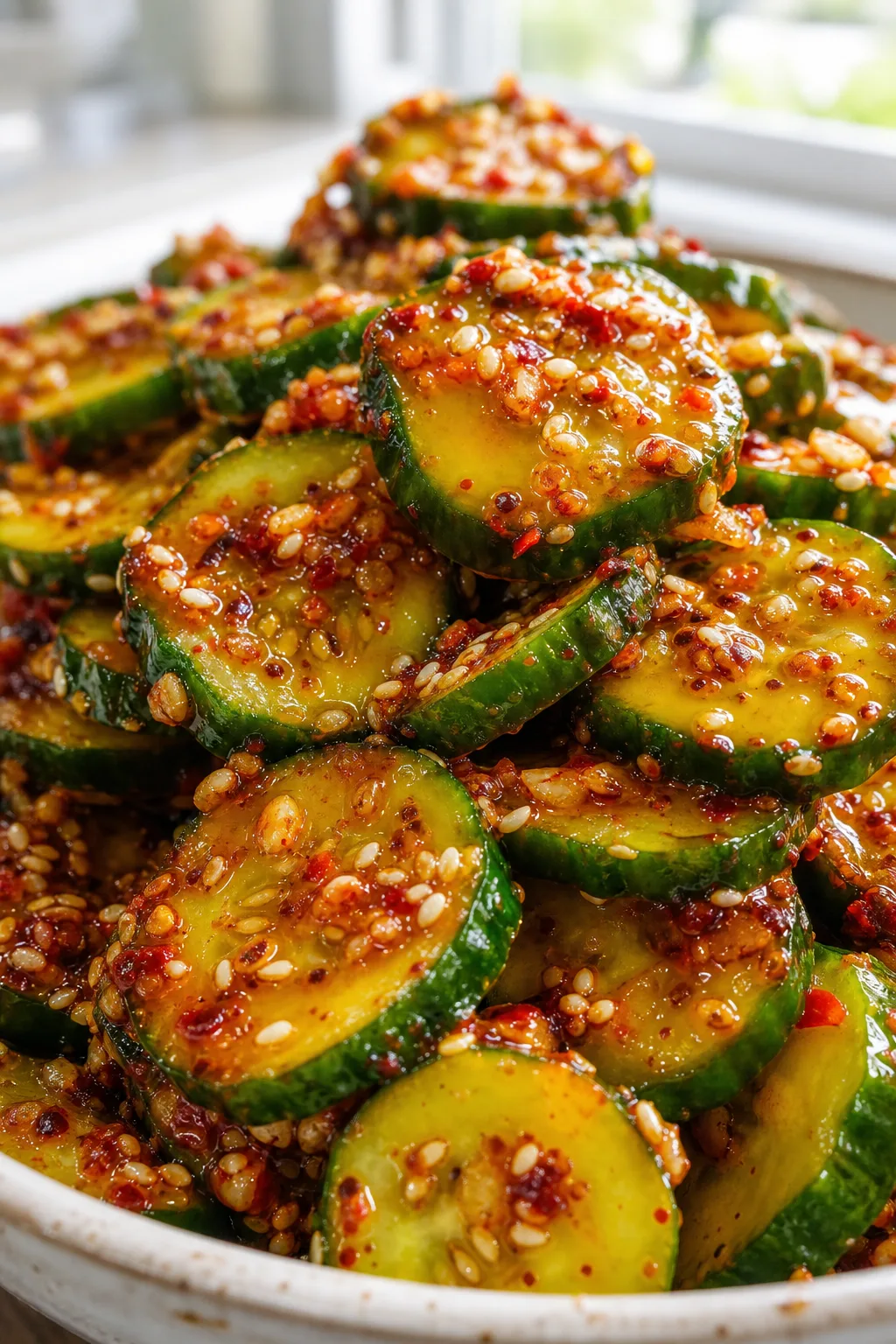
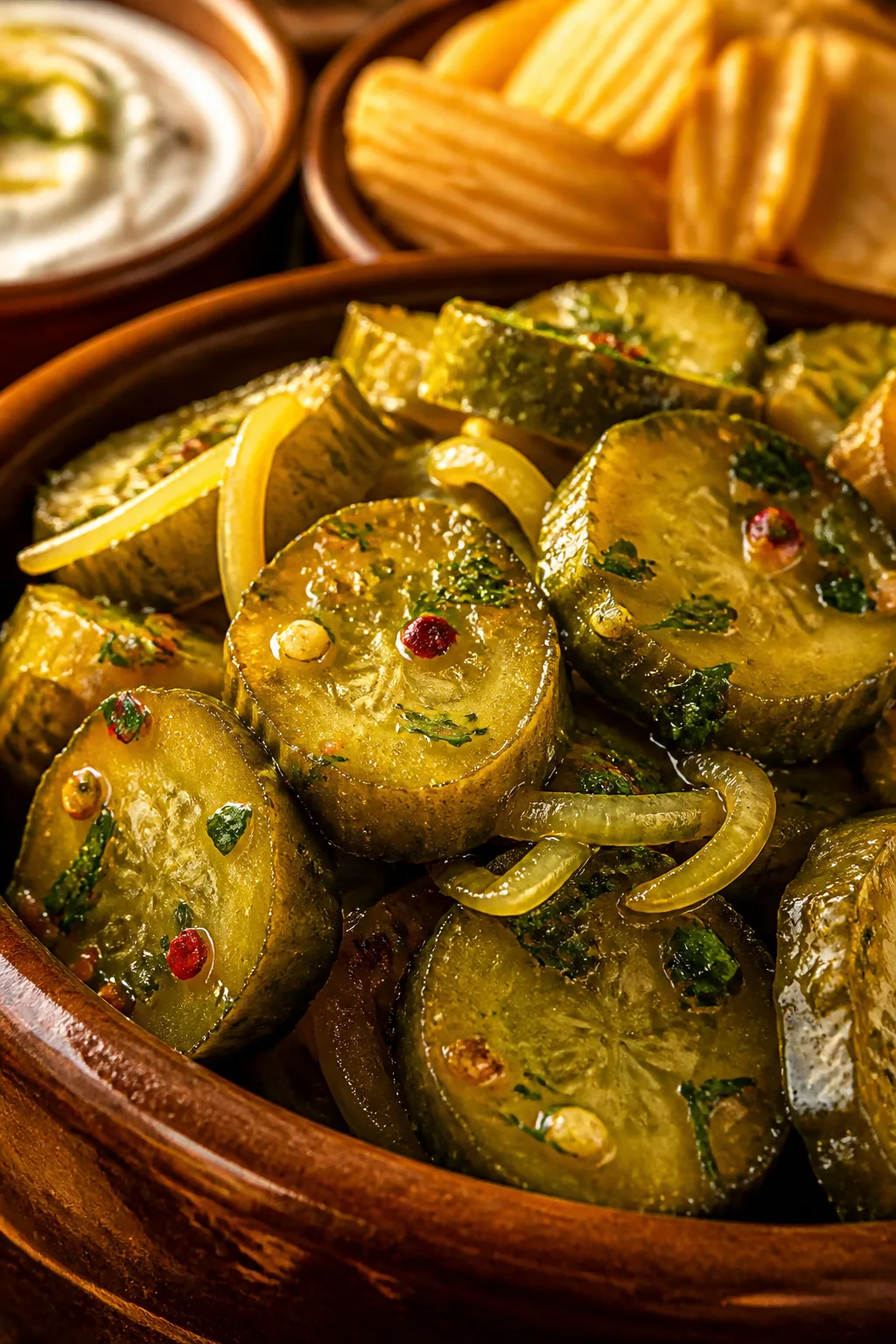
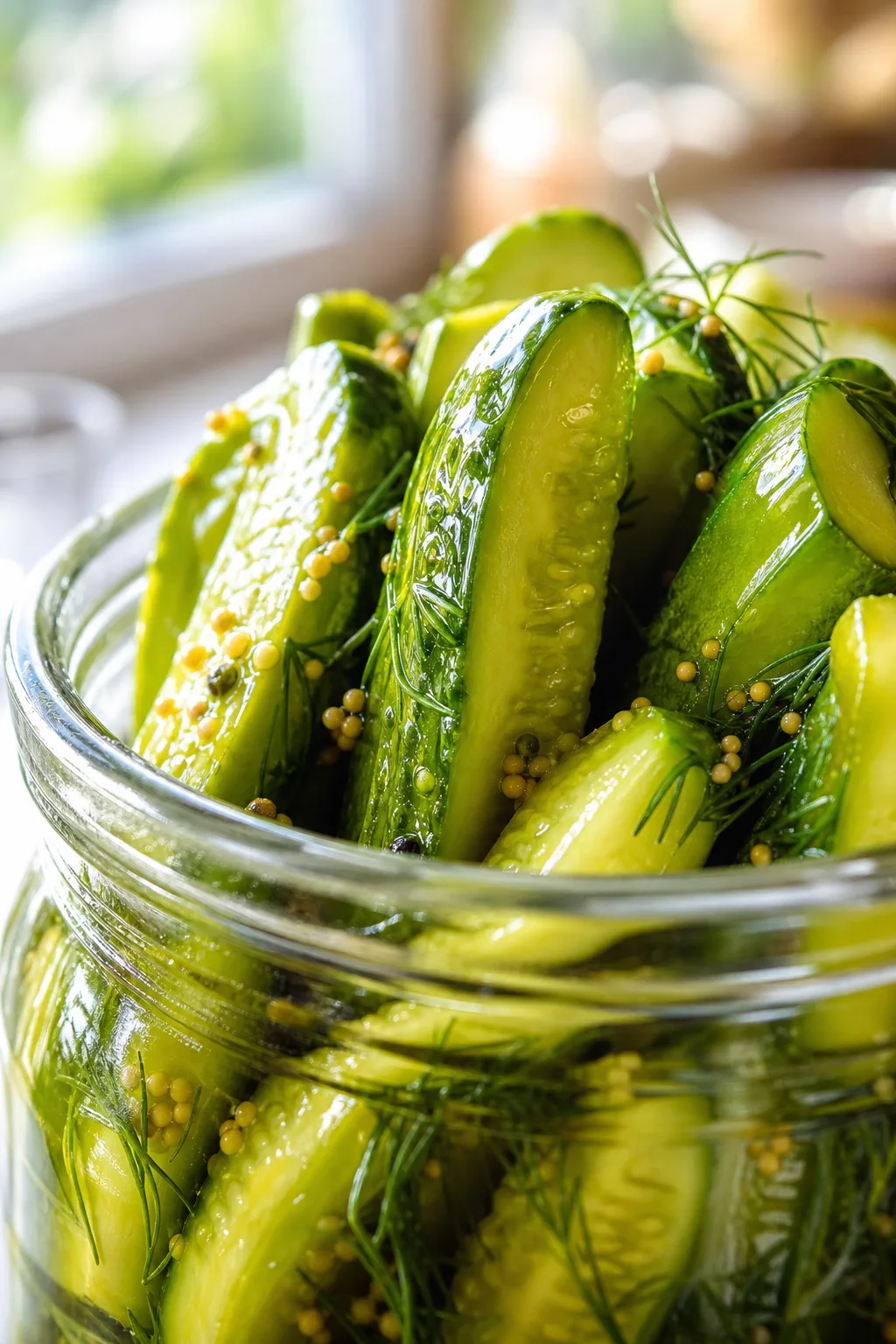
These easy refrigerator pickle recipes are my go-to for quick, crunchy snacks that brighten any meal. Using fresh dill and mustard seeds gives them a perfect tangy kick. Great for last-minute sides or snacking anytime!
Introduction
I first started making refrigerator pickles when I needed a fast, fresh alternative to canned pickles that didn’t require hours of waiting or fancy equipment. What I love most about this recipe is how simple it is—just a few fresh ingredients and a quick soak in the fridge, and you have crunchy, tangy pickles ready in a day or two. The fresh dill and garlic add that classic pickle flavor, while the mustard seeds give a subtle warmth and texture that makes these stand out from anything you buy in a jar. Over the years, I’ve tweaked the salt and sugar balance to get the perfect snap and tang that my family loves. These pickles are perfect for adding a bright crunch to sandwiches, burgers, or just as a snack straight from the jar. Plus, they’re incredibly forgiving—if you like yours spicier or sweeter, it’s easy to adjust. I think every home cook should have a go-to refrigerator pickle recipe because it’s a great way to use up fresh cucumbers and add a homemade touch to everyday meals. Give this a try, and you’ll never want to buy pickles again!
What You'll Need
Approximately 4 cups, 4 servings
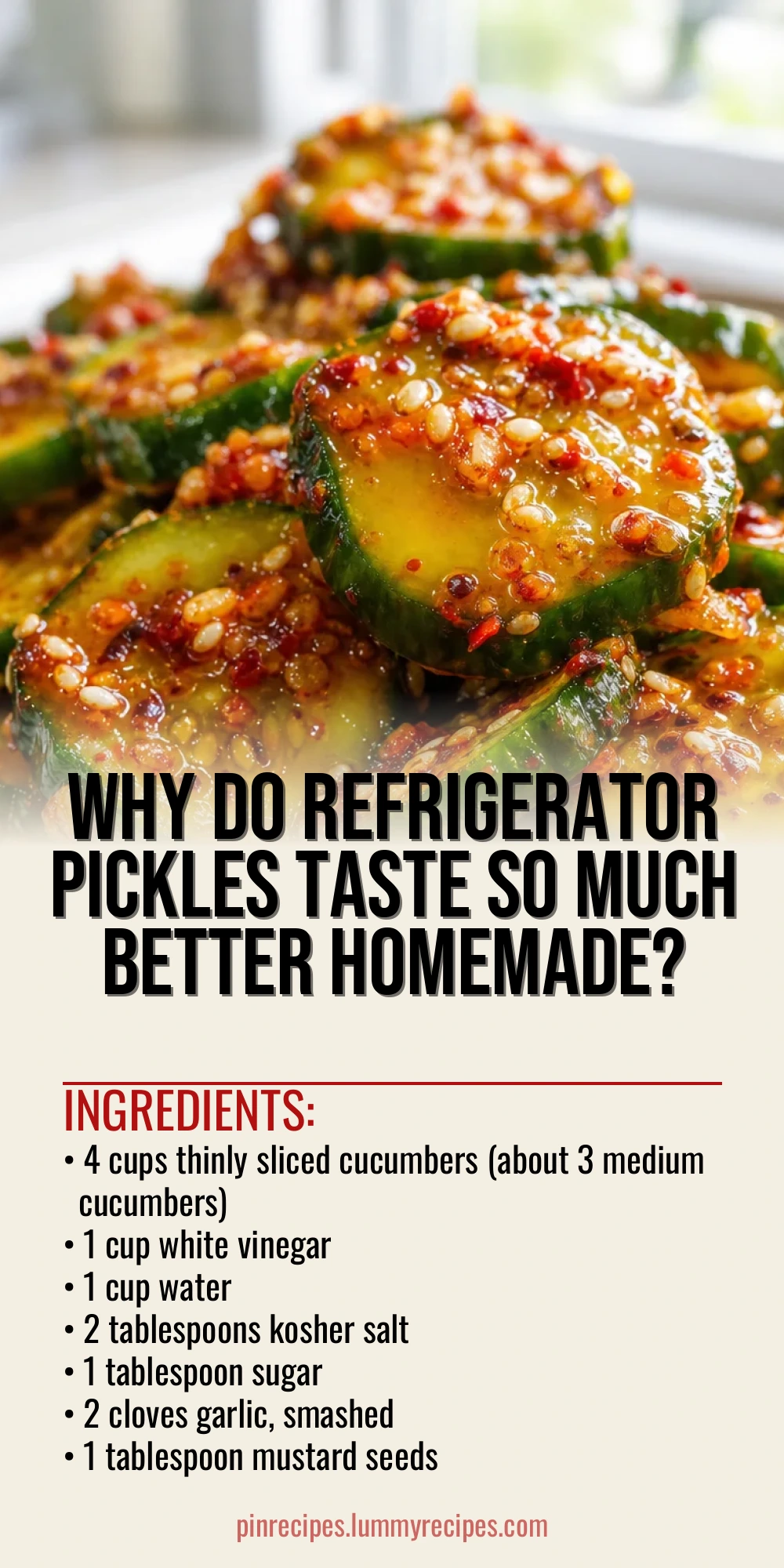
- 4 cups thinly sliced cucumbers (about 3 medium cucumbers)
- 1 cup white vinegar
- 1 cup water
- 2 tablespoons kosher salt
- 1 tablespoon sugar
- 2 cloves garlic, smashed
- 1 tablespoon mustard seeds
- 1 teaspoon black peppercorns
- 4 sprigs fresh dill
How To Do It
Step 1
Start by washing and thinly slicing your cucumbers. I like to use a mandoline for even slices about 1/8 inch thick because it ensures consistent texture and quick pickling. Thinner slices absorb the brine faster and stay crisp. Avoid slicing too thick, or the pickles won’t soak through as well. Place the slices in a large bowl as you go.
⏱ Time: 10
✓ Doneness: Evenly sliced cucumbers with uniform thickness and no bruising
Step 2
In a separate bowl, mix together the vinegar, water, kosher salt, and sugar until the salt and sugar dissolve completely. This brine is the heart of your pickles, balancing acidity and sweetness to preserve the cucumbers and build flavor. If you rush dissolving the salt, the pickles might taste grainy or unevenly seasoned.
⏱ Time: 5
✓ Doneness: Clear brine with no visible salt or sugar granules
Step 3
Add the smashed garlic cloves, mustard seeds, black peppercorns, and fresh dill sprigs to the bowl with the cucumbers. These aromatics infuse the pickles with classic flavor and a nice bite. Don’t skip the dill—it’s essential for that authentic pickle taste. Gently toss to combine so the spices distribute evenly.
⏱ Time: 5
✓ Doneness: Aromatic mixture evenly coating cucumber slices
Step 4
Pour the prepared brine over the cucumber mixture, making sure all slices are fully submerged. Use a clean weight or small plate to keep cucumbers under the brine if needed. This prevents spoilage and ensures even pickling. Leaving cucumbers exposed to air can cause soft spots or mold.
⏱ Time: 2
✓ Doneness: All cucumber slices fully covered by brine without floating
Step 5
Transfer the mixture to a clean glass jar with a tight-fitting lid. Seal it and place in the refrigerator. The cold temperature slows fermentation and keeps the pickles crisp while the flavors develop. Avoid room temperature storage for quick refrigerator pickles to prevent over-fermentation.
⏱ Time: 1
✓ Doneness: Jar sealed and stored upright in the fridge
Step 6
Let the pickles chill for at least 24 hours before tasting. The longer they sit, the more flavorful and tangy they become. I usually wait 2-3 days for the best crunch and balanced flavor, but you can eat them sooner if you prefer a milder pickle.
⏱ Time: 1440
✓ Doneness: Pickles taste tangy and flavorful with a crisp texture
Step 7
Before serving, drain some of the brine if you want less saltiness, or leave it in for maximum flavor. These pickles are perfect on sandwiches, burgers, or as a crunchy snack straight from the jar. Keep refrigerated and enjoy within 2 weeks for best quality.
⏱ Time: 1
✓ Doneness: Pickles firm and crisp with balanced salt and acidity
Step 8
If you want to customize, add sliced jalapeños for heat or a few whole cloves for warmth. These additions infuse the brine with extra flavor and make your pickles unique. Just be sure to keep the balance of salt and vinegar steady to maintain preservation.
⏱ Time: 2
✓ Doneness: Additional spices evenly distributed and infused
Step 9
Always use clean utensils to remove pickles from the jar to avoid contamination. This keeps your pickles fresh longer and prevents mold or spoilage. Also, keep the jar tightly sealed when not in use.
⏱ Time: 1
✓ Doneness: Pickle jar remains clean and sealed between uses
Pro Tips
Use a mandoline slicer for even cucumber slices.
Even slices ensure uniform brine absorption, so every pickle has the same crispness and flavor. Uneven slices can lead to some parts being over or under-pickled, affecting texture and taste.
Keep cucumbers fully submerged under the brine using a weight.
Exposure to air can cause mold growth and uneven pickling. A weight prevents floating slices and ensures all cucumbers soak evenly, preserving freshness and safety.
Use kosher salt instead of table salt.
Kosher salt dissolves cleanly without additives that can cloud the brine or affect flavor. It also helps maintain the crisp texture by balancing osmotic pressure properly.
Don’t skip the fresh dill.
Fresh dill provides essential aromatic oils that define classic pickle flavor. Dried dill lacks the brightness and can make pickles taste flat or dull.
Store pickles in the refrigerator, not at room temperature.
Cold storage slows fermentation and preserves crispness. Room temperature can cause over-fermentation, softening, and off-flavors in quick refrigerator pickles.
Taste after 24 hours and adjust seasoning if needed.
Pickling is flexible; some prefer more tang or salt. Tasting early lets you tweak brine ratios for future batches to suit your family’s preferences.
Use clean utensils when removing pickles.
Using dirty forks or hands can introduce bacteria, leading to spoilage or mold. Clean tools keep pickles safe and extend shelf life.
Common Mistakes to Avoid
Using thick cucumber slices.
Why it happens Many assume thicker slices retain crunch better, but they actually slow brine absorption, leading to uneven pickling.
Fix Slice cucumbers thinly and evenly to ensure quick, uniform flavor penetration and maintain crispness.
Not dissolving salt and sugar fully.
Why it happens Rushing the brine preparation or using cold liquids can leave undissolved salt or sugar.
Fix Mix brine ingredients in warm water until fully dissolved before adding to cucumbers for balanced flavor.
Leaving cucumbers exposed above brine.
Why it happens Not using a weight or packing jar tightly can let slices float and dry out.
Fix Use a clean weight or small plate to keep cucumbers submerged and prevent spoilage.
Using iodized table salt.
Why it happens Iodine and anti-caking agents affect flavor and cloud the brine.
Fix Always use kosher or pickling salt without additives for best results.
Storing pickles at room temperature.
Why it happens Some believe pickles ferment better at room temp, but quick refrigerator pickles need cold to stay crisp.
Fix Keep jars refrigerated to slow fermentation and maintain texture.
Variations
Spicy Refrigerator Pickles
Add sliced jalapeños or red pepper flakes for a spicy kick. This variation adds heat and complexity, perfect for those who like bold flavors. The heat intensifies as pickles sit, so start mild if unsure.
Note: Adjust brine salt and sugar slightly to balance the heat; monitor spice level over time.
Garlic Dill Refrigerator Pickles
Increase garlic cloves and add fresh dill seeds for a robust garlic flavor. This version is great for garlic lovers and pairs well with sandwiches and burgers.
Note: Use fresh garlic to avoid bitterness; add dill seeds early for stronger infusion.
Sweet Refrigerator Pickles
Double the sugar in the brine for a sweeter pickle reminiscent of bread-and-butter style. These are milder and great for kids or those who prefer less tang.
Note: Monitor sugar dissolution carefully to avoid graininess; reduce vinegar slightly if desired.
Bread and Butter Refrigerator Pickles
Add sliced onions, turmeric, and celery seeds to the brine for a classic bread and butter flavor. This variation is tangy, sweet, and slightly spiced.
Note: Use thin onion slices and stir gently to avoid breaking cucumbers.
Herb-Infused Refrigerator Pickles
Experiment with fresh herbs like tarragon, basil, or thyme alongside dill for unique flavor profiles. These pickles are aromatic and vibrant.
Note: Add delicate herbs just before refrigerating to preserve aroma and color.
Nutrition
Per Serving:
Nutritional values are estimates and may vary based on specific ingredients used.
Storage & Tips
Room Temperature
Refrigerator pickles should not be kept at room temperature for more than 2 hours to prevent spoilage. Always keep the jar sealed and refrigerated to maintain safety and crispness.
Refrigerator
Store pickles in an airtight glass jar in the fridge for up to 2 weeks. Flavor and crunch improve after a day or two. Pickles can be eaten cold or at room temperature but store cold for best texture.
Freezer
Freezing is not recommended as it breaks down cucumber texture, resulting in mushy pickles. Instead, consume within the fridge storage period.
Reheating
No reheating needed. Serve pickles chilled or at room temperature as a crunchy side or snack. Avoid microwaving to maintain texture.
Make Ahead
Prepare the brine and slice cucumbers up to 1 day ahead. Store cucumbers in a sealed container to keep fresh. Assemble and refrigerate pickles the day before serving for best flavor.
FAQ
Can I use regular cucumbers instead of pickling cucumbers?
Yes, but pickling cucumbers or Kirby cucumbers are preferred because they have thinner skins and fewer seeds, which helps maintain a crisp texture. Regular slicing cucumbers may become softer and less crunchy after pickling.
How long do refrigerator pickles last in the fridge?
Refrigerator pickles typically last up to 2 weeks when stored in a sealed jar in the fridge. For best flavor and crunch, consume within this timeframe. Always check for off smells or mold before eating.
Do I need to boil the brine for refrigerator pickles?
No need to boil the brine for quick refrigerator pickles. Simply dissolving salt and sugar in warm water is enough. Boiling can change the flavor and is more important in traditional canning methods.
Can I reuse the brine for another batch?
It’s best not to reuse brine as it loses acidity and can harbor bacteria. Fresh brine ensures safe preservation and consistent flavor with each batch.
Why are my pickles soft after pickling?
Soft pickles often result from using cucumbers that are too ripe or thickly sliced, insufficient salt in the brine, or storing at room temperature. Use fresh, firm cucumbers, slice thinly, and keep pickles refrigerated.
Can I add sugar-free options to this recipe?
Yes, you can omit sugar or use sugar substitutes, but sugar balances the vinegar’s acidity and enhances flavor. Without sugar, pickles will be more tart and less mellow.
How soon can I eat refrigerator pickles after making them?
You can start tasting them after 24 hours, but flavors improve after 2-3 days. The longer they sit in the brine, the more flavorful and tangy they become.
Can I add other vegetables besides cucumbers?
Absolutely! Carrots, green beans, or cauliflower can be quick-pickled using this method. Adjust slicing thickness and soaking time accordingly for best results.
Final Thoughts
I hope you enjoy making these easy refrigerator pickles as much as my family does. They’re a simple, fresh way to add crunch and flavor to any meal—give them a try and share your favorite variations!