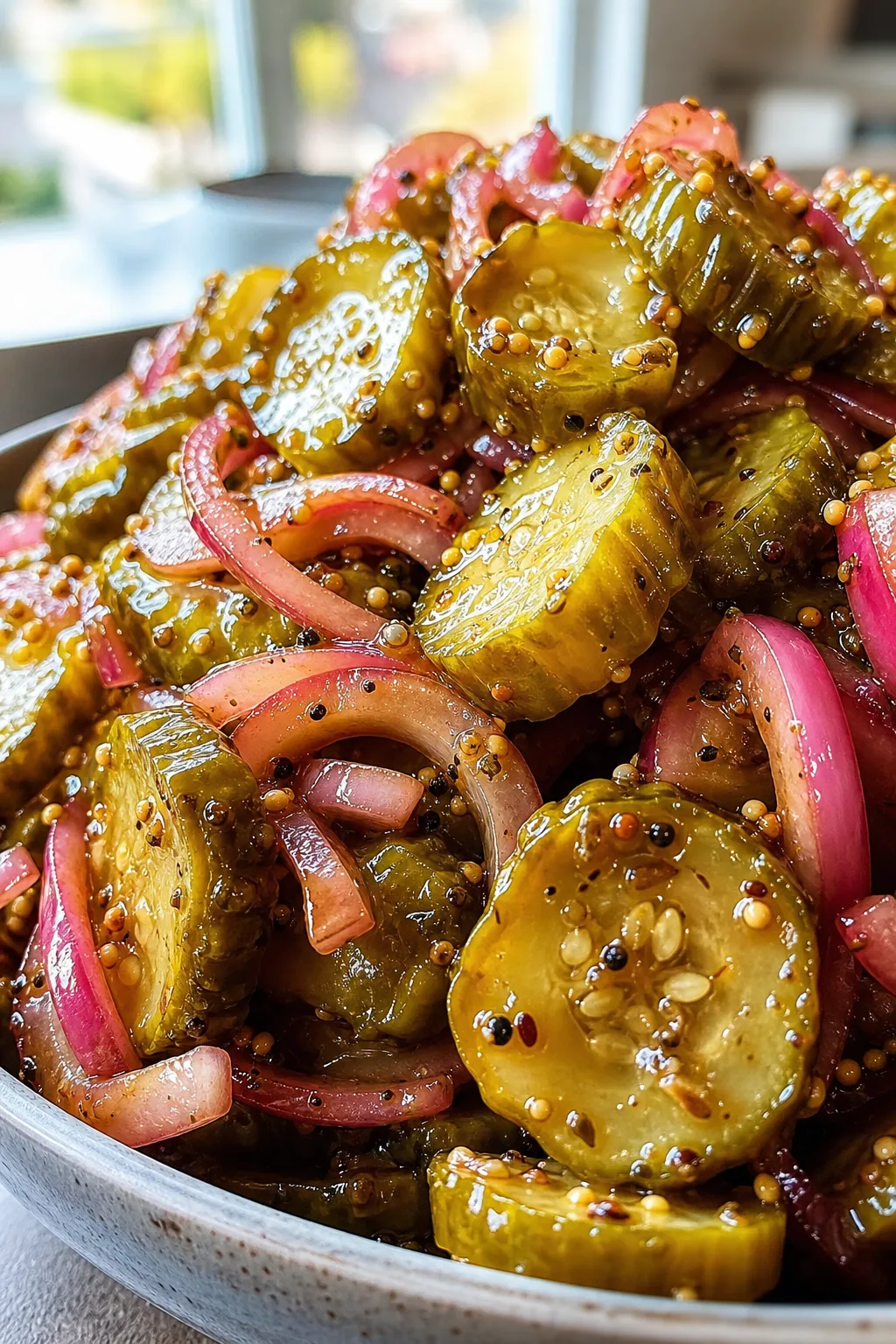
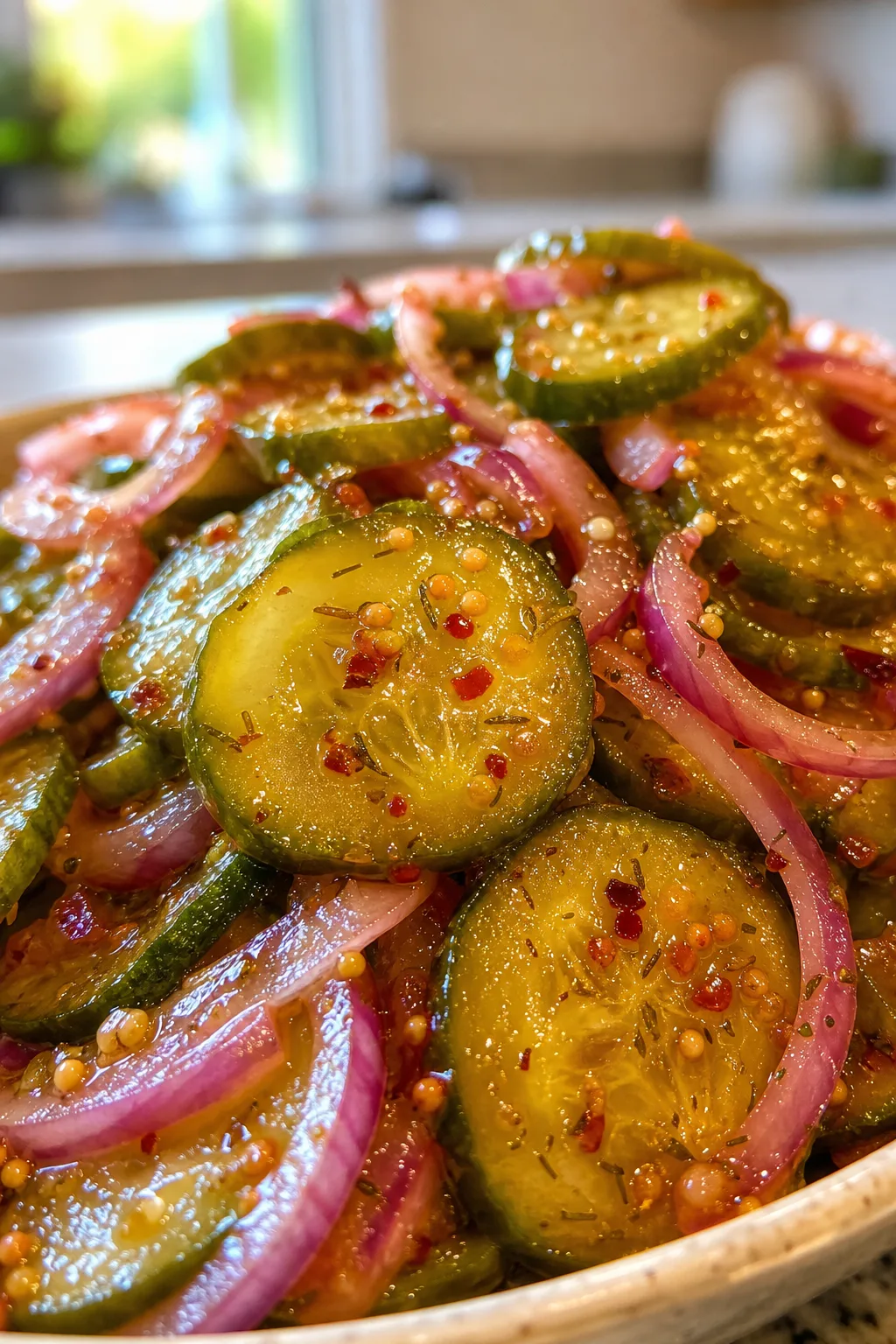
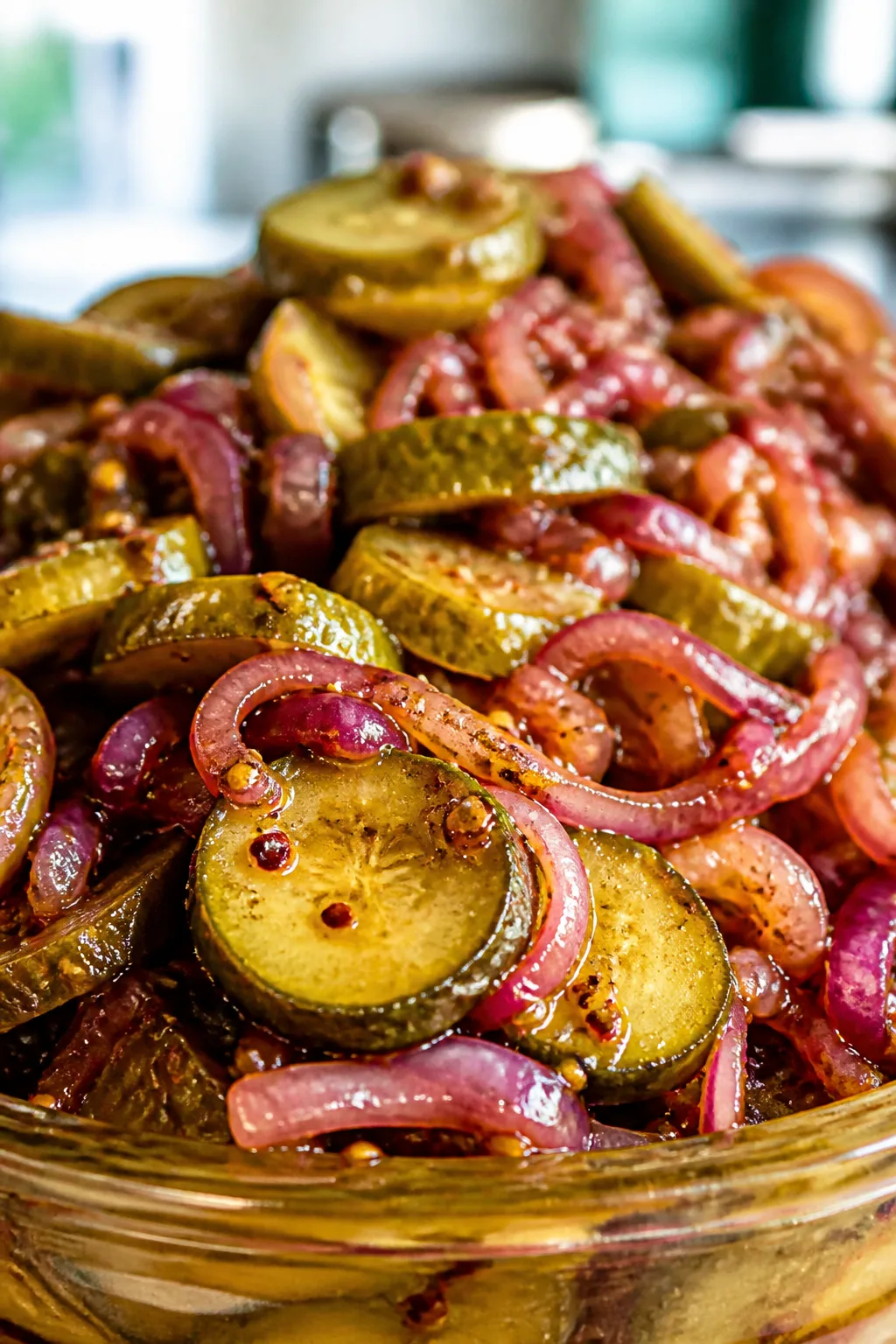
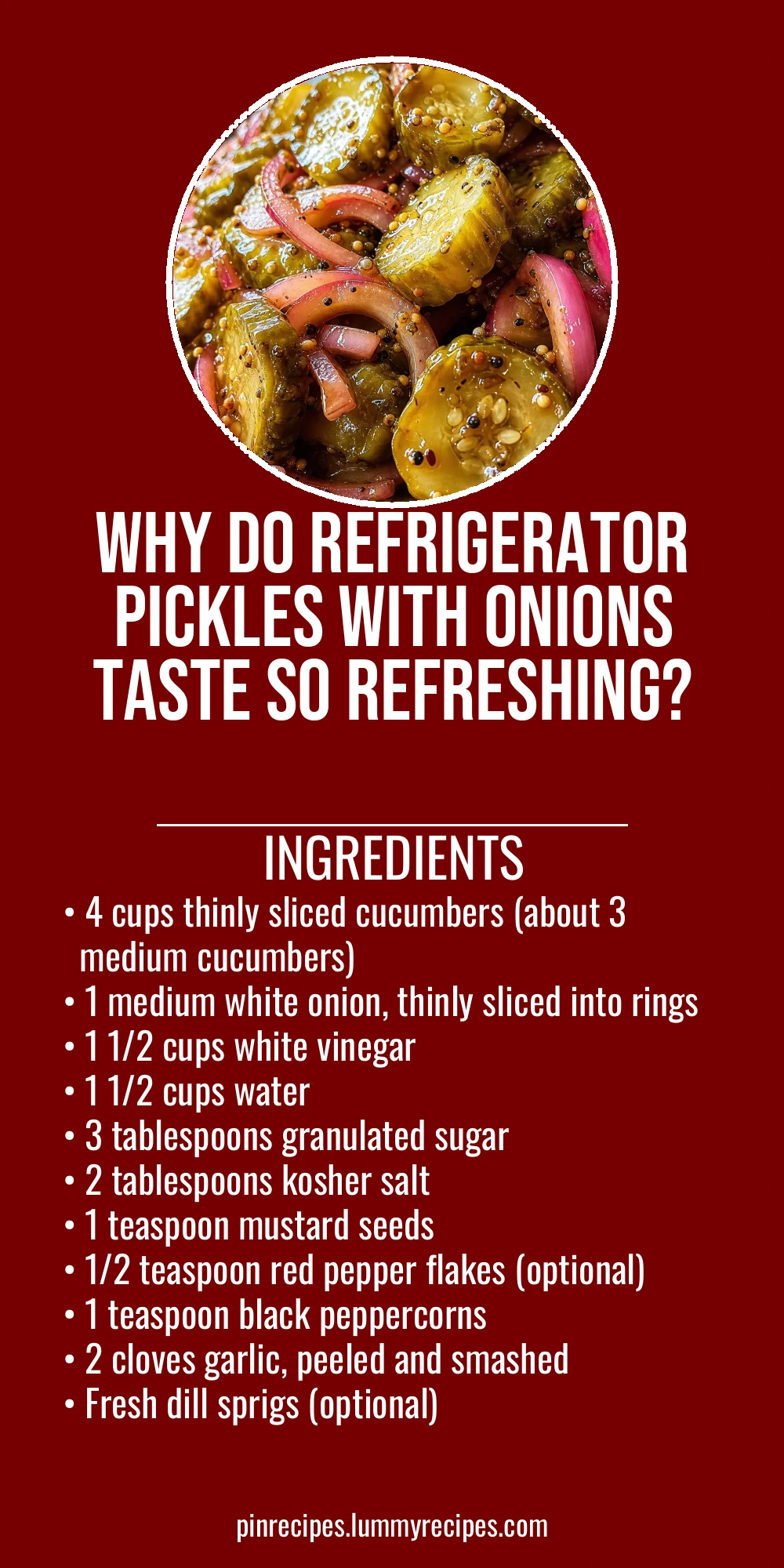
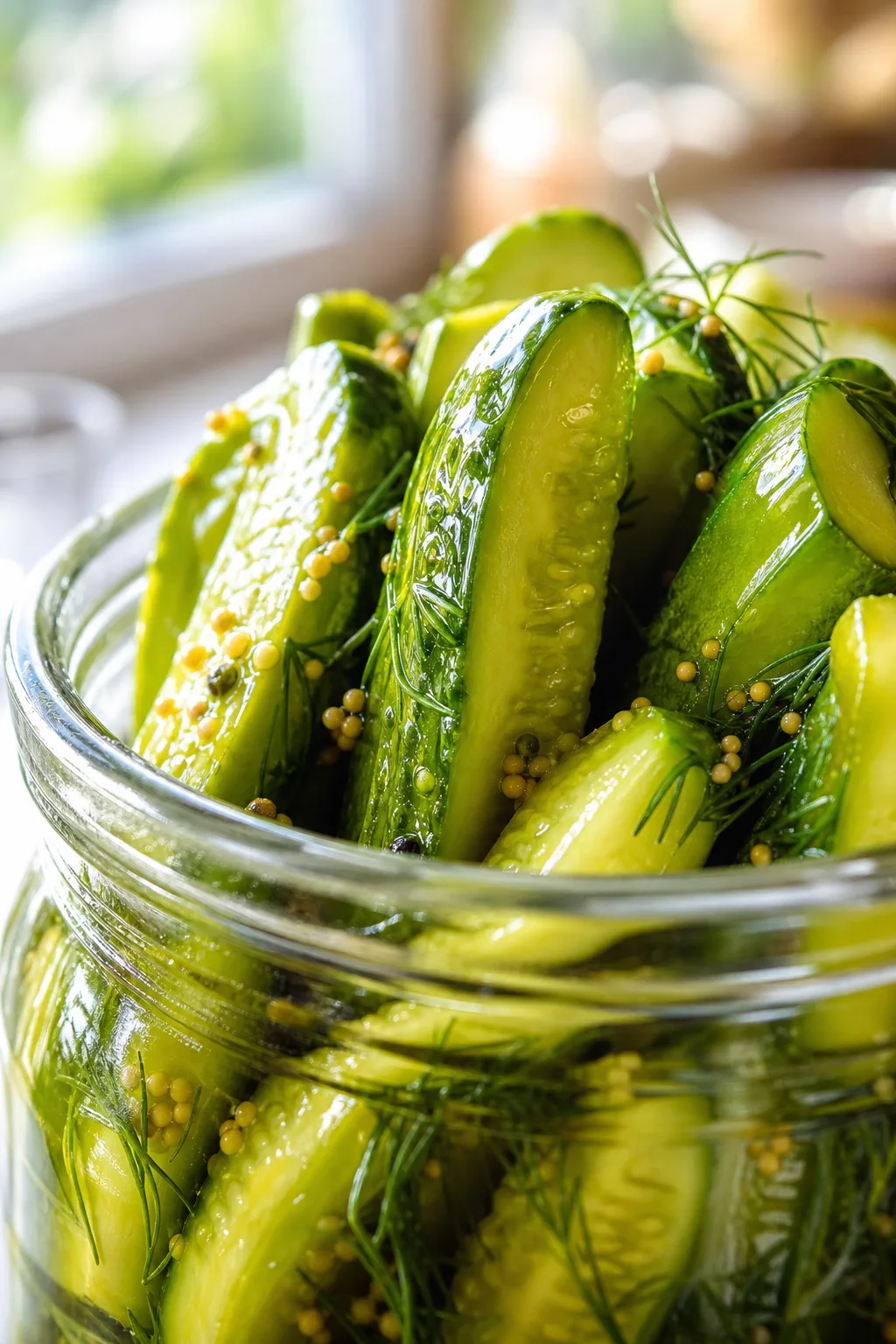
These refrigerator pickles with onions are a quick and tangy way to add crunch to your meals. The secret is a simple brine that perfectly balances sweet and sour, with onions adding a lovely bite. Great for snacking or topping sandwiches!
Introduction
I stumbled upon this simple refrigerator pickles with onions recipe when I wanted a quick, no-fuss way to add tangy crunch to my sandwiches and salads. Unlike traditional pickles that require canning or long fermentation, these come together in just minutes and develop flavor in the fridge over a day or two. What makes this version special is the balance of sweet and sour in the brine, plus the addition of thinly sliced onions that add a lovely bite and aroma. I remember my first batch was a happy accident—I forgot to boil the brine, but the pickles still turned out crisp and delicious. Since then, I’ve perfected the ratio of sugar and salt to vinegar for the best tang and crunch without overpowering the fresh cucumber flavor. The result is a bright, refreshing pickle that’s perfect for snacking, topping burgers, or adding to a charcuterie board. Plus, it’s so easy even beginners can whip it up without stress. You'll love how this recipe brings a little homemade magic to your fridge and your meals.
What You'll Need
Approximately 6 cups, 6 servings
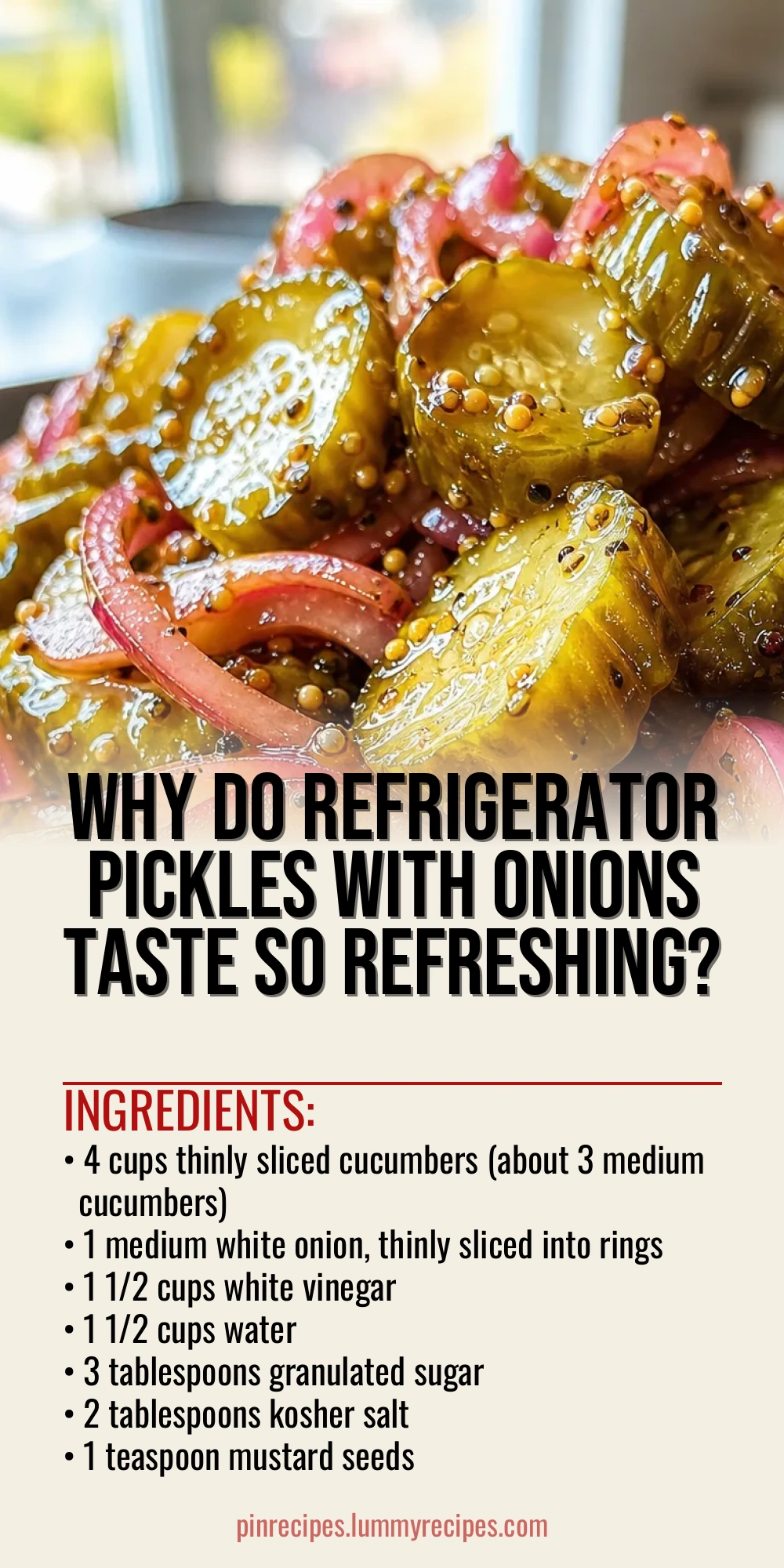
- 4 cups thinly sliced cucumbers (about 3 medium cucumbers)
- 1 medium white onion, thinly sliced into rings
- 1 1/2 cups white vinegar
- 1 1/2 cups water
- 3 tablespoons granulated sugar
- 2 tablespoons kosher salt
- 1 teaspoon mustard seeds
- 1/2 teaspoon red pepper flakes (optional)
- 1 teaspoon black peppercorns
- 2 cloves garlic, peeled and smashed
- Fresh dill sprigs (optional)
How To Do It
Step 1
Start by washing your cucumbers thoroughly and slicing them into thin, even rounds. Uniform slices ensure they pickle evenly and stay crisp. Next, peel and slice the onion into thin rings. The thin slicing helps the onions absorb the brine quickly, adding flavor without overpowering. Place the cucumbers and onions into a large clean glass jar or container with a tight-fitting lid. Using glass is important because it doesn’t react with the vinegar and keeps your pickles tasting fresh. Avoid plastic containers as they can absorb flavors and odors.
⏱ Time: 10
✓ Doneness: Cucumbers and onions are evenly sliced and packed loosely but fully into the jar.
Step 2
In a saucepan, combine the vinegar, water, sugar, kosher salt, mustard seeds, black peppercorns, red pepper flakes (if using), and smashed garlic cloves. Heat the mixture over medium heat, stirring occasionally until the sugar and salt dissolve completely. This helps the flavors meld and ensures the sugar and salt are fully integrated. Bring the mixture just to a simmer, then remove from heat and let it cool slightly for a few minutes. Pour the warm (not boiling) brine over the cucumbers and onions in the jar, making sure they are fully submerged. Seal the jar tightly and refrigerate. The warm brine helps the pickles absorb flavors faster but pouring boiling hot brine can soften the cucumbers too much.
⏱ Time: 15
✓ Doneness: Brine is clear and dissolved, fully covering vegetables in the jar with no air pockets.
Step 3
Once the jar is sealed, give it a gentle shake to distribute the spices and ensure the brine reaches every slice. Place the jar in the refrigerator and let the pickles marinate for at least 24 hours before eating. The longer they sit, the more flavorful and crisp they become. I usually wait 2-3 days for the best balance of tang and crunch. These pickles keep well in the fridge for up to 2 weeks, so you can make a batch ahead and enjoy them throughout the week.
⏱ Time: 1440
✓ Doneness: Pickles have a bright color and a tangy aroma, with a crisp bite when tasted.
Step 4
Before serving, taste the pickles and adjust seasoning if needed. If you want them spicier, add more red pepper flakes or a dash of hot sauce. For extra freshness, add a few sprigs of dill to the jar. Dill adds a lovely herbal note that complements the vinegar and onion perfectly. Just tuck the sprigs in between the cucumber slices and let them infuse overnight.
⏱ Time: 5
✓ Doneness: Pickles have a balanced flavor with a pleasant spicy or herbal note if added.
Step 5
Use a fork or clean tongs to serve the pickles. They’re perfect as a side for sandwiches, burgers, or grilled meats. You can also chop them up to add a tangy crunch to salads or potato dishes. Remember to keep the pickles submerged in brine when storing to maintain their crispness and flavor.
⏱ Time: 2
✓ Doneness: Pickles are glossy, crisp, and flavorful when served.
Step 6
If you want to make a larger batch, simply double the ingredients and use a larger jar or multiple jars. The pickling time remains the same. Just be sure to keep the ratio of vinegar, water, sugar, and salt consistent to maintain the right balance of flavors and preservation.
⏱ Time: 1
✓ Doneness: Brine ratio is balanced for larger quantities.
Step 7
Avoid using cucumbers that are overly ripe or soft as they won’t stay crisp. Pick firm, fresh cucumbers with bright green skin for the best texture. If you prefer, you can peel them partially or fully, but the skin adds nice color and crunch.
⏱ Time: 1
✓ Doneness: Cucumbers are firm and fresh before slicing.
Step 8
For a sweeter pickle, increase the sugar slightly, but be careful not to overpower the tangy vinegar flavor. For a more sour pickle, reduce the sugar or increase the vinegar slightly. Adjust to your taste, but keep the salt ratio to maintain crispness and preservation.
⏱ Time: 1
✓ Doneness: Brine flavor is balanced to your preference.
Step 9
If you want to add extra aromatics, try adding a bay leaf, coriander seeds, or fresh ginger slices to the brine. These add subtle layers of flavor without complicating the recipe. Just be sure to strain or remove larger pieces before serving to keep the pickles easy to eat.
⏱ Time: 2
✓ Doneness: Additional aromatics infuse subtle flavors without overpowering.
Pro Tips
Use fresh, firm cucumbers and slice evenly for the best texture.
Firm cucumbers with thicker skin hold up better during pickling, preventing mushiness. Even slices ensure the brine penetrates uniformly, giving consistent flavor and crunch throughout the batch.
Warm the brine until sugar and salt dissolve but avoid boiling when pouring over cucumbers.
Heating the brine helps dissolve ingredients and release spice flavors, but pouring boiling brine can soften cucumbers too much, resulting in soggy pickles. Letting it cool slightly keeps cucumbers crisp.
Keep cucumbers fully submerged in brine during storage.
Exposure to air causes pickles to dry out and spoil faster. Ensuring they’re submerged maintains flavor, texture, and safety by preventing mold and bacterial growth.
Add fresh dill or aromatics like garlic for extra flavor.
Herbs and aromatics infuse additional layers of flavor, making pickles more complex and enjoyable without complicating the recipe. Dill pairs especially well with cucumbers and vinegar.
Use a glass jar for pickling rather than plastic.
Glass is non-reactive and won’t absorb odors or flavors, ensuring your pickles taste fresh and clean. Plastic can impart unwanted tastes and is less durable for long-term storage.
Refrigerate pickles for at least 24 hours before eating.
This resting time allows the cucumbers and onions to absorb the brine fully, developing the signature tangy and crunchy flavor that defines good refrigerator pickles.
Adjust sugar and vinegar ratios to your taste preferences.
Some like sweeter pickles, others more sour. Tweaking these ingredients lets you customize the flavor balance while maintaining proper preservation and texture.
Common Mistakes to Avoid
Using cucumbers that are too large or overripe.
Why it happens People often use whatever cucumbers are on hand without considering size or freshness, assuming all cucumbers pickle the same.
Fix Choose smaller, firm pickling cucumbers or Kirby cucumbers with thick skin and fewer seeds. These hold their crunch better during pickling and won’t turn mushy.
Pouring boiling hot brine directly over cucumbers.
Why it happens Some recipes suggest boiling the brine and immediately pouring it in, but many overlook that hot liquid can soften the cucumbers too much.
Fix Let the brine cool slightly after dissolving sugar and salt before pouring it over the cucumbers and onions. This keeps the pickles crisp.
Not fully submerging the cucumbers in brine.
Why it happens It's easy to underestimate how important full submersion is, especially in smaller jars or containers.
Fix Use a clean weight or smaller jar lid to press the vegetables down, ensuring they stay completely covered by brine to prevent spoilage and drying out.
Using iodized table salt instead of kosher salt.
Why it happens Kosher salt isn’t always on hand, and iodized salt is often substituted without adjusting quantities.
Fix Use kosher salt for best flavor and dissolve rate. If using table salt, reduce the amount by about half and be aware it may slightly affect taste and color.
Skipping the rest time in the refrigerator.
Why it happens Impatience or wanting instant results leads some to eat pickles immediately after making.
Fix Allow at least 24 hours in the fridge for flavors to develop and cucumbers to absorb the brine fully, ensuring the best taste and texture.
Variations
Spicy Refrigerator Pickles
Add more red pepper flakes or sliced fresh jalapeños to the brine for a spicy kick. This variation is perfect if you like your pickles with a bit of heat. The spiciness infuses during refrigeration, making each bite pleasantly fiery.
Note: Increase red pepper flakes gradually to avoid overpowering. The pickling time remains the same, but flavors intensify over time.
Dill Refrigerator Pickles
Include several fresh dill sprigs in the jar for a classic dill pickle flavor. Dill adds a fresh herbal aroma and taste that pairs beautifully with the tangy brine and onions.
Note: Add dill right before sealing the jar. Remove before serving if preferred to avoid bitterness.
Garlic Refrigerator Pickles
Add a few extra smashed garlic cloves to the brine for a pungent, savory twist. Garlic complements the onion and vinegar, giving the pickles a richer flavor profile.
Note: Use fresh garlic and adjust quantity to taste. Too much garlic can overpower, so start small.
Sweet Refrigerator Pickles
Increase the sugar in the brine for a sweeter pickle reminiscent of bread-and-butter style. This variation softens the vinegar’s sharpness and adds a dessert-like quality to the pickles.
Note: Balance sugar and vinegar carefully to avoid overly sweet or mushy pickles.
Herb-Infused Refrigerator Pickles
Experiment with adding herbs like thyme, rosemary, or bay leaves to the brine for unique flavor twists. Each herb brings a different aromatic note, making these pickles more complex and gourmet.
Note: Add herbs sparingly and remove after pickling to keep flavors balanced.
Nutrition
Per Serving:
Nutritional values are estimates and may vary based on specific ingredients used.
Storage & Tips
Room Temperature
Refrigerator pickles should not be stored at room temperature for safety reasons. Keep them refrigerated at all times to prevent spoilage and maintain crispness.
Refrigerator
Store pickles in an airtight glass jar in the refrigerator for up to 2 weeks. Flavor and crunch are best within the first week. The pickles may become softer over time but remain safe to eat.
Freezer
Freezing is not recommended for refrigerator pickles as it causes the cucumbers to become mushy and lose their crisp texture. Best to enjoy fresh.
Reheating
No reheating needed. Serve refrigerator pickles cold or at room temperature as a crunchy, tangy accompaniment.
Make Ahead
Make the pickles 1-2 days ahead to allow flavors to develop fully. Prepare and slice cucumbers and onions, then combine with brine and refrigerate. This recipe is perfect for meal prep and quick snacking.
FAQ
Can I use other types of vinegar for refrigerator pickles?
While white vinegar is standard for its clean flavor, you can use apple cider vinegar or rice vinegar for a different taste. Keep the acidity around 5% to ensure safety and proper pickling. Using flavored or malt vinegar may alter the color and flavor unexpectedly.
How long do refrigerator pickles last in the fridge?
Refrigerator pickles typically last up to 2 weeks when stored properly in an airtight container. Their flavor and crunch are best within the first week. Always check for any off smells or mold before eating.
Why are my refrigerator pickles soggy?
Soggy pickles usually result from using cucumbers that are too ripe or from pouring boiling hot brine directly over the cucumbers. To avoid this, use firm cucumbers and let the brine cool slightly before pouring. Also, ensure cucumbers stay submerged in the brine.
Can I add sugar substitutes instead of granulated sugar?
Sugar substitutes like honey or maple syrup can be used but may affect the flavor and preservation. Granulated sugar dissolves easily and balances acidity well. If substituting, use less and taste the brine to adjust sweetness.
Do I need to sterilize the jars before making refrigerator pickles?
Since refrigerator pickles are stored in the fridge and not shelf-stable, sterilizing jars is not strictly necessary. However, using clean jars and utensils helps prevent contamination and prolongs freshness.
Can I use red onions instead of white onions?
Yes, red onions add a slightly sweeter and more colorful touch to the pickles. They may also impart a pinkish hue to the brine. Slice them thinly for best results.
How can I make my pickles crunchier?
Use fresh, firm cucumbers and avoid overripe ones. Adding a grape leaf or a small piece of horseradish leaf to the jar can help maintain crispness naturally. Also, keep the pickles submerged in cold brine and refrigerate promptly.
Can I make refrigerator pickles without onions?
Absolutely! The onions add flavor but can be omitted if you prefer plain cucumber pickles. You might want to increase the mustard seeds or add other aromatics to compensate.
Final Thoughts
I hope you enjoy making and sharing these easy refrigerator pickles with onions as much as my family does. They’re a simple, delicious way to brighten up any meal—give them a try and let me know what you think!