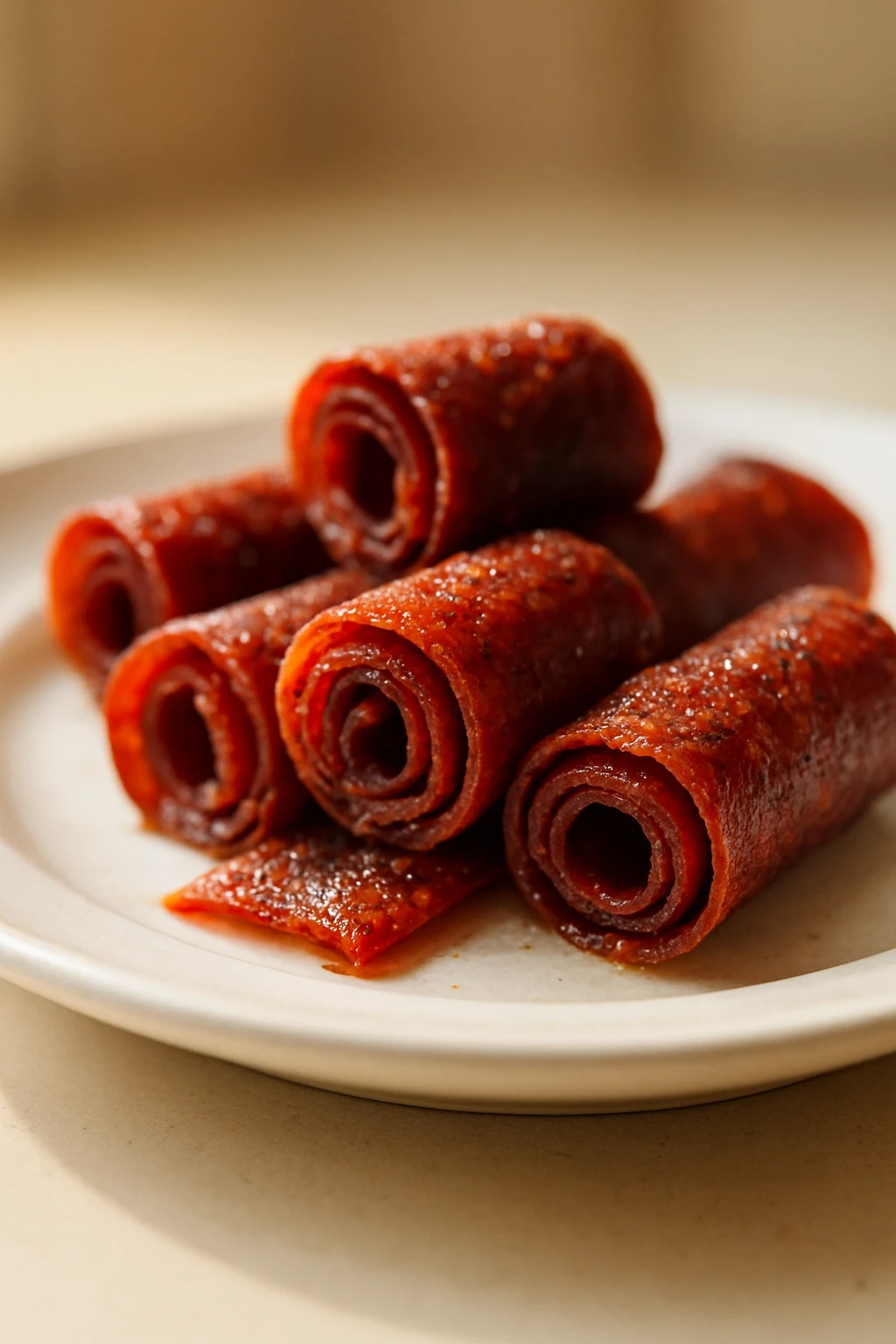
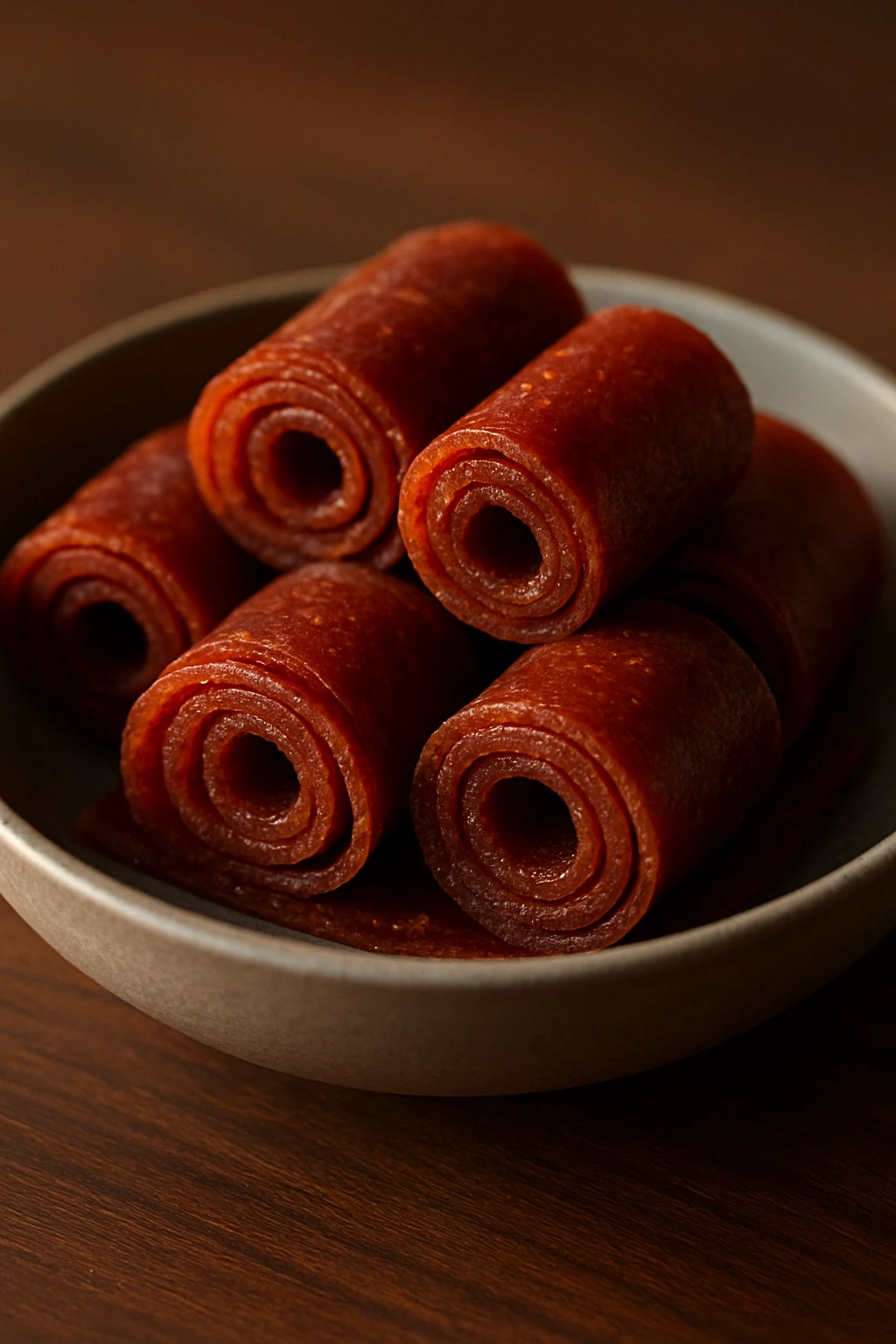
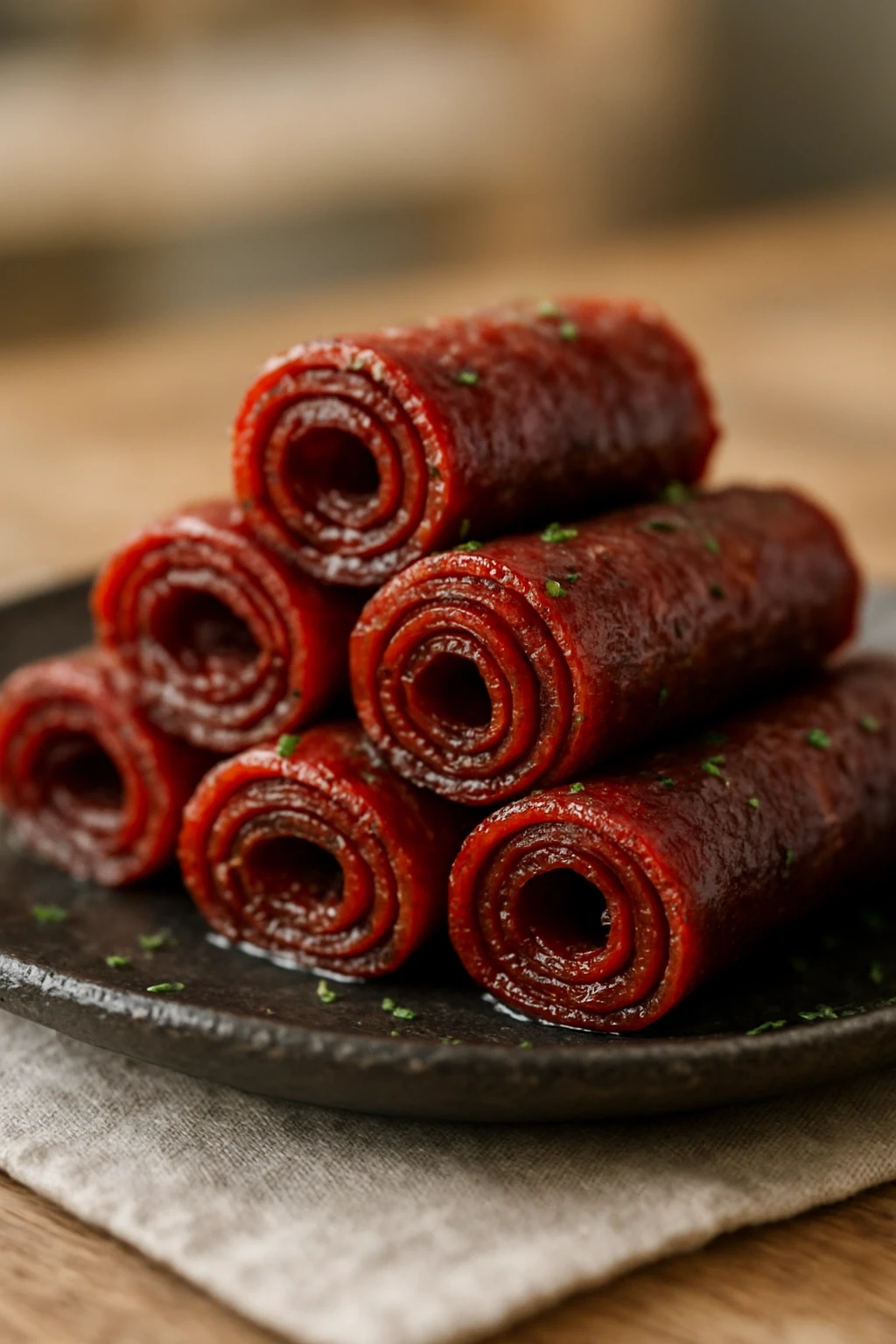
These fruit leather rolls are a wholesome, naturally sweet snack with zero added sugar. Made from pure fruit puree and dried low and slow, they’re perfect for lunchboxes or anytime you crave something fruity and chewy.
Introduction
I first stumbled upon fruit leather years ago when I wanted a healthy alternative to store-bought fruit snacks loaded with sugar and preservatives. Making your own is surprisingly simple and lets you control the sweetness and flavors completely. What I love about this recipe is how it uses only fresh fruit and a touch of lemon juice to brighten the flavor. No need for any added sugar because the natural fruit sugars come through beautifully after slow drying. I’ve tried different fruits, but a mix of berries and mango gives a nice balance of tartness and sweetness. The trick I learned is to puree the fruit until completely smooth and spread it thinly and evenly on the dehydrator or baking sheet. It takes patience, but the final fruit leather is chewy, pliable, and naturally sweet—not at all sticky or overly tough. It’s a perfect snack for kids’ lunchboxes, hiking trips, or just a guilt-free treat at home. Plus, you can customize it with spices like cinnamon or vanilla to make it your own. The vibrant colors and fresh fruit flavor really shine through, making it a fun and healthy snack everyone will enjoy.
What You'll Need
Approximately 8 rolls, 8 servings
- 3 cups mixed fresh fruit (e.g., strawberries, mango, and apples), chopped
- 1 tablespoon lemon juice, fresh
- 1 teaspoon vanilla extract (optional)
- 1/4 teaspoon ground cinnamon (optional)
How To Do It
Step 1
Start by washing and chopping your chosen fresh fruit into small pieces. This helps the blender process them more evenly. Using ripe, sweet fruit is key here because the natural sugars will intensify when dried, so pick fruits that taste good fresh. Next, puree the fruit in a high-speed blender or food processor until completely smooth. If you see any chunks or fibers, keep blending. This smooth texture is essential for the fruit leather to dry evenly and have a pleasant chew. If you want a bit of zing, add the fresh lemon juice now, which brightens the flavor and helps preserve the color. Avoid adding sugar or thickeners, as they can affect drying time and texture.
⏱ Time: 10 minutes
✓ Doneness: The puree should be completely smooth, thick but spreadable, without any lumps.
Step 2
Line a large baking sheet or dehydrator tray with parchment paper or a silicone mat. Pour the fruit puree onto the lined tray and spread it evenly using an offset spatula or the back of a spoon. Aim for about 1/8-inch thickness to ensure it dries uniformly without becoming brittle. If it’s too thick, the drying will take much longer and the texture might be gummy in the middle. If it’s too thin, the leather can dry out too much and become brittle. Smooth the edges and surface carefully to avoid uneven spots. This step is crucial because uneven thickness causes uneven drying and texture problems later.
⏱ Time: 5 minutes
✓ Doneness: The puree should form a smooth, even layer with no visible lumps or thick spots.
Step 3
Set your oven to the lowest temperature possible, ideally around 140°F (60°C), or use a food dehydrator if you have one. Place the tray in the oven or dehydrator and let the fruit puree dry slowly. This slow drying is what transforms the puree into chewy, pliable fruit leather without cooking or caramelizing the sugars. Avoid higher temperatures as they can cause the fruit sugars to burn or the leather to become brittle. Depending on your oven and fruit choice, drying can take anywhere from 4 to 6 hours. Check every hour after 3 hours to avoid over-drying.
⏱ Time: 4-6 hours
✓ Doneness: The fruit leather should be dry to the touch, no longer sticky, and peel away easily from the parchment.
Step 4
Once the fruit leather is dry but still pliable, carefully peel it off the parchment paper. If it sticks, gently loosen edges with a spatula or let it dry a bit longer. Then, cut the leather into strips or desired shapes using kitchen scissors or a sharp knife. Roll each strip up with parchment paper to keep them from sticking together. These rolls store well and are easy to grab for a quick snack. If the leather feels too sticky or soft, it needs more drying time. If it’s cracking or breaking when rolled, it’s over-dried.
⏱ Time: 15 minutes
✓ Doneness: Smooth, flexible sheets that peel easily and roll without cracking.
Step 5
Store the fruit leather rolls in an airtight container or zip-top bag at room temperature. They’ll keep for up to 2 weeks, but I usually eat them faster because they’re so good! For longer storage, you can refrigerate or freeze them to maintain freshness. Avoid exposing them to moisture or heat, which can cause stickiness or spoilage. When freezing, wrap individual rolls tightly in parchment and then place in a freezer bag to prevent freezer burn.
⏱ Time: 5 minutes
✓ Doneness: Stored properly, the fruit leather remains chewy and flavorful.
Step 6
If you want to add a twist, try sprinkling cinnamon or adding vanilla extract to the puree before drying. These subtle flavors complement many fruits and make your leather taste a bit more special. Just be sure to mix well so the flavors distribute evenly. You can also experiment with different fruit combos like peach and raspberry or apple and pear. Just keep an eye on drying times as some fruits have more water content and may take longer.
⏱ Time: 5 minutes
✓ Doneness: Even flavor distribution without clumps or streaks.
Step 7
For a smoother texture, strain the fruit puree through a fine mesh sieve before spreading. This removes seeds or fibrous bits that might make the leather less pleasant to chew. This extra step is especially helpful when using fruits like raspberries or blackberries. It’s a bit more work but results in a silky texture that’s worth it if you’re picky about seeds.
⏱ Time: 10 minutes
✓ Doneness: Puree passes through sieve easily with no seeds or lumps remaining.
Step 8
If you don’t have a dehydrator or oven with a low setting, you can dry the fruit leather outside on a sunny day using a mesh drying rack covered with cheesecloth to keep bugs away. This traditional method takes longer and depends on weather but can produce lovely results with a slightly different texture. Just be sure to bring it inside at night to avoid moisture.
⏱ Time: 1-2 days depending on weather
✓ Doneness: Leather is dry and pliable with no sticky spots.
Step 9
Before serving, let the fruit leather come to room temperature if refrigerated or frozen. This restores its chewiness and flavor. If it feels too stiff, you can soften it slightly by wrapping it in a damp paper towel and microwaving for 10-15 seconds, but don’t overdo it or it will get sticky. Enjoy your naturally sweet, preservative-free snack anytime you need a healthy boost!
⏱ Time: 5 minutes
✓ Doneness: Soft, chewy texture that’s easy to bite and roll.
Pro Tips
Use ripe, naturally sweet fruit for best flavor and drying results.
Ripe fruit contains more natural sugars, which intensify during drying and give the leather a pleasant sweetness without added sugar. Underripe fruit can taste bland or sour and may alter drying time due to different moisture levels.
Spread the puree evenly and thinly to ensure uniform drying.
Uneven thickness leads to inconsistent drying, with thick spots staying gummy and thin spots becoming brittle. A smooth, even layer dries at the same rate, producing a consistent texture throughout.
Dry fruit leather at the lowest possible temperature to preserve flavor and color.
Low heat prevents caramelization and burning of sugars, which can cause bitterness and darkening. Slow drying retains the fresh fruit flavor and bright color, resulting in a more appealing and tasty snack.
Strain the puree to remove seeds and fibrous bits, especially when using berries.
Seeds can create an unpleasant texture and interfere with smoothness. Straining produces a silky puree that dries evenly and results in a more enjoyable chew.
Store fruit leather rolls in airtight containers to maintain chewiness.
Exposure to air and moisture causes the leather to become sticky or hard. Airtight storage keeps the texture just right and prevents spoilage.
Add a splash of lemon juice to brighten flavor and help preserve color.
Acidity slows enzymatic browning and enhances the natural fruit flavor, making the final product taste fresher and look more vibrant.
Use parchment paper or silicone mats to prevent sticking during drying.
Non-stick surfaces allow easy removal without tearing. Wax paper or bare trays can cause sticking or uneven drying.
Common Mistakes to Avoid
Spreading the puree too thick or unevenly
Why it happens It’s tempting to pour all the puree quickly without spreading carefully, leading to thick patches that dry unevenly.
Fix Use an offset spatula or the back of a spoon to spread the puree evenly and thinly, about 1/8 inch thick. Check the surface carefully and smooth out any lumps before drying.
Drying at too high a temperature
Why it happens In a hurry, cooks crank up the oven to speed drying but end up burning or caramelizing the sugars.
Fix Set your oven to its lowest possible temperature (around 140°F/60°C). Slow drying preserves flavor and prevents bitterness or hard spots.
Not pureeing the fruit enough
Why it happens Sometimes chunks or seeds remain if the fruit isn’t blended thoroughly, causing uneven texture.
Fix Blend until completely smooth, and strain if needed, especially for berries. This ensures an even, pliable fruit leather.
Peeling the leather off too soon
Why it happens Impatience leads to peeling before the leather is fully dried, causing tearing or sticking.
Fix Wait until the leather is dry to the touch and peels away easily from the parchment. If unsure, dry a little longer.
Improper storage causing stickiness or mold
Why it happens Leaving rolls exposed to air or moisture causes texture changes and spoilage.
Fix Store in airtight containers at room temperature or refrigerate for longer freshness. Avoid humid environments.
Variations
Tropical Mango Pineapple Leather
Swap the mixed berries for ripe mango and pineapple for a bright, tropical flavor. The sweetness is naturally high, so no sugar needed. This combo dries a bit faster due to less fiber and more sugar content, resulting in a soft, chewy texture.
Note: Watch drying time closely—tropical fruits can dry quicker and may become brittle if left too long.
Apple Cinnamon Leather
Use apples as the base and add ground cinnamon and a splash of vanilla for a cozy, autumnal flavor. Apples have a mild sweetness and firm texture, so this leather is a bit firmer and less sticky than berry versions.
Note: Puree apples well and consider straining to remove any fibrous bits for smooth texture.
Berry Medley with Chia Seeds
Add chia seeds to the berry puree before drying for a nutritional boost and a fun texture. The seeds add crunch and omega-3s, making this version a bit heartier and more filling.
Note: Chia seeds absorb moisture and may increase drying time slightly; spread puree thinner to compensate.
Peach Ginger Leather
Combine ripe peaches with a touch of fresh grated ginger for a sweet-spicy kick. This combination is refreshing and has a zing that wakes up your taste buds, perfect for summer snacks.
Note: Ginger’s fibrous texture means pureeing thoroughly and possibly straining for best results.
Green Smoothie Leather
Blend spinach, banana, and apple for a green fruit leather packed with nutrients. The banana adds creaminess and natural sweetness, balancing the earthiness of spinach. A great way to sneak greens into snacks.
Note: Because of the greens, the color will be darker and flavor more vegetal; dry at low temperature to preserve nutrients.
Nutrition
Per Serving:
Nutritional values are estimates and may vary based on specific fruit and quantities used.
Storage & Tips
Room Temperature
Fruit leather rolls keep well at room temperature for up to 2 weeks if stored in an airtight container away from heat and moisture. Avoid leaving them exposed to air to prevent them from becoming sticky or drying out.
Refrigerator
Store fruit leather in an airtight container or zip-top bag for up to 1 month in the fridge. The cooler temperature helps preserve freshness but can make the leather slightly firmer. Let it come to room temperature before eating for best chewiness.
Freezer
Freeze fruit leather rolls for up to 3 months. Wrap each roll tightly in parchment paper and place in a freezer-safe bag to prevent freezer burn. Thaw in the fridge overnight or at room temperature before eating. Avoid microwaving frozen leather as it can become sticky.
Reheating
If the fruit leather feels too stiff or dry, soften it gently by wrapping in a damp paper towel and microwaving for 10-15 seconds. Avoid overheating, which makes it sticky and hard to handle.
Make Ahead
You can prepare and puree the fruit 1-2 days ahead and store it in the fridge. Spread and dry the puree the day you plan to serve. Alternatively, make the fruit leather fully ahead and store rolls properly for grab-and-go snacks.
FAQ
Can I use frozen fruit instead of fresh?
Yes, frozen fruit works well, especially if fresh isn’t in season. Just thaw completely and drain excess water to avoid overly wet puree, which extends drying time and can affect texture.
How do I know when the fruit leather is done drying?
It should feel dry to the touch, not sticky, and peel easily from the parchment. The surface will look matte, not shiny or wet. If it cracks when bent, it’s over-dried.
Can I add sweeteners like honey or sugar?
I recommend avoiding added sweeteners since ripe fruit is naturally sweet enough. Adding sugar can prolong drying time and risk burning or hardening the leather.
What if my fruit leather is too sticky after drying?
This usually means it needs more drying time. Return it to the dehydrator or oven and check every 15-20 minutes. Make sure it’s spread thinly and evenly next time.
Can I roll fruit leather without parchment paper?
You need parchment or silicone mats to prevent sticking. Rolling without a non-stick layer will cause tearing and make it difficult to separate rolls.
How long does fruit leather last once made?
Stored airtight at room temp, it lasts about 2 weeks. Refrigerated, it can last a month. Freezing extends shelf life to 3 months or more.
Can I use a microwave to dry fruit leather?
Microwaves aren’t ideal as they cook unevenly and can burn the fruit sugars. Slow drying in a low oven or dehydrator produces the best texture and flavor.
Is it possible to make fruit leather without any equipment?
Yes, you can dry fruit leather outdoors on a sunny day using a mesh drying rack covered with cheesecloth. This traditional method takes longer and depends on weather conditions.
Final Thoughts
Give this homemade fruit leather a try—you’ll love how simple and delicious it is. Don’t forget to share your favorite fruit combos and how your rolls turn out!