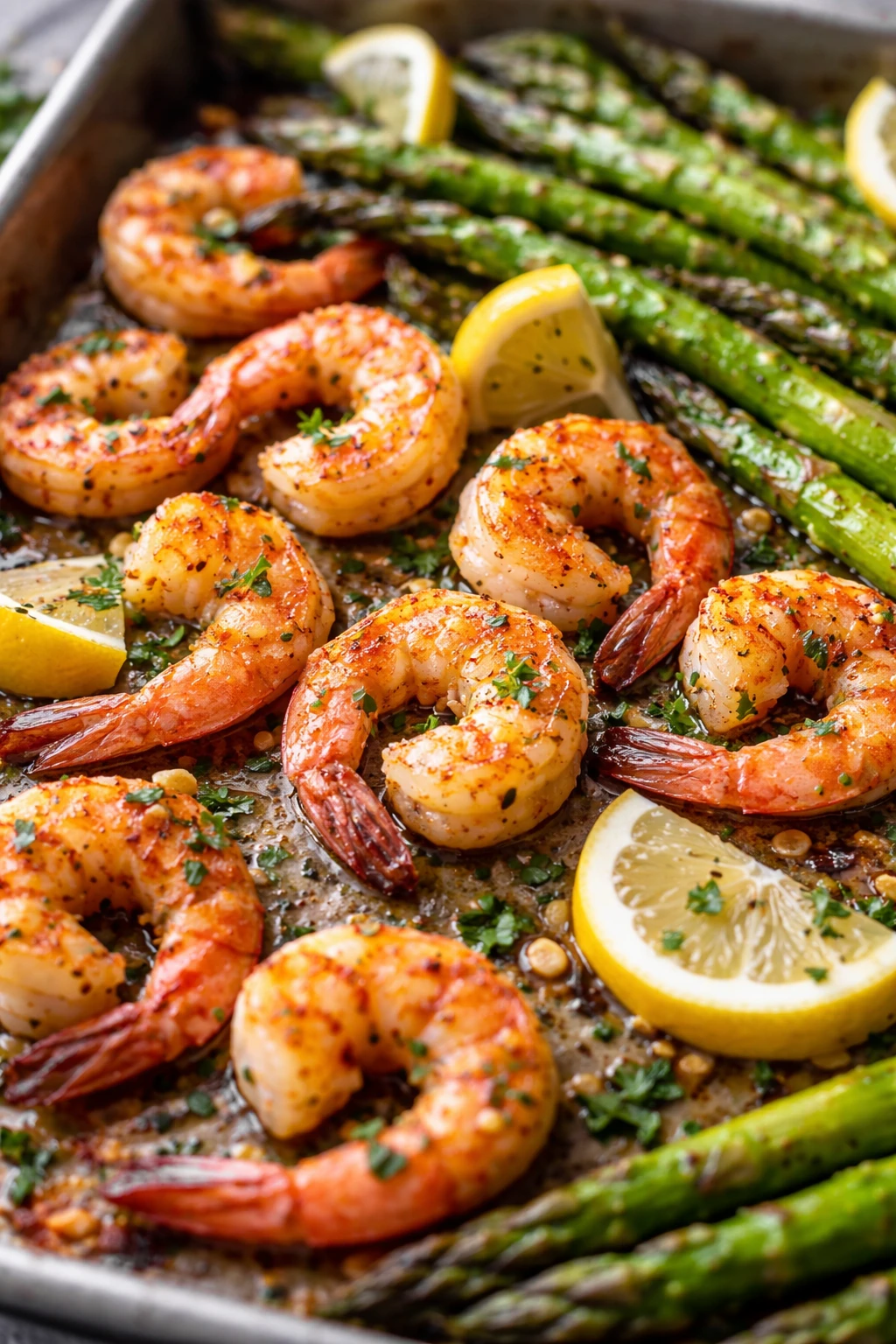
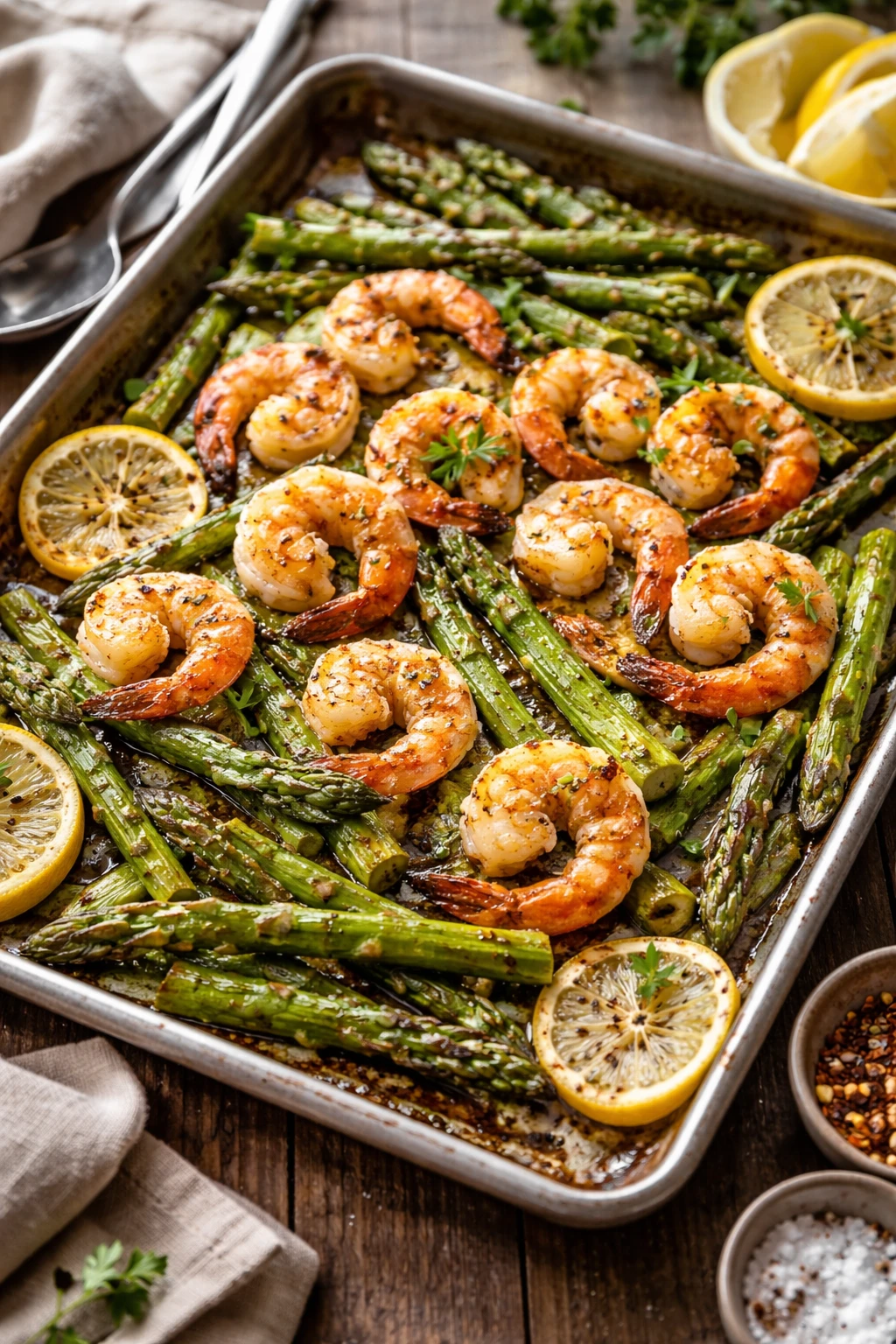
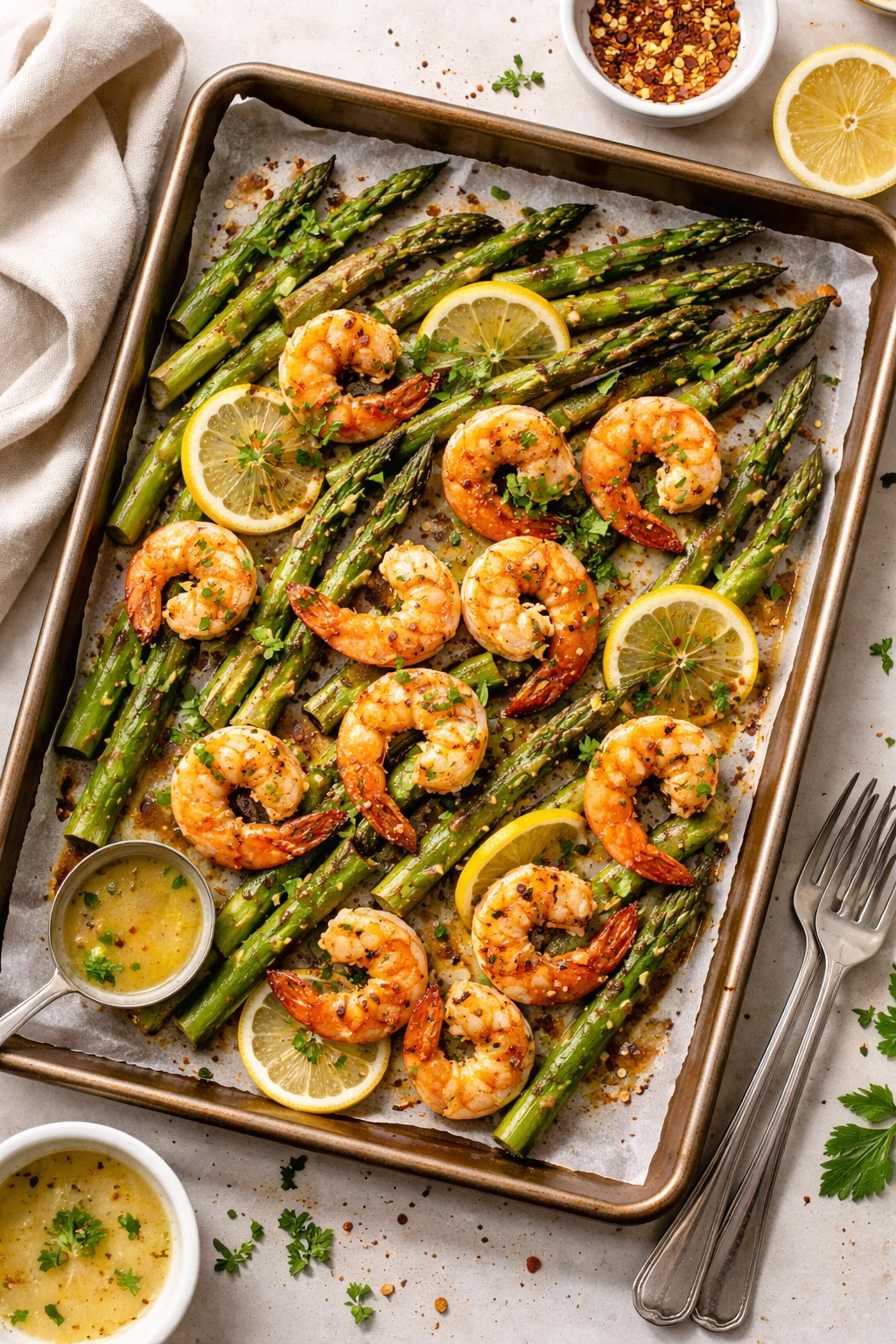
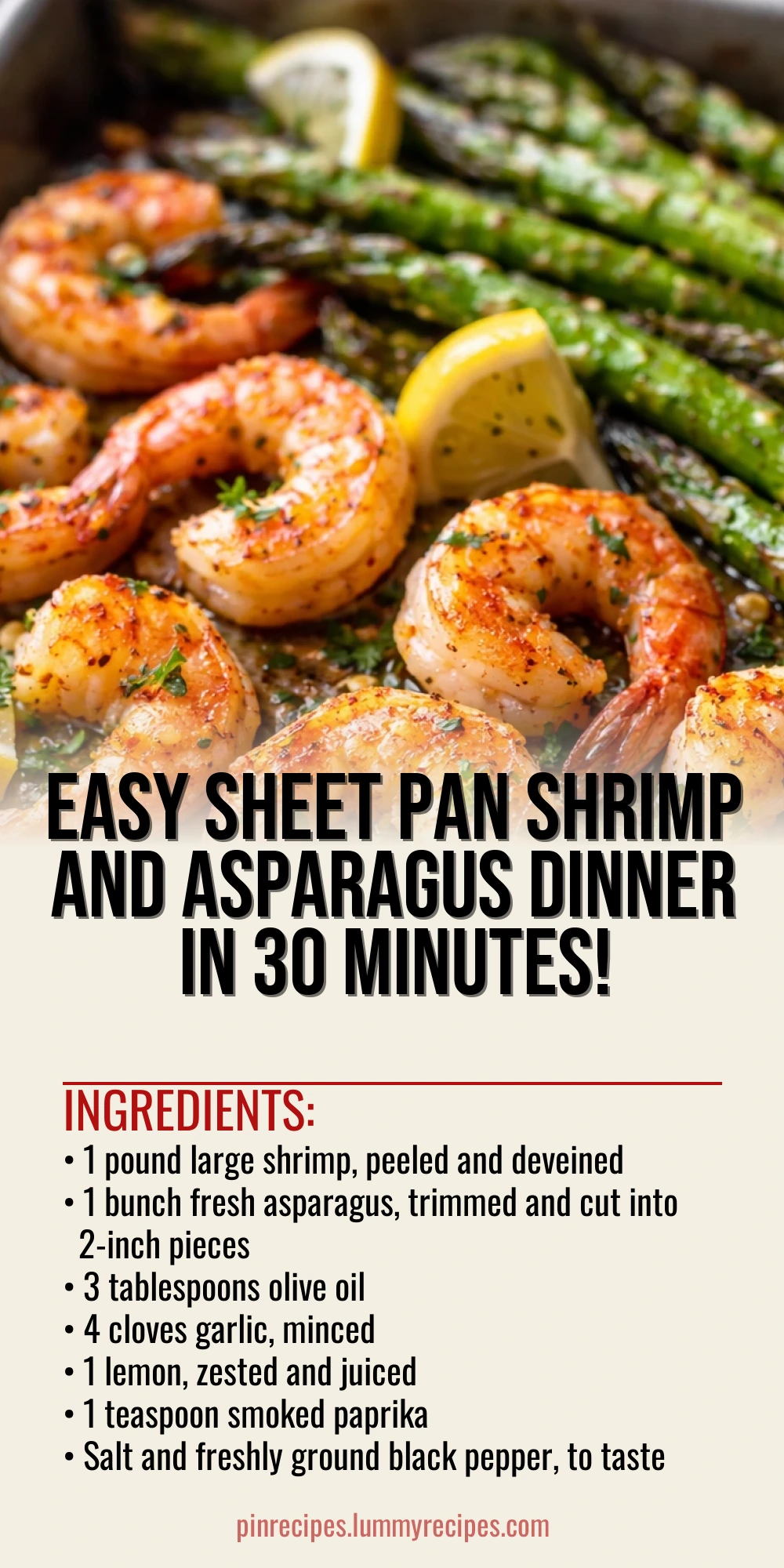
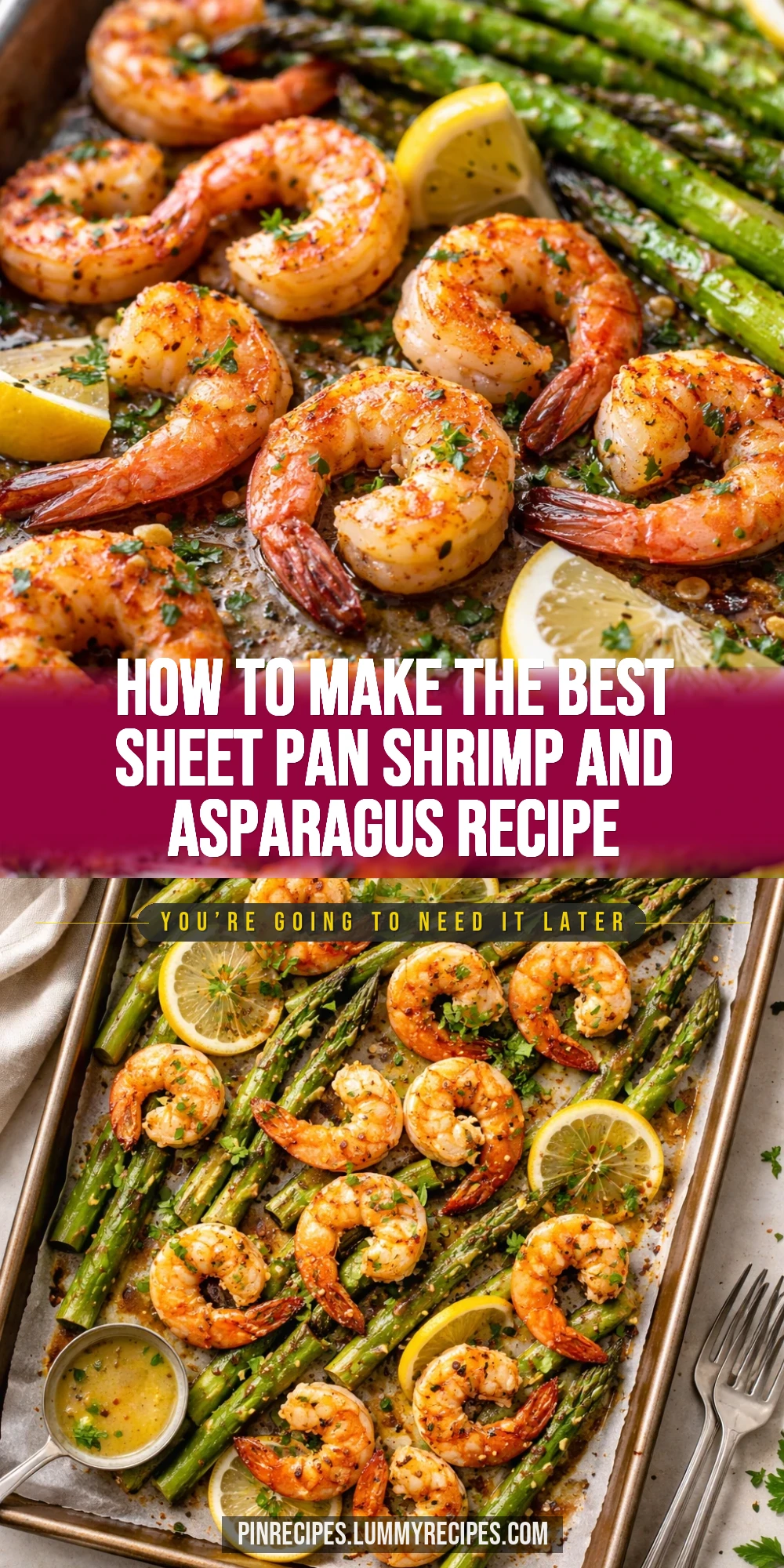
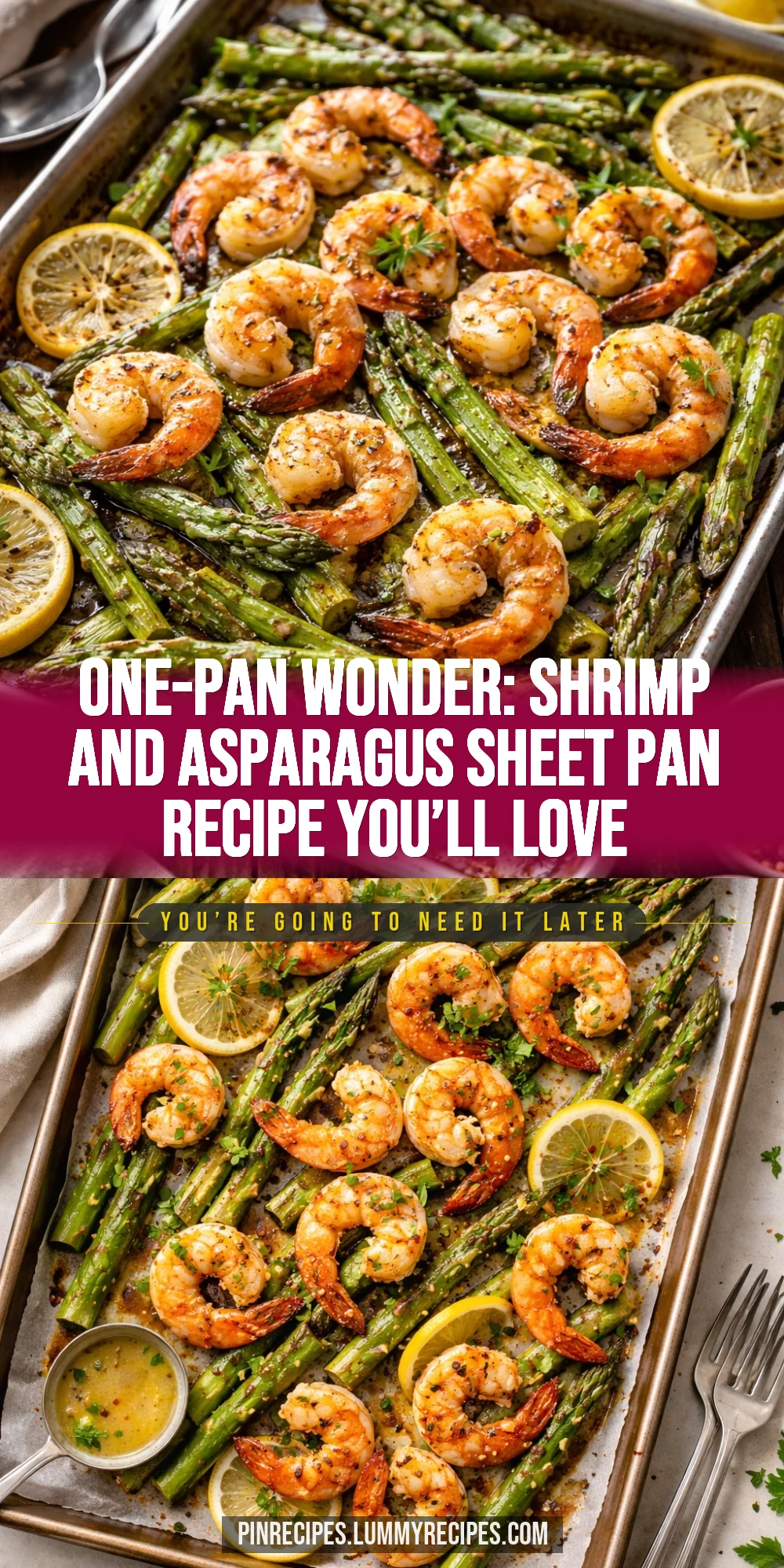
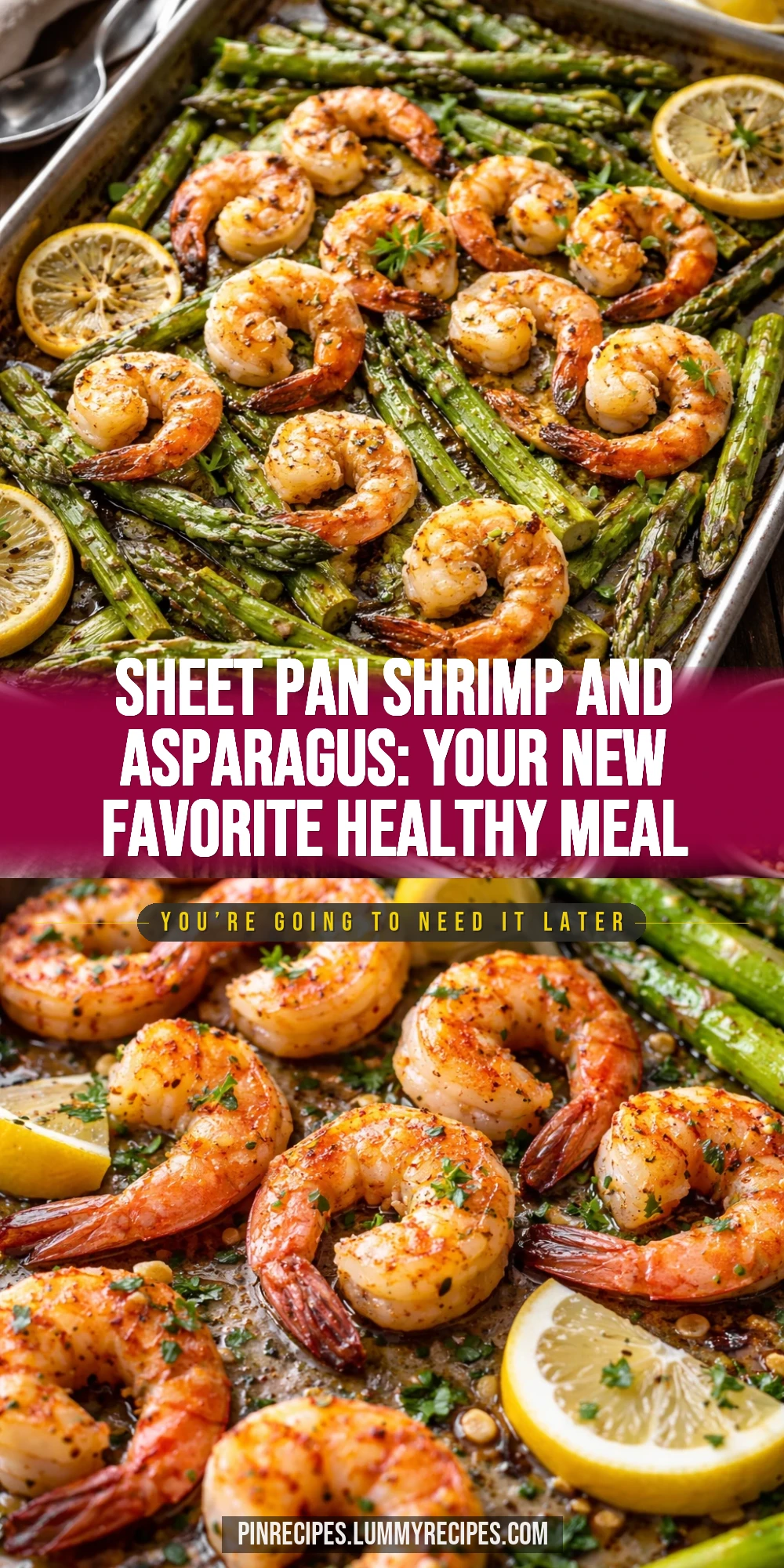
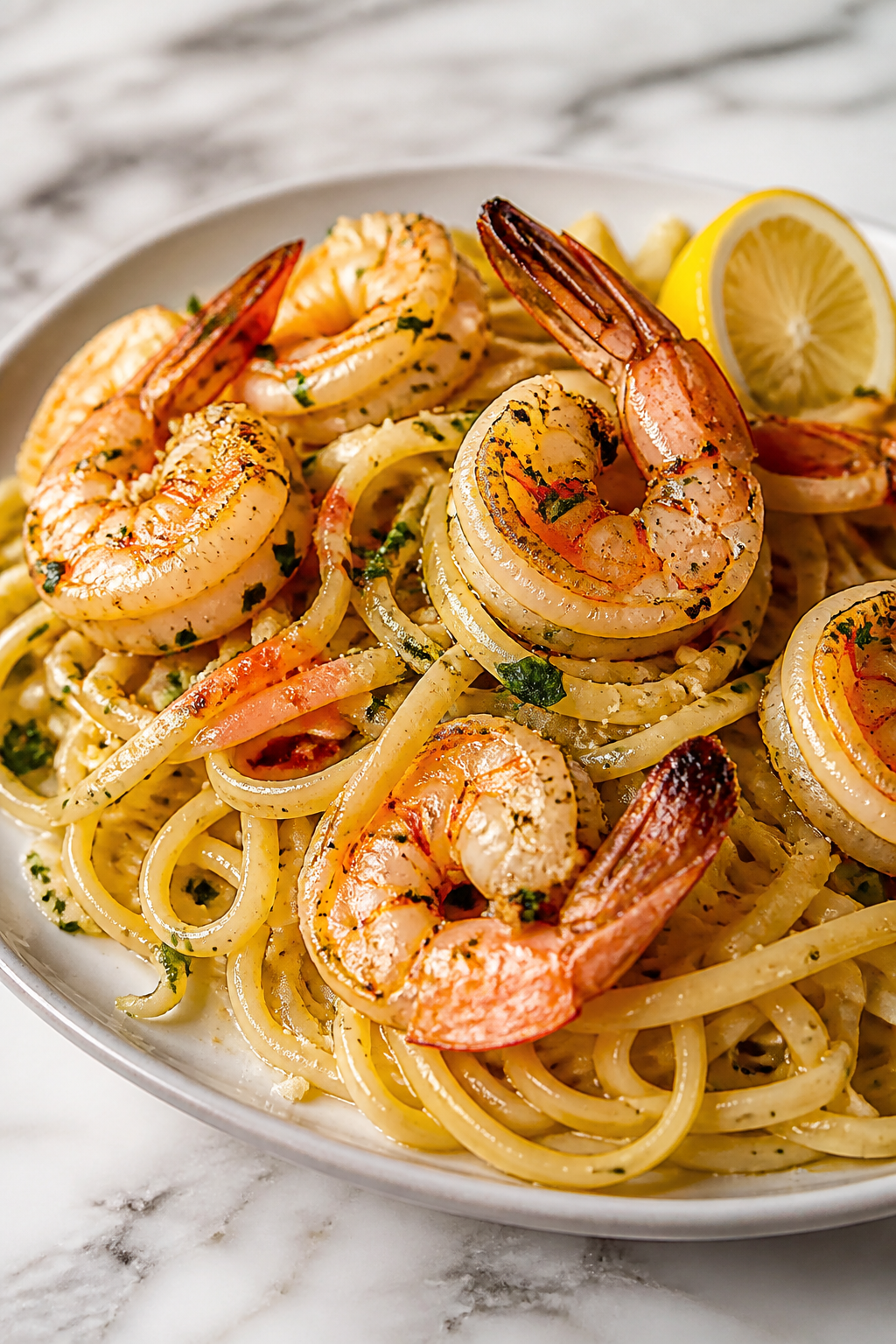
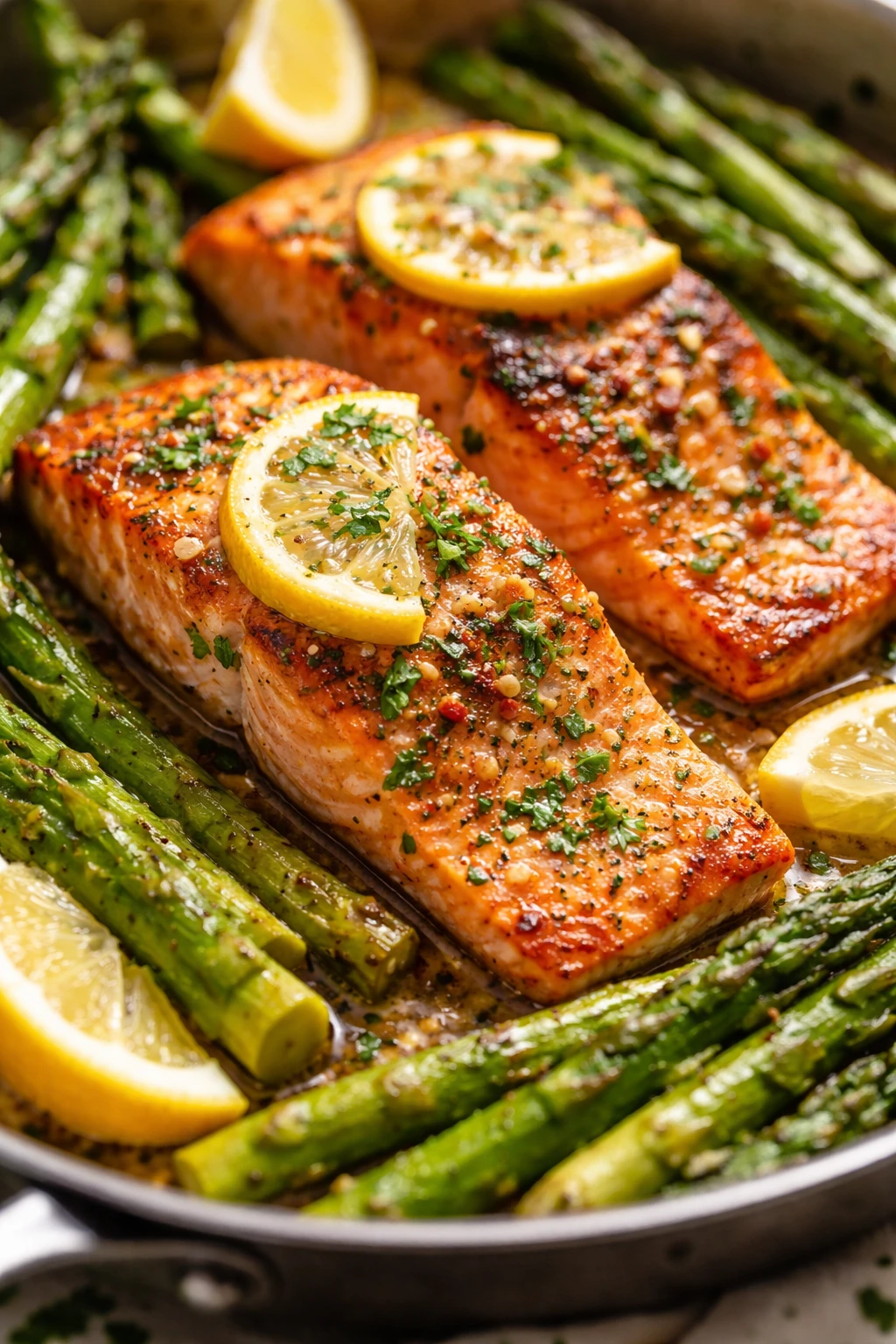
This sheet pan shrimp and asparagus recipe is a lifesaver for busy nights. Tossed in a garlicky lemon sauce, it’s fresh, bright, and ready in under 30 minutes. Perfect for a simple weeknight dinner or a healthy meal anytime!
Introduction
I first stumbled upon this sheet pan shrimp and asparagus recipe on a hectic weeknight when I needed something fast but satisfying. I’d tried shrimp dishes before, but they often ended up rubbery or overcooked. This recipe changed the game for me because it combines everything on one pan and uses a simple lemon-garlic marinade that keeps the shrimp tender and flavorful. The asparagus roasts alongside, soaking up those same bright flavors. What makes this version special is the balance of smoky paprika and fresh lemon zest, which adds a depth that’s missing in many quick shrimp recipes. Plus, roasting everything together means the shrimp stay juicy and the asparagus gets perfectly crisp-tender. I love how easy cleanup is too—no multiple pots or pans! The finished dish looks vibrant with the green asparagus and pink shrimp, and it’s light but filling. It’s become a go-to in my kitchen whenever I want a healthy, fuss-free dinner that feels a little special but doesn’t take hours. I think you’ll love how fresh and bright it tastes, and how quickly you can get it on the table.
How To Do It
Step 1
Preheat your oven to 425°F (220°C). This high temperature helps the shrimp cook quickly and the asparagus to get a nice roast without becoming soggy. Line a large sheet pan with parchment paper or foil for easy cleanup. Spread the trimmed asparagus evenly on the pan so they roast rather than steam, which keeps them crisp. Avoid overcrowding, or they’ll steam and turn mushy.
⏱ Time: 10 minutes
✓ Doneness: Asparagus should look bright green with slightly browned tips.
Step 2
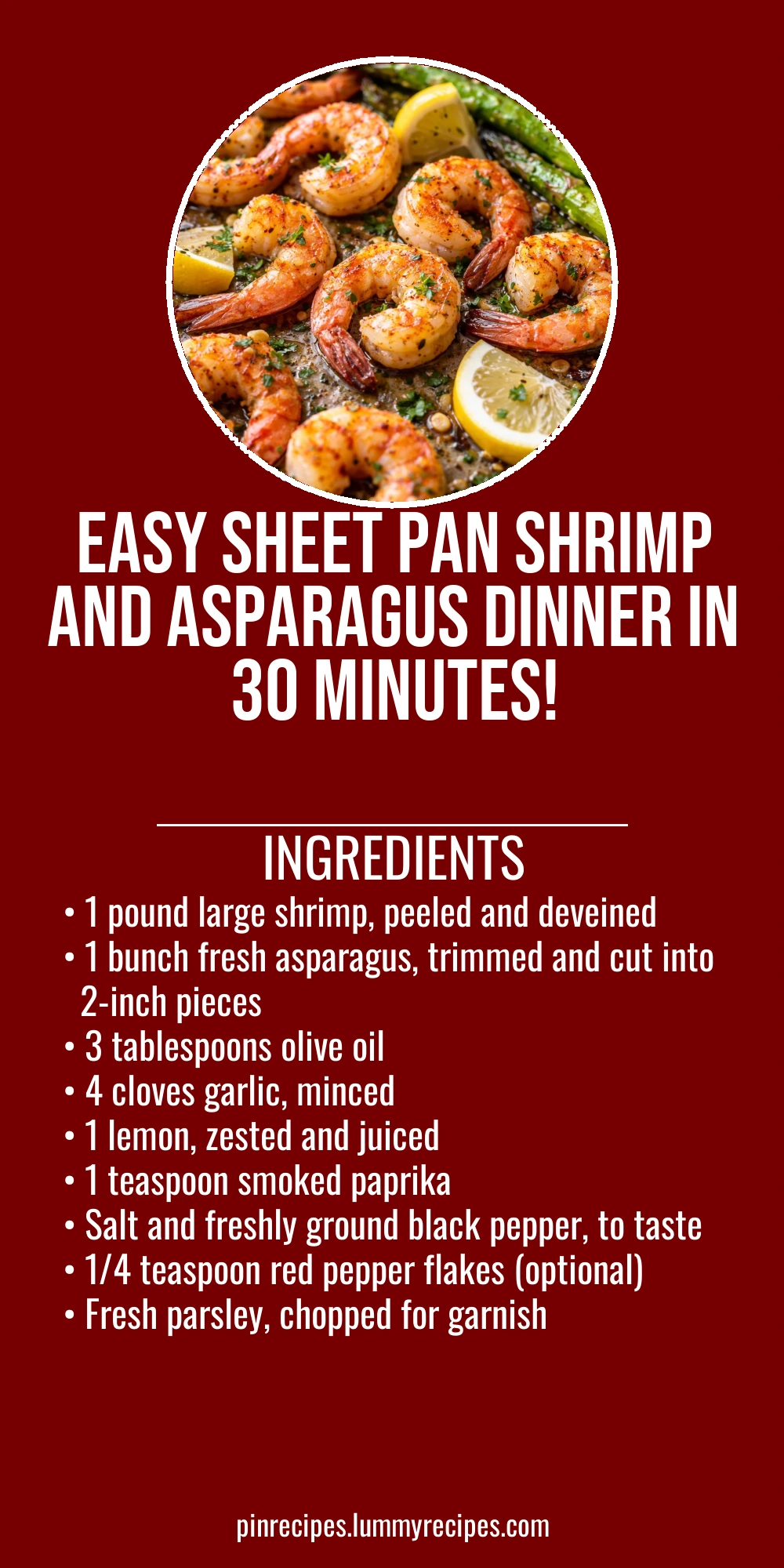
In a medium bowl, whisk together olive oil, minced garlic, lemon zest, lemon juice, smoked paprika, salt, black pepper, and red pepper flakes if using. This marinade flavors both the shrimp and asparagus, infusing them with a fresh, zesty, and slightly smoky taste. The acid in the lemon juice also helps tenderize the shrimp gently.
⏱ Time: 5 minutes
✓ Doneness: Marinade should be well combined with no clumps of garlic.
Step 3
Add the shrimp to the marinade and toss gently to coat all pieces evenly. Let them sit for 5–10 minutes while you prepare the asparagus on the sheet pan. This brief marinating time is enough to impart flavor without starting to cook the shrimp in the lemon juice.
⏱ Time: 10 minutes
✓ Doneness: Shrimp should be fully coated but not sitting in excess liquid.
Step 4
Pour half of the marinade over the asparagus on the sheet pan and toss to coat evenly. This ensures the asparagus picks up the same garlicky, lemony flavor as the shrimp. Spread the asparagus back out in a single layer to roast properly.
⏱ Time: 3 minutes
✓ Doneness: Asparagus pieces glisten with a light coating of marinade.
Step 5
Place the sheet pan with asparagus into the oven and roast for 8 minutes. This initial roasting softens the asparagus slightly so it finishes cooking perfectly when the shrimp are added later. Roasting it first prevents undercooked or overly crunchy asparagus.
⏱ Time: 8 minutes
✓ Doneness: Asparagus should be tender but still firm to bite.
Step 6
Remove the sheet pan from the oven and carefully add the marinated shrimp in a single layer on top of the asparagus. Pour the remaining marinade over the shrimp. Spreading everything out evenly ensures the shrimp cook quickly and evenly without steaming.
⏱ Time: 5 minutes
✓ Doneness: Shrimp are pink and glossy but raw-looking.
Step 7
Return the sheet pan to the oven and roast for another 7 minutes, or until the shrimp are opaque and just cooked through. Shrimp cook very fast, so keep an eye to avoid overcooking, which makes them rubbery. The asparagus will finish roasting during this time.
⏱ Time: 7 minutes
✓ Doneness: Shrimp should be firm, pink, and slightly curled.
Step 8
Remove the sheet pan from the oven and immediately sprinkle freshly chopped parsley over the shrimp and asparagus for a pop of color and fresh herbal flavor. The parsley brightens the dish and adds a lovely contrast to the smoky paprika and lemon.
⏱ Time: 2 minutes
✓ Doneness: Parsley looks fresh and vibrant on top of the dish.
Step 9
Serve the shrimp and asparagus hot straight from the sheet pan, maybe with a side of crusty bread or steamed rice. The dish is best enjoyed immediately for the freshest flavor and texture. Leftovers can be reheated gently but are not quite as crisp.
⏱ Time: 0 minutes
✓ Doneness: Dish looks vibrant and inviting on the plate.
Pro Tips
Don’t overcrowd the sheet pan when roasting.
Crowding traps steam and prevents proper roasting, leading to soggy asparagus and rubbery shrimp. Giving ingredients space allows hot air to circulate, creating caramelization and crispy edges that enhance flavor and texture.
Marinate the shrimp briefly before cooking.
A short marinade time lets the lemon juice and spices flavor the shrimp without 'cooking' them prematurely. Too long can make shrimp mushy or tough, so 5-10 minutes is ideal for optimal taste and texture.
Use fresh lemon zest and juice instead of bottled.
Fresh lemon juice provides bright acidity and fresh oils that bottled versions lack. Zest contains aromatic oils crucial for vibrant citrus flavor. These fresh elements elevate the dish from ordinary to memorable.
Add red pepper flakes for a subtle kick.
A pinch of red pepper flakes adds warmth and complexity without overpowering the delicate shrimp flavor. This small addition balances the richness and brightness, making the dish more dynamic.
Use parchment paper or foil for easy cleanup.
Sheet pan meals can be messy, especially with shrimp juices and marinade. Lining the pan prevents sticking and burning, making cleanup quick and hassle-free, encouraging you to make this recipe more often.
Trim the woody ends of asparagus before cooking.
Woody ends are tough and unpleasant to eat. Removing them ensures every bite is tender and enjoyable. It also helps the asparagus cook evenly without tough, fibrous bits.
Serve immediately after roasting for best texture.
Shrimp and asparagus lose their crispness and juiciness as they cool. Serving right away keeps shrimp tender and asparagus crisp-tender, preserving the dish’s fresh, vibrant qualities.
Common Mistakes to Avoid
Overcooking the shrimp
Why it happens Shrimp cook very quickly, and it’s easy to leave them in the oven too long, resulting in rubbery texture.
Fix Watch the shrimp closely during the last roasting step and remove the pan as soon as they turn opaque and curl slightly. Shrimp will continue to cook a bit after removing from heat, so err on the side of slightly underdone.
Crowding the pan
Why it happens Trying to fit too much on one sheet pan can trap steam instead of roasting the ingredients.
Fix Spread asparagus and shrimp in a single layer with space between pieces. Use two pans if necessary to ensure proper roasting and crisp edges.
Skipping trimming asparagus ends
Why it happens Some cooks overlook trimming, leaving tough, woody ends that are unpleasant to eat.
Fix Bend asparagus near the bottom until it snaps naturally or trim about 1-2 inches off the bottom before cooking for tender results.
Using bottled lemon juice
Why it happens Bottled lemon juice lacks fresh zest oils and brightness, dulling the marinade.
Fix Always use fresh lemon juice and zest for vibrant citrus flavor that complements shrimp and asparagus beautifully.
Not preheating the oven fully
Why it happens Starting with a cold oven leads to uneven cooking and less caramelization.
Fix Allow the oven to preheat completely to 425°F before roasting for even cooking and optimal texture.
Variations
Spicy Cajun Sheet Pan Shrimp and Asparagus
Swap smoked paprika for Cajun seasoning and add a dash of cayenne for heat. This variation gives the dish a bold, spicy kick. Serve with a cooling side like yogurt sauce or avocado slices to balance the spice.
Note: Adjust roasting time slightly if cayenne is added to avoid burning the spices; watch closely during cooking.
Garlic Butter Sheet Pan Shrimp and Asparagus
Replace olive oil with melted garlic butter for a richer, indulgent flavor. Toss shrimp and asparagus in the butter mixture before roasting. Perfect for a cozy dinner when you want something a little more decadent.
Note: Use unsalted butter and add salt separately to control seasoning; butter browns faster, so monitor roasting closely.
Mediterranean Style with Cherry Tomatoes and Olives
Add halved cherry tomatoes and pitted Kalamata olives to the sheet pan before roasting. This adds juicy sweetness and briny depth, turning the dish into a Mediterranean-inspired feast.
Note: Add tomatoes and olives with asparagus at the start to roast evenly without overcooking shrimp.
Sheet Pan Shrimp and Asparagus with Quinoa
Serve the roasted shrimp and asparagus over cooked quinoa for a complete protein-packed meal. Toss quinoa with fresh herbs and lemon for a light, nutritious bowl.
Note: Cook quinoa separately; do not add to sheet pan as it requires different cooking times and moisture.
Lemon Herb Variation with Thyme and Rosemary
Add fresh thyme and rosemary sprigs to the marinade and roast alongside the shrimp and asparagus. This adds a fragrant herbal aroma that complements the lemon and garlic beautifully.
Note: Remove woody herb stems before serving to avoid tough bites.
Nutrition
Per Serving:
Nutritional values are estimates and may vary based on specific ingredients used.
Storage & Tips
Room Temperature
This dish can safely sit at room temperature for up to 2 hours if covered loosely. Beyond that, bacteria growth increases, so refrigerate promptly to maintain safety and freshness.
Refrigerator
Store leftovers in an airtight container for up to 3 days. The asparagus may soften and lose crispness when cold. Reheat gently to restore texture or enjoy chilled in salads.
Freezer
Freeze cooked shrimp and asparagus in a freezer-safe container for up to 1 month. Wrap tightly with plastic wrap and foil to prevent freezer burn. Thaw overnight in the refrigerator before reheating.
Reheating
Reheat gently in a skillet over medium heat or in a 300°F oven for 5–7 minutes. Add a splash of olive oil or lemon juice to refresh flavors. Avoid microwaving on high as shrimp can become rubbery.
Make Ahead
You can marinate the shrimp and prepare the asparagus 1 day ahead, storing them separately in the fridge. On the day of serving, toss everything with the marinade and roast fresh to preserve texture and flavor.
FAQ
Can I use frozen shrimp for this recipe?
Yes, frozen shrimp works well if fully thawed and patted dry before marinating. Removing excess moisture helps the shrimp roast properly instead of steaming. Be sure to thaw in the refrigerator overnight or under cold running water.
What if I don’t have smoked paprika?
You can substitute with regular paprika or a mix of paprika and a pinch of cayenne for a bit of heat. Smoked paprika adds a subtle smoky flavor, but the dish will still be delicious without it.
Can I add other vegetables to the sheet pan?
Absolutely! Cherry tomatoes, bell peppers, or zucchini work great. Just cut them into similar-sized pieces and add them at the start with the asparagus to ensure even roasting.
How do I prevent shrimp from overcooking?
Keep a close eye during the final roasting step and remove the shrimp as soon as they turn opaque and curl slightly. Shrimp cook very fast and continue cooking a bit after you take them out of the oven.
Is it okay to marinate shrimp overnight?
It’s best to marinate shrimp only 5–10 minutes. Longer marinating, especially with lemon juice, can start to 'cook' the shrimp and make them mushy.
Can I make this recipe gluten-free?
Yes! This recipe is naturally gluten-free as it uses fresh ingredients and no wheat-based sauces. Just double-check any seasoning blends for hidden gluten.
What side dishes pair well with this shrimp and asparagus?
Simple sides like steamed rice, quinoa, or crusty bread are perfect. A light salad or roasted potatoes also complement the flavors nicely.
How do I store leftovers to keep asparagus from getting soggy?
Store leftovers in an airtight container in the fridge and reheat gently. Eating leftovers cold may make asparagus seem softer, so reheating briefly helps restore some texture.
Final Thoughts
Give this sheet pan shrimp and asparagus recipe a try—it’s quick, fresh, and perfect for busy nights. I’d love to hear how yours turns out!