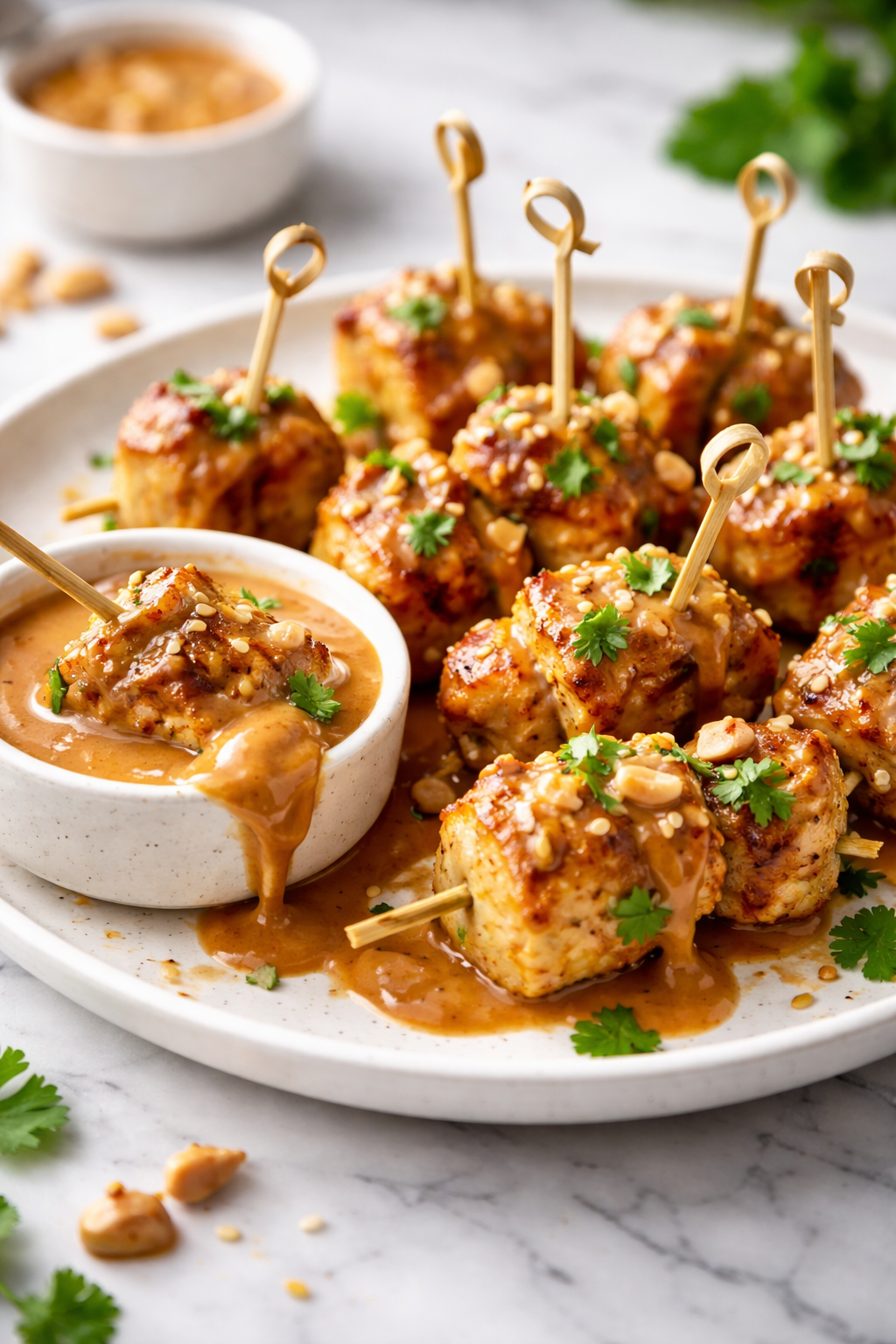
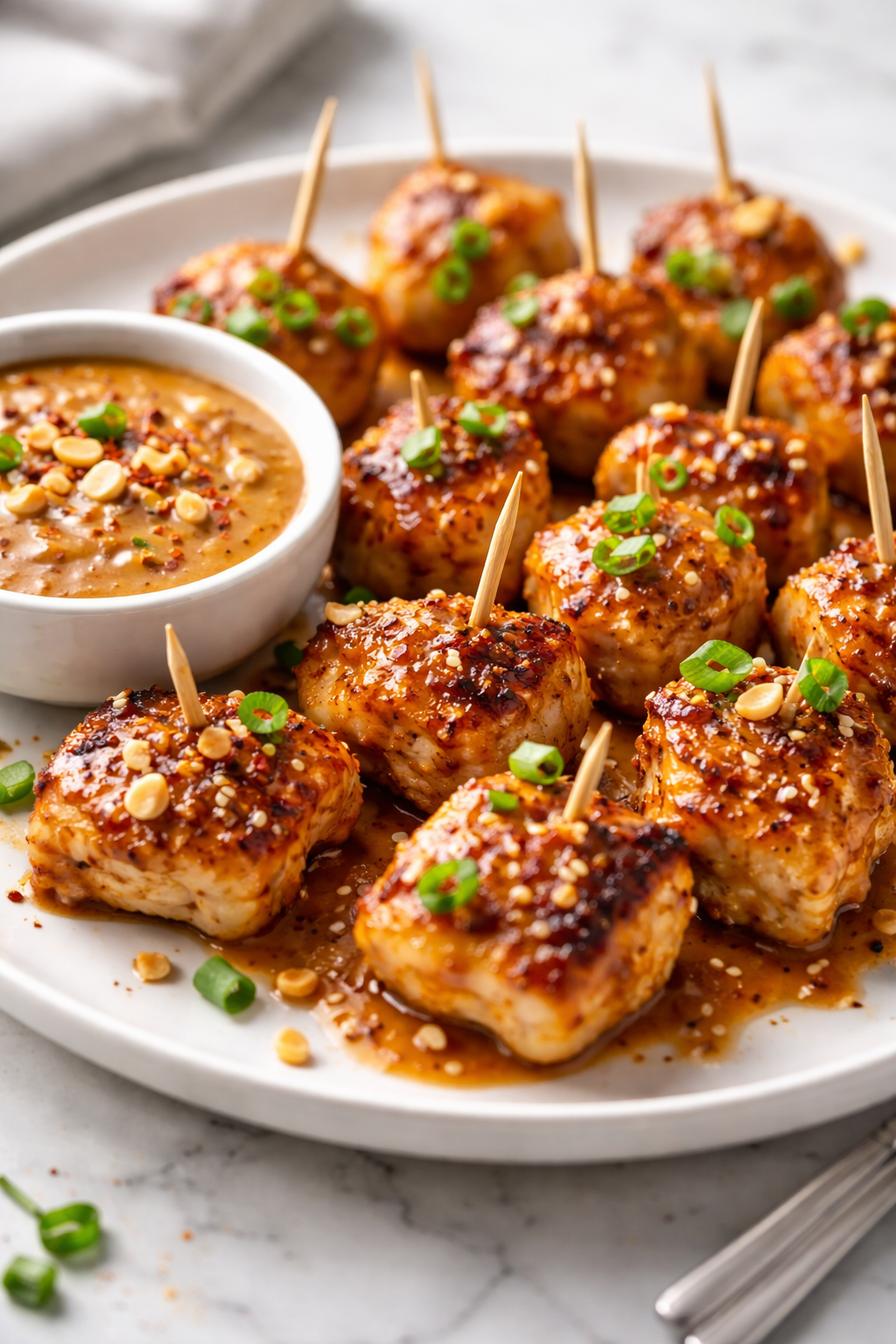
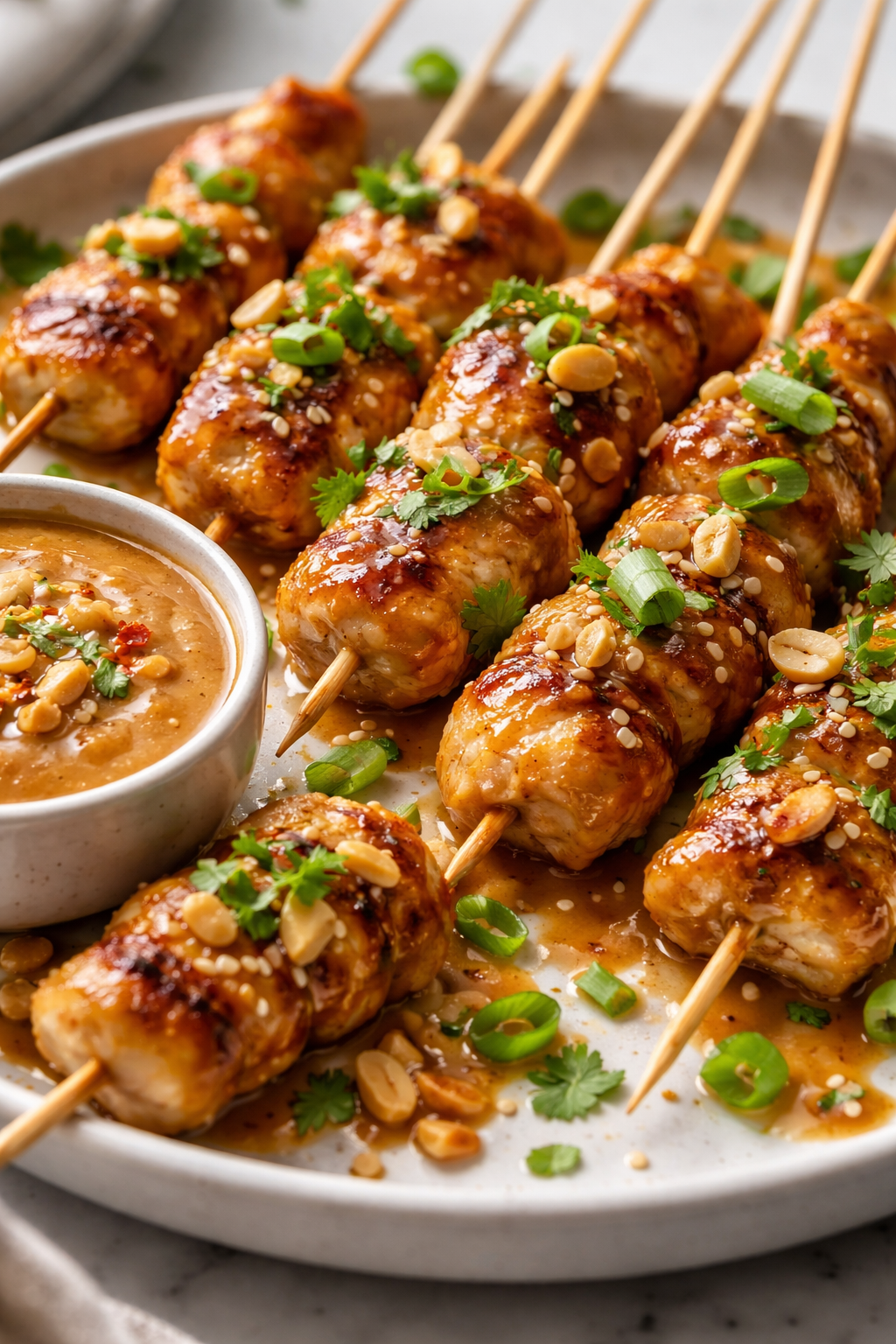
These mini chicken satay bites are a quick, tasty snack with a creamy peanut sauce that’s just irresistible. Perfect for casual get-togethers or a simple weeknight treat.
Introduction
I first made these mini chicken satay bites when I wanted a quick, flavorful snack that didn’t require hours in the kitchen. I’d always loved the flavors of traditional satay but found the full meal a bit time-consuming. This recipe is a simplified, smaller version perfect for busy days or casual get-togethers. What makes this version better is the marinade — a simple mix of soy, lime, and warm spices that really brings out the chicken’s flavor without fuss. Plus, the peanut sauce is creamy and tangy, with just the right balance of sweet and savory, and it’s super quick to whip up. I usually soak wooden skewers ahead to keep them from burning, and grilling the chicken quickly locks in the juices while giving a nice char. The finished bites are juicy, tender, and perfect for dipping. They look great on a platter and are always a crowd-pleaser. Honestly, the first time I tried this, I was worried they’d dry out, but the marinade and quick cooking time keep them moist and flavorful every time.
What You'll Need
Approximately 16 mini satay bites, serves 4
- 1 lb boneless skinless chicken breasts, cut into 1-inch pieces
- 2 tablespoons soy sauce
- 1 tablespoon brown sugar
- 1 tablespoon lime juice
- 1 teaspoon ground coriander
- 1 teaspoon turmeric powder
- 1/2 teaspoon garlic powder
- Wooden skewers, soaked in water for 30 minutes
- For the peanut sauce:
- 1/2 cup creamy peanut butter
- 2 tablespoons soy sauce
- 1 tablespoon honey
- 1 tablespoon lime juice
- 1 teaspoon grated fresh ginger
- 1/4 cup warm water (adjust for consistency)
- Pinch of red pepper flakes (optional)
How To Do It
Step 1
Start by cutting the chicken breasts into bite-sized 1-inch pieces. This size is perfect for quick cooking and easy eating. Make sure the pieces are uniform so they cook evenly; uneven pieces can lead to some being dry while others remain undercooked. Using sharp knives helps keep the cuts clean and prevents shredding the meat, which would affect texture.
⏱ Time: 10
✓ Doneness: Chicken pieces are uniform in size and smooth-edged
Step 2
In a medium bowl, whisk together soy sauce, brown sugar, lime juice, coriander, turmeric, and garlic powder to create the marinade. The soy sauce adds saltiness while the brown sugar balances with sweetness. Lime juice brightens the flavors and tenderizes the chicken. Mixing spices into the marinade allows the chicken to soak up a complex flavor profile. Avoid skipping the turmeric; it adds a subtle earthiness and color.
⏱ Time: 5
✓ Doneness: Marinade is smooth and evenly blended with no sugar clumps
Step 3
Add the chicken pieces to the marinade and toss until well coated. Cover and refrigerate for at least 15 minutes, but ideally 30 for more flavor. Marinating not only seasons the chicken but helps keep it moist during cooking. Don’t marinate longer than 2 hours or the acid from lime juice can start to 'cook' the meat, changing its texture.
⏱ Time: 15
✓ Doneness: Chicken pieces are evenly coated and slightly glossy
Step 4
While the chicken marinates, prepare the peanut sauce. In a small bowl, combine peanut butter, soy sauce, honey, lime juice, grated ginger, and warm water. Whisk until smooth and creamy. The warm water helps thin the sauce to a perfect dipping consistency. Taste and adjust sweetness or tanginess as you like. Adding red pepper flakes gives a nice kick but is optional.
⏱ Time: 10
✓ Doneness: Peanut sauce is smooth, creamy, and pourable
Step 5
Soak wooden skewers in water for at least 30 minutes before grilling to prevent burning. This step is crucial for safety and to keep skewers from charring. If you skip soaking, the skewers can catch fire or become brittle when heated.
⏱ Time: 30
✓ Doneness: Skewers are fully saturated and flexible
Step 6
Thread the marinated chicken pieces onto the soaked skewers, leaving a little space between each piece for even cooking. Crowding the chicken can cause uneven heat distribution and steam the meat instead of grilling it, which affects texture.
⏱ Time: 5
✓ Doneness: Chicken pieces are spaced evenly on each skewer
Step 7
Heat a grill pan or outdoor grill to medium-high heat. Place the skewers on the grill and cook for about 4-5 minutes per side, turning once. The high heat sears the chicken, locking in juices and creating a nice char without drying it out. Avoid moving the skewers too much to get good grill marks.
⏱ Time: 10
✓ Doneness: Chicken is golden brown with grill marks and no longer pink inside
Step 8
Once cooked, remove the skewers from the grill and let them rest for a few minutes. Resting allows the juices to redistribute, keeping the chicken moist and tender. Skipping this step can result in drier bites.
⏱ Time: 5
✓ Doneness: Chicken feels firm but juicy when pressed gently
Step 9
Serve the mini chicken satay bites warm with the peanut sauce on the side for dipping. This presentation makes it easy to enjoy as finger food. Garnish with chopped peanuts or fresh cilantro if desired for extra texture and freshness.
⏱ Time: 5
✓ Doneness: Sauce is creamy and chicken bites are hot and flavorful
Pro Tips
Soak wooden skewers for at least 30 minutes before grilling.
This prevents the skewers from burning or catching fire on the grill, which can ruin the presentation and flavor. Soaking also helps keep the skewers sturdy and prevents them from becoming brittle when exposed to high heat.
Cut chicken pieces uniformly to ensure even cooking.
Uneven pieces cook at different rates, leading to some bites being dry or undercooked. Uniform size ensures each piece reaches the perfect doneness simultaneously, resulting in tender and juicy bites.
Don’t over-marinate the chicken; 30 minutes is ideal.
The lime juice tenderizes the meat, but too long in the marinade can break down proteins excessively, causing a mushy texture. Keeping marination under two hours preserves the chicken’s natural firmness.
Use medium-high heat when grilling to get good char without drying out.
Medium-high heat allows the Maillard reaction to occur, creating flavorful browning and grill marks. Too low heat steams the chicken, while too high heat burns the outside before the inside cooks.
Whisk peanut sauce ingredients thoroughly for a smooth dip.
Proper emulsification blends the peanut butter with liquids evenly, preventing clumps and ensuring a creamy, luscious sauce that complements the chicken perfectly.
Rest the chicken skewers for a few minutes after grilling.
Resting allows juices to redistribute throughout the meat, keeping the bites moist and tender. Serving immediately can cause the juices to run out when bitten.
Add a pinch of red pepper flakes to the peanut sauce for a spicy kick.
The heat balances the sweetness and richness of the sauce, adding complexity and making the dip more exciting without overpowering the chicken.
Common Mistakes to Avoid
Skipping the skewer soaking step
Why it happens Many cooks overlook this step because it seems unnecessary or they’re short on time.
Fix Always soak wooden skewers in water for at least 30 minutes before grilling. This prevents them from burning or catching fire, ensuring safe cooking and a clean presentation.
Cutting uneven chicken pieces
Why it happens Rushing or not using a sharp knife leads to uneven sizes.
Fix Take your time to cut chicken into uniform 1-inch pieces. This ensures even cooking and a consistent texture across all bites.
Over-marinating the chicken
Why it happens Thinking longer marination means more flavor.
Fix Limit marinating time to 30 minutes to 1 hour. Longer exposure to acidic lime juice breaks down proteins too much and results in mushy texture.
Grilling on too low or too high heat
Why it happens Inexperience with grill temperature control.
Fix Preheat grill to medium-high heat. This allows a good sear and caramelization without drying out or burning the chicken.
Not whisking peanut sauce thoroughly
Why it happens Peanut butter can be lumpy or separate.
Fix Whisk sauce ingredients well until smooth and creamy. Warm water helps achieve the perfect dipping consistency.
Variations
Spicy Satay Bites
Add a teaspoon of chili paste or sriracha to the marinade and a pinch of cayenne to the peanut sauce for a spicier kick. This variation brings heat without overpowering the peanut flavor, perfect for those who like a little fire.
Note: Adjust cooking time slightly if adding spicy ingredients to avoid burning; watch for caramelization.
Coconut Satay Bites
Mix a tablespoon of coconut milk into the marinade for a richer, creamier flavor. The coconut adds a subtle sweetness and tropical note that pairs beautifully with the peanut sauce.
Note: Marinate for at least 30 minutes to allow coconut flavor to infuse; reduce lime juice slightly to balance acidity.
Grilled Vegetable Satay
Swap chicken for firm vegetables like bell peppers, zucchini, and mushrooms. Marinate similarly and grill for a vegetarian-friendly version that’s just as tasty with peanut sauce.
Note: Vegetables cook faster; grill for 3-4 minutes per side to avoid sogginess.
Baked Satay Bites
If you don’t have a grill, bake the chicken bites on a lined baking sheet at 425°F for about 15-20 minutes, turning halfway. This method is convenient and still delivers juicy bites.
Note: Watch closely to avoid drying out; broil for 1-2 minutes at the end for a charred effect.
Crunchy Satay Bites
Before grilling, coat the marinated chicken pieces lightly with crushed peanuts for extra texture and nutty flavor. This adds a delightful crunch to each bite.
Note: Press peanuts gently to adhere; grill carefully to avoid burning the nuts.
Nutrition
Per Serving:
Nutritional values are estimates and may vary based on specific ingredients used.
Storage & Tips
Room Temperature
These chicken satay bites can be safely kept at room temperature for up to 2 hours if covered loosely with foil or a clean towel. Beyond that, bacteria can grow rapidly, so it’s best to refrigerate leftovers promptly.
Refrigerator
Store cooked satay bites in an airtight container for up to 3 days. The peanut sauce can thicken or separate when cold, so stir it before serving. Reheat bites gently to avoid drying out, or serve cold as a snack.
Freezer
Freeze cooked chicken satay bites in airtight freezer bags or containers for up to 2 months. Wrap skewers individually if possible to prevent sticking. Thaw overnight in the refrigerator before reheating to maintain texture.
Reheating
Reheat satay bites in a 350°F oven for 8-10 minutes or on the stovetop over low heat to avoid drying out. Add a splash of water if needed to keep moist. Avoid microwaving too long as it can make the chicken rubbery.
Make Ahead
You can marinate and skewer the chicken up to 1 day ahead and keep covered in the refrigerator. Prepare the peanut sauce a day ahead as well; it stores well and flavors deepen. Grill or bake just before serving for best texture and freshness.
FAQ
Can I use chicken thighs instead of breasts for this recipe?
Absolutely! Chicken thighs are juicier and more forgiving if slightly overcooked. Just cut them into similar-sized pieces and reduce marinating time to avoid overly strong flavors. Cooking time remains about the same, but thighs may take a minute or two longer to cook through.
What if I don’t have a grill or grill pan?
No worries! You can bake the satay bites in the oven at 425°F for 15-20 minutes, turning once halfway. Broiling for 1-2 minutes at the end adds nice charred flavor. This method works well and keeps the chicken juicy if you watch cooking times closely.
How can I make the peanut sauce less thick?
Simply add warm water a tablespoon at a time while whisking until you reach your desired dipping consistency. The sauce should be creamy but pourable. Avoid adding too much water at once to prevent it from becoming too runny.
Can I prepare the peanut sauce in advance?
Yes, the peanut sauce actually tastes better after sitting for a few hours as flavors meld. Store it in an airtight container in the fridge for up to 3 days. Stir well before serving if it thickens or separates.
How do I avoid the chicken drying out?
Marinate the chicken for no more than 1 hour and cook over medium-high heat to sear quickly. Avoid overcooking by checking for an internal temperature of 165°F or until juices run clear. Rest the chicken a few minutes before serving to keep it juicy.
Is it okay to use peanut butter with added sugar or salt?
You can, but it may affect the balance of flavors in the sauce. I recommend using natural or unsweetened peanut butter so you can control sweetness and saltiness with the other ingredients. Adjust honey and soy sauce accordingly if using sweetened peanut butter.
Can I make this recipe gluten-free?
Yes! Use a gluten-free soy sauce or tamari in both the marinade and peanut sauce. Double-check other ingredients like peanut butter to ensure they don’t contain gluten. This swap keeps the flavors intact for a safe gluten-free option.
What’s the best way to serve these satay bites?
Serve warm with the peanut sauce on the side for dipping. They’re perfect as appetizers or snacks. Garnish with chopped peanuts or fresh cilantro for a fresh touch. Pair with a simple side salad or steamed rice for a light meal.
Final Thoughts
I hope you enjoy making and sharing these quick mini chicken satay bites as much as my family does! Don’t forget to try the peanut sauce—it really makes the dish special. Let me know how yours turn out!