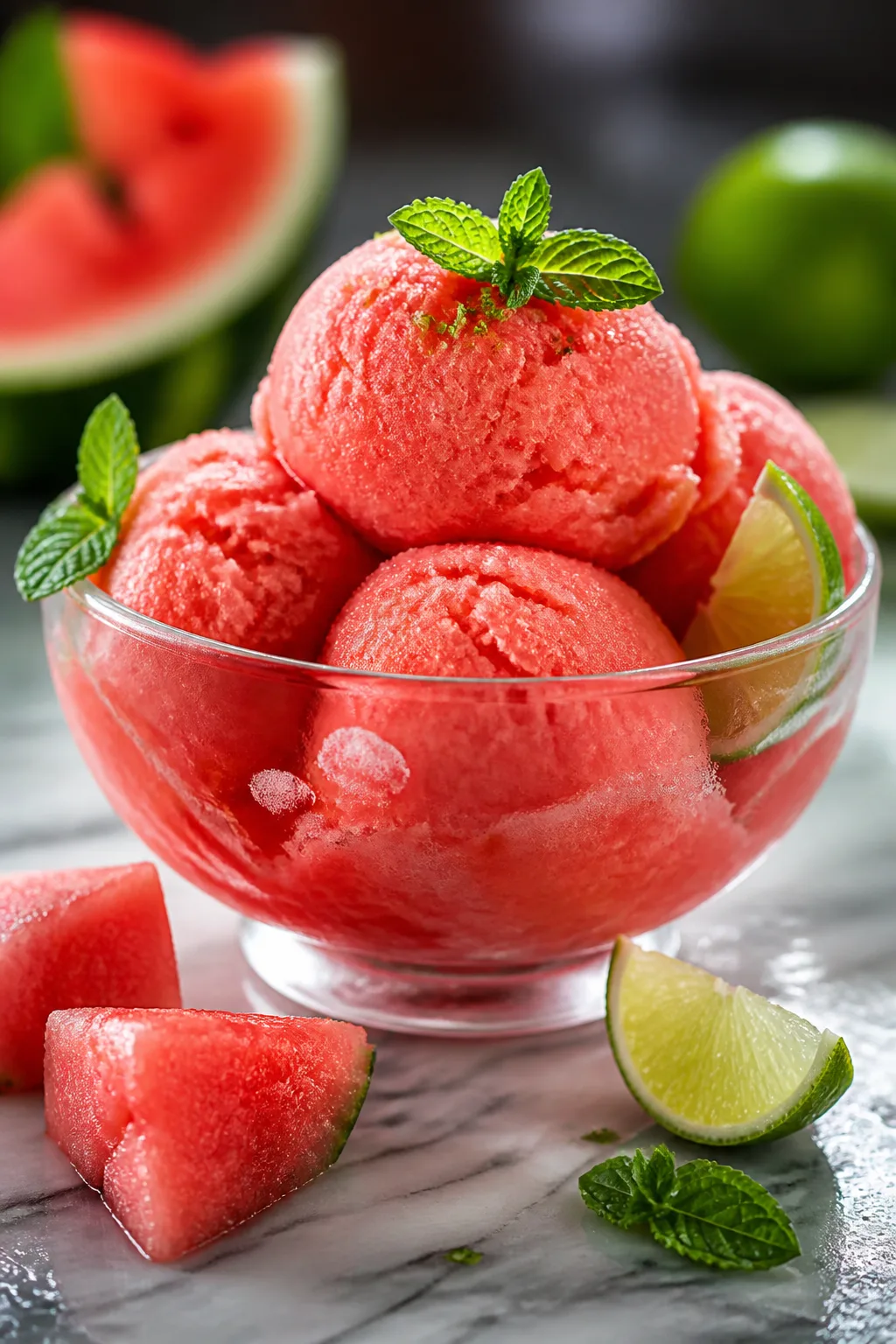
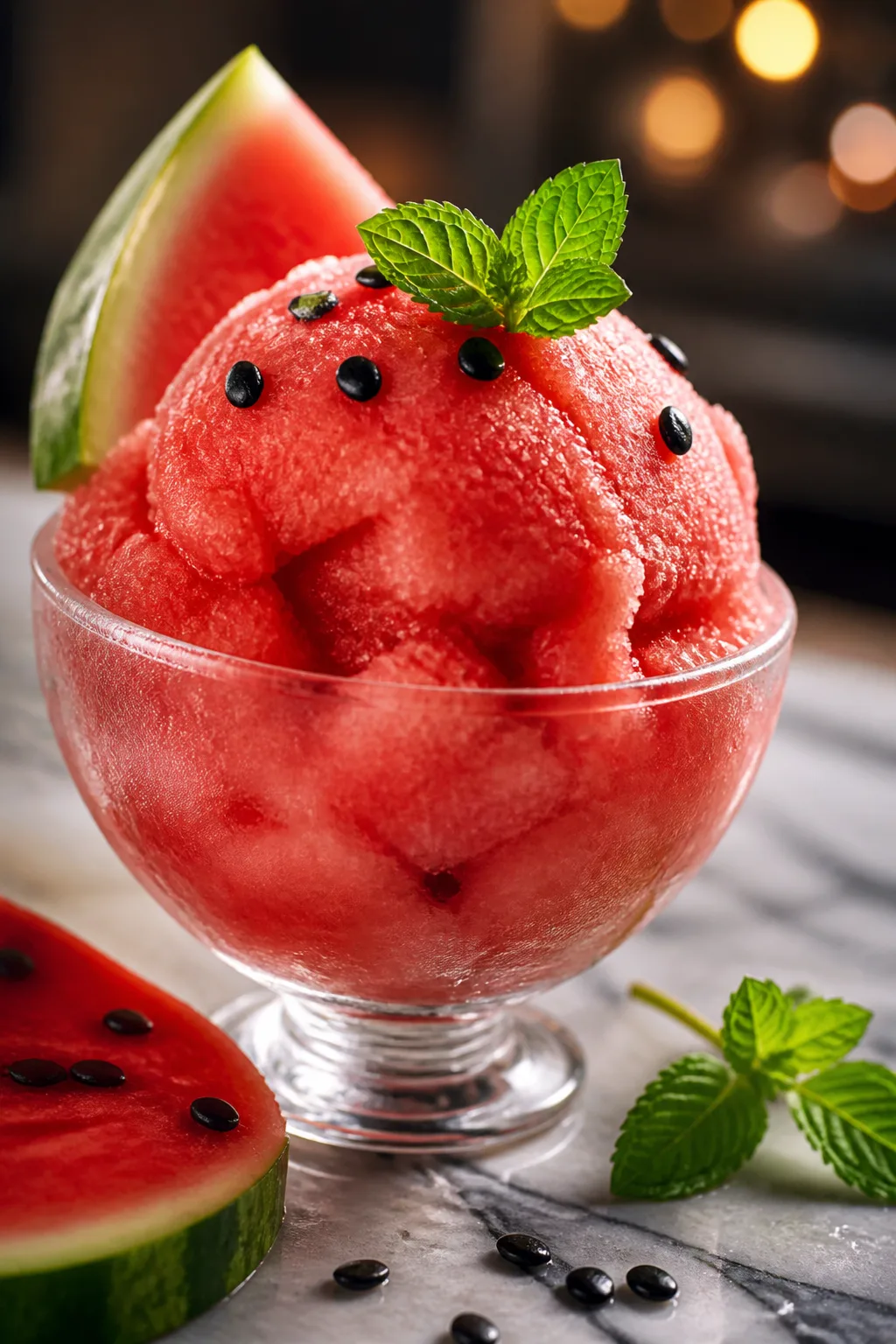
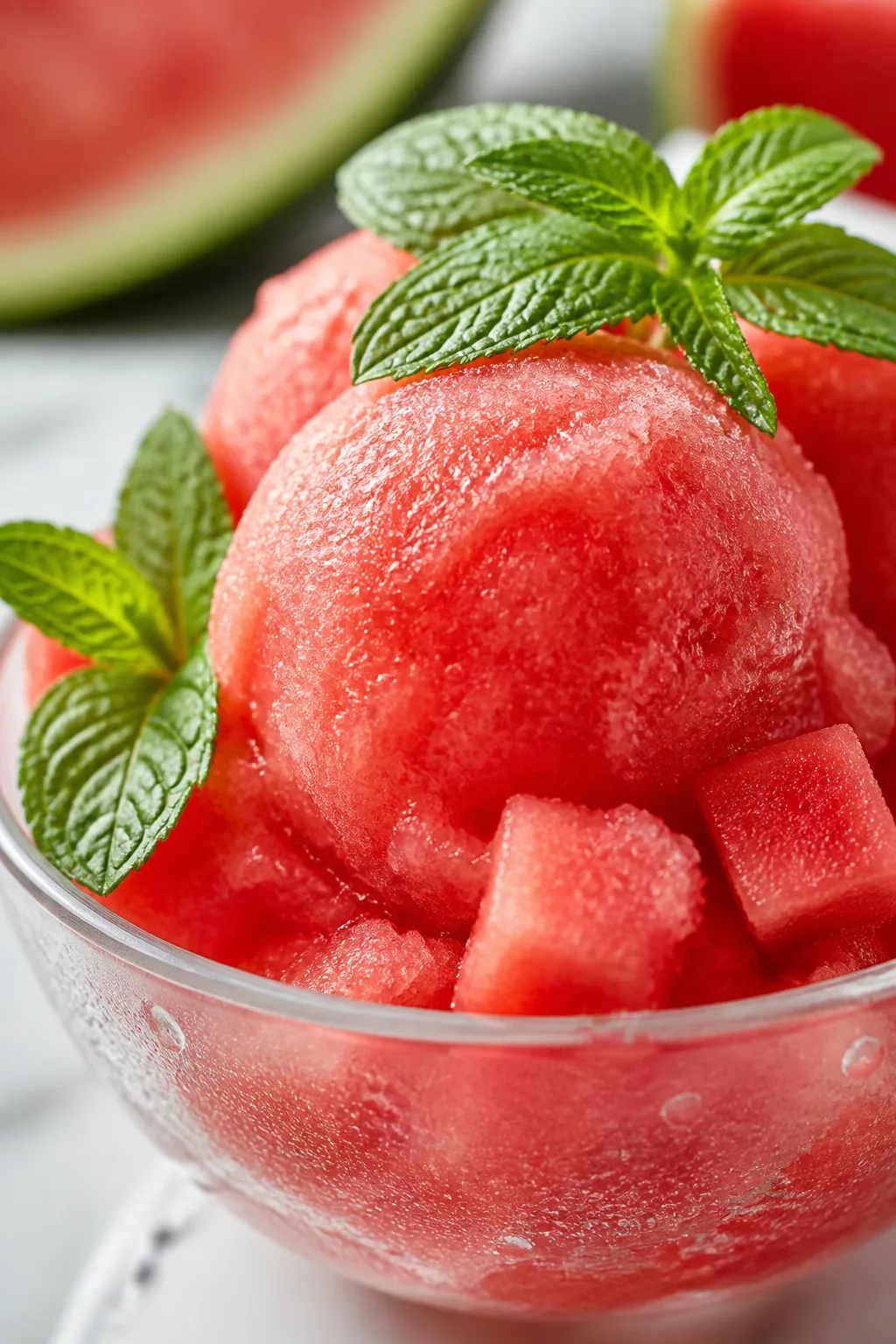
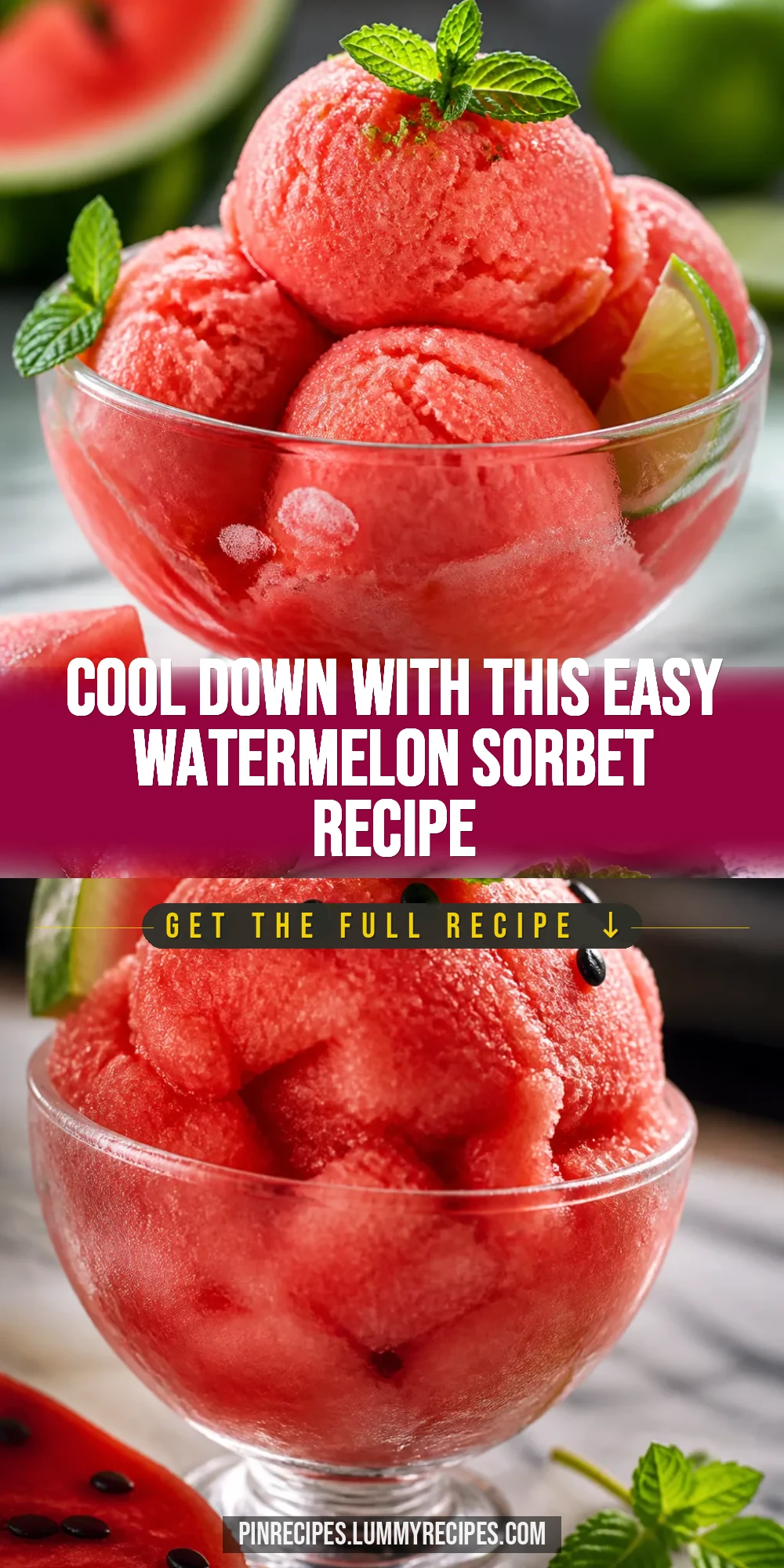
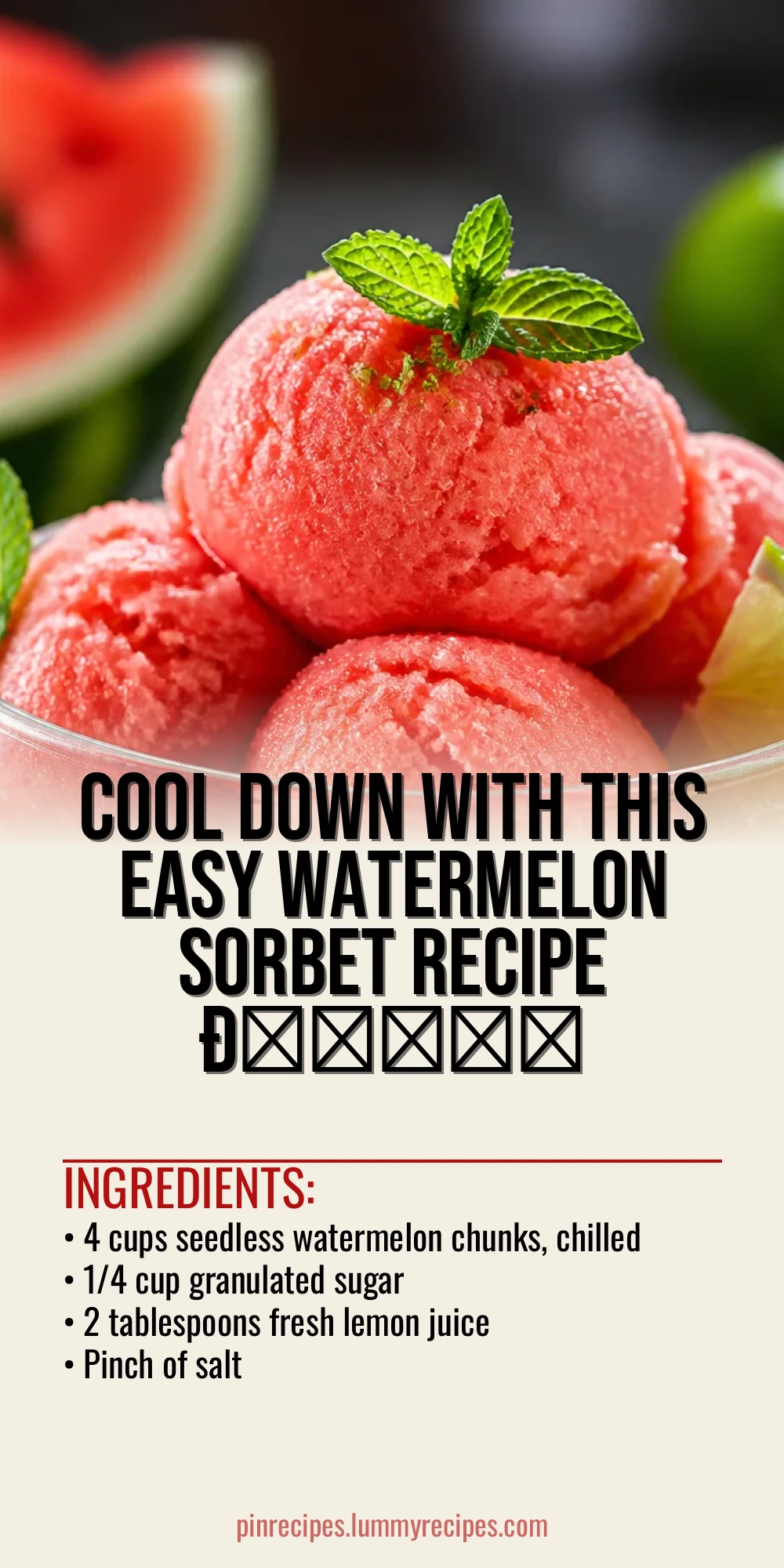
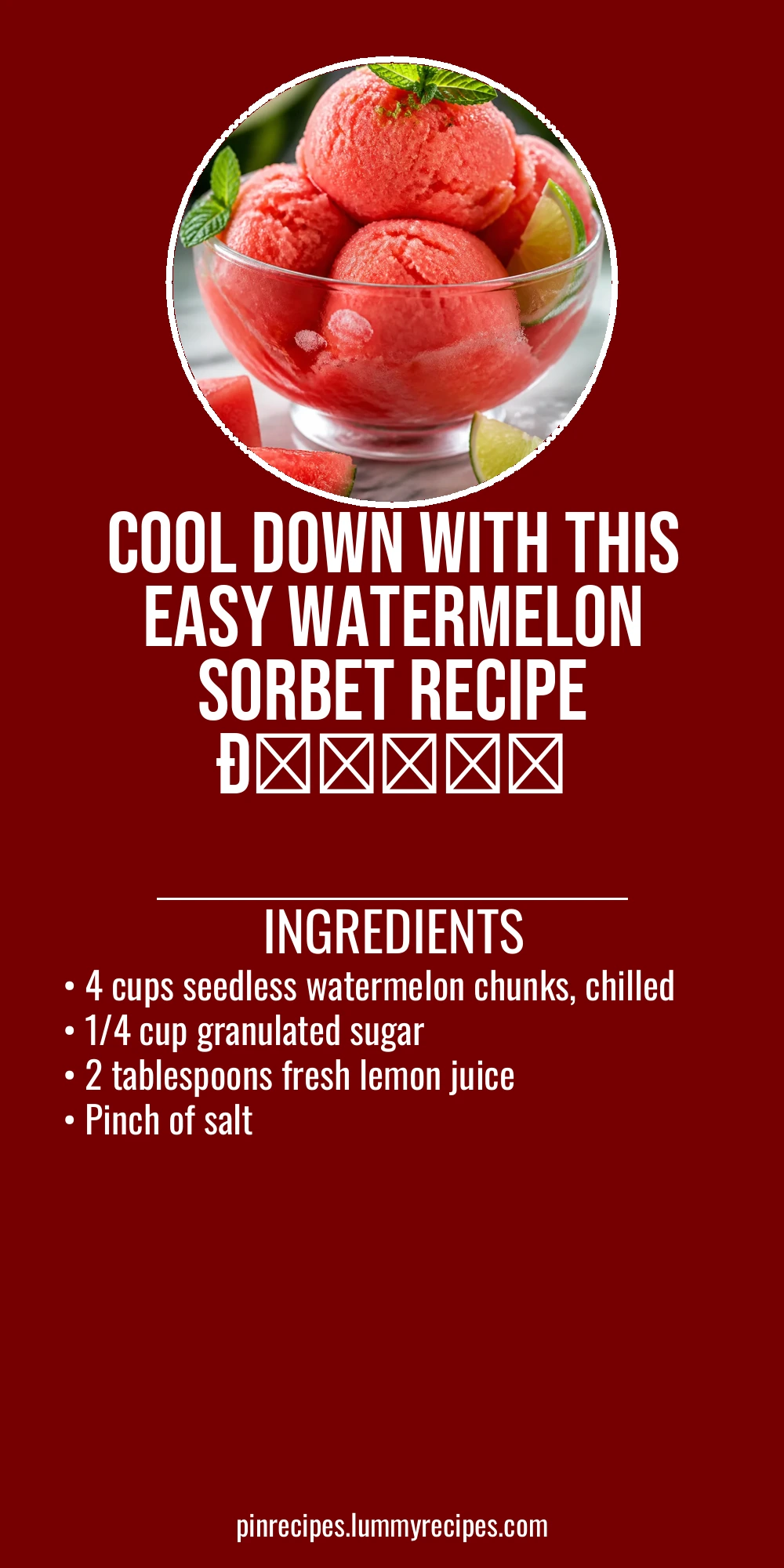
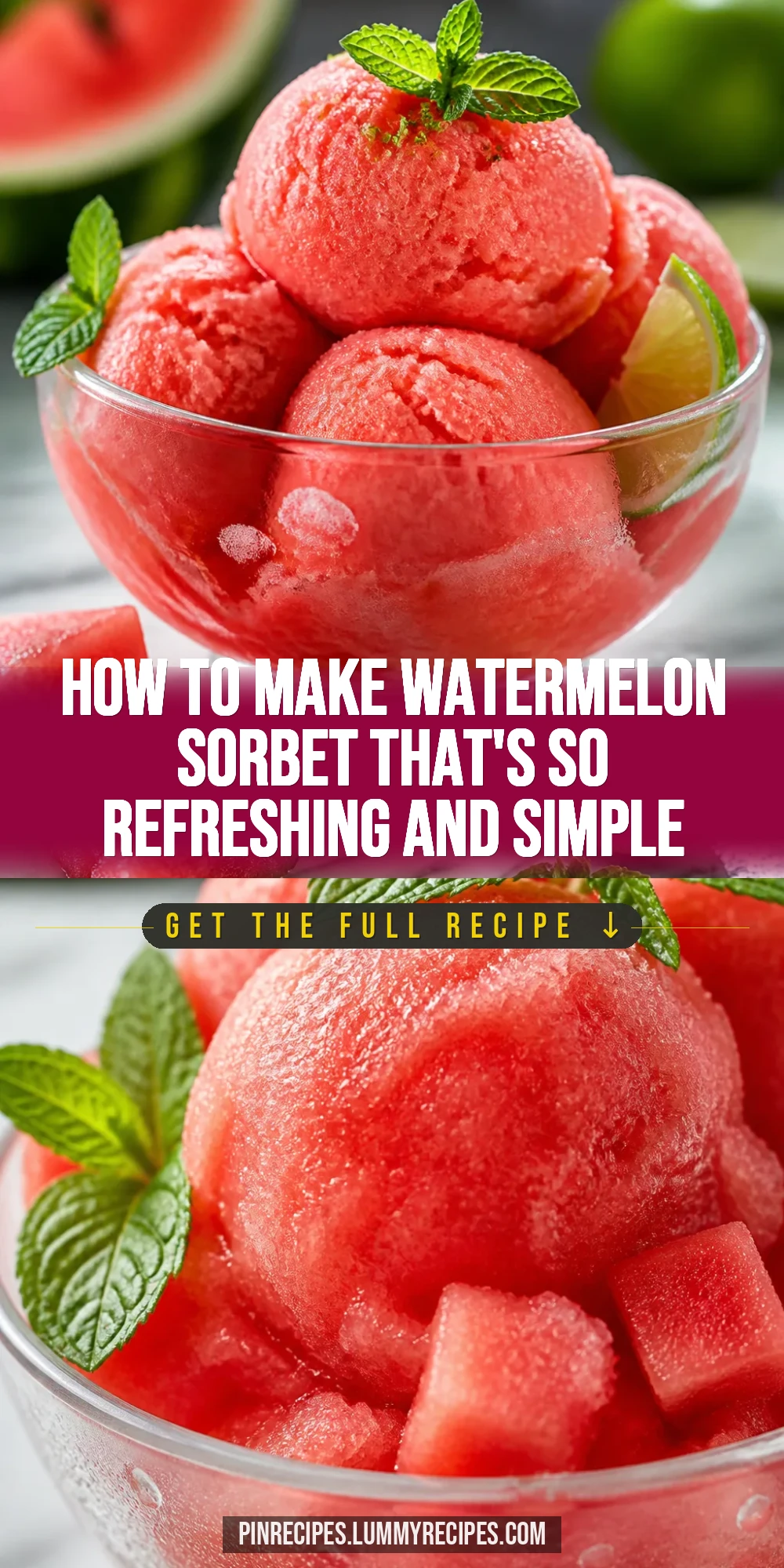
This watermelon sorbet is a simple, refreshing treat that’s perfect for hot days. Made with just watermelon, a bit of sugar, and lemon juice, it’s naturally sweet and super hydrating. Great for summer afternoons or after a barbecue!
Introduction
I first made watermelon sorbet on a hot summer afternoon when I had a big, ripe watermelon sitting on my counter. I wanted something cool and simple—no fuss, just fresh flavor. This recipe quickly became a favorite in my family because it’s so easy and refreshing. What makes this version special is that it uses just a little sugar and lemon juice to brighten the natural sweetness of the watermelon without overpowering it. I’ve tried sorbets with fancy ingredients, but honestly, this straightforward approach always wins. The trick I learned is to chill the watermelon well before blending; it helps the sorbet freeze faster and gives it a smoother texture. The final sorbet is icy but creamy, bursting with juicy watermelon flavor, and perfect for serving after a summer meal or as a light snack on a warm day. It’s one of those recipes that feels like a little celebration of summer in every bite.
What You'll Need
Approximately 4 cups, 4 servings
- 4 cups seedless watermelon chunks, chilled
- 1/4 cup granulated sugar
- 2 tablespoons fresh lemon juice
- Pinch of salt
How To Do It
Step 1
Start by cutting your seedless watermelon into chunks and chilling them thoroughly in the fridge for at least 2 hours. Chilling the fruit beforehand helps the sorbet freeze faster and improves the texture, making it smoother and less icy. Avoid using warm or room temperature watermelon, as this will slow the freezing process and can lead to a grainy sorbet.
⏱ Time: 120 minutes
✓ Doneness: Watermelon chunks feel cold and firm to the touch, not watery or warm.
Step 2
Place the chilled watermelon chunks in a blender along with the granulated sugar, fresh lemon juice, and a pinch of salt. Blend on high until completely smooth. The lemon juice brightens the flavor and balances the sweetness, while the salt enhances the overall taste. Make sure there are no large chunks left, as this will affect the texture of the sorbet.
⏱ Time: 5 minutes
✓ Doneness: Mixture is smooth and uniform with no visible chunks.
Step 3
Taste the watermelon puree and adjust sweetness if needed by adding a little more sugar, blending again briefly to mix. The sweetness should be balanced—not too sugary, just enough to enhance the natural watermelon flavor. This step is key because once frozen, the sorbet will taste slightly less sweet.
⏱ Time: 3 minutes
✓ Doneness: Balanced sweetness with a slight tang from the lemon juice.
Step 4
Pour the blended mixture into a shallow metal or glass pan. Using a shallow pan helps the sorbet freeze evenly and more quickly. Cover the pan with plastic wrap or a lid to prevent ice crystals from forming on the surface.
⏱ Time: 5 minutes
✓ Doneness: Mixture is evenly spread and covered in the pan.
Step 5
Place the pan in the freezer for about 30 minutes. After this time, check the edges for freezing and the center for softness. The mixture should start to firm up but still be scoopable. This initial freezing step sets the base for the sorbet’s texture.
⏱ Time: 30 minutes
✓ Doneness: Edges look frozen and center is beginning to firm.
Step 6
Remove the pan from the freezer and use a fork to scrape and stir the sorbet, breaking up any ice crystals. This step is essential to keep the sorbet light and smooth rather than icy and hard. Scraping regularly during freezing helps incorporate air and improves texture.
⏱ Time: 5 minutes
✓ Doneness: Mixture looks fluffy and no large ice crystals remain.
Step 7
Return the pan to the freezer and repeat the scraping and stirring every 30 minutes for 2 to 3 hours until the sorbet is firm but scoopable. This gradual freezing with frequent stirring is what creates that perfect sorbet texture. Don’t skip this, or the sorbet will be too icy.
⏱ Time: 120-180 minutes
✓ Doneness: Sorbet is evenly frozen with a smooth, creamy texture.
Step 8
Once fully frozen, transfer the sorbet to an airtight container for storage or serve immediately. Let it sit at room temperature for 5 minutes before scooping if it’s too hard. This resting time softens the sorbet slightly, making it easier to serve without melting too fast.
⏱ Time: 5 minutes
✓ Doneness: Sorbet is firm but scoopable and melts slowly.
Step 9
Serve the sorbet in chilled bowls or glasses, optionally garnished with fresh mint or a small wedge of watermelon. This adds a nice visual touch and a hint of fresh herb flavor that complements the sweet sorbet. Enjoy immediately for best texture and flavor.
⏱ Time: 2 minutes
✓ Doneness: Sorbet is visually appealing and refreshing.
Pro Tips
Use seedless watermelon for ease and better texture.
Seedless watermelon eliminates the need for straining seeds out, which saves time and keeps the sorbet smooth. Seeds can interrupt the texture and make scooping less enjoyable, so choosing seedless fruit ensures a better eating experience.
Chill the watermelon chunks thoroughly before blending.
Cold watermelon blends into a smoother puree and freezes faster, reducing ice crystal formation. Starting with warm or room temperature fruit leads to longer freezing times and a grainier texture, so chilling is key for a creamy sorbet.
Scrape and stir the sorbet every 30 minutes while freezing.
Regular stirring breaks up ice crystals and incorporates air, which creates a light, fluffy texture instead of a hard, icy block. Skipping this step results in a gritty sorbet that’s hard to scoop and less pleasant to eat.
Use a shallow pan for freezing the sorbet mixture.
A shallow pan freezes the mixture evenly and more quickly, which helps control ice crystal size and texture. Deep containers freeze slower and unevenly, increasing the chance of coarse ice crystals forming.
Add a pinch of salt to enhance flavors.
Salt balances sweetness and brings out the natural fruit flavors without making the sorbet taste salty. It’s a subtle trick that improves the overall taste profile and makes the sorbet more vibrant.
Let sorbet sit at room temperature for a few minutes before serving.
Allowing the sorbet to soften slightly makes it easier to scoop and enhances the creamy mouthfeel. Serving it straight from the freezer can be too hard and icy, which dulls the flavor experience.
Adjust sugar based on watermelon sweetness.
Watermelon sweetness varies by season and variety. Tasting the puree before freezing lets you add just the right amount of sugar, ensuring the sorbet isn’t too sweet or too bland once frozen.
Common Mistakes to Avoid
Using unripe or watery watermelon
Why it happens Sometimes people grab whatever watermelon is available without checking ripeness, assuming all watermelons are equally sweet and juicy.
Fix Choose a watermelon that feels heavy for its size and smells sweet near the stem. If the melon tastes bland or watery, the sorbet will lack flavor and texture. Always taste the watermelon before making sorbet.
Skipping the stirring during freezing
Why it happens It’s easy to forget or think it’s unnecessary, especially if you’re short on time or unfamiliar with sorbet making.
Fix Set a timer to remind yourself to scrape and stir the sorbet every 30 minutes. This breaks up ice crystals and incorporates air, essential for a smooth texture.
Adding too much sugar
Why it happens Some assume more sugar means better flavor or softer texture without considering the fruit’s natural sweetness.
Fix Taste the puree before freezing and add sugar gradually. Remember, freezing dulls sweetness, so aim for slightly sweeter than you want, but don’t overdo it.
Not chilling the watermelon before blending
Why it happens Rushing the recipe or not planning ahead leads to blending room temperature fruit.
Fix Plan ahead to chill watermelon chunks well in the fridge. This step improves texture and speeds freezing, resulting in a better sorbet.
Using a deep container to freeze
Why it happens Convenience or lack of shallow pans causes people to use whatever container is available.
Fix Use a shallow metal or glass pan to freeze the sorbet evenly and quickly. This helps control ice crystals and texture.
Variations
Mint-Infused Watermelon Sorbet
Add a handful of fresh mint leaves to the blender with the watermelon for a refreshing herbal twist. The mint adds a cool flavor that pairs beautifully with watermelon’s sweetness, making this perfect for summer parties.
Note: Strain the puree after blending to remove mint leaves if you prefer a smoother texture without bits.
Lime and Basil Watermelon Sorbet
Swap lemon juice for fresh lime juice and add a few torn basil leaves to the blender. This gives the sorbet a zesty, slightly peppery flavor that’s unexpected but delightful.
Note: Like with mint, you can strain out basil leaves for a silky sorbet or leave them for a rustic feel.
Watermelon and Coconut Sorbet
Blend in 1/4 cup coconut milk with the watermelon mixture for a creamy texture and tropical flavor. This adds richness while keeping the sorbet dairy-free and refreshing.
Note: Coconut milk can slightly slow freezing, so expect a softer sorbet that melts a bit quicker.
Spicy Watermelon Sorbet
Add a pinch of cayenne pepper or chopped fresh jalapeño to the blender for a sweet and spicy combo. It’s a fun way to surprise your guests with a little heat in a cool treat.
Note: Start with a very small amount of spice and adjust to taste to avoid overpowering the sorbet.
Watermelon and Strawberry Sorbet
Combine equal parts fresh watermelon and strawberries for a berry-fruit blend. This variation adds complexity and a richer color, perfect for berry season.
Note: Strawberries add natural pectin, which can help the sorbet hold its shape better.
Nutrition
Per Serving:
Nutritional values are estimates and may vary based on specific ingredients used.
Storage & Tips
Room Temperature
Watermelon sorbet should not be left out at room temperature for more than 15-20 minutes as it will melt quickly. Keep it covered loosely if serving outdoors to avoid contamination and insects.
Refrigerator
Store sorbet in an airtight container in the freezer, not the refrigerator. If left in the fridge, it will melt and lose texture. Sorbet is best served fresh from the freezer or after softening slightly at room temperature.
Freezer
Freeze sorbet in a tightly sealed container for up to 2 months. To prevent freezer burn, press plastic wrap directly on the sorbet surface before sealing the lid. Thaw in the fridge for 10-15 minutes before serving for best texture.
Reheating
Sorbet is served frozen and should not be reheated. To soften, leave it at room temperature for 5-10 minutes before scooping. Avoid microwaving as it will melt unevenly and alter texture.
Make Ahead
You can prepare the watermelon puree 1-2 days ahead and keep it covered in the fridge. Freeze and scrape the sorbet on the day you plan to serve it for the freshest texture and flavor.
FAQ
Can I use watermelon with seeds for this sorbet?
While you can use seeded watermelon, it’s best to remove as many seeds as possible before blending. Seeds can affect the texture and make the sorbet less smooth. Seedless watermelon is easier and gives a better result.
What if I don’t have a blender or food processor?
A blender or food processor is ideal for creating a smooth puree. If you don’t have one, you can mash the watermelon with a fork or potato masher, but the texture will be less smooth and more icy.
Can I make this sorbet without sugar?
You can reduce or omit sugar if your watermelon is very sweet, but some sugar helps improve texture and freezing properties. Without sugar, the sorbet may freeze too hard and be less scoopable.
How long does it take to freeze the sorbet completely?
It usually takes 2 to 3 hours with stirring every 30 minutes. The exact time depends on your freezer temperature and container used. Patience is key for the best texture.
Can I use this recipe in an ice cream maker?
Yes! Pour the blended mixture into your ice cream maker and churn according to the manufacturer’s instructions. This will give an even smoother sorbet with less need for manual scraping.
Why is my sorbet icy and hard?
This usually happens if the mixture wasn’t stirred regularly during freezing or if there was too little sugar. Stirring breaks up ice crystals, and sugar lowers the freezing point, both essential for smooth sorbet.
Can I add alcohol to this sorbet?
Adding a small amount of alcohol like vodka or rum can keep the sorbet softer, but too much will prevent freezing. Use sparingly (about 1 tablespoon) and adjust sugar accordingly.
How do I store leftover sorbet?
Keep leftover sorbet in an airtight container in the freezer. Press plastic wrap on the surface before sealing to prevent ice crystals. Consume within 2 months for best flavor and texture.
Final Thoughts
I hope you enjoy making and sharing this simple watermelon sorbet as much as my family does. It’s a perfect, refreshing treat to brighten your summer days—give it a try and let me know how it turns out!